
Matrice 4 in Forest Terrain: What Actually Matters When
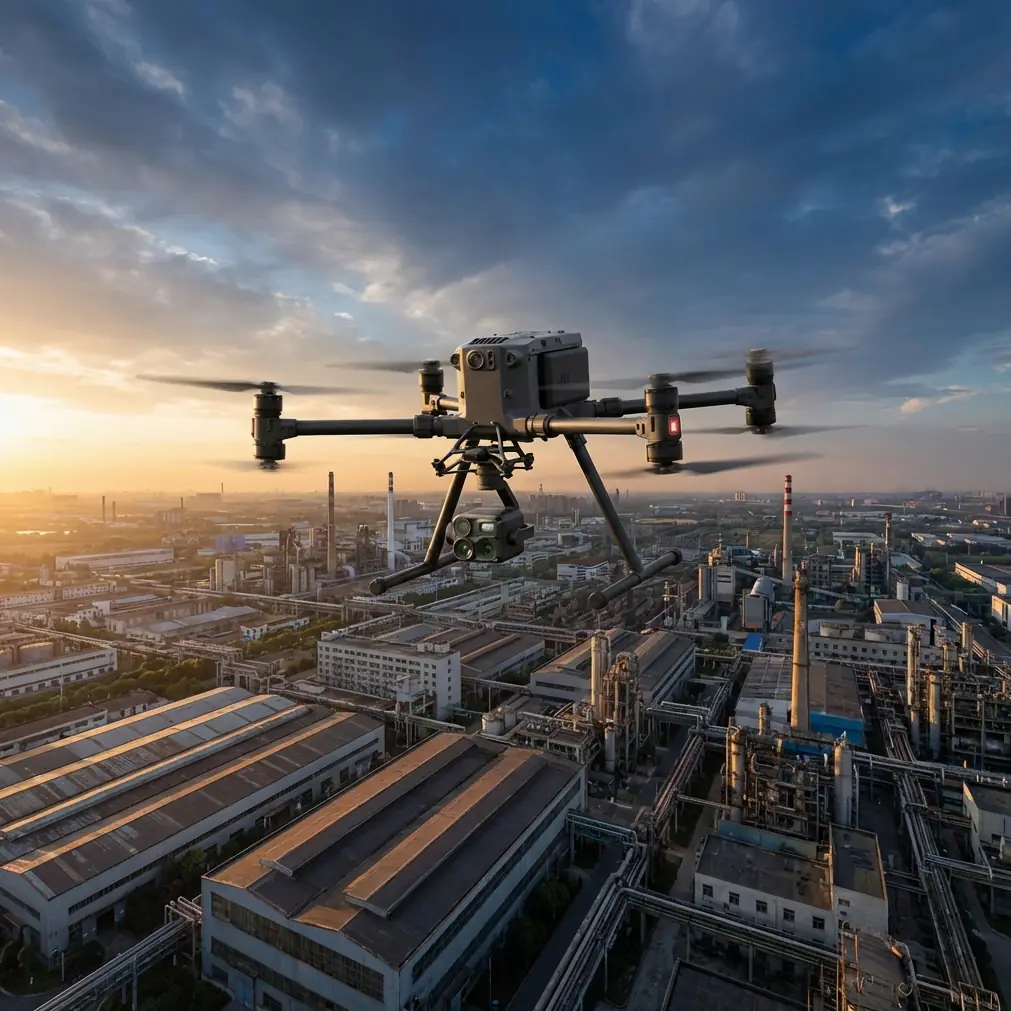
Matrice 4 in Forest Terrain: What Actually Matters When the Canopy Fights Back
META: Expert guide to using Matrice 4 for filming forests in steep, obstructed terrain, with practical insight on transmission, thermal work, mapping accuracy, battery strategy, and secure field operations.
Filming forests sounds romantic until you are in the field trying to hold a clean signal through ridgelines, maintain safe situational awareness under dense canopy, and come home with footage or survey data that is actually usable.
This is where the Matrice 4 conversation gets interesting.
With no fresh product-news cycle to react to, the most valuable way to look at the Matrice 4 is not as another headline drone, but as a platform choice for a specific problem: forest operations in complex terrain. That means steep ground, broken lines of sight, moving wind layers, inconsistent light, magnetic clutter from wet rock, and the practical reality that trees make every flight harder than the spec sheet suggests.
For that mission profile, the Matrice 4 stands out because it bridges three jobs that often get split across multiple aircraft: close visual storytelling, terrain-aware inspection, and repeatable data capture for mapping or environmental documentation. A lot of competing systems can handle one or even two of those well. Fewer remain composed when the forest itself starts degrading transmission, visibility, and navigation confidence at the same time.
The real problem in forests is not camera quality
People often start with the payload. They ask about image sharpness, zoom, thermal capability, or whether the aircraft can produce polished footage for a forestry client, conservation group, or production team.
Those questions matter, but they are not the first filter.
In forest terrain, the first filter is whether the aircraft can keep the mission stable when the landscape is actively interfering with it. Trees absorb and block signal. Valleys create awkward geometry between the pilot and aircraft. A beautiful overlook becomes a hostile RF environment the moment the drone drops behind a stand of conifers. Light changes by the second. The safe route in is not always the safe route out.
That is why the Matrice 4’s O3 transmission matters operationally. In open terrain, transmission specs can feel abstract. In forests, they become mission-defining. A stronger, more resilient link gives the pilot more room to work around trunks, contour lines, and partial obstructions before the aircraft starts forcing conservative decisions. You are not just buying range. You are buying link stability in imperfect conditions, which is a different thing entirely.
Compared with lighter prosumer platforms that can look impressive on paper, the Matrice 4 is better suited to this kind of obstructed environment because the airframe and mission architecture are built around professional continuity rather than casual capture. In practical terms, that means fewer moments where the pilot has to choose between getting the shot and preserving a comfortable margin of control.
Forest filming is usually a visibility problem disguised as a creative brief
A client may ask for cinematic fly-throughs above pines at sunrise. Another may want habitat documentation, wildfire-prevention records, or a progress archive for a restoration project. On paper, those are different assignments. In the field, they converge into the same operational challenge: you need to see what the environment is hiding.
That is where thermal signature work becomes more than a checkbox feature.
In forest terrain, thermal imaging can help separate subject from background when visible-spectrum imagery flattens the scene. Early morning moisture, shadow-heavy ravines, and mixed vegetation often make standard imaging less decisive than expected. Thermal data gives crews another layer of environmental awareness, particularly when tracing heat-producing equipment, identifying people in low-contrast settings, or spotting anomalies in terrain that otherwise looks uniform from the air.
The significance is not simply that thermal exists. It is that thermal changes how you plan your passes. Instead of flying visually “blind” into sections of woodland that conceal movement and structure, you can build a more informed route around heat cues and environmental patterns. In forest filming, that means less guesswork and more deliberate camera movement. In forestry operations, it means better detection and safer decision-making.
Competitor platforms with thermal options may deliver useful results, but the Matrice 4 earns its place by making thermal part of a broader mission stack instead of an isolated specialty. That matters when a single sortie has to produce both compelling visuals and actionable observations.
Why photogrammetry in a forest is tricky, and why the Matrice 4 still makes sense
Forests are notoriously unfriendly to clean photogrammetric results. Dense canopy limits ground visibility. Elevation changes distort assumptions about overlap if the mission is planned too simply. Uniform treetop texture can reduce tie-point quality. And if your end goal involves terrain understanding, you quickly discover that tree cover and topographic complexity are not generous collaborators.
Yet this is exactly why the Matrice 4 deserves attention from crews working in woodland environments.
A capable platform for photogrammetry does not just need a suitable camera. It needs mission repeatability, stable flight behavior, dependable transmission, and efficient turnaround between flights. That last point is often underestimated. Forest jobs usually involve repositioning launch sites, changing altitude profiles, and reacting to weather windows that close fast. Hot-swap batteries are a serious operational advantage here, not a convenience feature. The ability to keep the aircraft moving with minimal downtime can be the difference between completing a full grid over a hillside and losing the afternoon to battery cycling and setup friction.
Hot-swap batteries matter even more in mountain forest work because transit time to launch positions is often long and physically demanding. If your team has hiked to a saddle or logging access point, every unnecessary pause becomes expensive in daylight and fatigue. A platform that lets you maintain tempo without powering the whole operation down gives you more chances to finish the mission while conditions are still usable.
To improve mapping reliability in these environments, GCP workflows remain relevant. Ground control points help anchor outputs when canopy, slope, and limited visual ground access reduce confidence in purely aerial alignment. The Matrice 4 becomes more valuable when it is treated as part of a disciplined survey method rather than a magic box. Used that way, it supports repeatable documentation of forest edges, roads, erosion zones, landslide scars, cut blocks, and post-disturbance recovery areas.
Steep terrain changes your battery strategy before takeoff
Forest crews who work in rugged country learn quickly that battery management starts with topography, not percentages.
Climbing out of a valley, fighting variable wind at a ridgeline, and holding position for a second pass over a narrow corridor all create energy demands that basic flight-time marketing does not capture. The Matrice 4’s professional battery ecosystem is one of its practical strengths because it supports mission planning built around reserve discipline rather than optimistic flying.
This is another area where it compares favorably against smaller competitors. Many compact drones are excellent when the route is simple and recovery options are plentiful. In layered forest terrain, the safety case is different. You need to think about diversion routes, alternate landing spots, emergency climb performance, and how battery state interacts with terrain separation on the return leg.
Hot-swap capability sharpens that workflow. You can break a complex assignment into shorter, more conservative segments without losing operational momentum. For forest filming, that means you are more likely to stop and reset before risk compounds. For inspection or environmental work, it means cleaner mission discipline and less temptation to stretch a flight because restarting feels inefficient.
Security is not a side issue when forest data is sensitive
Not every forest mission is just about pretty footage. Some involve protected habitats, utility corridors, critical infrastructure, private estates, or government-managed land. In those cases, data handling is part of flight planning.
AES-256 matters because secure transmission and data protection are not merely enterprise talking points. They affect whether sensitive imagery can be collected, shared, and archived with confidence. If a crew is documenting firebreaks near critical assets, surveying a restricted conservation zone, or capturing imagery around strategic transport corridors, security moves from procurement language into operational requirement.
This is another reason the Matrice 4 fits professional fieldwork better than many consumer-adjacent alternatives. In lower-stakes projects, a lighter system may be enough. In controlled or sensitive environments, the platform’s security posture starts to justify itself quickly.
BVLOS discussions always get louder in forests, but the terrain sets the rules
People often raise BVLOS the moment forest operations are mentioned, and for understandable reasons. Large woodland areas can make visual line-of-sight inefficient, especially when the actual area of interest lies beyond a ridge or behind tree cover.
But forests are one of the clearest reminders that BVLOS is not simply a checkbox ambition. It is a concept bounded by regulation, site risk, aircraft capability, crew procedures, and the stubborn fact that terrain can break assumptions fast.
The Matrice 4 is well positioned for operations that need strong command-and-control integrity and disciplined mission planning, which is why it enters BVLOS conversations more naturally than hobby-grade aircraft. The O3 transmission system supports that confidence by improving the reliability of the link in environments where visual positioning and route awareness degrade quickly. That said, forest operators should treat BVLOS as a framework requiring authorization, mitigations, and proven procedures, not a shortcut around good airmanship.
In practice, the Matrice 4 is most impressive when it supports near-BVLOS complexity even inside legal visual operations. You can exploit better link quality, stronger situational awareness, and professional mission planning without pretending that regulation or terrain have stopped mattering.
Why the Matrice 4 often beats competitors in this exact use case
There are drones that are easier to throw in a backpack. There are drones with strong imaging for straightforward landscape work. There are specialty systems that do one thing very well.
The Matrice 4 excels in forests because it is unusually balanced.
It combines professional transmission, secure data handling, thermal relevance, mapping utility, and a battery workflow that respects the reality of long field days. That balance is what competitors often miss. One platform may be easier to deploy quickly but struggle with complex mission continuity. Another may offer a strong sensor story but feel less cohesive when the assignment shifts from filming to inspection to repeat mapping. In woodland terrain, those transitions happen constantly.
If your day starts with cinematic footage above a canopy opening, shifts into thermal scanning of a shaded drainage, and ends with a photogrammetry pass over a road cut or disturbed slope, the Matrice 4 makes more sense than a platform designed around a narrower idea of “aerial content.”
That is the difference between a drone that performs well in a demo and one that keeps solving problems at hour six.
A practical field workflow for forest crews
For crews using the Matrice 4 in forest terrain, the smartest approach is to divide each mission into layers.
Start with terrain logic. Identify ridgelines, potential signal shadows, emergency landing options, and likely wind transitions. Then build your capture logic around that map, not the other way around. If thermal is part of the task, plan the timing for when thermal contrast is most useful, rather than treating it as an add-on. If photogrammetry is required, think hard about overlap, elevation variation, and where GCP placement can realistically improve the output.
Most importantly, keep the operation modular. Forest work punishes overconfidence. Use the platform’s hot-swap battery workflow to preserve conservative sortie lengths. Use O3 transmission to maintain cleaner control margins, not to push deeper into bad geometry just because the link still exists. Use AES-256 and secure handling procedures when the mission involves sensitive locations or protected data.
That is the mindset that unlocks the Matrice 4’s value. Not bigger claims. Better discipline.
If your team is trying to match the aircraft setup to your terrain, permits, and sensor priorities, it often helps to talk through the mission profile directly before committing to a field workflow that is harder to undo later.
The bottom line for forest professionals
The Matrice 4 is not interesting because it checks fashionable boxes. It is interesting because forests expose weakness quickly, and this platform addresses several of those weaknesses at once.
O3 transmission improves link resilience where trees and terrain complicate control. Thermal signature capability adds a layer of awareness that visible imaging alone cannot always provide in shadowed or cluttered woodland. GCP-supported photogrammetry workflows remain viable for demanding documentation tasks, especially when repeatability matters. Hot-swap batteries help crews maintain tempo in difficult access conditions. AES-256 supports operations where imagery sensitivity cannot be treated casually.
Those are not abstract features. In forests, they directly influence whether you fly confidently, capture usable results, and finish the day without forcing the mission.
That is why the Matrice 4 deserves serious attention from operators filming or documenting complex terrain. It is not just capable. It is composed in the places where many drones become compromised.
Ready for your own Matrice 4? Contact our team for expert consultation.