
Matrice 4 in Mountain Forests: A Technical Review
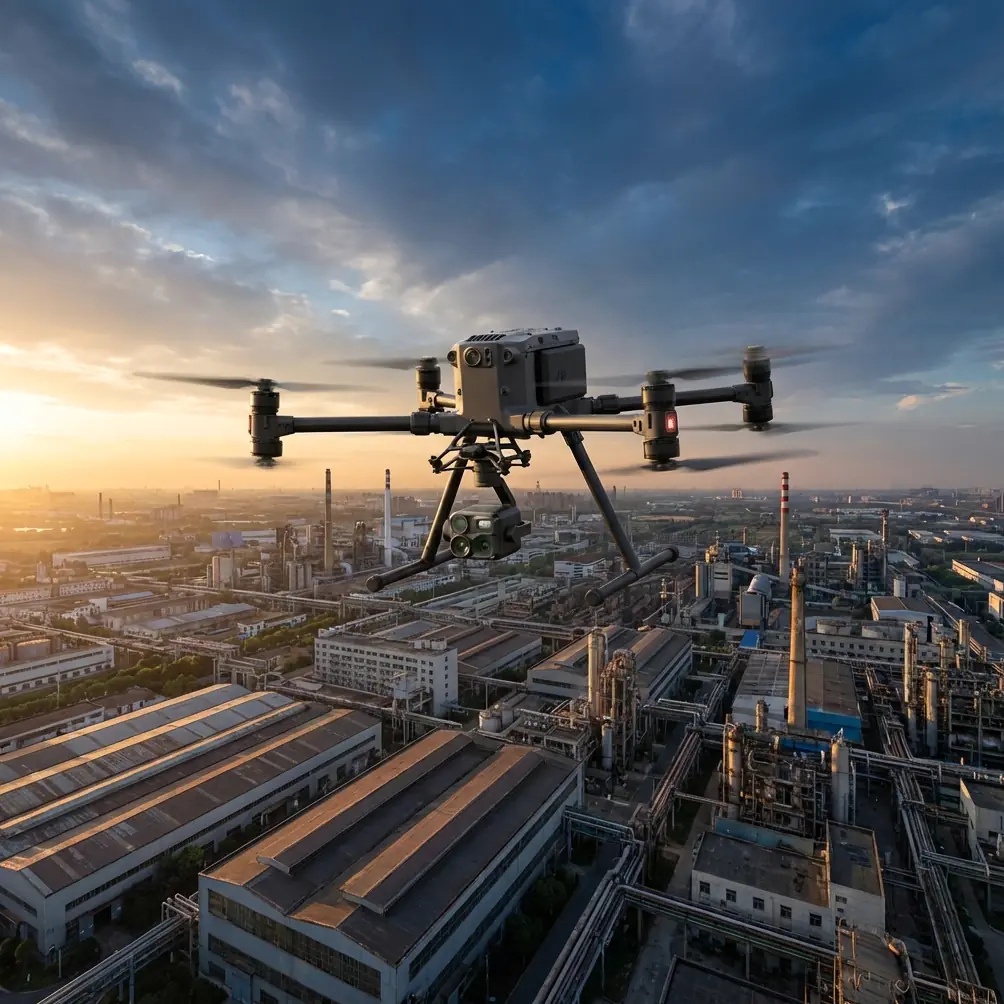
Matrice 4 in Mountain Forests: A Technical Review for Reliable Filming and Survey Work
META: Expert review of Matrice 4 best practices for filming forests in mountain terrain, with antenna positioning, transmission, thermal workflow, photogrammetry, GCP strategy, and battery planning.
Mountain forests expose every weakness in a drone workflow. Dense canopy blocks sight lines. Ridge lines interrupt signal paths. Wind shifts quickly as terrain funnels air through saddles and valleys. Light changes minute by minute, especially when you are trying to capture both the forest floor and the upper canopy in a single mission window.
That is exactly where the Matrice 4 class of aircraft becomes interesting.
If your goal is filming forests in mountain environments, the Matrice 4 is not just about image quality. The real story is system reliability: stable transmission when terrain works against you, disciplined battery operations when hiking between launch points, and payload flexibility when one mission needs both visual documentation and thermal interpretation. For crews balancing cinematic capture, inspection-style observation, and mapping-grade data collection, those details decide whether a sortie is useful or wasted.
This review is built around that reality.
Why mountain forests are hard on any drone platform
Open farmland is forgiving. Mountain timber is not.
In a forested slope environment, signal quality can degrade even when the aircraft is not especially far away. Range numbers on spec sheets matter less than geometry. A drone tucked behind a ridge shoulder may be only a short horizontal distance from the pilot, yet the radio path is effectively broken by terrain and vegetation. Add moisture in the canopy, shifting launch elevation, and cold batteries at altitude, and the mission gets complicated fast.
That is why O3 transmission is one of the most meaningful details to consider in this category. For mountain work, the significance is not merely “long range.” It is the ability to maintain a more resilient live feed and command link across uneven topography, provided the pilot does the physical setup correctly. Transmission technology helps, but mountain success still begins with antenna discipline.
Antenna positioning advice for maximum range
Most signal problems in forested mountain operations are caused by poor launch geometry rather than a weak aircraft.
The first rule: do not point the tips of the controller antennas at the aircraft. Radio energy is generally strongest off the sides of the antenna faces, not straight out of the ends. In practical terms, you want the broadside of the antennas oriented toward the drone’s expected operating area.
The second rule is even more important in the mountains: launch from a point with a clean horizon toward your working sector. A few extra minutes spent walking to a ridge edge or clearing can be worth far more than any theoretical range advantage. If you launch low in a bowl, surrounded by trunks and rising terrain, the aircraft may lose link quality as soon as it drops behind the nearest contour.
A simple field method works well:
- Stand where you can visually “see” the valley or slope face you plan to film.
- Keep the controller chest-high, not low by your waist.
- Angle the antennas so their flat faces are aligned with the aircraft’s route.
- Rotate your body as the aircraft moves rather than leaving the controller fixed in one direction.
- If the mission traverses along a ridge, choose a launch point that minimizes side-hill masking.
This matters operationally because O3 transmission can only perform well if you preserve line-of-sight as much as the terrain allows. In mountain forests, your body position and launch point selection often matter more than the drone’s published transmission capability.
Forest filming is really two missions, not one
People often say they are “filming the forest,” but that phrase hides two different jobs.
One job is cinematic or documentary capture: revealing scale, showing how a ridge line carries tree cover, following drainage corridors, and capturing the relationship between canopy, cliffs, and access roads.
The other job is spatial documentation: identifying storm damage, tracking stand boundaries, observing thermal anomalies in the early morning, or creating terrain-aware models through photogrammetry.
The Matrice 4 platform is compelling because it can sit between these use cases. That flexibility matters in mountain operations where access is expensive and weather windows are short. If the crew is already hiking to a remote launch site, it makes sense to gather more than one kind of dataset.
This is where thermal signature work becomes especially useful.
Thermal signature in forests: useful, but only if you respect timing
Thermal is often misunderstood in heavily wooded terrain. It does not magically “see through” the canopy. What it does offer is pattern recognition where visual contrast fails.
For mountain forestry and environmental documentation, a thermal payload can help identify drainage saturation, disturbed ground, lingering heat differences in exposed rock faces, stressed sections near roads or utility corridors, and temperature separation between shaded and sun-struck terrain. Early morning and late evening usually produce clearer thermal contrast than midday, when solar loading can flatten the image and create misleading hotspots on exposed surfaces.
Operationally, this matters because thermal signature data can influence your visual filming plan. If a section of slope shows unusual heat retention or moisture-related temperature variation, you may choose to re-fly that zone with the visual payload for closer documentation. The drone becomes more than a camera platform; it becomes a decision tool.
For forestry consultants, ecological survey teams, and mountain infrastructure crews working near tree cover, that combination is efficient. One aircraft, one climb to the launch point, several layers of insight.
Photogrammetry in mountain forests: where expectations need adjustment
Photogrammetry in forest terrain is powerful, but it has limits. Dense canopy will always reduce your ability to model the true ground surface from standard optical imagery. If your objective is a clean canopy model, stockpile survey, corridor mapping along forest roads, or documenting landslip-prone edges, the Matrice 4 workflow can be very effective. If your objective is precise bare-earth modeling under thick tree cover, expectations need to be managed.
That said, a disciplined mission still produces valuable outputs.
The key is overlap consistency and ground control discipline. GCP placement in mountain forests is harder than on open sites because tree cover limits visibility from above. Targets need to be placed in clearings, road bends, ridge breaks, or exposed surfaces where they are unmistakable in the imagery. A few well-positioned GCPs are usually more valuable than many poorly visible ones hidden beneath branch overhang.
Why does that matter? Because terrain exaggerates alignment errors. In a flat landscape, a weak control setup may go unnoticed until later analysis. In mountains, the same weakness can distort slope representation, throw off volumetric interpretation, or create mismatches at ridge transitions. Good GCP strategy is not paperwork. It is what keeps your model credible.
For teams capturing forest roads, erosion channels, logging access, or habitat edge conditions, this is where the Matrice 4 becomes practical rather than merely capable.
AES-256 matters more than people think
Most pilots focus on cameras and flight time first. Reasonable. But AES-256 deserves attention in commercial mountain operations, especially when the mission involves sensitive land-management data, ecological surveys, privately owned forest parcels, or pre-construction documentation.
The significance is simple: your transmission and data handling posture should match the professional value of the work. When crews are documenting infrastructure routes, conservation zones, or commercial woodland assets, the drone is generating information that clients may not want casually exposed. AES-256 is not a glamorous feature, but it is a strong indicator that the platform is built with enterprise-grade data protection in mind.
For operations managers, that reduces friction when integrating drone outputs into a formal reporting environment.
Hot-swap batteries change the pace of mountain fieldwork
In mountain forests, battery swaps are not just a convenience issue. They affect safety margins, productivity, and whether a team can complete a mission before weather closes in.
Hot-swap batteries are one of the most practical enterprise features for this kind of work. If the aircraft supports true rapid battery replacement without a full reboot cycle, turnaround between sorties becomes much tighter. That is significant when your launch point is a cramped rocky shelf, a narrow trail opening, or a roadside pullout where conditions change quickly.
A hot-swap workflow also helps with sequence discipline. You can land, replace packs, review the previous leg, and get back into the air with less disruption to mission continuity. For long ridge traverses or repeated passes over a forest corridor, that continuity reduces the chance of gaps in your visual set or mapping block.
Cold mountain mornings make battery management even more important. Keep packs insulated before use, verify cell balance, and avoid launching on batteries that have cooled excessively while sitting exposed to wind. The aircraft may be advanced, but electrochemistry still sets the rules.
BVLOS talk should stay grounded in actual operations
BVLOS is one of the most searched terms in enterprise drone circles, but for mountain forest filming it is often discussed too loosely.
The useful way to think about BVLOS here is not as a shortcut to farther flying. It is as an operational framework that may become relevant for large-area forestry, long linear corridor work, or remote environmental monitoring where authorized procedures, trained crews, and local regulations allow it. In practical mountain filming, terrain masking can defeat the spirit of visual awareness long before the aircraft is geographically distant.
So even if a platform is technically suited to advanced operations, the smart approach is conservative route planning. Use terrain-aware launch points. Segment long missions into manageable blocks. Maintain clear decision points for return, reposition, or abort. In other words, do not let a powerful aircraft tempt you into lazy geometry.
How I would configure a Matrice 4 day in mountain woodland
If I were planning a full mountain forest mission around this platform, I would break the day into three windows.
First light to early morning:
Thermal passes over target slopes, access roads, drainage lines, or areas of known stress. Thermal contrast is often strongest here, and wind is usually lighter.
Mid-morning:
Primary visual filming while the sun angle still gives shape to the terrain. This is the best window for revealing forest texture, ridge relief, and road alignments without the flatness that arrives later.
Late morning to midday:
Structured photogrammetry blocks where the objective is consistency rather than artistry. At this stage, your concern is overlap, speed, altitude discipline, and GCP visibility.
That sequencing matters because it uses the mountain’s changing conditions rather than fighting them.
One practical mistake to avoid
Do not assume the highest launch point is always the best launch point.
Pilots love elevation advantage, but the top of a ridge can expose the aircraft to harsher wind shear and leave you with fewer emergency landing options. Sometimes a slightly lower shoulder with a cleaner forward view and calmer air is the better operational choice. In forests, stable control and a clean signal path beat dramatic launch scenery every time.
Final assessment
The Matrice 4 makes the most sense in mountain forests when you treat it as a field system, not a flying camera. O3 transmission supports workable live-link performance, but only if your antenna orientation and launch geometry are sound. Thermal signature capability adds value when used at the right time of day and interpreted carefully. Photogrammetry can be highly effective for canopy, corridor, and terrain-edge documentation, especially when GCP placement is handled with real discipline. AES-256 supports professional data practices. Hot-swap batteries keep the mission moving when the environment is the real bottleneck.
That combination is what makes this platform relevant.
Not flashy relevance. Useful relevance.
If you are planning a mountain forest workflow and need help matching flight plans, payload choices, or controller setup to the terrain, you can message an experienced team here and compare notes before you head uphill.
Ready for your own Matrice 4? Contact our team for expert consultation.