
Matrice 4 in Mountain Forest Filming: A Technical Review
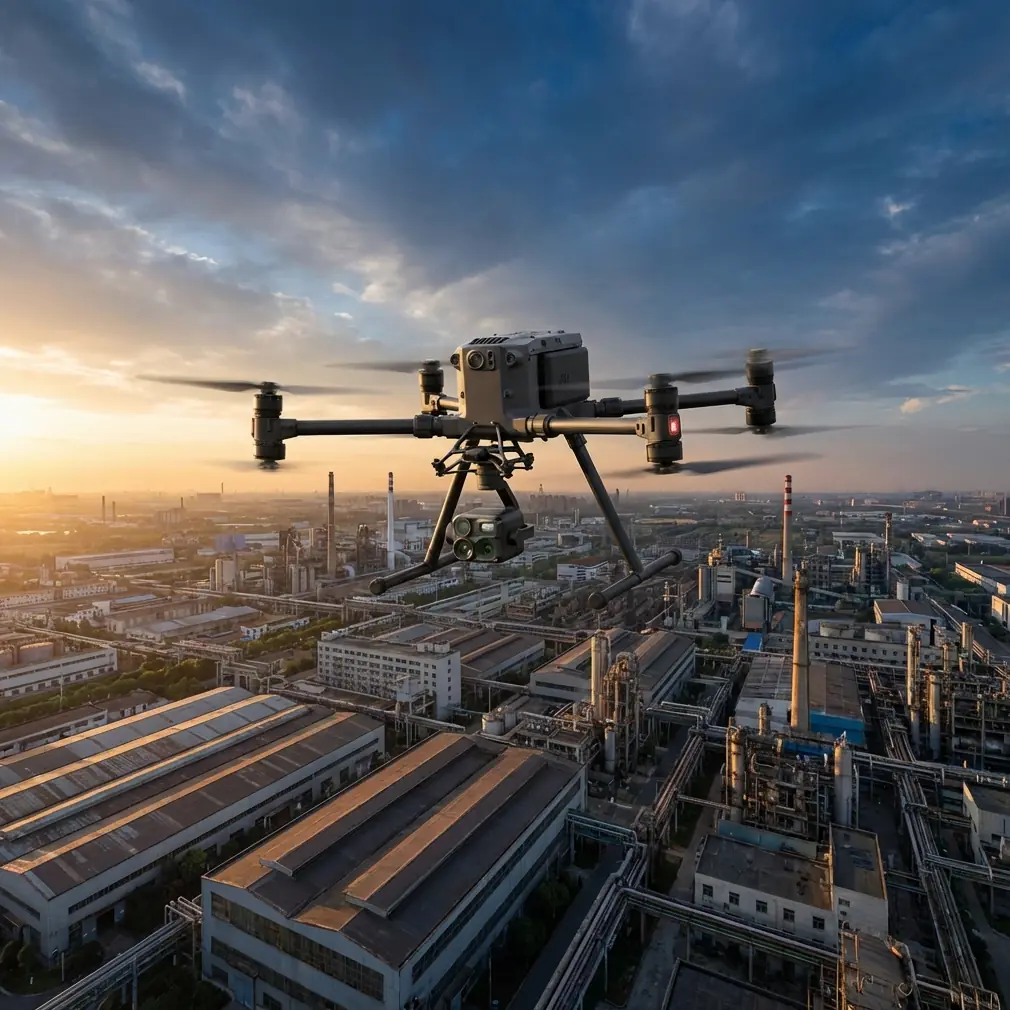
Matrice 4 in Mountain Forest Filming: A Technical Review from the Field
META: Expert review of the Matrice 4 for filming forests in mountain terrain, with practical guidance on transmission stability, thermal workflows, battery strategy, photogrammetry, GCP use, and secure operations.
I’ve spent enough mornings on mountain ridgelines to know that forest filming is rarely defeated by image quality alone. The real problems show up earlier: broken sightlines, swirling wind that changes by the minute, dark conifer canopy that swallows contrast, and battery decisions that feel simple on paper but become critical when the nearest flat landing spot is half a slope away.
That is the lens through which I look at the Matrice 4.
Not as a brochure aircraft. As a tool for a very specific job: filming forests in mountain terrain, where a platform has to do more than hover and capture a nice wide shot. It needs to remain linked when the terrain interferes. It needs to support repeatable data capture when a cinematic mission turns into a mapping requirement. It needs to let a crew work quickly when weather windows are short. And if you are documenting ecology, infrastructure corridors, or forestry operations, thermal signature work may matter just as much as visible-light footage.
The Matrice 4 sits in that intersection of imaging, operational resilience, and workflow control. For mountain forest crews, that combination matters more than any single headline spec.
The mountain problem most drones don’t solve well
A forest in flat country is one thing. A forest on a mountain is another system entirely.
Elevation changes punish link stability. Tree density reduces safe emergency landing options. Lighting shifts fast because ridges create moving shade lines. Wind over a valley can be manageable at takeoff and ugly 150 meters higher. Add moisture, cold air, and pressure to finish before clouds close in, and suddenly “good enough” flight hardware isn’t good enough at all.
Years ago, on a survey-and-film job in mixed pine forest above a steep service road, our biggest issue wasn’t camera resolution. It was confidence in the link as the aircraft crossed behind terrain features and dense canopy. We had to fly conservatively, reposition the crew too often, and break what should have been one coherent mission into multiple short flights. The footage was usable. The day was inefficient.
That kind of job is where the Matrice 4 changes the equation.
O3 transmission is more than a convenience in mountain forest work
One of the most operationally significant details in this platform context is O3 transmission. People often treat transmission technology as a comfort feature. In mountain forestry work, it is a planning feature.
A stronger, more stable digital link affects three things immediately:
- Route confidence
- Crew positioning
- Shot continuity
When you are filming tree lines across changing elevation, minor terrain masking can disrupt weaker systems or force constant pilot relocation. A more robust transmission path means fewer interruptions as the aircraft works around ridges, clearings, and canopy edges. That doesn’t remove the need for careful line-of-sight planning or legal compliance, especially when teams are discussing long-range or BVLOS-type workflows. But it does reduce the friction that often ruins mountain missions before the camera does anything useful.
In practical terms, that means the pilot can hold focus on the actual task: maintaining safe aircraft behavior while the camera operator works the scene. In a forested mountain environment, that separation of attention is valuable. Every second the crew spends worrying about link quality is a second not spent evaluating wind, terrain, and framing.
If your work includes environmental documentation, tourism visuals, utility corridor inspection through wooded slopes, or forestry progress records, O3 is not just a spec-sheet acronym. It is part of what makes a difficult site feel manageable.
Thermal signature work changes what “filming” means
The other detail that deserves real attention here is thermal signature capability. In mountain forests, visible imagery can be beautiful and still incomplete. Dense canopy, uneven sunlight, and temperature swings hide patterns that thermal sensors can reveal quickly.
This matters in several civilian scenarios:
- locating heat anomalies in infrastructure corridors crossing forested hills
- checking for stressed vegetation patterns at dawn or dusk
- documenting post-event conditions after a small wildfire or controlled forestry operation
- identifying differences in moisture and heat retention across terrain
For a filming crew, thermal is especially useful because it changes your shooting plan. Instead of treating thermal as an add-on, you can use it to prioritize where the visible-light camera should spend time. A broad thermal pass can identify the sections of slope that deserve closer, more cinematic inspection. That is efficient, and in mountain conditions, efficiency often determines whether the mission finishes before weather shifts.
Thermal also improves repeatability. If you are returning to the same mountain forest site over several days or seasons, comparing thermal signature patterns alongside standard imagery can make your footage more meaningful. You are not just showing what the forest looks like. You are showing how it behaves.
That distinction matters for clients in forestry, environmental monitoring, and infrastructure management. Pretty footage is easy to praise. Useful footage gets used.
Why hot-swap batteries matter more in the cold and on uneven ground
Another reference point worth calling out is hot-swap batteries. On flatter, simpler sites, battery replacement is mostly a turnaround issue. In mountains, it becomes a mission-continuity issue.
If you have ever landed on a narrow patch of stable ground with a team moving around tripods, landing pads, and cases while wind curls off the slope, you already understand the value of shortening the reset cycle. A hot-swap approach helps keep the aircraft ready between flight segments without turning every battery change into a full restart of operational momentum.
That matters for three reasons:
- Weather windows are brief.
- Light consistency disappears quickly.
- Crew fatigue grows fast at elevation.
When the aircraft can be cycled efficiently, the team can hold onto the rhythm of the mission. In technical filming, rhythm matters. The more often you fully stop and rebuild the operation, the more likely you are to lose framing continuity, timing, and location awareness.
Battery strategy in mountain forest work should always be conservative. Cold air can alter performance expectations, and climbing profiles tend to consume more than crews expect if they come from flatter environments. But a platform designed around smoother battery turnover is simply better suited to the terrain.
AES-256 is not a niche feature if your forest job involves sensitive land data
Mountain filming is not always just filmmaking. Sometimes you are collecting geospatial records, condition reports, conservation evidence, or client-owned survey imagery. In that context, AES-256 has real operational significance.
Secure transmission and data handling matter when the mission includes:
- private forestry assets
- commercial land management records
- route documentation for infrastructure
- pre-construction or environmental baseline datasets
A lot of teams still talk about security as if it only concerns large enterprise programs. That is outdated. Even small mountain site projects can involve sensitive imagery, coordinates, or proprietary land-use information. If your drone is feeding data into a larger mapping or planning workflow, transmission security is not optional housekeeping. It is part of the professional standard.
For operators building trust with landowners, consultants, or industrial clients, security details like AES-256 help support a more mature operating model. It shows that the aircraft is not just capable of capturing the scene, but of fitting into controlled data environments without improvisation.
Photogrammetry in forests is harder than people expect
Here is where many mountain filming projects quietly become dual-purpose missions. A client asks for cinematic footage, then realizes they also need terrain context, stockpile estimates, road condition mapping, or a repeatable orthomosaic of a disturbed area. That is where photogrammetry enters the picture.
Forests are difficult photogrammetry environments. Canopy texture can be repetitive. Shadows are severe. Slopes distort perception. Breaks in vegetation reveal uneven ground that may be hard to model cleanly without disciplined capture settings.
The Matrice 4 becomes more useful in this context if the crew treats it as both a camera platform and a geospatial instrument.
A few field-tested principles matter here:
1. Separate cinematic flights from mapping flights
Trying to get hero shots and survey-grade overlap on the same mission usually leads to compromise. Build one flight for visuals and another for capture discipline.
2. Use GCP where accuracy matters
GCP, or ground control points, become especially valuable on mountain sites where elevation changes and canopy interruptions complicate model alignment. Even a strong aerial dataset benefits from accurate terrestrial references when you need dependable outputs.
3. Watch sun angle more than usual
Mountain shadows can ruin consistency between passes. If the photogrammetry deliverable matters, capture when the scene is stable enough to reduce harsh contrast shifts.
4. Be realistic about canopy penetration
Photogrammetry models what it sees. In dense forest, that often means the top of the canopy, not the true ground beneath it. Plan the deliverable around that reality.
This is one reason I like the Matrice 4 conceptually for mountain forest work. It supports a more complete mission mindset. The same platform can contribute to storytelling, inspection, and mapping without forcing the operator into a one-purpose workflow.
BVLOS conversations should start with procedure, not distance
The reference context also points toward BVLOS. For mountain forest readers, this topic needs a sober frame.
In practical field operations, people often mention BVLOS because ridges, trees, and long corridor routes create pressure to extend mission reach. That is understandable. But the real value of a BVLOS-ready mindset is not simply flying farther. It is building procedures that remain reliable when terrain complicates direct observation.
That means:
- disciplined route planning
- communication protocols
- controlled emergency actions
- defined weather limits
- strong link awareness
- battery margins that account for terrain and climb
Whether a particular operation is legally authorized for BVLOS is jurisdiction-specific and non-negotiable. But even for standard operations, thinking in that structured way improves safety and efficiency. And in mountain forests, structured operations are the difference between a professional mission and an optimistic one.
How I would configure a Matrice 4 day in the mountains
If I were sending a crew to film forest terrain with the Matrice 4, I would organize the day into four mission layers.
First pass: terrain read
Start with a short visual reconnaissance flight. Confirm wind behavior across slope faces, identify likely turbulence zones, and mark reliable landing areas.
Second pass: thermal scan if relevant
Use thermal signature review early, while temperature contrast can still highlight meaningful variations. This can reveal where follow-up visual footage should concentrate.
Third pass: hero imagery
Now capture your cinematic material. By this stage, the team already understands the terrain, the link behavior, and the sections of forest with the strongest visual or operational interest.
Fourth pass: photogrammetry set
If the client needs a model or map, switch mental gears completely. Fly for overlap and consistency. If there are GCP on site, verify them before launch rather than assuming they are visible and usable from the air.
That sequence saves time. It also produces more coherent output. The Matrice 4 makes sense when it is used as a multi-role system rather than a single-camera aircraft.
Where this platform genuinely reduces friction
The easiest way to overstate a drone is to say it does everything better. That is rarely true. The better question is simpler: where does it reduce friction for the mission?
For mountain forest filming, the Matrice 4 reduces friction in a few clear ways:
- transmission reliability supports work across difficult terrain
- thermal capability expands what the crew can detect, not just what it can see
- hot-swap battery workflow helps protect short weather windows
- AES-256 supports professional data handling
- photogrammetry-friendly operations make dual-purpose missions realistic
Those are not abstract advantages. They influence route design, staffing, capture sequence, and client deliverables. That is why this aircraft matters in the field.
The real test: does it make hard days easier?
That is my standard for any professional drone. Not whether it sounds impressive in a product brief, but whether it makes a hard day easier.
On mountain forest jobs, “easier” means fewer unnecessary landings, better situational awareness, more useful imagery, and less compromise when the mission expands from filming into inspection or mapping. The Matrice 4 is well suited to that kind of work because it addresses the operational bottlenecks that crews actually face.
If you are planning a forest production, a terrain survey, or a mixed imaging mission in complex mountain topography, the best starting point is not the camera menu. It is the workflow. Build the mission around transmission stability, thermal timing, battery turnover, and geospatial discipline. Then let the aircraft do what it was built to do.
If you want to compare mission setups for your terrain and payload goals, you can message our flight team directly on WhatsApp.
Ready for your own Matrice 4? Contact our team for expert consultation.