
Filming Forests in Wind with Matrice 4: A Field Case Study
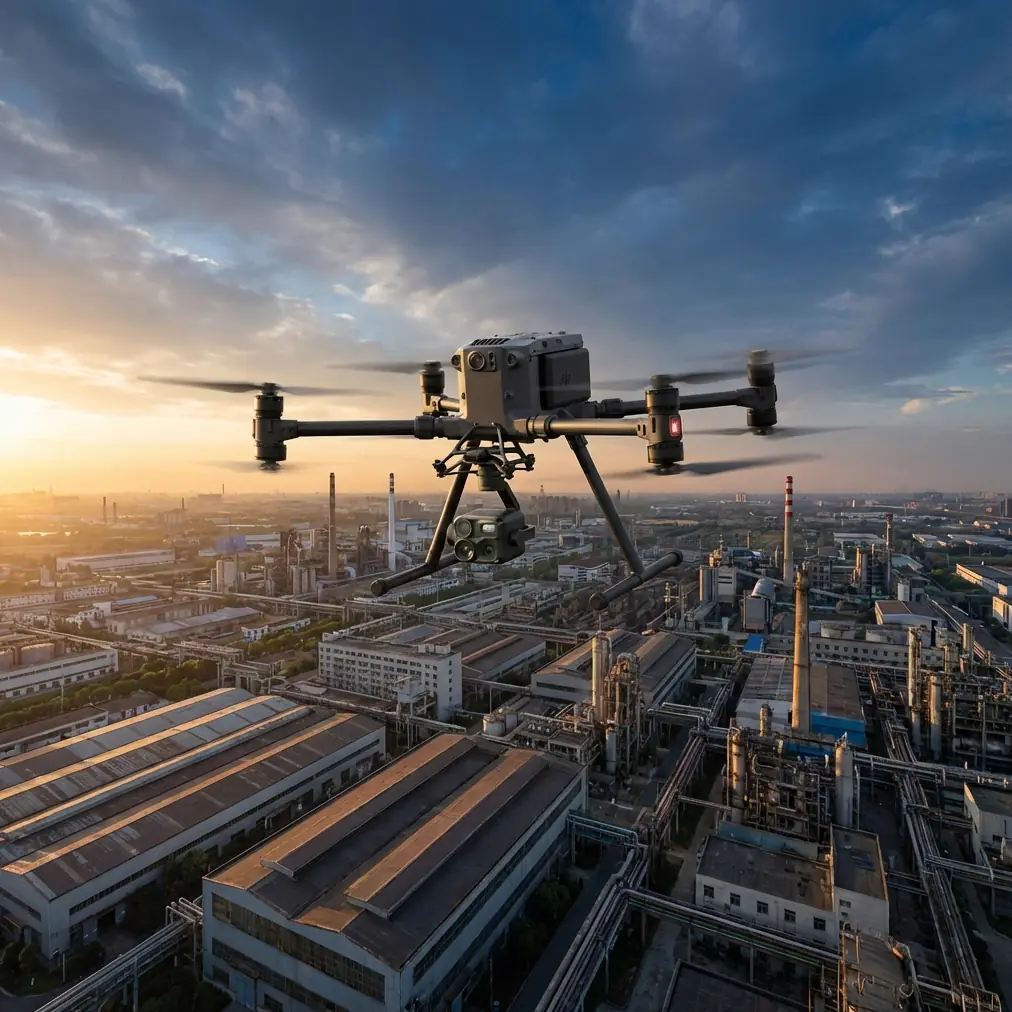
Filming Forests in Wind with Matrice 4: A Field Case Study on Reliability, Materials, and Battery Discipline
META: A field-based Matrice 4 case study for windy forest operations, covering battery management, transmission reliability, thermal workflow, photogrammetry discipline, and why aircraft material science still matters in real missions.
Wind changes everything in forest work.
Not because the drone suddenly becomes incapable, but because every weakness in planning gets exposed at once. Tree canopies shear airflow into layers. Clearings look safe from the ground and turn turbulent at 40 meters. Light shifts fast. Signal paths open and close as trunks, ridgelines, and moisture-heavy foliage interfere with the link. On a Matrice 4 job, that means the difference between bringing home stable footage and usable map data, or wasting a weather window.
I’ve seen this most clearly on mixed missions where the aircraft is expected to do more than one thing in one sortie: capture cinematic passes along a forest edge, inspect storm damage, collect thermal signature data at first light, and still return enough overlap for later photogrammetry. In that environment, the usual generic advice about “fly safely” is not useful. What matters is how the aircraft behaves under stress, how the crew manages power, and how small engineering details affect reliability when wind and temperature are working against you.
This is where a surprisingly old reference becomes relevant to a very current platform.
Why an aircraft materials handbook still matters to a Matrice 4 operator
One of the source references is not about drones at all. It is an aircraft design handbook entry on fluororubber used in aviation sealing products. On paper, that seems far removed from a forest filming mission. In practice, it isn’t.
The handbook notes that vulcanized fluororubber offers strong resistance to heat, ozone, and multiple aviation oils. It is used for seals, rubber sheets, and hoses operating in air, fuel, petroleum-based lubricants, and hydraulic media. It also gives a working temperature range of about -40 to 250°C in air, and -40 to 180°C in aviation oils. Another detail stands out: low-temperature performance is relatively weak, with brittleness values in some grades around -25 to -33°C, depending on formulation. Hardness ranges listed in the extract sit roughly between 68 and 92 Shore A, while certain elongation values reach 180%.
For a Matrice 4 crew filming forests in wind, the operational significance is simple. Aircraft reliability does not begin at the camera or even the motors. It begins at the interfaces: seals, cable protections, hose-like flexible components, and the material choices around parts exposed to heat, pressure change, ozone, and chemical contact. Forest work tends to stress those interfaces more than operators realize. You launch from dusty tracks, damp clearings, cold dawns, hot midday sun, and vehicles full of lubricants and cleaning agents. The drone is not an abstract flying sensor. It is a machine with real material limits.
That matters most when people assume weather tolerance is a binary question. It is not. A platform may fly well in wind while still experiencing accelerated wear if storage, maintenance, or field handling are sloppy. Material science is why veteran crews care about how batteries are warmed, how aircraft are stored after mist exposure, and whether protective parts remain compliant rather than stiffening with age.
The mission: wind over a forest ridge
On a recent style of mission that fits the Matrice 4 well, the brief was split three ways.
First, collect smooth visual footage of a conifer ridge line for a land management client. Second, identify cold and warm anomalies before sunrise in a section of damaged trees where water stress and root exposure were suspected. Third, capture enough structured imagery to support a photogrammetry model tied to GCPs placed along the access road and two open breaks in the canopy.
That sounds manageable until the wind starts stacking.
At ground level it was tolerable. At canopy height it was unstable. Above the ridge, gusts became directional and inconsistent. The problem was not maximum speed alone; it was the rhythm of the air. The Matrice 4 had to transition through layers of moving air while maintaining shot stability, link confidence, and predictable battery burn.
This is where pilots who only look at headline specs get caught out. Windy forest operations are not won by brute force. They are won by energy management.
My battery rule for Matrice 4 in forests: land earlier than you think you need to
The most useful field tip I can offer is not glamorous: split your batteries by mission intent before takeoff, not after you feel the wind.
I keep three mental categories.
One set is for precision passes and mapping. One set is for thermal work in cooler conditions. One set is reserve-only for aborted approaches, repeated climbs, or repositioning when the canopy turbulence is worse than expected. If a battery starts as a mapping pack, I do not casually turn it into a cinematic ridge-chase pack just because there is time left on the percentage display.
Why? Because windy forest flying burns power unevenly. Hover checks near a launch point tell you almost nothing about what happens once the aircraft begins repeated corrections over the trees. A pack that looks healthy can degrade from “comfortable” to “return now” very quickly after a few gusty climbs and stop-start lateral moves.
My working habit is to come home with more margin than the screen seems to require. Not because the Matrice 4 is fragile, but because wind through canopy layers punishes optimism. If your route includes a climb over a stand of trees and a headwind return, the usable battery is smaller than the percentage suggests.
When crews ask for a practical threshold, I tell them to create an internal return discipline based on the hardest segment of the route, not the easiest one. If the outbound leg is sheltered and the inbound leg faces the ridge wind, then the aircraft’s true battery story begins on the way home.
Hot-swap battery workflows help a lot here, especially when you are cycling between thermal and visual tasks during a narrow weather window. The gain is not just speed on the ground. It is cognitive clarity. Faster turnarounds let you preserve mission structure rather than stretching one pack across too many objectives. That reduces rushed decisions, and rushed decisions are where windy forest flights go wrong.
Transmission in tree country: O3 is only part of the answer
Forests are where people finally learn that transmission quality is never just a marketing line.
O3 transmission is valuable in this environment because it helps maintain a resilient link as the aircraft moves around partial obstructions, moisture-rich foliage, and uneven terrain. But a strong system does not replace flight path discipline. If you tuck the aircraft behind a dense stand, descend into a fold in the terrain, and ask for a clean live view while branches and trunks are stacking in the Fresnel zone, you are asking too much of any link.
The better approach is to design the route around transmission geometry. In practical terms, that means climbing before crossing the thickest vegetation barrier, keeping the controller position clear of vehicle roofs and embankments, and avoiding unnecessary side-hill placements that force the signal through trunks rather than over them.
For clients handling sensitive environmental data, link security also matters. AES-256 support is not a flashy field talking point, but it matters when the mission includes proprietary land-use planning, utility corridor analysis, or pre-development surveys. In forestry and infrastructure-adjacent operations, the data itself often has more value than the flight footage. Secure transmission architecture becomes part of operational professionalism, not an IT afterthought.
Thermal signature in wind: what changes and what does not
Thermal work over forests is often misunderstood because operators expect tidy heat patterns from a very untidy biological environment.
Wind does two things at once. It can help reveal anomalies by increasing contrast in some exposed areas, and it can also flatten or blur useful differences by moving air across surfaces unevenly. A thermal signature seen along a damaged edge may be real, but if you do not account for recent sun exposure, airflow, and moisture, you may misread what the sensor is telling you.
With the Matrice 4, the right move is usually to run thermal early, before the visual mission expands and before heating becomes more complex. This is another reason to preserve battery segregation. Thermal sorties often work best when the aircraft is launched with a fresh, intentionally reserved pack, not the leftover end of a visual flight.
In windy woodland, I also prefer shorter thermal legs with deliberate loiter points rather than one long continuous sweep. The aircraft spends less time fighting drift while you evaluate whether an anomaly persists across angles and distances. It is slower on paper, faster in truth.
Photogrammetry under canopy margins: overlap is easy, usable overlap is harder
Photogrammetry in forests rarely fails because the drone did not take enough pictures. It fails because the geometry was weak.
The moment you move from open ground to canopy margins, shadows deepen, texture becomes repetitive, and the terrain under the trees starts disappearing from the model logic. That is why GCP placement matters far more than many crews admit. A few well-positioned points in open breaks, road edges, and visually distinct surfaces can save a model that would otherwise drift or warp.
The reference material also included a standards-related document on common imperial units and conversion context. The OCR is messy, but the broad significance is still useful: mixed-unit environments create avoidable mistakes. In forestry, that shows up when GCP spacing, altitude planning, line setbacks, and deliverable requirements arrive from different teams using different units. One person is talking feet, another meters. In windy conditions, where flight altitude and terrain clearance already demand precision, a unit conversion error is not a paperwork problem. It becomes a mission quality problem.
So for Matrice 4 mapping runs, I recommend writing the mission board in one unit system only and marking the conversion once, centrally, before any batteries are loaded. Simple habit. Big payoff.
What material limits teach us about field handling
Let’s go back to the fluororubber reference, because it carries a lesson modern drone crews often ignore.
The handbook highlights strong performance against heat, ozone, and fluid exposure, but it also clearly states that low-temperature behavior is not its strongest trait. That combination matters in field logistics. Components can be highly durable in one environmental dimension and less forgiving in another. Crews should stop talking about ruggedness as if it were universal.
For Matrice 4 teams working forests, that translates into a few habits:
- Do not leave aircraft and packs exposed in a vehicle where they swing between cold dawn temperatures and strong solar heating.
- Inspect flexible protective elements and seals after repeated dusty or damp deployments.
- Be conservative after contact with oils, cleaners, or improvised maintenance chemicals around the launch site.
- When temperatures drop, give the system time to stabilize before demanding aggressive climbs over turbulent canopy.
None of this is dramatic. That is the point. Reliability is usually quiet.
The real lesson from windy forest work
The Matrice 4 is at its best when the crew uses it as a system rather than a camera with propellers.
In a windy forest mission, the aircraft’s value comes from how well it connects transmission reliability, stable imaging, thermal utility, battery discipline, and survey structure into one coherent workflow. If you treat each feature separately, the day becomes reactive. If you treat them as one operating logic, the aircraft starts paying you back in cleaner data and fewer forced decisions.
That is why a materials handbook excerpt about fluororubber and a standards text about unit conversion still belong in the same conversation as O3 transmission, AES-256, thermal signature capture, BVLOS planning culture, and hot-swap batteries. One speaks to physical durability. The other speaks to procedural accuracy. Windy forest operations demand both.
If you are building a Matrice 4 workflow for this kind of terrain and want a second set of eyes on route design, payload planning, or battery rotation logic, you can message our field team here.
Ready for your own Matrice 4? Contact our team for expert consultation.