
M4 for Highway Filming in Dusty Conditions: Expert Guide
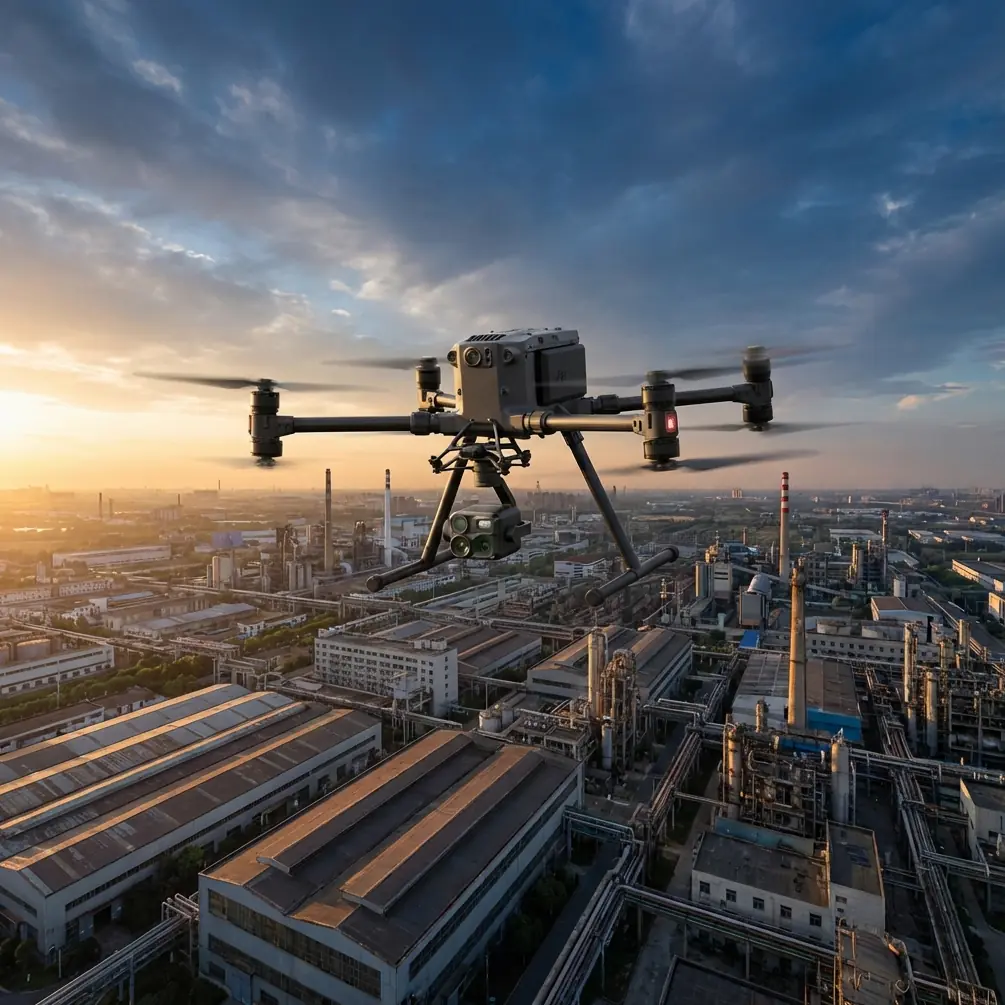
M4 for Highway Filming in Dusty Conditions: Expert Guide
META: Master highway filming in dusty environments with the Matrice 4. Learn essential pre-flight cleaning, dust protection features, and pro techniques for stunning footage.
TL;DR
- Pre-flight sensor cleaning is mandatory in dusty highway environments to prevent thermal signature interference and ensure obstacle avoidance accuracy
- The Matrice 4's IP55 rating and sealed gimbal design provide critical dust ingress protection during extended roadway operations
- O3 transmission technology maintains stable 20km video links even through particulate-heavy air corridors
- Proper GCP placement and photogrammetry workflows compensate for reduced visibility conditions common in highway filming
The Dust Problem Every Highway Filmmaker Faces
Highway filming operations generate unique challenges that ground most consumer drones within minutes. Vehicle traffic kicks up continuous particulate clouds, roadside construction creates silica-laden air, and seasonal conditions transform filming sites into visibility nightmares.
The Matrice 4 addresses these environmental hazards through engineering designed specifically for industrial applications. Understanding how to leverage these capabilities—starting with proper pre-flight preparation—separates professional results from equipment failures.
This guide covers the complete workflow for highway filming in dusty conditions, from essential cleaning protocols to advanced flight techniques that protect your investment while capturing broadcast-quality footage.
Pre-Flight Cleaning: Your First Line of Defense
Before any dusty highway operation, a systematic cleaning protocol prevents the cascade of failures that dust contamination triggers. This isn't optional maintenance—it's a safety-critical procedure.
The 5-Point Sensor Cleaning Checklist
Vision sensors require particular attention. The Matrice 4 uses multiple omnidirectional sensing arrays for obstacle detection. Even light dust films reduce their effectiveness by 15-30%, potentially causing the aircraft to misjudge distances from highway infrastructure.
Follow this sequence before every dusty environment flight:
- Forward vision sensors: Use a microfiber cloth with isopropyl alcohol, wiping in single directional strokes
- Downward positioning sensors: Check for accumulated grit that affects hover stability
- Lateral sensing arrays: Inspect for particulate buildup around sensor housings
- Gimbal camera lens: Apply lens-specific cleaning solution; never use general-purpose cleaners
- Cooling intake vents: Clear debris with compressed air at 30 PSI maximum
Expert Insight: I carry a dedicated cleaning kit in a sealed container for highway operations. Dust contamination from your cleaning materials defeats the entire purpose. Replace microfiber cloths after every three field uses—embedded particles turn them into abrasives.
Thermal Signature Considerations
The Matrice 4's thermal imaging capabilities suffer significantly from lens contamination. A dust layer as thin as 0.1mm creates false thermal signatures, rendering infrastructure inspection data unreliable.
For highway thermal surveys, clean the thermal sensor housing with dry, oil-free compressed air only. Liquid cleaners leave residues that create thermal artifacts during temperature differential measurements.
Understanding the M4's Dust Protection Systems
The Matrice 4 wasn't designed for sterile environments. Its industrial heritage shows in protection systems that exceed typical consumer drone specifications.
IP55 Rating Explained
The IP55 certification means the Matrice 4 resists:
- Limited dust ingress: Dust may enter but cannot affect operation
- Low-pressure water jets: Rain and spray from any direction
For highway filming, this rating provides confidence during operations near active traffic lanes where tire spray and kicked-up debris are constant threats.
Sealed Gimbal Architecture
The Zenmuse series gimbals compatible with the M4 feature sealed bearing assemblies and positive-pressure internal environments. During operation, slight internal overpressure prevents particulate infiltration through mechanical joints.
This design allows continuous operation in conditions that would destroy exposed gimbal mechanisms within hours.
O3 Transmission: Maintaining Links Through Particulate Air
Dust particles scatter radio frequencies, degrading control links and video transmission. The Matrice 4's O3 transmission system counters this through several mechanisms.
How O3 Handles Environmental Interference
The system operates across dual-frequency bands simultaneously, automatically routing data through whichever channel experiences less interference. In dusty conditions, this adaptive approach maintains:
- 1080p/60fps live feed at distances up to 20km in clear conditions
- Stable command links with latency under 120ms
- AES-256 encryption that remains uncompromised regardless of environmental conditions
Practical Range Expectations
During highway filming in moderate dust conditions, expect effective operational ranges of 8-12km with full HD video transmission. Heavy particulate loads reduce this to 5-8km—still exceeding most operational requirements.
Pro Tip: Position your ground station upwind from the filming location. Dust clouds drift with prevailing winds, and maintaining the cleanest possible air corridor between controller and aircraft maximizes link stability.
Technical Comparison: M4 vs. Alternative Platforms
| Feature | Matrice 4 | Enterprise Competitor A | Consumer Platform B |
|---|---|---|---|
| Dust Protection | IP55 | IP43 | None rated |
| Transmission Range | 20km (O3) | 15km | 8km |
| Hot-swap Batteries | Yes | Yes | No |
| Thermal Integration | Native | Adapter required | Not supported |
| BVLOS Capability | Certified ready | Limited | Not approved |
| Encryption Standard | AES-256 | AES-128 | Variable |
| Obstacle Sensing | Omnidirectional | Forward/Down only | Forward only |
The hot-swap battery capability deserves emphasis for highway operations. Dusty environments accelerate battery contact contamination. Being able to swap power sources without powering down the aircraft means fewer opportunities for dust to enter the battery compartment during the vulnerable connection process.
Photogrammetry Workflows for Highway Surveys
Highway filming often serves dual purposes: creative footage and engineering documentation. The Matrice 4 supports professional photogrammetry workflows that produce survey-grade outputs.
GCP Placement Strategy
Ground Control Points establish geographic accuracy for photogrammetric reconstructions. Highway environments present unique GCP challenges:
- Traffic interference: Place GCPs on shoulders or median areas inaccessible to vehicles
- Visibility concerns: Use high-contrast targets (minimum 30cm diameter) visible through dust haze
- Spacing requirements: Maintain 50-100m intervals for highway corridor mapping
- Elevation variation: Include GCPs at bridge approaches and underpasses to capture vertical datum changes
Flight Pattern Optimization
For dusty highway photogrammetry, modify standard grid patterns:
- Increase front overlap to 80% (compensates for haze-affected frames)
- Maintain side overlap at 70% minimum
- Fly perpendicular to prevailing wind direction when possible
- Schedule flights during lowest traffic periods to minimize active dust generation
BVLOS Operations: Extended Highway Coverage
Beyond Visual Line of Sight operations transform highway filming capabilities, allowing single-flight coverage of 10+ kilometer road segments. The Matrice 4's certification-ready design supports BVLOS approval processes.
Regulatory Preparation
BVLOS authorization requires demonstrating:
- Reliable command links: O3 transmission provides documented performance data
- Detect-and-avoid capability: Omnidirectional sensing satisfies basic DAA requirements
- Operational redundancy: Dual battery systems and return-to-home failsafes
Practical BVLOS Highway Filming
Extended range operations in dusty conditions demand additional precautions:
- Pre-position visual observers at 2km intervals along the route
- Establish communication protocols for real-time dust condition updates
- Program automatic RTH triggers if transmission quality drops below 70%
- File NOTAMs that account for potential dust-related visibility reductions
Common Mistakes to Avoid
Ignoring wind-dust correlation: High winds mean heavy dust. If sustained winds exceed 10m/s, postpone operations regardless of how clear the air appears at ground level.
Cleaning sensors after landing in dust: This grinds particles into optical coatings. Always relocate to a clean area before any maintenance.
Underestimating battery contact contamination: Dusty battery terminals cause intermittent power failures. Clean contacts with electrical contact cleaner before every flight, not just when problems appear.
Flying immediately after traffic passes: Vehicle-generated dust clouds take 3-5 minutes to settle. Patience prevents equipment damage.
Storing equipment in vehicles: Trunk temperatures in highway-adjacent parking areas can exceed 60°C, degrading seals that protect against dust ingress.
Frequently Asked Questions
How often should I clean the Matrice 4 during extended highway filming sessions?
Perform the full 5-point sensor cleaning protocol after every 2-3 flights in dusty conditions, or immediately if you notice degraded obstacle detection performance. For thermal operations, clean the thermal sensor before every flight—contamination affects data quality before it becomes visible to the naked eye.
Can the Matrice 4 operate in active sandstorm conditions?
No. While the IP55 rating provides substantial dust protection, active sandstorms exceed design parameters. Visibility below 1km, sustained winds above 15m/s, or visible sand accumulation on surfaces indicates conditions too severe for safe operation. The aircraft may survive, but optical systems will sustain damage affecting future performance.
What's the best time of day for highway filming in dusty regions?
Early morning flights between sunrise and 9:00 AM typically offer the best conditions. Overnight moisture settles surface dust, traffic volumes remain low, and thermal activity hasn't yet generated convective dust lifting. Avoid midday operations when thermal updrafts maximize particulate suspension in the air column.
Capturing Professional Highway Footage
Highway filming in dusty conditions tests both equipment and operator expertise. The Matrice 4 provides the engineering foundation—sealed systems, robust transmission, and professional imaging capabilities—but success ultimately depends on disciplined preparation and environmental awareness.
The pre-flight cleaning protocol isn't glamorous work. Neither is checking weather forecasts, positioning GCPs, or waiting for dust clouds to settle. These unglamorous steps separate professionals who deliver consistent results from operators who blame their equipment for preventable failures.
Master the fundamentals covered in this guide, and dusty highway environments become manageable challenges rather than operation-ending obstacles.
Ready for your own Matrice 4? Contact our team for expert consultation.