
Matrice 4 for Highway Filming in Complex Terrain
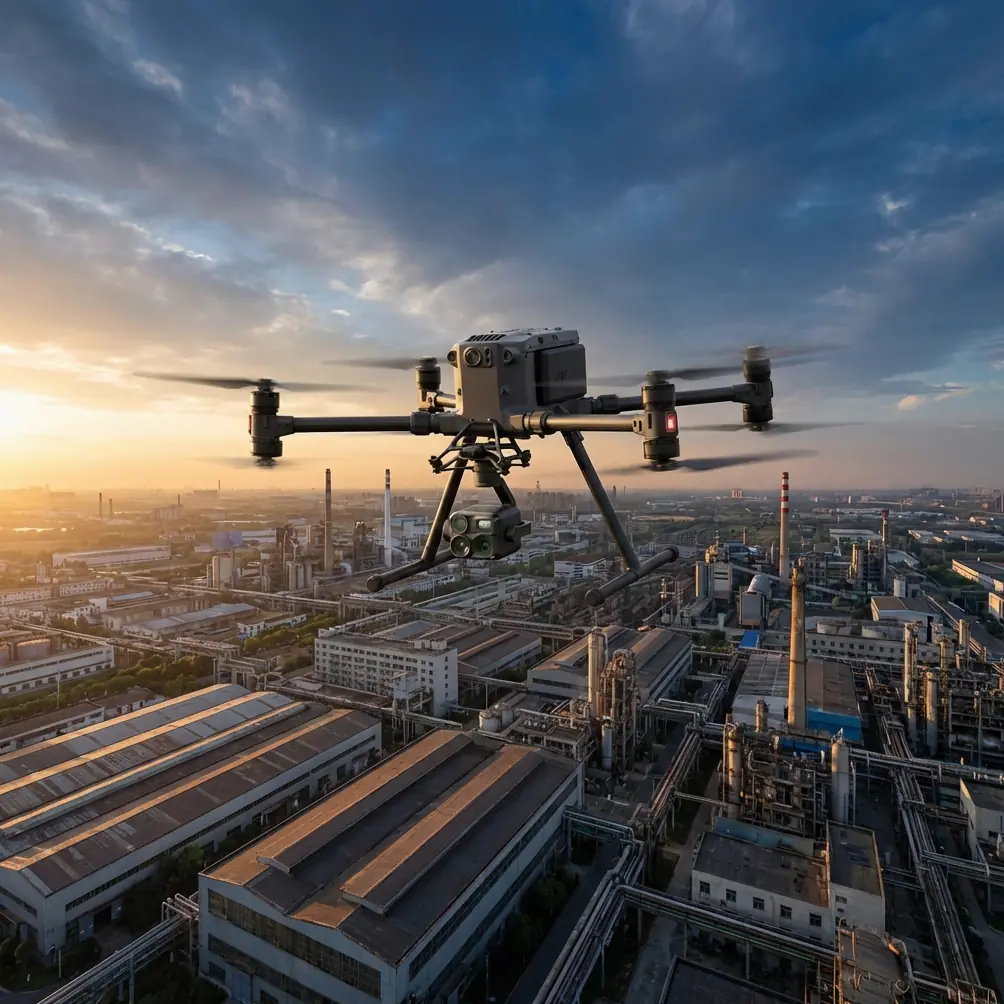
Matrice 4 for Highway Filming in Complex Terrain: What Actually Matters in the Air
META: Expert analysis of using Matrice 4 for highway filming in complex terrain, with practical insight on GNSS/INS correction, GCP reduction, EMI handling, photogrammetry accuracy, and stable mission planning.
Highway filming sounds straightforward until the route starts climbing, bending, and disappearing into cut slopes, bridges, retaining walls, and patchy signal environments. A clean cinematic pass is only one part of the job. In commercial reality, many teams also need location fidelity, repeatable flight paths, usable mapping outputs, and stable operations around difficult terrain and infrastructure.
That is where a Matrice 4 setup becomes more interesting than a simple camera platform.
For this kind of work, the real question is not whether the aircraft can fly the corridor. Most professional drones can do that in ideal conditions. The question is whether the system can keep producing reliable visual and spatial data when the airframe is being nudged by crosswinds, when the valley wall blocks part of the sky, and when roadside infrastructure adds electromagnetic noise. If your highway project runs through mountainous sections or heavily built transport corridors, those details decide whether the day ends with usable deliverables or a folder full of compromises.
The operational problem behind highway filming
Complex terrain creates two different problems at once.
First, it destabilizes image capture. Low-altitude flight near slopes and changing elevations can introduce body tilt, yaw deviation, and inconsistent camera angles. That matters for video quality, but it matters even more if the same flight is expected to support photogrammetry, progress documentation, or corridor modeling.
Second, the environment can interfere with navigation and link stability. High-voltage lines, steel structures, roadside communications equipment, and changing satellite visibility can degrade positioning confidence. Even when a drone remains flyable, subtle positioning drift can show up later as misaligned image sets, weak reconstruction geometry, or time-consuming correction work.
A useful way to think about Matrice 4 on a highway job is not as a flying camera, but as the center of a data collection chain. The aircraft, antennas, navigation stack, transmission link, and processing workflow all affect the final result.
Why GNSS/INS thinking belongs in a Matrice 4 workflow
One of the most relevant reference points here comes from direct georeferencing in UAV remote sensing. The source describes an AGS300 system that added a high-precision inertial navigation module to provide full 3D aircraft attitude, then used recorded flight data and software correction after the mission to recover accurate outputs even when the aircraft had tilted during flight. That correction path was significant enough that it aimed at zero ground control point deployment in aerial surveying workflows.
That is not a small detail. It goes to the heart of corridor work.
On a highway filming project, ground control can be inconvenient, slow, and sometimes risky to place, especially along active roads, embankments, interchanges, or remote cut sections. A workflow that reduces dependence on dense GCP placement changes field logistics immediately. You spend less time sending people onto roadside margins and more time planning the air mission properly.
For Matrice 4 operators, the lesson is clear: if the aircraft is being used for more than visual footage, attitude-aware navigation and post-processed georeferencing matter. Even when the platform itself differs from the AGS300 system mentioned in the source, the principle is the same. Body motion during flight does not automatically ruin a mission if your workflow captures enough positional and attitude information to correct it later. That is especially relevant on highway runs where air is rarely perfectly calm and slopes can produce uneven airflow.
The source also states that the AGS300 supported real-time and post-mission differential processing across multiple navigation systems, and could push data precision into the 1-centimeter range. For a Matrice 4 user, the practical significance is not just headline accuracy. It is mission confidence. If your deliverable includes corridor orthomosaics, surface context, or asset positioning, centimeter-class thinking changes how aggressively you can reduce rework.
Why this matters more in complex terrain than on open sites
Flat industrial sites are forgiving. Highway corridors are not.
A corridor through hilly terrain compresses your margin for error. Elevation changes alter aircraft-to-subject distance. Curved alignment changes the look angle continuously. Trees, rock faces, signs, gantries, and concrete barriers create visual clutter and intermittent occlusion. In these conditions, even a slight mismatch in pose data can create visible issues in stitched outputs or make repeated shots harder to match from one survey date to the next.
That is why a Matrice 4 crew filming highways should treat photogrammetry discipline as part of filming discipline. Maintain overlap. Watch shutter behavior. Keep flight lines consistent. Use terrain-aware planning where possible. And if the brief includes mapping or progress modeling, design the mission around georeferencing quality rather than assuming the footage can be repurposed later.
Electromagnetic interference is often a setup problem before it becomes a flight problem
The narrative spark around electromagnetic interference and antenna adjustment is not cosmetic advice. It is one of those field habits that separates experienced operators from people who blame the environment for everything.
On highway projects, EMI often shows up around transmission corridors, roadside electronics, bridge steel, tolling equipment, or dense utility zones. Operators usually notice it first as unstable telemetry, weaker video link quality, or inconsistent control responsiveness rather than total signal loss.
A Matrice 4 pilot should start with the basics:
- avoid takeoff immediately beside large metal structures or active utility hardware
- reassess home point placement if nearby infrastructure is creating noise
- keep antennas correctly oriented relative to aircraft position rather than pointed directly at the drone
- adjust operator stance as the corridor bends, instead of locking into one fixed controller position
- monitor link quality changes as the aircraft moves from open sky into cut sections or beneath surrounding terrain walls
With O3 transmission in the conversation, stable link management becomes part of image quality assurance, not just control safety. If transmission degrades at the wrong moment, the operator may miss framing corrections, delay gimbal response, or lose confidence in the live view needed for precise roadway passes. On infrastructure jobs, that translates directly into retakes.
Encryption such as AES-256 also matters in a commercial context, though for a different reason. Highway projects can involve sensitive civil works documentation, contractor progress records, or pre-opening inspection visuals. Secure transmission and data handling are not glamorous features, but they are increasingly part of professional compliance and client trust.
A practical Matrice 4 workflow for highway filming
The strongest Matrice 4 results on difficult corridors usually come from blending cinema logic with survey logic.
1. Start with terrain, not with the shot list
Before deciding on hero angles, study the route profile. Identify cuttings, elevated spans, retaining structures, switchbacks, and areas where the roadway drops into GNSS-challenging terrain. This tells you where navigation confidence may fluctuate and where body attitude corrections will matter most.
2. Separate creative passes from data passes
Trying to capture everything in one flight often creates mediocre outputs across the board. If the project also needs photogrammetry, run a disciplined mapping pass first. Then fly selective cinematic sequences. This keeps overlap, altitude control, and camera orientation consistent for the dataset that actually needs geometric integrity.
3. Use reduced-GCP strategy intelligently
The AGS300 reference is a useful reminder that direct georeferencing can reduce or even eliminate ground control in the right workflow. But “reduced” does not mean “careless.” On a Matrice 4 project, use check points where possible, especially on long corridors with changing elevation. Even if you are not laying out a full control network, independent validation helps you confirm that the navigation solution remained trustworthy throughout the mission.
4. Watch attitude behavior in crosswinds
The source specifically highlights the value of recording aircraft attitude so that tilt during flight can be corrected later in software. On a windy highway route, that becomes essential. If the airframe is constantly leaning to maintain line, your footage may still look fine to the naked eye while the underlying geometry becomes less clean for mapping purposes. Review logs and image quality with that in mind.
5. Tune antenna positioning during the mission
Antenna adjustment is not a one-time preflight action. In winding road corridors, the relative orientation between pilot and aircraft changes constantly. If the aircraft moves along a valley edge or behind a roadside rise, physically rotating your position and re-aiming antennas can noticeably improve stability. If you want a second opinion on corridor link planning or EMI mitigation, you can share your route details here: https://wa.me/85255379740
The hidden role of materials and airframe thinking
The second reference document looks unrelated at first glance. It comes from an aircraft materials handbook and lists composite material categories and suppliers, including BMS8-218, BMS8-219, and BMS8-260, with names such as Hexcel, Ciba-Geigy, and American Cyanamid appearing in the source tables.
Why should that matter to someone using Matrice 4 for highway filming?
Because professional drone operations are often discussed as if payload and software do all the work. They do not. Airframe material design influences stiffness, vibration behavior, weight efficiency, and durability under repeated field use. Composite structures became standard in aerospace for a reason: they allow strong, relatively lightweight structures that can better support stable flight performance and payload carriage.
You do not need to know the exact layup inside a Matrice 4 to understand the operational takeaway. When flying long corridor missions in gusty terrain, structural rigidity and vibration control feed directly into image sharpness, gimbal workload, and repeatability. The reference to established aerospace composite standards like BMS8-series materials is a reminder that airframe quality is not a cosmetic specification. It sits underneath every clean frame and every accurate map.
This is especially relevant when crews compare platforms only by sensor specs. A camera can be excellent on paper and still produce weaker results if the aircraft beneath it handles turbulence poorly or transmits vibration into the imaging stack. On highway work, where repeated directional changes and wind exposure are common, that difference becomes visible.
Thermal signature and mixed-sensor value on road infrastructure jobs
Highway filming is not always just about pretty daylight visuals. Depending on the assignment, thermal signature analysis can add another layer of utility. Surface drainage issues, moisture retention patterns near structures, or temperature anomalies around adjacent assets can sometimes be more apparent in thermal than in RGB imagery. For teams already operating Matrice 4 in infrastructure contexts, mixed-sensor planning can widen the value of each site visit.
That said, thermal should be scheduled with purpose. Midday heat can flatten contrast. Early morning or evening windows often reveal more useful differentiation. If thermal data is part of the mission, it deserves its own flight logic rather than being treated as an afterthought to a standard visual pass.
BVLOS ambition needs corridor discipline
Many highway projects naturally tempt teams toward BVLOS-style thinking because roads are long and linear. But long range is not the same as operational readiness. Complex terrain, transmission conditions, and visual occlusion increase the burden on planning, communications, and route segmentation.
Even where regulations and approvals support extended operations, the best Matrice 4 corridor teams still break missions into controllable blocks. That improves battery planning, keeps data organized by segment, and reduces the temptation to push through deteriorating link conditions.
Hot-swap battery capability, where available in the broader workflow context, becomes valuable here because it reduces downtime between route sections. On long infrastructure jobs, efficiency often comes not from flying farther in one stretch, but from turning multiple short, disciplined sorties into a seamless collection sequence.
What separates a usable highway mission from a frustrating one
For Matrice 4 users, the difference usually comes down to whether the mission was designed around real environmental constraints.
If you assume the aircraft will hold perfect attitude, complex terrain will prove you wrong. If you assume satellite geometry will remain clean, a valley wall or roadside structure will expose that mistake. If you assume the live feed will stay solid without antenna management, EMI will find you. And if you assume every mapping issue can be fixed later, you may discover the dataset never had enough geometric integrity to begin with.
The reference material points to a better mindset. High-precision inertial data can rescue missions from tilt-related error. Differential processing can compress positional uncertainty to a much more useful level, with the source citing 1-centimeter-class performance. Reduced dependence on GCPs can transform field logistics on active transport corridors. And airframe material quality, though rarely discussed by end users, still underpins stability where it matters most.
That is the real story for highway filming with Matrice 4. Not raw specs. Not marketing adjectives. A professional result comes from treating the drone as part of an integrated capture system built to manage motion, terrain, signal conditions, and downstream accuracy all at once.
Ready for your own Matrice 4? Contact our team for expert consultation.