
Matrice 4 for High-Altitude Power Line Filming: A Field How
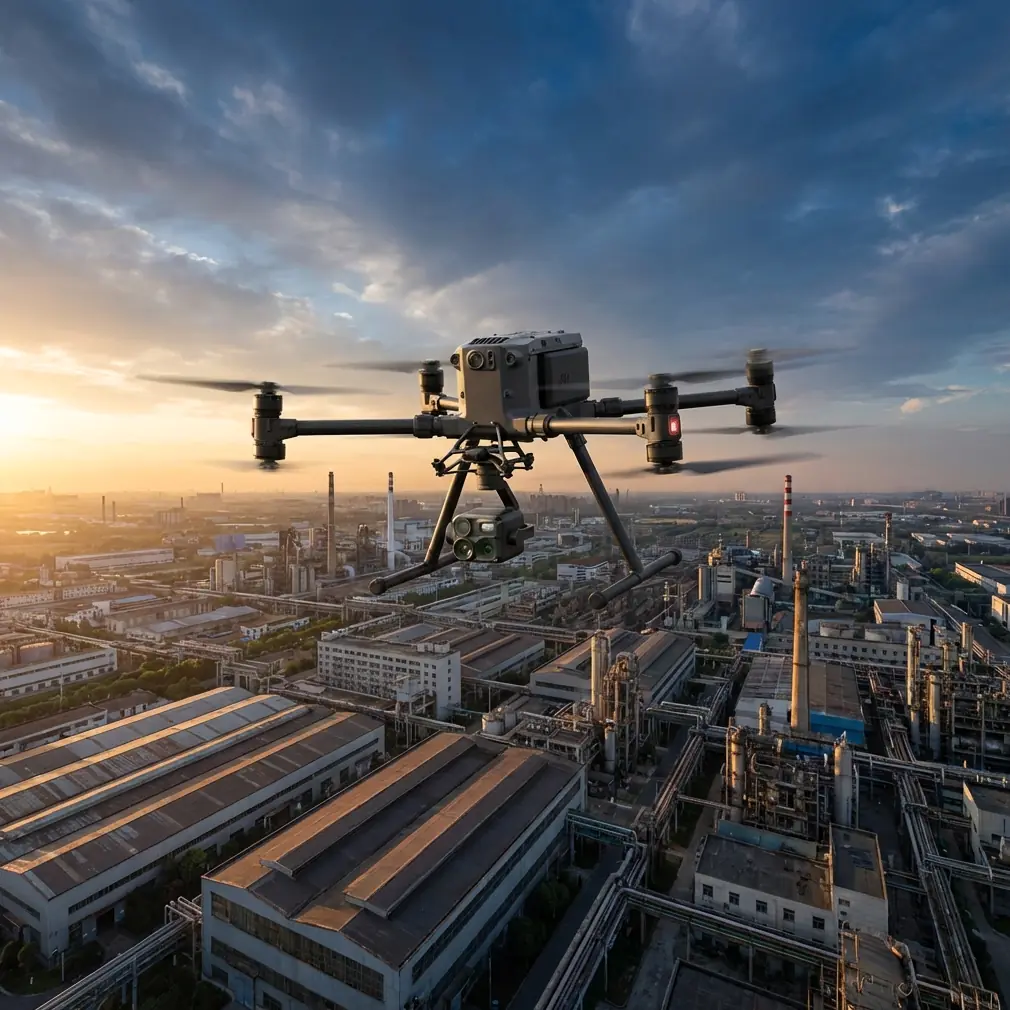
Matrice 4 for High-Altitude Power Line Filming: A Field How-To from Dr. Lisa Wang
META: Expert how-to for using Matrice 4 on high-altitude power line missions, with practical advice on thermal signature capture, battery management, O3 transmission, AES-256 security, and photogrammetry workflow.
High-altitude power line work punishes weak planning. Wind stacks up along ridgelines, temperatures shift faster than crews expect, and the visual complexity of towers, conductors, insulators, and surrounding terrain can expose every gap in your flight workflow. If you are preparing to use the Matrice 4 for this kind of mission, the aircraft itself is only part of the equation. The real advantage comes from how you set up the platform, manage power, structure your image capture, and protect the data path from aircraft to operations team.
I have spent enough time around utility inspection teams to know that the mission usually looks straightforward on paper and far less forgiving once the aircraft is climbing above uneven ground. A pilot may launch from a slope at one elevation, fly a conductor span that crosses a valley at another, and then hold position near a tower where gusts behave differently on each side of the structure. That is exactly why the Matrice 4 deserves to be treated as a system rather than just a camera drone. In high-altitude power line filming, success depends on whether the platform can maintain a stable imaging position, deliver clear transmission, preserve battery margin, and produce usable footage for engineering review rather than just attractive visuals.
Start With the Mission, Not the Aircraft
For power line filming, your first job is to decide what kind of evidence the final deliverable must contain. Crews often say they need “video of the line,” but that phrase hides several very different use cases.
If the goal is cinematic corridor footage for project documentation, your flight path, lens choices, and gimbal movement priorities will lean toward stable lateral motion and terrain-aware framing. If the goal is technical inspection support, then the flight has to reveal hardware condition, vegetation encroachment, conductor sag behavior, and abnormal thermal signature patterns. If the mission feeds a reconstruction model, then photogrammetry rules the schedule: overlap, camera angle consistency, and GCP placement matter more than dramatic movement.
This distinction changes everything. The Matrice 4 is most effective when the payload and flight profile are matched to the decision the client needs to make afterward. Utilities do not benefit from pretty footage if the imagery cannot confirm whether a connector is overheating or whether a structure is shifting relative to surrounding terrain.
Why High Altitude Changes the Way You Fly
A lot of pilots underestimate how much altitude changes battery behavior. They focus on thinner air and stronger winds, which are obvious, but the more subtle issue is how quickly the mission can burn through reserve when the aircraft spends long stretches fighting lateral gusts while holding composition on narrow linear assets.
My field rule is simple: never plan a mountain power line segment as if the outbound and return legs will consume energy symmetrically. They rarely do. One leg may look easy, while the other becomes a sustained power draw because the wind rotates around a ridge face. On the Matrice 4, hot-swap batteries are not just a convenience feature in this environment. They are a scheduling tool. When crews use them well, they can reduce idle time, keep payload configuration consistent, and shorten the gap between repeatable passes on the same span.
The practical tip I give every team is this: after a demanding uphill or crosswind segment, do not judge the next sortie only by battery percentage. Judge it by battery behavior under load during the prior flight. If you saw a sharper-than-normal voltage dip while braking or climbing near a tower, treat that as a warning sign for the next launch window, especially in cold conditions. A battery can show a comfortable remaining percentage on the ground and still feel weak once the aircraft is back in turbulent air over a valley.
That single habit has prevented more rushed landings than any checklist tweak I know. Percentage is easy to read. Load response tells the truth.
O3 Transmission Is Operational, Not Cosmetic
For high-altitude power line filming, long and stable transmission matters because line-of-sight is rarely as clean as it appears from the takeoff point. Terrain shoulders, steel structures, and vegetation corridors can all interfere with the pilot’s confidence in framing and aircraft orientation.
This is where O3 transmission becomes operationally significant. It is not simply about maintaining a clean live view. It directly affects whether the pilot can make precise adjustments when filming conductor hardware or tracking along an offset route near towers. On narrow infrastructure corridors, a brief degradation in feed quality can turn a careful inspection pass into a partial repeat. That costs time, battery, and sometimes daylight.
In mountain environments, I recommend building the mission profile around known signal trouble spots before takeoff. If there is a segment where terrain may partially mask the aircraft, plan either a different ground control position or a more conservative standoff path rather than improvising once the aircraft is airborne. A stable O3 link expands your options, but it should never be treated as a reason to ignore topography.
For teams coordinating with remote engineering staff, this also affects decision speed. If the live feed holds up well, an engineer can flag a suspect insulator string or attachment point in real time, reducing the chance of a second mission. If your team wants to compare workflows before the next deployment, it helps to message our utility UAV desk on WhatsApp and walk through corridor-specific comms planning in advance.
Security Matters More Than Many Flight Teams Admit
Utilities are critical infrastructure operators. That should shape your data handling from the beginning. If your Matrice 4 workflow uses AES-256 for protected transmission and data security, that is not a background specification to ignore. It is part of the operational risk model.
Power line filming often captures more than the line itself. You may collect imagery of substations, access roads, private land boundaries, or maintenance activities that should not move casually through an unsecured chain. AES-256-level protection matters because it reduces exposure in exactly the kinds of missions where infrastructure details carry operational sensitivity.
The significance is practical. Secure transmission and handling make it easier to involve multiple stakeholders without turning every review session into a data governance problem. It also supports a more disciplined BVLOS planning culture where command, monitoring, and review processes must be clearly controlled. Even when a mission remains within local visual requirements, designing the workflow as if it may later scale into BVLOS operations is smart. It forces better communication discipline, cleaner audit trails, and more intentional crew roles.
Thermal Signature Capture: Useful Only if You Respect Timing
Thermal imaging around power infrastructure is often misunderstood by teams coming from general aerial video work. The camera can show a problem, but only if the capture window, aircraft position, and environmental context make that reading meaningful.
A thermal signature from a connector, splice, or hardware attachment point should never be judged in isolation. Solar loading, recent weather, conductor load conditions, viewing angle, and background reflectivity all influence interpretation. In high-altitude areas, cold ambient air can sharpen certain contrasts, but wind can also alter the apparent heat pattern enough to mislead inexperienced reviewers.
For Matrice 4 crews, the method matters more than the excitement of seeing heat differences on screen. Fly repeatable passes. Keep your viewing geometry as consistent as the corridor allows. Pair thermal capture with visible imagery on the same target zone. If possible, document whether the suspect component remained thermally distinct across more than one pass. A single bright anomaly is interesting. A persistent anomaly observed under controlled positioning is actionable.
This is one place where stable hovering and predictable battery reserve really pay off. If the aircraft has enough margin to hold position cleanly near a structure without hasty corrections, your thermal evidence becomes more reliable.
Photogrammetry Along a Linear Asset Requires Discipline
Plenty of operators can produce decent maps over open ground. Power line corridors are less forgiving. Towers are vertical structures, lines are thin features, and terrain often creates abrupt elevation changes that punish lazy overlap planning.
If your Matrice 4 mission includes photogrammetry, treat the line as a narrow infrastructure model rather than a standard area map. That means planning for sufficient front and side overlap, but also thinking in terms of tower geometry and terrain breaks. Oblique captures are often essential if you need a useful reconstruction of attachment hardware or tower condition. A flat top-down mindset leaves holes where the engineering questions usually sit.
GCP strategy also deserves attention. In mountain environments, crews sometimes place ground control points where access is easiest instead of where geometric stability needs support. That creates uneven model confidence across the corridor. A better approach is to place GCPs to anchor changes in elevation, tower clusters, and transitions where the line crosses roads, streams, or ridge contours. Even a small number of well-positioned GCPs can improve the trustworthiness of the output more than a larger number placed for convenience.
Operationally, this matters because line owners are not asking for a pretty surface model. They want a dataset they can use to assess clearances, terrain interaction, structure placement, and maintenance priorities.
A Practical Flight Sequence for Power Line Filming
When crews ask me how to structure a Matrice 4 mission in the mountains, I recommend a layered capture sequence rather than trying to do everything in one artistic pass.
Start with a short reconnaissance leg to read the wind where the line actually sits, not where the pilot is standing. Watch how the aircraft behaves near towers and over low points in the corridor. Then perform your primary visual documentation run with consistent framing and deliberate speed. After that, conduct targeted thermal checks on selected components or structures rather than trying to thermal-scan every asset casually. If photogrammetry is required, fly that as a dedicated block with model integrity in mind.
This sequencing solves two recurring problems. First, it separates inspection logic from cinematic habits. Second, it keeps battery decisions cleaner. Teams get into trouble when they try to combine exploratory flying, hero footage, thermal checks, and model capture in one sortie. The result is usually fragmented data and a tense return leg.
With hot-swap batteries available, there is no reason to force too much into a single flight. The better discipline is to land earlier, swap quickly, verify the next capture objective, and relaunch with a fresh plan.
Common Mistakes That Waste Good Aircraft Time
The Matrice 4 can cover serious work, but it cannot rescue poor field decisions. The most common mistake I see is launching without a clear hierarchy of mission goals. That leads crews to drift between filming, inspecting, and mapping without collecting any of them properly.
The second mistake is trusting on-screen conditions too much. A live feed can look stable while the aircraft is quietly spending reserve fighting wind. Again, battery percentage alone is not enough. Watch how the aircraft responds during acceleration, braking, and hover corrections.
The third is underestimating data discipline. If your capture set is not labeled, synchronized, and secured properly, then features like AES-256 do not solve the full problem. They help protect the data path, but you still need a clean operational process once files reach the review team.
Finally, many crews treat transmission range as permission to stretch farther than the terrain and workflow justify. O3 is a real advantage, especially in complex corridor work, but it should support better decision-making, not encourage avoidable risk.
What Makes the Matrice 4 a Strong Fit Here
For high-altitude power line filming, the Matrice 4 stands out when the mission demands more than a single capture mode. Utility work often needs visible documentation, thermal investigation, secure handling, and repeatable route logic in the same deployment cycle. The combination of O3 transmission, AES-256 security, hot-swap battery workflow, and support for technical capture tasks like photogrammetry gives crews room to build a serious operating method rather than a one-off flight.
That is the real story. Not the aircraft as an abstract platform, but the way its feature set maps onto actual field constraints: wind exposure, corridor geometry, infrastructure sensitivity, repeated passes, and the need to make engineering-grade decisions from what the drone collects.
If you are filming power lines at altitude, think like an investigator, not a camera operator. Build your sequence around evidence. Protect your battery margin before it becomes a problem. Use transmission stability to improve precision, not to chase distance. And when thermal or photogrammetry outputs are part of the mission, fly them as disciplined technical tasks with repeatable standards.
That is how the Matrice 4 stops being impressive on paper and starts becoming useful in the mountains.
Ready for your own Matrice 4? Contact our team for expert consultation.