
Matrice 4 for High-Altitude Power Line Filming
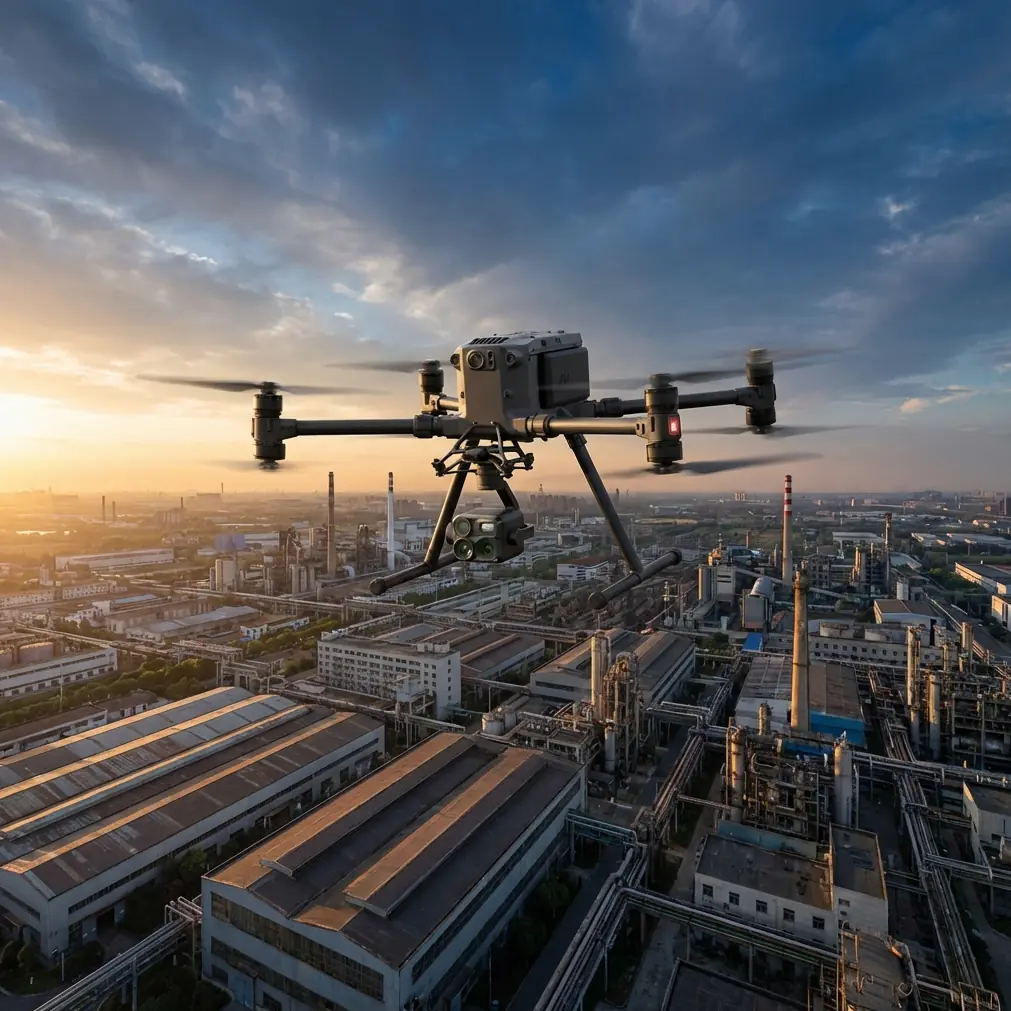
Matrice 4 for High-Altitude Power Line Filming: The Small Pre-Flight Checks That Decide the Mission
META: Expert technical review of Matrice 4 workflows for filming power lines at altitude, with practical guidance on drivetrain-aware power planning, thermal capture reliability, transmission integrity, and pre-flight safety checks.
Power line filming in the mountains looks simple from a distance. Get airborne, track the span, collect visible and thermal imagery, move to the next tower. In reality, high-altitude work exposes every weak assumption in the aircraft, the payload, and the crew’s pre-flight discipline.
That is why the most useful way to think about a Matrice 4 mission is not as a camera job, but as a power-system job with imaging attached.
The older aircraft design literature makes this point in a way many drone teams still overlook. One reference on aircraft electrical system design explains that the generator or constant-speed transmission must be able to operate across the full engine working speed range. It even states the ratio of maximum to minimum working speed for the generator side should be equal to or greater than the same ratio on the engine side. In manned aviation, that rule exists because electrical stability fails when the power source and the driven system drift out of sync.
Why does that matter to a Matrice 4 crew filming transmission lines on a cold ridge?
Because the drone version of the same problem shows up as load mismatch. Climb power, wind correction, gimbal stabilization, transmission overhead, thermal payload demand, and repeated hover checks all draw from the same onboard energy budget. You are not managing an engine and generator gearbox, but you are still managing a chain of interfaces that must remain stable from takeoff through landing.
On a routine lowland inspection, teams can get away with sloppy assumptions. At altitude, they usually cannot.
The pre-flight cleaning step that deserves more respect
Before I get into imaging and flight profile, I want to start with one simple practice that saves more missions than people admit: cleaning the aircraft’s sensing and cooling-critical surfaces before power-up.
Not just the main camera glass. I mean the obstacle sensing windows, thermal lens cover area, vent openings, battery contacts, and the gimbal seating surfaces if the aircraft has been transported through dust, frost, or road grit.
This sounds minor. It isn’t.
High-altitude power line filming often starts from improvised launch points: gravel pull-offs, concrete pads, maintenance roads, snowy verges. Fine debris gets everywhere. A thin film on a vision sensor can degrade obstacle awareness. Dust on cooling paths can reduce thermal efficiency during long climbs. Residue on battery contacts can create intermittent power behavior that only appears under peak load. On a mission where you may be flying close to cables, insulators, or tower steel, these are not cosmetic issues.
That old handbook on aircraft power interface design highlights concerns such as rotational range, acceleration, power extraction, installation space, lubrication, and heat dissipation. Translate that into drone operations and you get a useful mindset: every system that supports stable power and stable sensing deserves inspection before launch. Cleaning is part of systems validation, not housekeeping.
For Matrice 4 crews, this step is especially relevant when the day’s work combines zoom capture, thermal signature analysis, and long-distance transmission over exposed terrain.
High altitude changes the mission before the drone even leaves the ground
Power line filming at elevation creates a layered problem. The aircraft has less margin. The wind is often less predictable around saddles and tower faces. Battery performance is less forgiving in cold conditions. And the visual task is harder than many crews expect because contrast shifts constantly against snow, rock, cloud shadow, and reflective conductor surfaces.
The result is that your shot plan needs to be built around power integrity first and image collection second.
That does not mean flying timidly. It means being deliberate about how the Matrice 4 spends energy during each flight segment:
- climb to working altitude
- transit to first structure
- hover for framing confirmation
- lateral track along conductor corridor
- stand-off thermal or zoom verification
- return with reserve preserved, not guessed
This is where experienced pilots separate themselves. They stop thinking in generic battery percentages and start thinking in peak-load phases.
The aircraft design source mentions that some aviation engine output speeds can reach roughly 6000 to 10000 during cruise, which is one reason reduction gearing is used between the output shaft and generator input. In practical drone terms, that is a reminder that raw power generation and usable power delivery are not the same thing. Efficiency depends on the interface. For Matrice 4 operators, the interface is everything between battery condition, propulsion demand, payload load, and flight control response.
If the aircraft is fighting wind and simultaneously streaming high-quality video over long range via O3 transmission, while also holding a stable gimbal angle for conductor imagery, your available margin shrinks faster than the battery gauge alone may suggest.
Why transmission reliability matters more than headline range
For power line filming, link quality is not just a convenience feature. It shapes operational safety and data confidence.
A strong O3 transmission link helps the pilot and camera operator judge conductor separation, identify hardware details, and confirm whether the thermal signature actually belongs to the target component rather than a background reflector or sun-loaded surface. In high-altitude corridors, the line itself can lead the eye into false depth perception. Low-latency video becomes a navigation tool.
Security matters too. AES-256 support is often discussed in enterprise terms, but in utility environments it has a practical field advantage: crews can move sensitive infrastructure imagery through a protected link without treating cybersecurity as an afterthought. For contractors working with grid operators, that matters operationally and contractually.
Still, the stronger lesson is this: no transmission system can rescue poor positioning. If your route forces the aircraft behind terrain breaks or tower steel clutter, expect instability. High-altitude filming rewards flight lines that preserve both radio geometry and visual interpretability.
Thermal capture is only as good as your timing
A lot of operators say they are “doing thermal” when they are really just recording heat-colored footage. That is not enough for utility inspection-grade results.
Thermal signature work around conductors, clamps, connectors, and insulators depends on timing, angle, and environmental consistency. Early morning can be useful for isolating anomalies before solar loading distorts the scene. Midday can hide subtle differentials. Late afternoon can help on some assets and confuse others.
The Matrice 4 becomes most valuable when thermal capture is paired with disciplined visible-light context. You need both. Thermal alone may show a hotspot. The visual payload tells you whether that heat aligns with corrosion, hardware looseness, contamination, or a misleading reflection pattern.
At altitude, the temptation is to hurry because conditions change fast. Resist that. If a component looks suspicious, hold position long enough to confirm from more than one angle. A single thermal frame can start a maintenance conversation; a verified thermal sequence with matching visual context can close it.
Photogrammetry is not the main event, but it can quietly improve the whole job
Most crews approach power line filming as a video task. Fair. Yet photogrammetry can add surprising value even when the primary deliverable is inspection imagery.
For example, if the utility wants updated terrain context around access paths, tower approach routes, erosion zones, or vegetation encroachment, a short mapping segment around the structure can create reusable data. That is where GCP discipline matters. Ground control points are rarely glamorous, but when you need spatial confidence in a mountainous corridor, they can reduce ambiguity in slope interpretation and tower-adjacent measurements.
I would not oversell this for every mission. You do not need to turn every power line filming day into a full survey campaign. But if your Matrice 4 team already has the site access and weather window, a carefully planned photogrammetry pass can extend the value of the sortie without changing the core mission.
The key is to keep the power budget honest. Mapping extras belong only after the inspection objective is secure.
Hot-swap batteries help productivity, but they do not fix weak planning
Hot-swap batteries are one of those features that crews love for obvious reasons. Less downtime. Faster turnaround. Better use of weather windows. On remote power line jobs, they can turn a frustrating day into a workable one.
But hot-swap capability should not tempt teams into treating batteries as interchangeable fuel cans.
At high altitude, each pack’s temperature history, charge balance, storage condition, and connector cleanliness affect real-world performance. This goes back to that pre-flight cleaning point. If you are rotating packs in dusty or frozen conditions, battery interface inspection needs to be a formal step, not a quick glance.
And do not ignore the mission pacing effect. When crews know they can swap quickly, they often compress ground review. That is exactly when they miss subtle issues in thermal files, exposure consistency, or tower coverage gaps. The right workflow is simple: land, swap, verify captured data, then relaunch.
BVLOS discussions need a reality check in utility corridors
BVLOS gets mentioned constantly in drone marketing and conference panels. For power line work, it can be useful, but only when the operation, regulations, terrain model, and risk controls are aligned.
In mountainous corridors, the phrase alone does not solve the hard parts. Terrain masking, changing winds, infrastructure obstacles, and the need for confident visual interpretation often push crews toward conservative line-of-sight or segmented corridor workflows anyway. The Matrice 4 may be technically capable within a broader enterprise architecture, but capability is not the same as a sensible mission design.
For most civilian utility teams, the better question is not “Can this be BVLOS?” but “Can we maintain image confidence, link stability, and reserve margins across the whole segment?” If the answer is weak, shorten the segment.
That is what mature operators do.
Fasteners, fittings, and why small hardware details matter in drone operations
One of the reference documents is not about drones at all. It covers aircraft standard parts and includes details on quick-release locking pins, including a 30CrMnSiA material callout and dimensional conventions where certain length values are design-determined. At first glance, that seems far removed from a Matrice 4 power line mission.
It is not.
The operational significance is that airworthiness always lives in the little interfaces: retention, fit, repeatability, and tolerance. In field drone work, the equivalent concerns show up in payload mounting checks, prop retention verification, battery latch confirmation, and accessory attachment security. A locking feature is only useful if it seats correctly every single time. High-altitude launch sites are exactly where rushed crews skip that tactile confirmation.
When a team treats hardware engagement as a memory exercise instead of a physical check, they invite avoidable risk. Mature pre-flight discipline borrows this mindset from larger aviation: inspect the retention point, not just the part.
What a strong Matrice 4 workflow looks like on power lines
A reliable high-altitude mission with the Matrice 4 usually has a clear rhythm:
First, clean and inspect the aircraft. Lens surfaces, obstacle sensors, vent paths, battery contacts, propellers, payload seat, and landing area.
Second, define the power-critical phases. Identify where climb load, hover time, and wind exposure will be highest.
Third, plan image priorities before launch. Decide what must be captured in visible, what requires thermal confirmation, and which structures justify a second-angle pass.
Fourth, protect the transmission geometry. O3 works best when you give it a clean path.
Fifth, review every landing before the next takeoff. Hot-swap speed should never outrun data verification.
If your team wants to compare mission setups or field-check a Matrice 4 configuration for utility corridor work, you can send the details here: share the flight profile directly.
The real takeaway
The Matrice 4 is most effective on high-altitude power line filming jobs when crews stop reducing the mission to “camera plus batteries.” The better model is systems coordination.
That is exactly what the source material points toward. One reference stresses that the driven electrical system must match the full operating range of the power source, and another reminds us that even small retention hardware follows strict dimensional and material logic. Together, they point to a simple truth: reliability comes from interfaces. Power interface. Mechanical interface. Sensor interface. Human interface.
On a mountain utility corridor, that truth shows up fast.
The crews who get repeatable results are usually the ones who clean before they calibrate, verify before they launch, and plan for load variation before they chase footage. With a Matrice 4, that discipline is what turns a difficult power line mission into useful data instead of pretty video.
Ready for your own Matrice 4? Contact our team for expert consultation.