
How I’d Use the Matrice 4 to Film and Inspect Remote Solar F
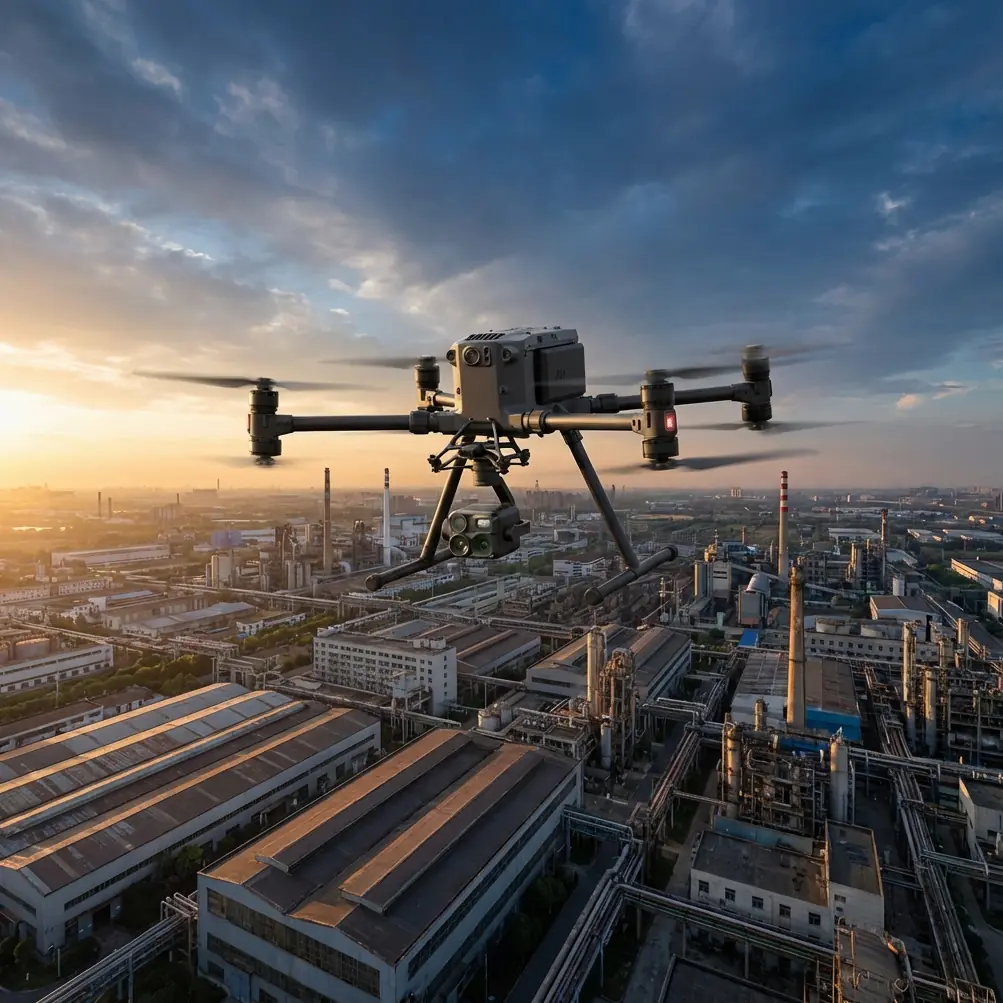
How I’d Use the Matrice 4 to Film and Inspect Remote Solar Farms
META: A practical Matrice 4 guide for remote solar farm filming and inspection, covering thermal workflow, photogrammetry, transmission reliability, battery strategy, and field-ready accessories.
Remote solar sites punish weak drone workflows.
The distances are long. The light is harsh. Heat shimmer can ruin telephoto detail by midday. And if you are filming a utility-scale installation rather than a rooftop array, you are not just chasing pretty footage. You are trying to leave the site with usable visual assets, location-accurate data, and enough battery discipline to finish the job without wasting a travel day.
That is where the Matrice 4 conversation gets interesting.
If your assignment is “film a solar farm in a remote area,” the drone is not just a camera carrier. It becomes a field platform for three jobs happening at once: cinematic capture for stakeholders, thermal review for panel anomalies, and mapping-grade documentation that can support maintenance or expansion planning. The reason operators keep looking at the Matrice 4 class for this kind of work is simple: the aircraft can support a more layered mission profile than a lightweight camera drone, especially once transmission stability, battery handling, and payload flexibility start to matter.
I’ll walk through how I’d structure that workflow.
Start with the site objective, not the flight mode
Solar clients often ask for “video,” but what they usually need is a bundle of outcomes:
- clean establishing footage for investors, internal reporting, or project marketing
- close visual review of strings, inverters, substations, access roads, and perimeter conditions
- thermal signature checks to reveal hotspots, failed cells, soiling patterns, or imbalance across sections
- orthomosaic or photogrammetry outputs for recordkeeping and planning
Those are four different deliverables. If you approach them as one long free-flight session, quality drops fast. The Matrice 4 is best used when the mission is segmented.
My normal sequence would be:
- sunrise thermal flights
- early morning mapping runs
- controlled cinematic passes once the light lifts
- targeted reshoots of maintenance or infrastructure details
- battery-managed contingency window before the site heats up too much
That order matters. Thermal signature work is most useful when the panel temperature contrast is readable and not yet flattened by aggressive daytime heating. Photogrammetry benefits from repeatable overlap and steady conditions. Cinematic footage can come after the data flights, once I know I already have the operational material secured.
Why remote solar work stresses transmission more than people expect
On paper, solar farms look easy. Flat land. Open sky. Minimal skyline clutter.
In the field, they create their own challenges. You may be operating across large repeating rows of reflective surfaces with intermittent service roads, fencing, low structures, and heat distortion. The farther the aircraft moves from the pilot position, the more valuable a reliable link becomes. That is why O3 transmission is not just a spec-sheet talking point in this scenario. It directly affects confidence during long corridor passes and wide-area coverage.
For solar work, a stable downlink changes operator behavior. You can commit to smoother, more deliberate passes because you are not constantly managing uncertainty in the feed. You can also reposition less often, which saves time on large sites. On a remote job, every unnecessary vehicle move compounds fatigue and chews into your battery window.
If the operation involves sensitive client infrastructure data, secure transmission also matters. AES-256 is operationally relevant here because solar assets often sit inside a larger energy or utility environment where image and thermal data are not something the owner wants casually exposed. For site owners, cybersecurity is not abstract. It is part of vendor trust. For the pilot, it means the aircraft fits more comfortably into professional reporting workflows where data handling is scrutinized.
Thermal is not a side feature on a solar mission
For remote solar farms, thermal is often the reason the drone was approved in the first place.
Beautiful footage helps with communication. Thermal findings help with decisions.
Aerial thermal review can reveal hotspots, underperforming modules, disconnected strings, or irregular heat patterns that would take far longer to isolate from the ground. The key is not simply having a thermal sensor available. The key is building your mission timing, altitude, and reshoot logic around thermal interpretation.
When I brief a client, I explain that thermal is most valuable when paired with visual context. If a hotspot appears in one block of panels, I want a thermal view, a corresponding visual frame, and a location reference tied into the site map. That is where the Matrice 4 style workflow becomes efficient: one aircraft platform, one field team, multiple layers of evidence.
Operationally, that means I am not just flying pretty diagonals over endless rows. I am planning targeted lines that let me revisit anomalies and document them from more than one angle. A suspect module seen from a nadir thermal pass may need an oblique visual follow-up to show dust accumulation, shading, frame damage, or cable issues nearby.
Photogrammetry gives the footage long-term value
Many solar operators still separate “marketing video” and “survey data” into different budgets. In remote environments, that split is often inefficient.
If I am already mobilizing a Matrice 4 team to a distant site, I want to leave with a photogrammetry set whenever conditions allow. Not because every client asked for it, but because a properly built orthomosaic or 3D surface model can become useful later for maintenance planning, drainage assessment, access route review, vegetation management, or future buildout comparisons.
This is where GCP strategy matters.
Ground control points are not glamorous, but they are one of the easiest ways to make your outputs defensible instead of merely attractive. On large solar sites, repeating geometry can make visual interpretation deceptively tricky. GCP-backed mapping helps align panel blocks, roads, drainage paths, inverter locations, and site boundaries with greater confidence. If the client later asks, “Can you show exactly where this thermal anomaly sits relative to the eastern inverter station?” your workflow is already built to answer that.
I would not oversell GCPs for every quick media visit. But for a remote solar farm where travel is expensive and the operator may not return soon, taking the time to lay and record control can pay for itself in downstream utility.
Battery strategy is where remote jobs are won or lost
People obsess over cameras and forget the clock.
Remote solar farms expose every weakness in battery planning because there is rarely a convenient charging fallback, and the site itself may not offer the kind of field support you imagined from the office. Heat, wind, and long transit legs all reduce your margin.
That is why hot-swap batteries are more than a convenience feature. They change crew tempo. On a production day, hot-swapping lets you keep the aircraft rotation moving without turning every battery change into a cold restart and recalibration ritual. Over a multi-sortie mission, those saved minutes add up. More importantly, they preserve concentration. A team that can swap efficiently tends to maintain better discipline in shot logging, anomaly tagging, and checklists.
For remote work, I usually divide packs by mission type rather than simply flying them in sequence:
- one group for thermal passes at first light
- one group reserved for photogrammetry runs
- one group for cinematic work and reshoots
- one protected reserve group for weather drift, missed targets, or unexpected client requests
This avoids the classic mistake of spending your best battery window on hero footage, then trying to capture a mapping grid later when the site is already shimmering with heat.
A third-party accessory that genuinely helps in the field
One accessory I have seen make a real difference on solar assignments is a high-bright, third-party field monitor hood or sun-shield system for the ground display. It sounds minor until you are trying to interpret subtle thermal signature differences under brutal glare.
On remote sites, sunlight on the pilot display can lead to bad decisions: missed anomalies, imprecise framing, and unnecessary repeat passes. A well-designed monitor shade, especially one built for rugged field use rather than hobby flying, improves readability enough to tighten the whole operation. You spend less time second-guessing what you saw in the feed.
Another useful add-on is a third-party landing pad with weighted corners for dusty terrain. Solar sites often combine gravel, dry soil, and wind corridors between panel rows. Keeping debris out of the aircraft during repeated hot-swap cycles is not glamorous, but it is exactly the sort of small discipline that protects uptime on a remote day.
Filming choices that work for solar farms
Solar farms can look repetitive and flat unless you create structure in the story.
With the Matrice 4, I would avoid relying on endless top-down reveals. Those shots have their place, but they flatten scale if overused. A stronger sequence usually combines:
- low oblique passes along array lines to show geometry
- rising pull-backs from inverter or transformer areas
- lateral moves that reveal the extent of the installation
- controlled top-down segments for layout clarity
- telephoto compression shots in early light, when atmospheric distortion is lower
The visual goal is to show not only size, but system logic. How the site is arranged. How roads, rows, electrical equipment, and terrain interact. For clients in energy, that often matters more than cinematic flair.
If the farm is in an especially isolated area, I also like to capture contextual access footage: approach roads, surrounding land use, drainage channels, fencing, and nearby service structures. These details anchor the site in reality and make the final package more useful to people who were not on location.
Can this support BVLOS-style planning discussions?
For obvious regulatory reasons, any actual BVLOS activity depends on local approval, operator credentials, site conditions, and the legal framework where the mission takes place. But even when a job is flown within standard visual constraints, remote solar farms often push teams to think in a BVLOS mindset: long coverage distances, layered risk planning, communication discipline, emergency procedures, and stronger route design.
That matters because the Matrice 4 is most effective when the operator behaves like a systems manager, not a casual pilot. You need clear sectors, return plans, battery thresholds, and data logging. Remote infrastructure work rewards methodical crews.
My preferred field workflow on a remote solar site
If I were writing the day plan for a Matrice 4 team, it would look like this:
1. Pre-sunrise setup
Arrive early enough to stage GCPs, verify winds, inspect launch area, and confirm battery grouping. If remote support is needed before mobilization, I’d sort that out in advance through direct field coordination here.
2. First-light thermal block
Fly the thermal survey before the site heats unevenly. Keep paths repeatable and log anomalies by row, block, or inverter reference.
3. Visual confirmation sorties
Revisit anomalies with visual payload framing. Capture enough context that an engineer or asset manager can understand what the thermal image is pointing at.
4. Mapping mission
Run the photogrammetry grid while conditions remain stable. If the client needs measurable output later, this is where disciplined overlap and GCP integration matter.
5. Cinematic coverage
Only after the technical capture is secured do I move into hero footage. At this point, I already know the site layout and can film with intention rather than improvisation.
6. Infrastructure detail package
Capture substations, inverter skids, cable routes, maintenance roads, water runoff areas, and perimeter conditions.
7. Redundancy check
Before breaking down, verify that the thermal findings, mapping set, and hero shots are all genuinely usable. Remote jobs punish assumptions.
The real value of the Matrice 4 for this niche
For solar farm work in remote areas, the best drone is not the one with the flashiest spec list. It is the one that helps you bring home a coherent package: stable long-area flight, secure data handling, efficient battery turnover, thermal intelligence, and mapping-ready capture from a single field deployment.
That is why details like O3 transmission, AES-256, hot-swap batteries, thermal signature workflow, and GCP-backed photogrammetry are not random buzzwords in this context. They connect directly to what the client experiences on the ground: fewer interruptions, better anomaly records, more useful site documentation, and less need to remobilize later.
If I were sending a team to film and inspect a remote solar farm, that is exactly how I would judge the platform. Not by hype. By whether it helps the crew work cleanly from first light to pack-down, with enough structure to support both visual storytelling and technical decision-making.
Ready for your own Matrice 4? Contact our team for expert consultation.