
Matrice 4 for Mountain Solar Farm Filming
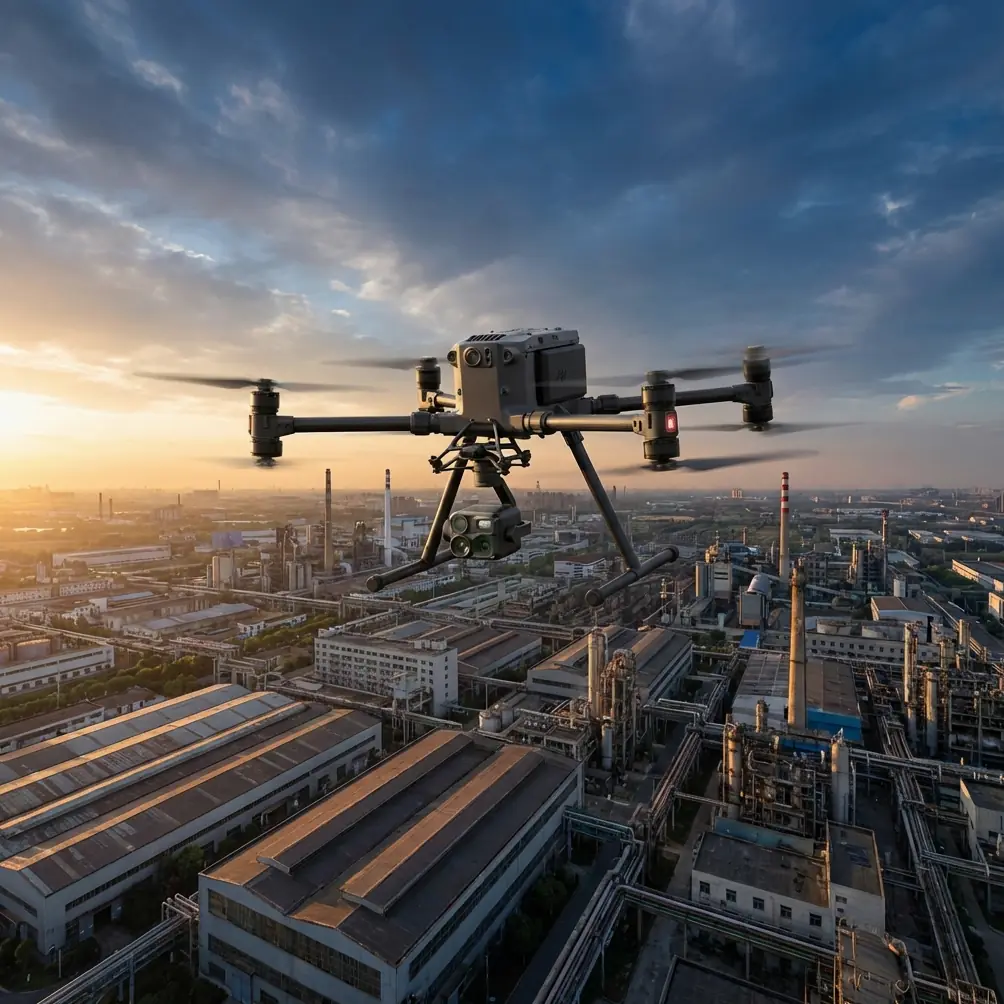
Matrice 4 for Mountain Solar Farm Filming: The Workflow That Actually Holds Up on Site
META: A field-driven Matrice 4 tutorial for filming and documenting mountain solar farms, with practical insight on planning, system coordination, lifecycle cost thinking, thermal workflows, and safer data capture.
I still remember a mountain solar job that looked straightforward on paper and turned into a logistics puzzle the moment we reached the access road.
The site climbed across uneven ridgelines. Panel rows were broken up by service tracks, retaining edges, and abrupt elevation changes. Wind behaved differently every few hundred meters. The client wanted cinematic footage, inspection-grade imagery, and a usable site record for future maintenance. In other words, not just pretty video. They needed a repeatable documentation workflow.
That is the right lens for thinking about Matrice 4 in this kind of environment.
Most conversations about drones for solar work stay too shallow. They focus on headline features and skip the real issue: whether the aircraft, payload workflow, and mission planning method can stay coordinated when terrain, safety margins, and deliverables all start pulling in different directions. For mountain solar farms, that coordination matters more than any single spec sheet talking point.
What changed my own approach was not one isolated drone feature. It was adopting a more aircraft-design mindset to drone operations: define the mission clearly, map how the systems interact, and manage the project not only for output quality but for total operating efficiency over time.
That idea is backed by two reference points from traditional aircraft design literature that are surprisingly relevant to Matrice 4 users today.
One source emphasizes that cost and design should be controlled across the whole lifecycle, not treated as a one-time decision at purchase or development stage. It specifically describes managing a project under a defined cost target and using design and economic rules to reduce full-life cost at the root. Another source argues that after preliminary configuration is set, a formal model specification should guide all subsequent system definitions, because it clarifies technical requirements, system interactions, and coordination across teams.
Those are old aircraft-program lessons. They also happen to be exactly how you avoid wasting days on a mountain solar drone project.
Why mountain solar farms expose weak drone workflows
Flat-ground solar sites are forgiving. Mountain sites are not.
At altitude and on broken terrain, every weakness in your workflow gets magnified:
- line of sight changes constantly
- battery planning becomes less forgiving
- route geometry gets more complicated
- visual and thermal passes may need different timings
- handoffs between pilot, camera operator, and data team become easier to botch
- return flights cost more than time; they cost weather windows, access coordination, and crew energy
This is why I treat Matrice 4 less as “a drone for getting shots” and more as a field platform that needs a written operating structure.
That may sound rigid for a filming assignment, but it is exactly what gives you flexibility on the hill.
Start with a mission specification, not a flight plan
One of the most useful ideas from the aircraft design reference is the role of a model specification after the initial configuration is defined. The point is simple: once you know the general machine and mission concept, you document the technical requirements and the interaction between systems so every department works from the same baseline.
On a Matrice 4 mountain solar project, your version of that document should exist before the first battery goes in.
Mine usually includes:
Primary deliverables
Separate cinematic footage, inspection imagery, thermal signature review, and photogrammetry outputs. If you blend them into one vague brief, the mission will drift.Flight geometry by task
Oblique passes for visual storytelling are not the same as nadir grids for photogrammetry. Thermal collection may also require a different time window and aircraft speed.Transmission and data handling expectations
If the site has frequent ridge breaks, your O3 transmission strategy needs to be considered during route planning, not after the signal starts dropping behind terrain. For any sensitive client infrastructure data, secure handling matters too, which is where AES-256 becomes operationally relevant rather than just a checkbox.Crew roles
Who monitors exposure? Who logs GCP placement? Who checks wind shifts on the ridge crest? Who confirms whether a thermal anomaly needs a re-pass?Battery and turnaround logic
If you are relying on hot-swap batteries to keep moving, define at what remaining capacity you end the leg, what reserve you hold for climb or repositioning, and which missions can be split without compromising data consistency.
This is not paperwork for its own sake. It prevents the classic mountain-site failure mode: an efficient first hour followed by fragmented flights, inconsistent framing, and missing data that forces a return visit.
The full-lifecycle mindset matters more than people think
The second reference point is the lifecycle cost perspective. In the source material, one of the key ideas is that project control should happen through the whole process, with funds allocated under a defined objective and design choices used to lower total lifetime cost. It also mentions different estimating methods across stages and even refers to sample-based models using aircraft data, including sets built from 26 aircraft and regression approaches using multiple explanatory variables.
You do not need to turn a drone team into an economics department to apply that logic. You just need to stop evaluating mountain solar work as a one-day flying problem.
With Matrice 4, the smarter question is this:
What workflow reduces repeat visits, reshoots, fragmented datasets, and downstream processing friction over the season?
That is the real operating cost.
For example, if your photogrammetry plan is sloppy and you have to revisit the site because panel row overlap was inadequate over a steep contour, the cost is not just another battery cycle. It is crew time, travel, weather uncertainty, and disruption to the asset owner’s schedule.
The same goes for thermal. If you collect thermal signature data at the wrong time of day or with inconsistent flight spacing, you may produce footage that looks usable while failing the inspection objective. That creates a hidden lifecycle cost because the client cannot rely on the archive later.
Matrice 4 becomes much more valuable when it is integrated into a repeatable mountain-site standard. That is where the platform earns its keep.
My recommended Matrice 4 workflow for mountain solar filming
Here is the structure I now use when the brief includes both visual storytelling and operational documentation.
1. Build two missions, not one
Trying to gather hero footage, thermal data, and mapping-grade images in one improvised route usually compromises all three.
I split the day into:
- Visual mission
- Data mission
The visual mission captures ridge-reveal movements, service-road approaches, panel textures, inverter station context, and topographic scale.
The data mission is far stricter. It is where photogrammetry, GCP alignment, and thermal logic live. This mission gets the cleaner checklist, the steadier speed control, and the tighter recordkeeping.
That separation sounds obvious, but many crews skip it. On mountain solar farms, that shortcut usually shows up later in post-production or asset review.
2. Use terrain as a system constraint, not a backdrop
The aircraft design reference discussing system descriptions highlights something many drone teams overlook: where components sit, how systems are controlled, and how operators interact with them directly affect usability, safety, and maintenance. In full-size aviation, cockpit controls and system relationships matter because they influence real-world operation. The same principle applies in the field with Matrice 4.
In mountain work, terrain changes your effective system behavior.
O3 transmission performance, pilot positioning, takeoff point selection, and visual observer placement all interact. A route that is simple on a flat map may become awkward once a ridge shoulder blocks the best observation angle.
So before launching, I pick positions based on three priorities:
- a stable takeoff and landing area
- the cleanest likely transmission corridor
- the easiest recovery path if wind or visibility changes
This matters for BVLOS planning as well, where applicable and legally authorized. Even when the operation remains within visual constraints, thinking in BVLOS terms improves route discipline. You stop assuming the aircraft can simply “pop over” a ridge and remain easy to manage.
3. Treat thermal as a diagnostic layer, not a visual effect
Solar clients increasingly ask for thermal coverage, but mountain terrain can distort expectations. Panel arrays may present mixed sun angles, partial shading, and varied heating patterns depending on slope direction.
The right approach is to plan thermal signature collection as a separate analytical pass. Keep altitude and speed consistent. Log environmental context. Avoid mixing dramatic camera moves with data acquisition.
This is one area where a disciplined model-specification mindset pays off. If the mission document says the thermal pass exists to identify anomalies for maintenance review, then every choice should support that purpose. No drifting into “while we’re here, let’s also grab some cinematic moves.”
Thermal becomes more useful when its collection method is boring.
That is a compliment.
4. Lock down your mapping chain before you climb
Photogrammetry on mountain solar farms is harder than many newcomers expect. Elevation change can break uniform ground sampling assumptions, and long, repeating panel rows can create processing headaches if overlap and angle discipline are weak.
If the client needs a reliable map or model, I do four things:
- confirm whether GCPs are required and where they can be placed safely
- account for slope-driven altitude variation in the mission design
- separate structural context shots from mapping passes
- verify image consistency before leaving the site
The biggest mistake is assuming the software will rescue poor acquisition. It usually will not.
If your Matrice 4 mission is intended to support maintenance planning, vegetation analysis, drainage review, or expansion studies, the field capture standards need to reflect that from the beginning.
5. Use hot-swap batteries to preserve rhythm, not to rush
Hot-swap batteries are most valuable on mountain jobs when they protect workflow continuity.
That means:
- one crew member handles swap preparation
- the next leg is pre-briefed before the aircraft lands
- card and file discipline are maintained during the transition
- battery rotation is tracked against mission type
Without this structure, fast swapping just accelerates confusion.
With structure, it keeps the site moving. That matters on mountain projects where weather windows are short and repositioning the whole crew can take longer than expected.
Data security is part of professionalism now
Utility and energy clients care about infrastructure visibility, site layout, and system condition data. If your workflow involves sensitive imagery, secure transmission and storage should be treated as standard practice.
That is where references to AES-256 stop being abstract terminology. If you are documenting a remote solar asset with detailed thermal and visual records, protecting the integrity and privacy of that data is part of the job.
Same for transmission reliability. O3 is not just about range headlines. In practical mountain work, stable link quality supports better framing decisions, fewer interrupted passes, and less temptation to improvise unsafe route choices to maintain signal.
The old aircraft lesson that fits Matrice 4 best
If I had to reduce the reference material to one operational lesson for mountain solar work, it would be this:
Define the system before the mission starts, and manage the operation for its whole-life value, not just the next flight.
That comes straight out of the aircraft-design thinking in the provided material.
One source stresses coordination through a governing specification so every subsystem works toward the same technical objective. Another stresses cost control throughout the full process rather than only at one stage. Applied to Matrice 4, that means your drone, payload use, crew behavior, battery plan, transmission strategy, data security, and deliverables should behave like one designed system.
When they do, mountain solar filming becomes calmer.
Not easier, exactly. The terrain still makes sure of that.
But calmer. More repeatable. More useful to the client long after the footage is delivered.
A field note from experience
The job I mentioned at the start would have gone badly if we had treated it as a standard scenic flight with some inspection extras layered on top.
Instead, we rewrote the day around separate mission intents, cleaner battery sequencing, better observer placement, and a tighter link between footage collection and data use. That changed everything. We got the cinematic material, yes, but we also left with a coherent inspection record and mapping assets the client could actually use.
That is the real promise of a platform like Matrice 4 on mountain solar sites. Not magic. Not hype.
A better operating structure.
If you are designing your own mountain solar workflow and want a second set of eyes on route planning, payload logic, or data capture standards, you can message me here.
Ready for your own Matrice 4? Contact our team for expert consultation.