
Matrice 4 for Venue Filming in Wind: Expert Guide
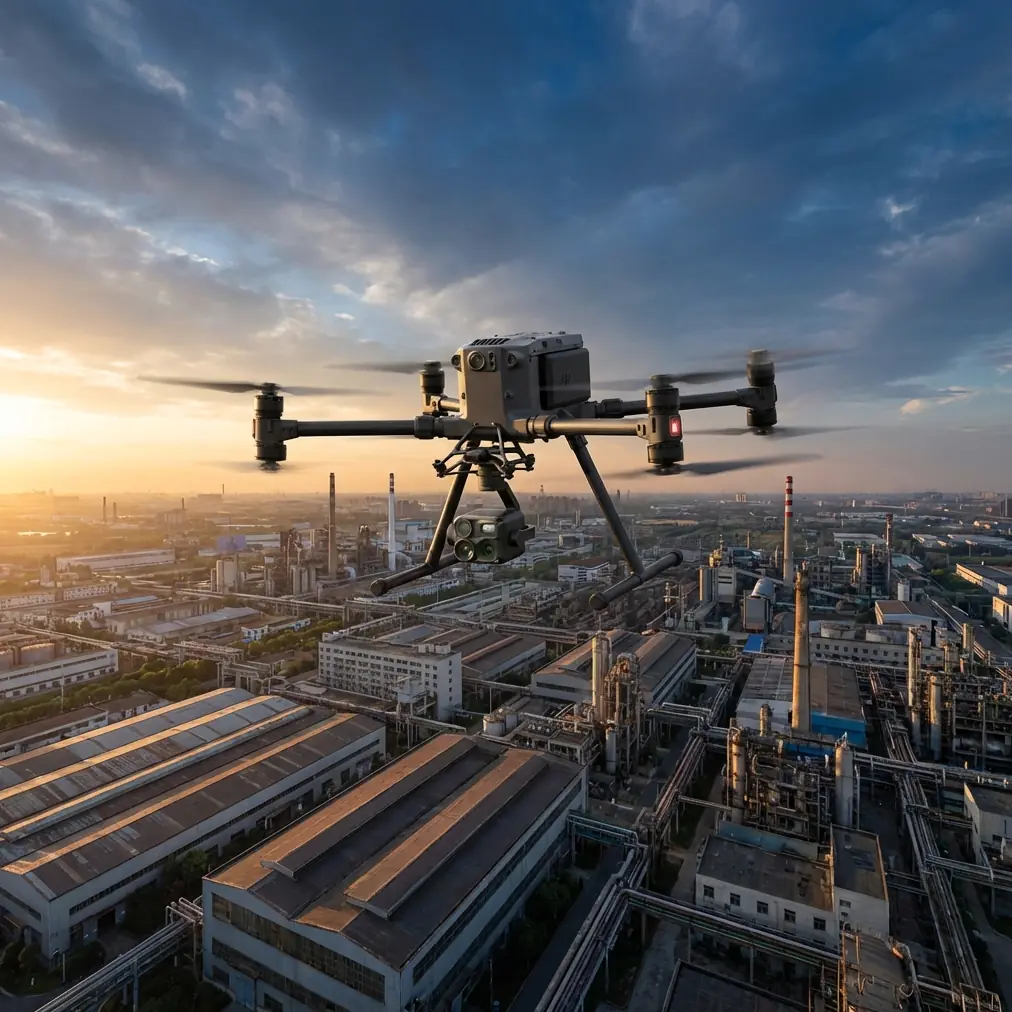
Matrice 4 for Venue Filming in Wind: Expert Guide
META: Learn how the DJI Matrice 4 handles windy venue filming with stabilized footage, O3 transmission, and thermal tools. Expert how-to guide inside.
By Dr. Lisa Wang, Drone Cinematography & Aerial Survey Specialist
TL;DR
- The Matrice 4 maintains stable cinematic footage at venue sites in winds up to 12 m/s thanks to its advanced stabilization and aerodynamic airframe design.
- O3 transmission provides reliable, low-latency video feed even when flying around large metal-roofed structures that cause signal interference.
- Integrated thermal signature detection helps scout venues for heat-related hazards, HVAC assessments, and pre-event safety audits.
- A streamlined photogrammetry workflow lets you generate 3D venue models from a single flight mission—even on gusty days.
Why Windy Venue Shoots Are Notoriously Difficult
Filming stadiums, amphitheaters, convention centers, and outdoor event spaces with drones has always been a battle against unpredictable wind. Large structures create turbulent airflow patterns—downdrafts off rooflines, vortices around corners, and sudden gusts channeled between buildings. I once lost an entire afternoon of footage at a coastal concert venue because my previous platform couldn't hold position in 8 m/s crosswinds. The footage was jittery, the gimbal over-corrected constantly, and the pilot (me) spent more time fighting drift than composing shots.
That experience drove me to the DJI Matrice 4. This guide walks you through exactly how to use it for professional venue filming when the wind won't cooperate—from pre-flight planning to post-processing deliverables.
Step 1: Pre-Flight Planning for Windy Venue Environments
Assess the Wind Profile Around Your Venue
Before you ever power on the Matrice 4, you need a site-specific wind assessment. Large venues create their own micro-weather patterns. Here's what to evaluate:
- Prevailing wind direction relative to the venue's longest face
- Roofline height and geometry—peaked roofs create stronger updrafts than flat ones
- Surrounding terrain—parking lots offer clean airflow; nearby tree lines create turbulence
- Time-of-day wind patterns—morning shoots often see calmer conditions than afternoon flights
- Obstruction-free corridors for approach and landing paths aligned with the wind
Use apps like UAV Forecast or Windy.com to check conditions, but always bring a handheld anemometer for ground-truth readings at your launch point.
File Your Airspace Authorization
Most major venues sit within controlled airspace or near heliports. Secure your BVLOS waiver early if you need to fly around the far side of a large structure where visual line of sight is obstructed. Even for standard visual-line-of-sight operations, many venue managers require proof of Part 107 certification and liability coverage before granting access.
Pro Tip: Contact the venue's operations manager at least two weeks before your shoot. Send them your flight plan, insurance certificate, and a brief safety overview. Venue staff who understand your mission will often help you access optimal launch positions—like rooftop helipads or loading docks sheltered from wind.
Step 2: Configure the Matrice 4 for Wind-Resilient Flight
Airframe and Propulsion Advantages
The Matrice 4 was engineered for demanding field conditions. Its compact, aerodynamically refined body reduces the cross-sectional area exposed to crosswinds compared to older Matrice platforms. Key specs that matter for windy venue work:
| Feature | Matrice 4 | Matrice 350 RTK | Matrice 30T |
|---|---|---|---|
| Max Wind Resistance | 12 m/s | 12 m/s | 12 m/s |
| Max Flight Time | ~45 min | ~55 min | ~41 min |
| Weight (with battery) | ~3.54 kg | ~6.47 kg | ~3.77 kg |
| Transmission System | O3 | O3 Enterprise | O3 Enterprise |
| Onboard Camera Sensor | Wide + Zoom + Thermal | Payload-dependent | Wide + Zoom + Thermal |
| Encryption Standard | AES-256 | AES-256 | AES-256 |
| Hot-swap Batteries | No (fast-change design) | Yes | No |
| Obstacle Sensing | Omnidirectional | Omnidirectional | Omnidirectional |
The Matrice 4's lighter weight is a double-edged sword in wind: it's more susceptible to displacement, but the flight controller compensates aggressively with faster motor response times. The result is a platform that moves slightly in gusts but keeps the gimbal payload remarkably stable—which is what actually matters for your footage.
Optimal Flight Settings
Configure these settings before launch for the best results in gusty conditions:
- Set flight mode to Normal (not Sport)—this prioritizes stabilization over speed
- Enable APAS (Advanced Pilot Assistance Systems) for omnidirectional obstacle avoidance around venue structures
- Lower your maximum flight speed to 8 m/s to give the flight controller more authority for wind compensation
- Set the gimbal to FPV mode only if you want deliberate motion; otherwise, keep it in Stabilized mode for locked-off cinematic shots
- Activate AES-256 encrypted transmission if filming a venue with sensitive security considerations
Step 3: Filming Techniques for Windy Venue Shoots
Capture Exterior Establishing Shots
Start with high-altitude orbits. The Matrice 4's waypoint mission planning allows you to pre-program smooth orbital paths around the venue at consistent altitude and speed. This eliminates the jittery stick inputs that plague manual flying in wind.
- Program orbits at 3 different altitudes: high (80-100 m AGL), mid (40-60 m AGL), and low (15-25 m AGL)
- Set the point of interest at the venue's geometric center
- Use the wide-angle lens for establishing context, then switch to zoom for architectural details
Close-Range Facade and Detail Work
This is where wind becomes your biggest enemy. Flying 5-10 meters from a building face means you're in the turbulence zone. The Matrice 4's omnidirectional sensing prevents collision, but you still need technique:
- Fly into the wind when approaching the structure—this gives you maximum control authority
- Use slow, deliberate lateral movements at 2-3 m/s
- Let the drone hover stationary for 5-10 seconds at each detail point to ensure the gimbal fully settles
- Record in 4K at minimum 30fps; higher frame rates give you stabilization flexibility in post
Expert Insight: When filming a venue facade with the wind coming from behind you, don't fight it. Instead, reposition your flight path so you're always making headway into the wind. The Matrice 4's flight controller works hardest (and most effectively) when it's actively pushing against resistance rather than being pushed from behind and trying to brake. Your footage will be noticeably smoother.
Step 4: Leverage Thermal and Photogrammetry Capabilities
Thermal Signature Scanning for Venue Assessment
The Matrice 4's integrated thermal camera isn't just for inspections—it's a powerful tool for venue assessment. Event production companies increasingly request thermal signature overlays to identify:
- HVAC system performance across large roof areas
- Electrical hotspots in exterior junction boxes and transformer pads
- Moisture intrusion zones that indicate potential leak hazards for indoor events
- Crowd heat modeling areas to optimize ventilation planning for open-air venues
Fly thermal passes early in the morning when ambient temperatures are lower, maximizing the contrast between heat sources and the background structure.
Photogrammetry for 3D Venue Models
Event planners, architects, and production designers love accurate 3D models of venue spaces. The Matrice 4 makes this achievable even on windy days:
- Set up a grid mission with 80% frontal overlap and 70% side overlap
- Place at least 5 GCP (Ground Control Points) markers around the venue perimeter for georeferenced accuracy
- Fly the grid at consistent altitude—the Matrice 4's RTK-capable positioning (with D-RTK 2 base station) holds altitude within centimeters
- Export images with embedded EXIF GPS data for processing in Pix4D, DJI Terra, or Agisoft Metashape
The GCP workflow is critical for any deliverable that needs real-world coordinate accuracy. Place your GCPs on flat, clearly visible surfaces—painted parking lot markers or purpose-built survey targets both work well.
Step 5: Post-Flight Data Management
After landing, your workflow should include:
- Immediate SD card backup to a field laptop—never rely on a single copy
- Flight log export for client documentation and regulatory compliance
- Battery health check—note any cells that show voltage imbalance after high-wind flights
- Gimbal calibration if you notice any drift during the flight (rare, but wind-heavy sessions can warrant it)
The Matrice 4's AES-256 encryption ensures that all transmitted data remains secure during the flight, which is essential when filming venues that involve corporate or government clients with strict data handling policies.
Common Mistakes to Avoid
- Flying in wind gusts exceeding the rated 12 m/s maximum. Sustained wind and gusts are different. If gusts hit 15 m/s+, ground the aircraft regardless of what the sustained reading says.
- Launching from exposed positions. A parking lot offers no wind shelter. Find a loading dock, wall-sheltered corner, or even the interior of a covered walkway for safer takeoff and landing.
- Ignoring battery drain rates in wind. The Matrice 4's ~45-minute flight time drops to roughly 28-32 minutes in sustained high wind because the motors work harder to hold position. Plan your shots accordingly and land at 30% battery minimum.
- Skipping GCP placement for photogrammetry work. Without ground control, your 3D model might look impressive but carry positional errors of several meters—unacceptable for production design or architectural measurement.
- Forgetting to white-balance for venue lighting. If the venue has colored LED exterior lighting, your auto white balance will shift constantly. Lock it manually before recording.
Frequently Asked Questions
Can the Matrice 4 film reliably in rain as well as wind?
The Matrice 4 carries an IP54 ingress protection rating, meaning it can handle light rain and dust. However, heavy rain creates water spots on the lens and degrades image quality. For windy-and-rainy conditions, apply a hydrophobic lens coating and limit flight duration to reduce exposure. Always dry the aircraft thoroughly after wet flights to prevent long-term corrosion.
How does O3 transmission perform around large metal venue structures?
O3 transmission on the Matrice 4 excels in environments that would cripple older systems. Metal roofs, steel framing, and reinforced concrete create multipath interference, but O3's dual-antenna diversity and adaptive frequency hopping maintain a stable 1080p feed at distances up to 20 km (line of sight). Around venues, you'll typically fly within 1-2 km, so signal integrity is rock-solid even when the drone is behind a structure relative to the controller.
Is hot-swap battery capability available on the Matrice 4?
The Matrice 4 does not feature true hot-swap batteries like the Matrice 350 RTK. However, its fast battery change design means swaps take under 60 seconds with practice. For venue shoots requiring continuous coverage, bring at least 4-6 fully charged batteries and stagger your charging schedule using a multi-bay hub. The quick changeover minimizes downtime between flight legs—critical when you're racing against a narrow weather window.
Final Thoughts and Next Steps
The Matrice 4 has fundamentally changed how I approach windy venue shoots. Where I once budgeted an entire extra day for "weather contingency," I now fly confidently in conditions that would have grounded my previous platforms. The combination of aggressive stabilization, reliable O3 transmission through complex RF environments, integrated thermal and visual sensors, and a streamlined photogrammetry workflow makes it the most capable single-drone solution for professional venue cinematography and survey work.
Whether you're delivering cinematic reels for event marketing, conducting thermal assessments for facility management, or building photogrammetry models for production design, the Matrice 4 handles the wind so you can focus on the creative and technical work that matters.
Ready for your own Matrice 4? Contact our team for expert consultation.