
Matrice 4 in a High-Altitude Vineyard: What Actually
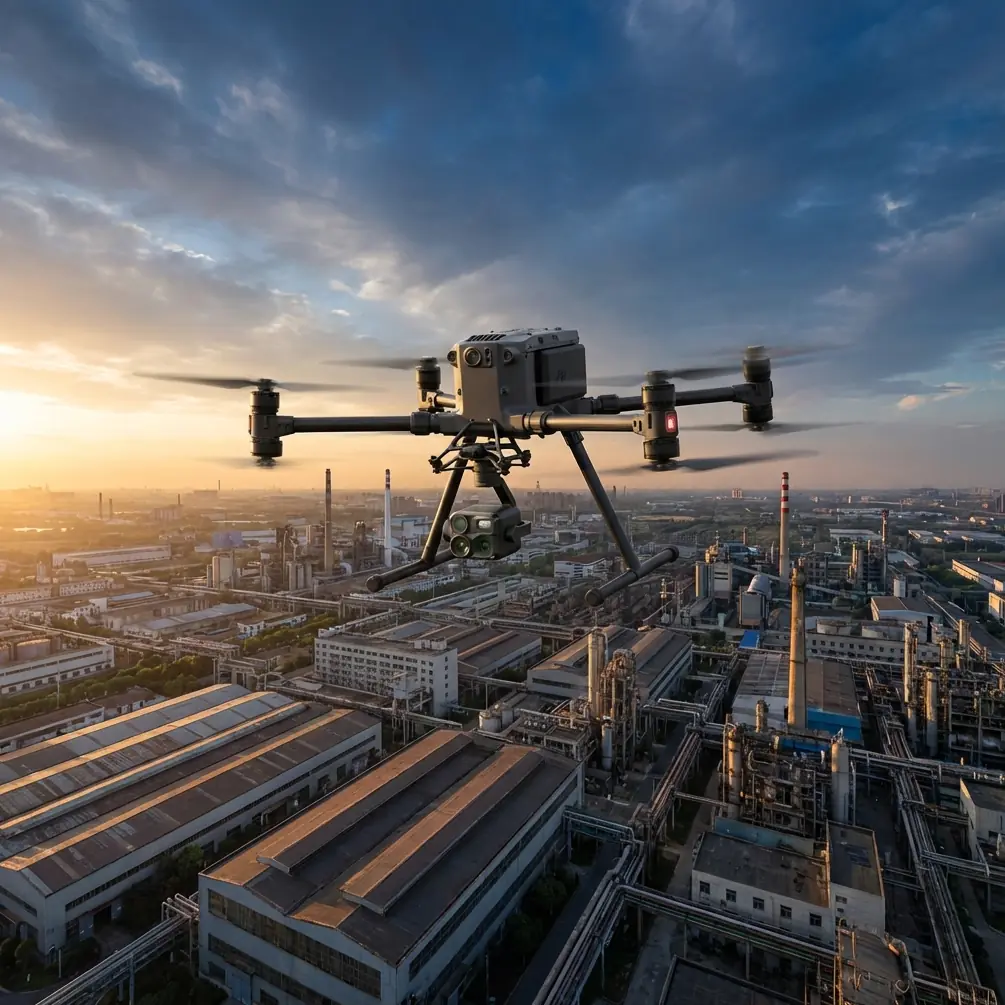
Matrice 4 in a High-Altitude Vineyard: What Actually Matters When Air, Moisture, and Interference Start Working Against You
META: A field-based Matrice 4 case study for high-altitude vineyard filming, covering moisture control, salt and fungal risk, antenna adjustment under interference, thermal workflow, and mission planning for reliable commercial results.
I’ve spent enough time around mountain agriculture and drone operations to know that the aircraft is rarely the whole story. The environment writes half the mission plan.
That is especially true when the job is filming vineyards at altitude with a Matrice 4. On paper, the assignment sounds straightforward: capture sweeping rows at dawn, collect thermal signature data before the sun loads the canopy, then build a photogrammetry set for terrain context and irrigation analysis. In the field, though, the weak points show up somewhere else. Moisture in storage. Fine airborne particles. Temperature swings. Uneven airflow around sensitive electronics. And, on some properties, electromagnetic interference that quietly degrades control confidence until the pilot finally notices the link margin is not where it should be.
This article is built around one practical scenario: a commercial crew using Matrice 4 to film and document a high-altitude vineyard. Not a generic product overview. A real-world operating logic for getting clean footage and reliable data while protecting the aircraft between flights.
The assignment: cinematic footage plus usable agronomic intelligence
The vineyard in this case sits high enough that mornings are cold, midday sun is harsh, and the terrain folds in ways that complicate both radio paths and image consistency. The owner wanted three outputs from one deployment:
- cinematic video for estate marketing
- thermal passes for spotting uneven vine stress
- photogrammetry deliverables tied to GCPs for repeatable seasonal comparison
That combination makes the Matrice 4 platform appealing because one aircraft can support more than one layer of decision-making. The footage sells the place. The map explains the place. The thermal layer reveals where the place is underperforming.
But the deeper lesson from this job wasn’t about camera specs. It was environmental discipline.
Why air quality and moisture control matter more than most crews admit
A detail from classic aircraft environmental design literature is surprisingly relevant to drone operations: fungal growth accelerates in warm, damp conditions, and many common species thrive at 20–30°C with relative humidity above 85%. That sounds like an aviation maintenance footnote until you remember how commercial drone crews actually work. They pack fast, drive downhill after a shoot, leave cases closed, and trap moisture inside with batteries, landing gear residue, straps, foam inserts, and lens cloths.
That is how you create a tiny climate chamber.
The source material also notes a basic preventive rule that remains brutally practical: equipment should be well sealed internally and kept clean and dry, with relative humidity below 65%. For a Matrice 4 crew in vineyard country, that translates into operational habits, not theory:
- never seal the aircraft in a case immediately after a cold morning flight if condensation is possible
- dry down the aircraft, payload surfaces, and case interior before long transport
- avoid leaving organic debris, dust, or plant residue in folds, latches, and vent areas
- store batteries and the aircraft in controlled humidity when not flying for multiple days
Why does this matter operationally? Because fungal contamination and persistent moisture don’t just affect cosmetics. The same reference points out the consequences across materials: reduced insulation performance, aging of plastics, damage to seals, corrosion on metals, and even degradation of coated optical elements. For a Matrice 4 mission set that depends on stable imaging, clean gimbal behavior, and trustworthy electronics, that is not minor. It can mean softer optics over time, compromised seals around sensitive assemblies, or intermittent electrical behavior that gets misread as a software issue.
A high-altitude vineyard is often treated as a “dry” environment because the midday air feels clean. That assumption is sloppy. Morning dew, irrigation microclimate, cold-soak recovery, and vehicle-to-field temperature transitions can create exactly the kind of moisture exposure crews underestimate.
The overlooked particle problem: not just dust, but coastal logistics too
Another source detail deserves more attention in drone field planning: most salt fog particles fall in the 1–5 μm range, and particle size decreases as you move farther from the coast. This isn’t just interesting atmospheric trivia. It changes how we think about aircraft transport and staging.
Many vineyard operators are not flying in isolation from coastal supply routes. Aircraft may be stored near the coast, transported inland, or staged from mixed environments across a multi-day production schedule. Fine salt particles in that 1–5 μm range are small enough to spread easily and settle into equipment interfaces, especially when crews open cases in humid conditions. Once there, salt and moisture become a corrosion partnership.
For Matrice 4 users, the operational takeaway is simple: if your aircraft or support kit has spent time in coastal air, don’t assume a mountain filming location resets the clock. Inland deployment does not erase prior exposure. Wipe-downs, case maintenance, dry storage, and routine inspection of connectors and optical surfaces should be part of the mission cycle.
This matters even more when the job includes repeated dawn launches. Those are the flights where salt residue and moisture can combine into subtle performance issues—sticky mechanical feel, degraded contact reliability, or haze on glass that steals contrast from first-light footage.
The mountain vineyard interference problem is rarely where pilots expect it
Now to the part most operators recognize immediately: link quality.
In this case, the vineyard had a ridge with repeater hardware, buried power infrastructure feeding pump systems, and a metal-roofed processing area near one launch point. None of that created a total signal failure. It did something more annoying. It created inconsistent electromagnetic interference that showed up during lateral moves and low-altitude transitions along the rows.
This is where experience with antenna adjustment matters more than menu-diving.
With O3 transmission in the workflow, pilots often assume the link will simply sort itself out. Usually it does—until terrain shadow, reflective surfaces, and local interference stack together. On this site, the fix was not dramatic. We adjusted pilot position and reoriented antennas to maintain better geometric alignment during cross-slope passes. That reduced instability more effectively than changing the flight concept.
The important thing is understanding why. In vineyards, especially on stepped or sloped terrain, the aircraft may look visually unobstructed while the radio path is still compromised by angle, structure bounce, or partial terrain masking. Antenna adjustment is not superstition. It is a control input at the mission-design level.
Our field rule was this: if the aircraft was moving across a slope and transmission quality dipped near a service structure, we paused assumptions before blaming the drone. We shifted the ground station position, checked antenna orientation, and reran a short test leg. In several cases, that restored confidence without forcing a more conservative route.
That matters commercially because every unnecessary reflight costs light, battery cycles, and continuity. When you are trying to match thermal, video, and photogrammetry windows on the same morning, delay compounds quickly.
Thermal signature collection only works if the rest of the workflow is disciplined
The vineyard owner initially thought thermal imaging would simply “show the stressed vines.” That is not how it works. Thermal signature data is highly sensitive to timing, background heating, recent irrigation, and wind exposure. At altitude, with fast-changing morning conditions, the window for clean comparative data can be narrow.
The Matrice 4 platform makes that capture practical, but success depends on how you sequence the mission.
We flew thermal first, before the visible-spectrum cinematic passes. Not because the camera demanded it, but because the site did. Once sunlight built across the slope, the thermal separation between irrigation inconsistency and sun-angle heating began to collapse. You can still gather imagery later, but it becomes less useful for diagnosing subtle differences between rows.
The second discipline was GCP integration for the photogrammetry run. Vineyards are deceptively repetitive. Row after row can look similar enough that small registration errors become annoying later when managers want to compare block conditions across time. Ground control points anchor the dataset to something more trustworthy than visual repetition alone.
Operationally, this is where the mission becomes more than a filming job. A Matrice 4 deployment with thermal and photogrammetry can help a vineyard identify drainage patterns, missing vigor zones, edge effects, and infrastructure conflicts in one visit. But only if the environmental variables are respected from the start.
Battery handling in cold morning operations
High-altitude vineyard work often starts in air that is cold enough to affect both aircraft readiness and crew judgment. Pilots rush because the light is beautiful. That is exactly when small mistakes become expensive.
If you are running hot-swap batteries in a tight schedule, the temptation is to cycle quickly and keep the aircraft moving. Fine. But battery handling has to stay synchronized with environmental handling. Packs brought from a warm vehicle into cold air, then returned to a case or charger environment too quickly, can create condensation pathways that operators don’t always see.
This is another reason the humidity guidance above matters. Keeping storage conditions below 65% relative humidity is not abstract best practice; it reduces the risk that your battery compartment, connectors, and case internals become moisture traps during repeated launch-and-recover cycles.
For long morning sessions, we used a simple rhythm: inspect, air out, rotate, and avoid sealing damp gear. That preserves reliability better than any heroic troubleshooting later.
Cabin airflow lessons that strangely apply to drone kit management
One of the reference texts discusses aircraft air distribution and makes an observation that translates well to field electronics: large volumes of very dry fresh air can create comfort problems, while recirculation and controlled distribution are often necessary to maintain balance. In passenger systems, it’s about avoiding overly dry conditions and managing temperature layering. In drone operations, the parallel is this: airflow itself is not automatically beneficial unless it is controlled and applied where needed.
Why mention that here? Because crews often “dry” equipment badly. They blast cases with uncontrolled air, leave one side ventilated while moisture remains trapped elsewhere, or store warm electronics in ways that encourage uneven condensation and reabsorption. The reference’s broader lesson is useful: airflow placement and distribution matter. Good drying and storage are not just about moving air; they are about moving it intelligently.
For a Matrice 4 crew, that means:
- ventilating the case interior evenly rather than cracking one corner open for an hour
- separating damp accessories from sealed compartments
- avoiding storage arrangements that trap warm, moist air near optics and connectors
- treating the whole kit as an environmental system, not a pile of parts
That mindset improves aircraft longevity more than most operators realize.
AES-256, data trust, and why vineyard clients care
Commercial vineyard clients may not ask specifically about AES-256, but they do care about discretion. They are sharing crop conditions, property layouts, irrigation patterns, and sometimes operational bottlenecks they would rather not circulate casually. If your Matrice 4 workflow includes secure transmission and protected handling of captured data, that is not technical trivia. It supports trust.
This becomes especially relevant when the mission extends toward repeatable remote operations or future BVLOS-style planning in broad agricultural estates, where data continuity and procedural integrity matter as much as the imagery itself. Even when the current flight is entirely local and visual, building a disciplined handling process now makes later scaling easier.
What made the Matrice 4 effective on this job
The strongest result from this deployment was not a single hero shot. It was the way the aircraft supported layered outputs without losing operational control in a difficult environment.
Three things stood out:
First, interference management was solved in the field, not in theory. Antenna adjustment and pilot repositioning restored transmission confidence when terrain and infrastructure started degrading the link.
Second, environmental handling preserved reliability. The practical thresholds from aircraft environmental design—especially the warning around fungal growth above 85% relative humidity and the storage target below 65%—are directly useful for drone crews working between cold mornings and enclosed transport.
Third, the mission sequence matched the vineyard’s needs. Thermal signature capture came early. Photogrammetry followed with GCP support. Cinematic footage was scheduled around the light rather than forcing all objectives into one rushed block.
That is what good Matrice 4 work looks like in the real world. Not spec recitation. Not generic best practices copied from a manual. Just a platform used with respect for the environment it is flying in.
If you’re planning a similar vineyard workflow and want to compare mission architecture, payload strategy, or transmission setup, you can message our flight team directly here.
Final field notes for vineyard operators
If I had to compress this case into a few non-obvious lessons, they would be these:
Mountain vineyard work punishes casual storage habits. Moisture control is mission readiness.
Fine airborne particles matter even when they are invisible. Salt exposure from prior coastal logistics can continue affecting aircraft inland.
Interference is often geometric before it is technological. Antenna position and operator location can restore O3 link quality faster than overcomplicating the route.
Thermal imaging is only valuable when timing is protected. Once the slope heats unevenly, clean interpretation gets harder.
And perhaps the most useful point of all: the Matrice 4 becomes much more valuable when you stop thinking of it as a flying camera and start treating it as part of an environmental measurement system.
That shift in mindset is what separates a decent vineyard shoot from a repeatable aerial workflow the client can use season after season.
Ready for your own Matrice 4? Contact our team for expert consultation.