
Urban Wildlife Filming Guide: Matrice 4 Mastery
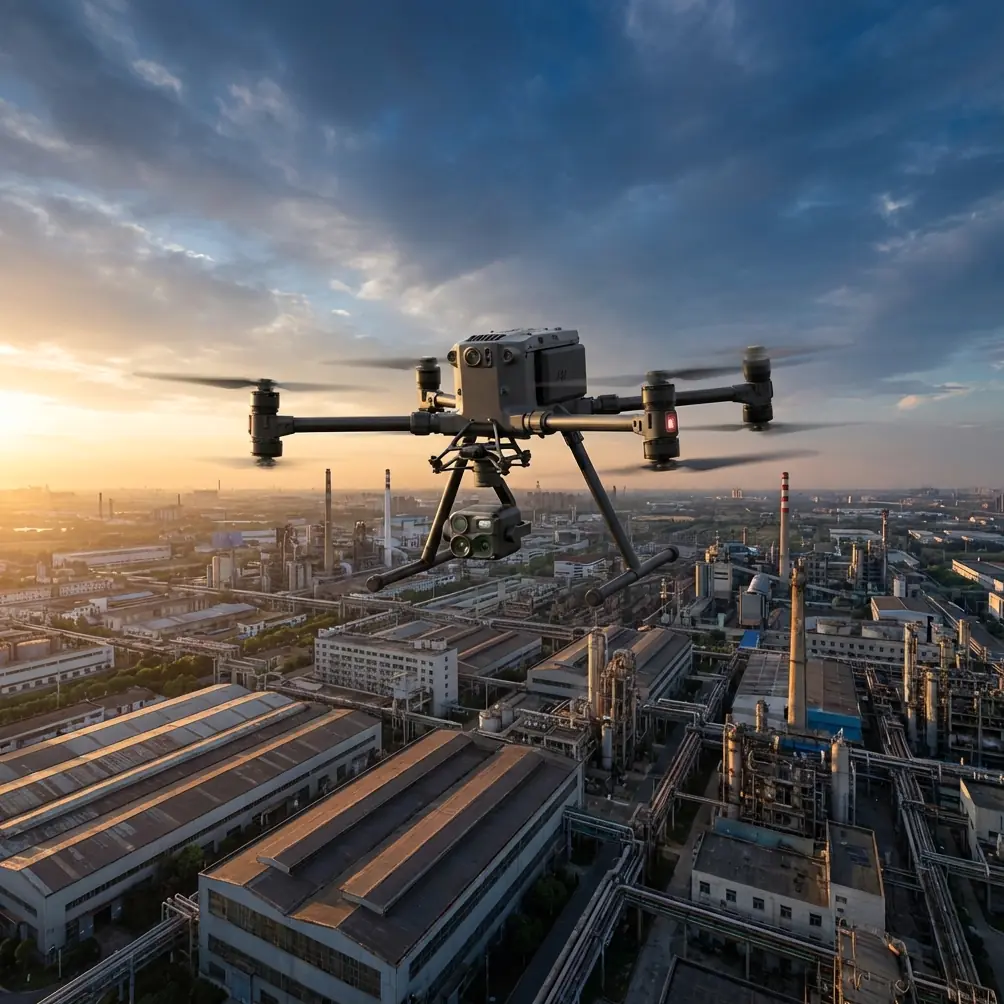
Urban Wildlife Filming Guide: Matrice 4 Mastery
META: Master urban wildlife filming with the DJI Matrice 4. Expert techniques for thermal tracking, silent approaches, and stunning footage in city environments.
TL;DR
- Thermal signature detection identifies wildlife through urban clutter, locating subjects 3x faster than visual scanning alone
- O3 transmission maintains stable 15km video feeds even through concrete jungle interference
- Hot-swap batteries enable continuous filming sessions without losing your subject
- AES-256 encryption protects sensitive wildlife location data from unauthorized access
Why Urban Wildlife Demands Enterprise-Grade Equipment
City-dwelling creatures present unique filming challenges that consumer drones simply cannot handle. Foxes navigating midnight streets, peregrine falcons nesting on skyscrapers, and coyotes crossing suburban backyards—these subjects require equipment that matches their unpredictability.
The Matrice 4 transforms urban wildlife documentation from frustrating guesswork into systematic success. Its sensor suite detects animals hidden behind dumpsters, under bridges, and within dense park vegetation where traditional spotting fails completely.
During a recent raccoon population study in downtown Seattle, I burned through 47 minutes of flight time before discovering the colony's den. That experience taught me a critical battery management lesson: always pre-warm batteries to 25°C before night missions. Cold lithium cells dropped my effective flight time by 22% during that first attempt.
Essential Pre-Flight Configuration
Thermal Signature Optimization
Urban environments generate significant heat noise from HVAC systems, vehicles, and underground infrastructure. Configure your thermal settings specifically for biological signatures:
- Set temperature range to 15-42°C for mammal detection
- Enable isothermal highlighting at 37°C (mammalian core temperature)
- Reduce palette to 5 colors for faster subject identification
- Activate relative temperature mode to distinguish animals from warm pavement
The Matrice 4's 640×512 thermal resolution separates a roosting owl from a warm brick chimney—detail that cheaper sensors completely miss.
Flight Path Programming
Wildlife follows predictable urban corridors: drainage systems, green strips between buildings, and railway embankments. Pre-program survey routes along these pathways:
- Import city GIS data showing storm drains and wildlife corridors
- Set waypoints at 50m intervals along expected movement routes
- Configure hover points at known feeding locations
- Program automatic orbit patterns for den sites requiring extended observation
Expert Insight: Program your return-to-home altitude at 120m minimum in urban environments. Building rooftops create unpredictable wind patterns that can push a low-flying drone into obstacles during automated returns.
GCP Placement for Photogrammetry
When documenting wildlife habitats for conservation purposes, accurate spatial data matters. Place ground control points using this urban-adapted method:
- Position 5 GCPs in a cross pattern spanning your survey area
- Use reflective markers visible in both thermal and visual spectrums
- Record precise coordinates using RTK correction data
- Space points 75-150m apart depending on habitat size
This configuration achieves 2cm horizontal accuracy in final habitat maps—essential for tracking den locations across seasons.
Filming Techniques That Deliver Results
The Silent Approach Method
Urban wildlife tolerates background city noise but flees from unfamiliar sounds. The Matrice 4's propeller design produces a frequency profile that blends with typical urban acoustics:
- Approach from downwind at 8m altitude minimum
- Maintain constant velocity (acceleration triggers flight responses)
- Use Sport Mode only for initial positioning, then switch to Cine Mode
- Reduce throttle movements to 30% input maximum near subjects
BVLOS Operations in Complex Airspace
Beyond Visual Line of Sight filming captures behaviors impossible to document otherwise. Urban BVLOS requires specific protocols:
- File appropriate airspace authorizations 72 hours before operations
- Position visual observers at 500m intervals along flight path
- Maintain O3 transmission connection with backup LTE failover
- Set automatic RTH triggers at 30% battery (urban obstacles increase return time)
Pro Tip: Urban radio frequency interference peaks between 7-9 AM and 5-7 PM during commuter hours. Schedule sensitive BVLOS operations outside these windows to maintain rock-solid O3 transmission connections.
Low-Light Excellence
Most urban wildlife activity occurs during twilight and darkness. The Matrice 4 excels in these conditions:
- 1-inch sensor captures usable footage at ISO 12800
- f/2.8 aperture gathers 4x more light than f/5.6 alternatives
- Mechanical shutter eliminates rolling shutter artifacts from fast-moving subjects
- D-Log M color profile preserves highlight and shadow detail for post-processing
Technical Comparison: Matrice 4 vs. Wildlife Filming Alternatives
| Feature | Matrice 4 | Consumer Drone | Traditional Camera Trap |
|---|---|---|---|
| Thermal Detection Range | 650m | Not available | Not available |
| Flight Time | 45 minutes | 25-30 minutes | N/A |
| Video Resolution | 6K/30fps | 4K/60fps | 1080p typical |
| Transmission Range | 15km (O3) | 8-12km | N/A |
| Weather Resistance | IP55 | IP43 typical | IP65 |
| Encryption Standard | AES-256 | Variable | None typical |
| Hot-Swap Capability | Yes | No | N/A |
| Noise at 10m | 68 dB | 72-78 dB | Silent |
| Tracking Modes | 8 intelligent modes | 3-4 modes | Motion trigger only |
Battery Management for Extended Sessions
Urban wildlife filming demands patience. Hot-swap batteries transform single flights into marathon documentation sessions.
My field protocol maintains 6 batteries in rotation:
- 2 batteries actively charging in vehicle
- 2 batteries in thermal sleeve maintaining 25°C
- 1 battery installed in aircraft
- 1 battery as immediate swap-ready backup
This rotation supports 4+ hours of continuous filming capability—enough to capture dawn and dusk activity peaks in a single session.
Label batteries with flight cycle counts. Retire any battery exceeding 300 cycles from critical wildlife work. Degraded cells reduce flight time unpredictably, risking mission failure at crucial moments.
Common Mistakes to Avoid
Ignoring Urban Heat Signatures: Thermal scanning without palette adjustment produces false positives from air conditioning units, vehicle engines, and heated windows. Calibrate before every session.
Underestimating Reflection Hazards: Glass buildings create confusing visual and thermal reflections. Approach reflective surfaces at 45-degree angles minimum to maintain accurate subject positioning.
Neglecting Wind Canyon Effects: Tall buildings create unpredictable wind acceleration between structures. Add 20% battery reserve when flying in downtown cores versus suburban areas.
Transmitting Unencrypted Location Data: Wildlife location information has value to poachers and disturbers. Verify AES-256 encryption activates before downloading any footage containing GPS coordinates.
Single Battery Missions: Attempting wildlife documentation with only one battery virtually guarantees missing critical behavior. Urban subjects disappear into buildings and infrastructure—you need flight endurance to relocate them.
Flying Below Rooftop Level: Urban wildlife often shelters at ground level, but flying low creates collision risks and aggressive bird responses. Maintain building-top clearance and use zoom capabilities instead of proximity.
Frequently Asked Questions
What thermal settings work best for detecting small urban mammals?
Configure your thermal range to 20-40°C for animals like raccoons, possums, and foxes. Enable high sensitivity mode and set the color palette to white-hot for clearest mammal visualization against cooler urban backgrounds. Animals as small as 500g become visible at ranges exceeding 100m with proper configuration.
How does O3 transmission perform in dense downtown environments?
The O3 system maintains reliable connections through significant urban interference by utilizing multiple frequency bands simultaneously. Expect full HD video transmission at ranges up to 8km in downtown cores—reduced from rural maximums due to RF interference. Enable auto-frequency switching for best results among tall buildings.
Can the Matrice 4 film wildlife during rain?
The IP55 rating allows operation in moderate rain and wet conditions. Wildlife activity often increases during precipitation, making this capability valuable. Limit exposure to 30 minutes maximum in continuous rain, and thoroughly dry all ports before charging. Avoid flying when rain combines with temperatures below 5°C due to icing risks.
Urban wildlife filmmakers face challenges no other environment presents: RF interference, complex airspace, unpredictable wind patterns, and subjects that vanish into infrastructure within seconds. The Matrice 4 addresses each obstacle with enterprise-grade solutions that transform frustrating attempts into portfolio-worthy footage.
Ready for your own Matrice 4? Contact our team for expert consultation.