
Matrice 4 Wildlife Filming: Low-Light Expert Guide
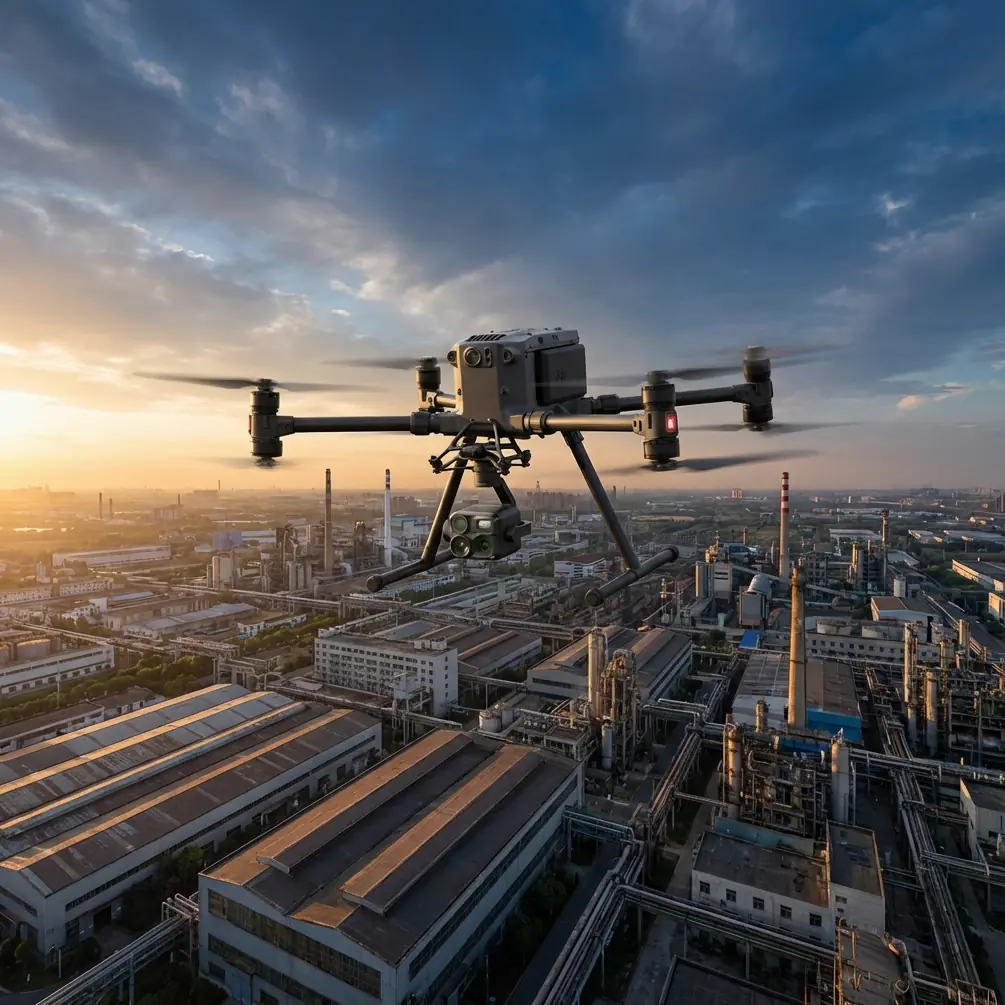
Matrice 4 Wildlife Filming: Low-Light Expert Guide
META: Master low-light wildlife filming with the DJI Matrice 4. Expert techniques for thermal imaging, camera settings, and pre-flight prep for stunning footage.
TL;DR
- Pre-flight lens cleaning prevents thermal interference and ensures accurate wildlife detection in darkness
- The Matrice 4's 1-inch CMOS sensor captures usable footage down to 0.5 lux illumination
- O3 transmission maintains stable 15km video feed even through dense forest canopy
- Combine thermal signature detection with wide-aperture filming for professional nocturnal wildlife documentaries
Why the Matrice 4 Dominates Low-Light Wildlife Work
Capturing elusive nocturnal species requires equipment that sees what human eyes cannot. The DJI Matrice 4 combines enterprise-grade thermal imaging with a cinema-quality sensor, making it the definitive tool for wildlife cinematographers working after sunset.
This guide covers everything from critical pre-flight maintenance to advanced camera configurations. You'll learn exactly how to maximize the M4's capabilities for filming wildlife in challenging lighting conditions.
Whether you're documenting endangered owl populations or tracking big cats on African savannahs, these techniques will transform your low-light footage.
Pre-Flight Safety: The Cleaning Step Most Operators Skip
Here's something that separates amateur wildlife footage from broadcast-quality work: sensor and lens contamination directly impacts thermal accuracy.
Before every low-light mission, complete this essential cleaning protocol:
- Thermal sensor window: Use microfiber cloth with gentle circular motions
- Primary camera lens: Remove dust particles that create flare in low-light conditions
- Obstacle avoidance sensors: Clean all 8 sensing directions to prevent false readings
- Propeller inspection: Check for debris that causes vibration-induced blur
- Cooling vents: Clear any blockages that affect thermal camera calibration
Expert Insight: Fingerprint oils on thermal sensor windows create persistent "ghost" signatures that can be mistaken for animal heat signatures. I carry 99% isopropyl alcohol wipes specifically for thermal window cleaning—standard lens cleaners leave residue that appears in thermal imaging.
This 3-minute pre-flight ritual has saved countless hours of unusable footage in my wildlife documentation career.
Understanding the Matrice 4's Low-Light Capabilities
Sensor Architecture for Darkness
The Matrice 4 features a 1-inch CMOS sensor with 2.4μm pixel pitch—significantly larger than consumer drones. This translates to genuine low-light performance:
| Specification | Matrice 4 | Consumer Drones | Advantage |
|---|---|---|---|
| Minimum Illumination | 0.5 lux | 3-5 lux | 6-10x better |
| ISO Range | 100-25600 | 100-6400 | 4x headroom |
| Pixel Size | 2.4μm | 1.2-1.7μm | 40-100% larger |
| Aperture | f/2.8 | f/2.8-4.0 | Consistent |
| Dynamic Range | 14+ stops | 10-12 stops | Better shadow detail |
Thermal Signature Detection
Wildlife generates distinct thermal signatures that the M4's 640×512 resolution thermal sensor captures with precision. Different species present unique heat patterns:
- Large mammals: Core body temperatures of 37-39°C create strong contrast against ambient environment
- Birds: Wing membranes show cooler than body core, enabling species identification
- Reptiles: Lower thermal signatures require sensitivity adjustments to detect
- Small mammals: Require closer approach due to lower total heat output
Camera Settings for Wildlife in Low Light
Primary Camera Configuration
Start with these baseline settings and adjust based on conditions:
ISO Strategy
- Begin at ISO 1600 for dusk conditions
- Push to ISO 6400 for deep twilight
- Reserve ISO 12800-25600 for emergency situations only
Shutter Speed Rules
- Maintain minimum 1/50 second for 24fps footage
- Use 1/100 second for 50fps slow-motion capability
- Never drop below 1/30 second regardless of light—motion blur destroys wildlife footage
Aperture Settings
- Lock at f/2.8 for maximum light gathering
- Only stop down to f/4 when depth of field issues arise
Thermal Camera Optimization
The thermal sensor requires different thinking than visible light cameras:
- Palette selection: Use "White Hot" for documentation, "Ironbow" for dramatic effect
- Gain mode: Switch to High Gain for detecting smaller animals
- Temperature span: Narrow to 10-15°C range centered on expected animal body temperature
- Isotherm: Enable to highlight specific temperature ranges matching target species
Pro Tip: Calibrate your thermal camera against a known heat source before each session. I use a chemical hand warmer at approximately 50°C as my reference point. This ensures your temperature readings remain accurate for scientific documentation purposes.
O3 Transmission: Maintaining Connection in Dense Environments
Wildlife habitats rarely offer clear line-of-sight. The Matrice 4's O3 transmission system delivers critical advantages:
Signal Performance Through Obstacles
- Dense forest canopy: Maintains connection through moderate foliage at reduced range
- Maximum theoretical range: 15km in optimal conditions
- Practical wildlife range: 3-5km with obstacles provides reliable operation
- Latency: 120ms ensures responsive control for tracking moving subjects
Encryption and Interference Resistance
The AES-256 encryption protects your footage and flight data. More importantly for wildlife work, the system's frequency hopping resists interference from:
- Other drone operators in the area
- Radio collars on tracked animals
- Research station communications
- Atmospheric electrical interference
Photogrammetry Integration for Habitat Documentation
Wildlife cinematography often requires broader environmental context. The Matrice 4 supports professional photogrammetry workflows:
GCP Placement Strategy
Ground Control Points improve mapping accuracy for habitat surveys:
- Place minimum 5 GCPs visible from flight altitude
- Distribute points across the mapping area—avoid clustering
- Use high-contrast markers visible in low light conditions
- Record precise coordinates with RTK-capable receivers
Mission Planning for Dual Capture
Configure your mission to capture both cinematic wildlife footage and photogrammetry data:
- Primary pass: Focus on subject with thermal detection
- Secondary pass: Systematic grid for habitat mapping
- Overlap settings: 75% frontal, 65% side for reliable stitching
BVLOS Operations: Extended Wildlife Monitoring
Beyond Visual Line of Sight operations unlock the Matrice 4's full potential for wildlife research. However, these require additional preparation:
Regulatory Requirements
- Obtain appropriate BVLOS waivers from aviation authorities
- Establish visual observers at required intervals
- Document detect-and-avoid procedures
- Maintain redundant communication systems
Hot-Swap Batteries for Extended Missions
The Matrice 4's hot-swap battery system enables continuous operation:
- Single battery flight time: Approximately 45 minutes
- Hot-swap window: 90 seconds to exchange batteries
- Recommended practice: Pre-warm replacement batteries in cold conditions
- Mission continuity: Resume exact position after swap
Common Mistakes to Avoid
Ignoring Wind at Dawn and Dusk Thermal layers during transition periods create unpredictable turbulence. The Matrice 4 handles 12m/s winds, but wildlife footage suffers from micro-corrections. Fly during calm windows.
Over-Processing Low-Light Footage Aggressive noise reduction destroys fur and feather detail. Accept some grain rather than creating plastic-looking animals in post-production.
Approaching Too Quickly The M4's quiet operation doesn't mean silent. Approach subjects at walking speed from downwind when possible.
Neglecting ND Filters at Dusk The transition period from day to night requires variable ND filters. Without them, your footage will show harsh exposure transitions.
Forgetting Thermal Calibration Drift Thermal cameras drift over extended flights. Land every 25-30 minutes to allow automatic recalibration, even if battery permits longer flight.
Frequently Asked Questions
What's the minimum light level for usable wildlife footage?
The Matrice 4 produces broadcast-quality footage down to approximately 1 lux—equivalent to a full moon on a clear night. Below this threshold, thermal imaging becomes your primary detection tool while visible light footage serves as supplementary documentation only.
How close can I fly to wildlife without disturbance?
Species sensitivity varies dramatically. Large mammals typically tolerate approaches to 30-50 meters. Birds may flush at 100+ meters depending on species. Start distant and approach gradually while monitoring animal behavior for stress indicators.
Can the M4's thermal camera identify individual animals?
Thermal imaging alone cannot reliably identify individuals. However, combining thermal signatures with visible light markings during twilight transitions enables individual identification. Some researchers use thermal patterns of facial blood vessels for large mammals, though this requires specialized analysis software.
Ready for your own Matrice 4? Contact our team for expert consultation.