
Matrice 4 wildlife filming in dusty terrain
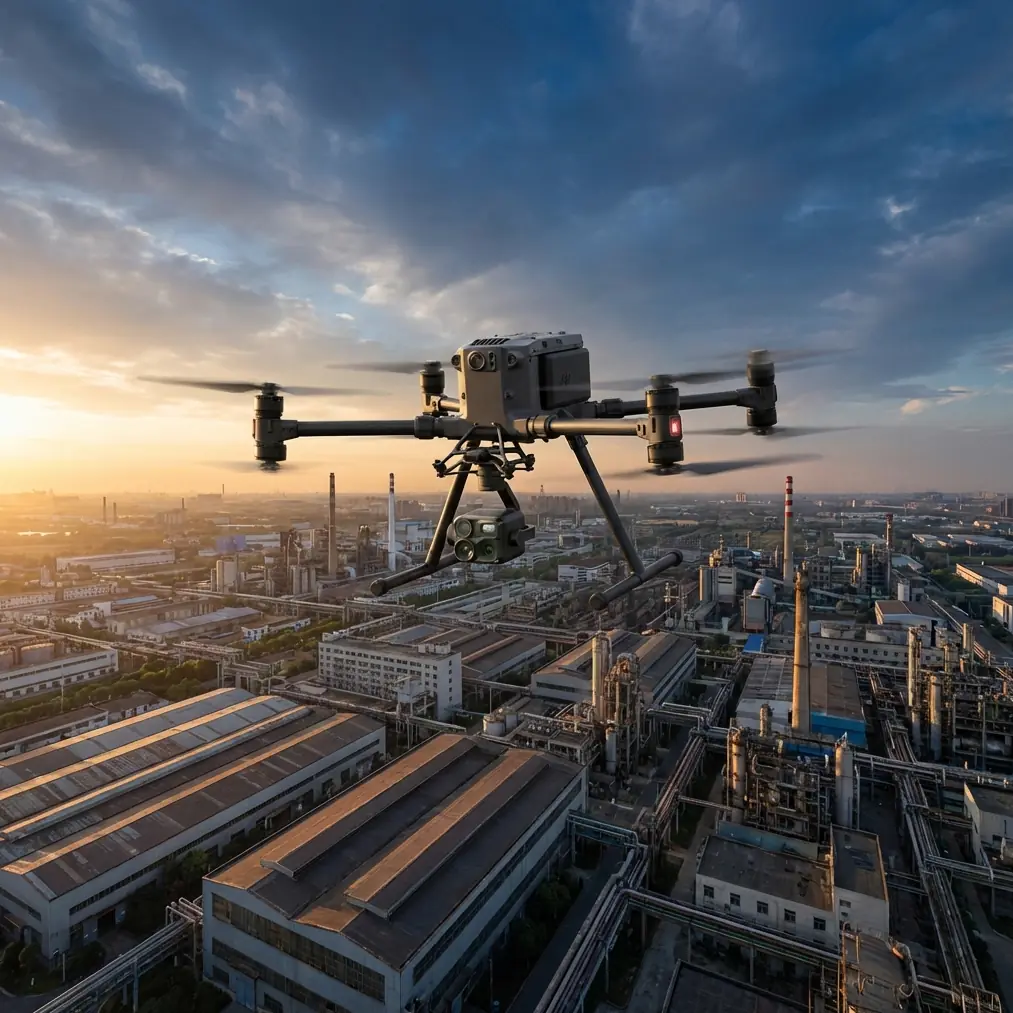
Matrice 4 wildlife filming in dusty terrain: how stronger navigation changes the way you plan the mission
META: Expert Matrice 4 wildlife filming tips for dusty environments, with a practical look at precision navigation, interference resilience, and why low-altitude guidance matters in the field.
Dust changes everything.
Not just image quality or lens cleaning schedules. It changes how confidently you can fly, how tightly you can repeat a route, and how much trust you place in the aircraft when the environment gets messy. For wildlife work, that matters more than most operators admit. Animals rarely wait while you recalibrate, and the best footage often comes when you can hold position, re-fly the same line, and keep the aircraft stable near terrain features that confuse weaker navigation systems.
That is why a recent development from Anhui’s provincial science and aviation ecosystem deserves attention from anyone evaluating the Matrice 4 for real field work. A project led by 安徽省通航控股集团 was selected for the 2025 Anhui provincial scientific and technological innovation plan. Its focus is unusually relevant to drone operators: a BeiDou-based intelligent navigation system built for low-altitude flight, with anti-interference capability, centimeter-level precision, and high reliability.
On paper, that sounds like infrastructure news. In practice, it speaks directly to what serious Matrice 4 users care about in dusty wildlife filming: stable low-level navigation in difficult conditions, where interference, degraded visibility, and repeated flight paths can make or break a shoot.
Why this navigation story matters to Matrice 4 pilots
The headline detail is not just “high precision.” It is the combination of three things in one system: strong anti-interference, centimeter-level accuracy, and high reliability. Those are not marketing adjectives. They describe three operational problems that show up constantly in field production.
First, interference. Dusty wildlife zones are often remote, but they are not always signal-clean. You may be working near temporary communications equipment, rugged vehicles, solar installations, field camps, or mixed terrain that creates odd GNSS behavior. The Anhui project explicitly targets the issue of low-altitude aircraft navigation becoming vulnerable in complex electromagnetic environments. That is a concrete problem, not a theoretical one.
Second, precision. If you are filming animals at dawn over dry grassland or along dusty riverbanks, repeatability matters. You may need to return to a vantage point at the same altitude and heading to compare movement patterns, maintain visual continuity, or avoid disturbing the subject by experimenting with new paths each time. A navigation stack designed around centimeter-level positioning changes how repeatable those shots can become, especially when tied to waypoint workflows and mapping-derived scene planning.
Third, reliability. Wildlife filming rarely happens in ideal conditions. Wind, haze, heat shimmer, and airborne dust all increase workload. Reliable navigation reduces one more variable. That lets the pilot and camera operator focus on subject behavior, exposure, and flight path discipline rather than fighting drift or uncertain hold performance.
What this says about the direction of the Matrice 4 ecosystem
The most interesting part of the Anhui project is not only who leads it, but who is involved. The work is being advanced by 安徽省通航控股集团 together with research institutes linked to the Chinese Academy of Sciences, Anhui University, and industry partners including 宇疆科技. That mix matters because low-altitude navigation is no longer being treated as a standalone GNSS problem. It is being approached as a stack: BeiDou positioning, anti-interference algorithms, intelligent sensing, and low-altitude operations management.
For Matrice 4 users, that signals where capability is heading. The aircraft itself is only one layer. The bigger story is the maturing support architecture around low-altitude flight. In wildlife filming, especially in dust-heavy areas, that translates into better route confidence, stronger positional integrity, and more dependable mission planning when terrain and atmosphere are both working against you.
Compared with smaller prosumer platforms, this is where Matrice 4-class systems are positioned to excel. Not because they simply fly farther or carry better cameras, but because they sit closer to the professional low-altitude operating model: repeatable missions, more robust signal handling, tighter navigation logic, and workflows that can absorb industrial-grade planning methods. Competitors in lighter categories may produce attractive footage in clean open air, but once dust, heat, and route repetition enter the equation, the aircraft with stronger navigation discipline usually wins.
How to use Matrice 4 more effectively for wildlife filming in dusty conditions
1. Build the mission around navigation integrity, not just camera settings
Most operators begin with focal length, orbit speed, or time of day. In dusty environments, start earlier than that. Ask a simpler question: how stable does the aircraft need to be at low altitude, and how repeatable does the route need to be?
The Anhui project’s emphasis on solving interference and precision issues in low-altitude operations is a reminder that your best footage often starts with route confidence. If you are filming watering points, migration corridors, or animals moving between scrub cover and open ground, pre-plan stand-off positions that minimize rotor wash over loose soil. Then define repeatable entry and exit lines. This reduces dust kick-up and makes subsequent passes more consistent.
If you are also collecting reference imagery for habitat analysis, photogrammetry can help you pre-visualize terrain undulations and obstacles. Add GCP-based reference where appropriate for better spatial consistency if the assignment combines filming with environmental survey work.
2. Treat dust as a navigation problem as much as a maintenance problem
Pilots often discuss dust only in terms of motors, gimbal care, and lens contamination. That is only half the story. Dust reduces surface contrast, softens horizons, and can make visual orientation less intuitive, especially in flat landscapes with monochrome tones. In those moments, confidence in the aircraft’s navigation solution matters more.
A system trend toward anti-jamming, high-precision low-altitude guidance is valuable because wildlife filming seldom gives you the luxury of hovering indefinitely while you sort out your bearings. If the aircraft can maintain a trustworthy position solution despite electromagnetic complexity and visual ambiguity, you preserve smoother movements and safer spacing from terrain.
This is also where aircraft in the Matrice 4 class tend to distinguish themselves from lighter alternatives. In the same dusty basin, a weaker platform may still produce footage, but it can require more pilot correction and more cautious framing. That extra workload often shows up in the final video as micro-adjustments, inconsistent lateral speed, or aborted passes.
3. Use thermal signature intelligently when dust limits visual contrast
Dust at dawn or dusk can flatten a scene. If your Matrice 4 configuration includes thermal capability, use thermal signature not as a novelty shot, but as a tracking aid for subject awareness and route planning. In wildlife documentation, thermal is especially useful when the animals blend into dry terrain or when fine dust hangs low enough to reduce visible contrast.
Operationally, this matters because stronger navigation and better sensing complement each other. A precise low-altitude position solution helps you hold a safe offset while thermal helps maintain awareness of movement within brush, dry grass, or shaded depressions. You are not chasing the subject. You are managing a stable observing platform.
4. Plan communications around reliability, not maximum headline range
Transmission quality in dusty terrain is often less about distance and more about consistency through clutter, ground contour, and atmospheric conditions. If your workflow uses O3 transmission-class expectations and secure data handling such as AES-256, the real benefit is not technical bragging rights. It is stable viewing, command confidence, and protected project footage when operating over sensitive environmental sites or private conservation areas.
The Anhui navigation project reinforces this same mindset. High reliability is a system outcome. It comes from reducing weak points, not from fixating on one spec. For a Matrice 4 wildlife operator, that means checking line-of-sight geometry, reducing unnecessary obstructions, validating return routing, and keeping your control position out of the worst dust plumes.
5. Repeatability beats improvisation when animals are easily disturbed
The reference news specifically ties the new navigation system to low-altitude application scenarios including drone logistics, emergency response, and urban air mobility. Wildlife filming is not listed, but the significance is obvious: these are use cases where route precision and operational reliability are non-negotiable. The same characteristics transfer well to responsible nature filming.
Why? Because wildlife subjects respond badly to erratic aircraft behavior. A drone that approaches on a steady, repeatable path is generally easier to assess than one that wanders, repositions abruptly, or hovers indecisively. If your Matrice 4 mission planning allows you to replicate the same safe line multiple times, you reduce animal stress and improve your odds of getting consistent footage without repeated trial-and-error encroachment.
This is one of the strongest practical arguments for professional-grade navigation development. Better positioning is not just a pilot convenience. It can support more predictable and less disruptive field technique.
6. Build battery strategy for short, deliberate windows
Dusty wildlife shoots often reward patience punctuated by quick action. Instead of long random airtime, structure the session around short flight windows with defined objectives: approach, hold, track, exit. If your platform supports hot-swap batteries or fast turnaround workflows, use them to stay ready without stretching a single flight too far into deteriorating conditions.
That approach pairs well with high-precision route planning. You are not trying to search the whole landscape every sortie. You are returning to known, planned positions with confidence. Precision navigation reduces wasted movement. Battery discipline turns that efficiency into more useful field time.
7. Think ahead about BVLOS-style discipline, even when operating within visual rules
Many commercial operators talk casually about BVLOS as if it simply means “farther away.” The better way to think about it is procedural maturity. The Anhui project is aimed at the broader low-altitude economy, where navigation resilience becomes essential as operations scale in complexity. Even if your wildlife filming remains within visual operating constraints, adopting BVLOS-style discipline improves outcomes.
That means predefining contingencies, documenting route geometry, verifying terrain and signal conditions, and establishing clear decision points for aborts. Dust makes casual flying look foolish very quickly. A Matrice 4 operated with structured planning behaves like a professional tool rather than a camera in the air.
The bigger takeaway from the Anhui project
This provincial innovation selection is easy to misread as a regional science story. It is bigger than that. It confirms that low-altitude navigation is becoming a strategic technical foundation, with research and industry partners concentrating on the exact pain points field operators feel first: interference, insufficient precision, and reliability under difficult conditions.
Those pain points are especially relevant for the kind of Matrice 4 user who works outside polished demo scenarios. Dusty wildlife filming is a perfect example. You need precise holds, calm repeatability, route trust, and a system that remains dependable when the environment becomes visually and electrically messy.
The article’s most useful fact may be the simplest one: this effort was selected into the 2025 provincial science and technology innovation program after expert review. That means anti-interference, centimeter-level low-altitude navigation is not being treated as speculative future tech. It is being elevated as an applied priority for the next phase of civilian drone operations.
For Matrice 4 operators, that should shape buying logic and field technique alike. Do not evaluate the platform only by camera output. Look at whether it fits the wider trajectory of professional low-altitude flight: precise positioning, robust sensing, repeatable route execution, and enough operational maturity to perform when dust, terrain, and subject sensitivity all narrow your margin for error.
If you want to discuss a practical Matrice 4 setup for wildlife work in dry environments, including mission planning and payload choices, you can reach an operator specialist directly on WhatsApp here.
The best wildlife footage in dusty country rarely comes from the most aggressive pilot. It comes from the one who can place the aircraft exactly where it needs to be, keep it there with confidence, and leave as little disturbance behind as possible. That is why developments in anti-interference, centimeter-grade low-altitude navigation deserve the attention of every serious Matrice 4 user.
Ready for your own Matrice 4? Contact our team for expert consultation.