
Filming Wildlife in Mountain Weather With Matrice 4
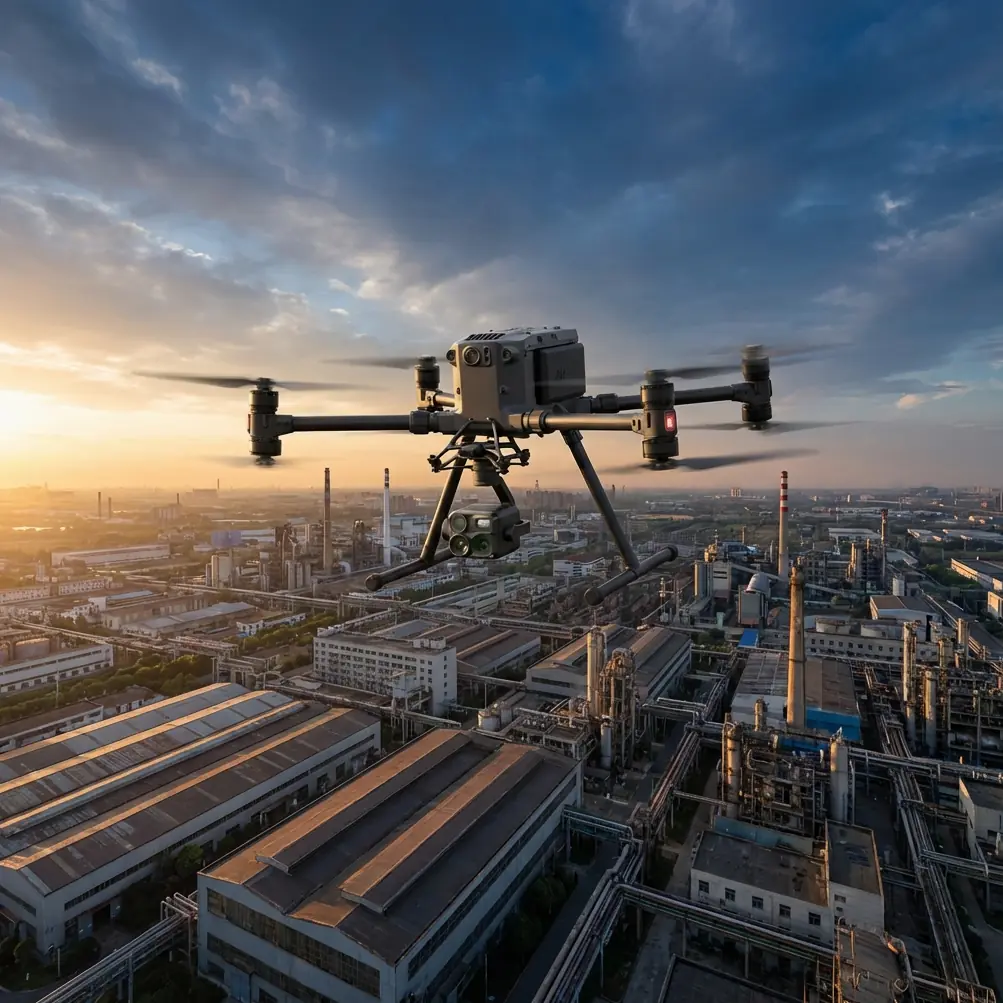
Filming Wildlife in Mountain Weather With Matrice 4: A Field Case Study on Locking Confidence, Signal Discipline, and Mid-Flight Adaptation
META: A mountain wildlife filming case study on Matrice 4, covering thermal signature tracking, O3 transmission, AES-256 security, battery workflow, and why aircraft locking principles still matter in harsh weather.
I’m Dr. Lisa Wang, and this piece is built around a practical question I hear often from field crews: when you take a Matrice 4 into steep mountain terrain to film wildlife, what actually determines whether the mission feels controlled or fragile?
Not the brochure points. Not the easy-day demo flight. The real answer shows up when weather shifts while you are already in the air, when line of sight is broken by terrain, when animal movement is brief and unpredictable, and when every reposition costs battery, time, and access.
On one recent mountain wildlife shoot, the day started clean. Cold air. Thin haze in the valley. Stable light over the ridgelines. The plan was simple enough: use the Matrice 4 to locate a herd at first light with thermal signature support, then transition to visual capture once the sun rose high enough to separate the animals from the terrain without flattening the scene.
The mountain, of course, had its own ideas.
The mission profile: not just filming, but finding without disturbing
Wildlife filming in mountains is rarely a pure camera exercise. It is really a search-and-positioning problem first, an image-making problem second.
That is where the Matrice 4 class of aircraft becomes interesting. In these environments, thermal signature detection matters less as a cinematic feature and more as a decision tool. Before the sun heats the rock faces, thermal contrast helps narrow your search area quickly. That means fewer blind passes, less unnecessary aircraft movement, and less pressure to push deeper into terrain where signal behavior can turn messy.
For this operation, we also built a low-impact mapping layer before the main filming window. A short photogrammetry pass over the accessible ridge and meadow system gave us a terrain-aware reference model. If you work in mountain habitat, that matters more than many crews expect. Photogrammetry is not only for survey teams. In wildlife production, it can help identify launch alternatives, fallback landing zones, blind ridges, and safe camera corridors that reduce disturbance.
Ground control points, or GCPs, were limited because the site was sensitive and physically difficult to access. That is a common compromise in real field conditions. Even with sparse control, a lightweight terrain model was still operationally useful. It gave us enough spatial confidence to set conservative altitude buffers and avoid aggressive terrain chasing once the animals were found.
Why a landing gear textbook detail still matters to a Matrice 4 operator
At first glance, one of the reference materials behind this article seems far removed from drone filmmaking. It comes from an aircraft design handbook section on locking mechanisms for landing systems. Yet the logic is surprisingly relevant.
The source describes internal locking approaches used to hold a landing system securely in position. One example uses 13 steel balls driven inward by a sloped contact surface, compressing a spring-loaded plunger and creating a locked state. Another example explains a finger-type lock built inside a sleeve strut, using a split collet design with 8 slots, small in form but capable of carrying substantial load. The point made in the handbook is not just mechanical detail. It is about what reliable lockup does for the entire aircraft system: it simplifies structure, holds extension securely, and prevents motion when the platform most needs stability.
Why should a Matrice 4 wildlife crew care?
Because mountain operations expose the same broader principle. Aircraft confidence is built on controlled states. Locked. Extended. Stable. Predictable under load. For a modern UAV, that may show up in different components and architectures than traditional manned landing gear, but the operational lesson is the same: field reliability depends on mechanisms and subsystems that remain positively controlled when external conditions become less friendly.
In practical terms, when the weather changed during our shoot, I was not thinking about abstract performance claims. I was thinking about whether the platform would remain disciplined in hover, in transit, and during the transition back to landing. Professional crews trust aircraft that behave like well-resolved systems, not like loosely coordinated features.
The weather turn: wind shear, passing mist, and a tighter signal envelope
About twenty minutes into the main sequence, a cross-slope wind developed faster than forecast. You could see it first in the grass line and then in the uneven movement of the low cloud crossing the saddle. Within minutes, the ridgeline that had been clean became intermittent with drifting mist.
This is where many mountain flights start to unravel. Not because the aircraft suddenly fails, but because the crew keeps trying to force the original plan onto a new environment.
We changed tactics immediately.
First, we abandoned the idea of a long lateral tracking shot across the exposed slope. Crosswind at that angle would have increased correction inputs, wasted battery, and raised the risk of visual inconsistency in the footage. Second, we shifted to shorter observational holds from a position with better terrain shielding. Third, we relied more heavily on the thermal layer to maintain subject awareness while the visible image contrast came and went through mist.
This is also where O3 transmission earned its keep. Mountain terrain does not just reduce range; it creates uneven signal behavior. You can have acceptable telemetry one second and degraded video the next as the aircraft passes through a fold in the terrain. A stable transmission link is not a luxury in wildlife work. It is what lets the pilot and camera operator make calm decisions instead of reactive ones.
The significance is straightforward: if your downlink remains coherent while conditions tighten, you preserve decision quality. That means cleaner repositioning, less overcorrection, and fewer unnecessary passes over the animals.
Secure links matter in remote production too
There is another detail that gets dismissed too easily in field cinematography: AES-256.
Some crews hear that and assume it belongs in enterprise procurement documents, not on a mountain. I disagree. Remote wildlife projects often involve sensitive location data, protected habitat access, research coordination, or embargoed footage. If your aircraft is collecting thermal imagery, mapping data, and high-value wildlife footage in a controlled area, secure transmission and data handling are not optional extras. They are part of professional risk management.
In our case, the secure link mattered for two reasons. The first was operational privacy around a species location. The second was simple team confidence. When you are sharing mission planning, photogrammetry outputs, and observation data across a mixed crew of pilots, producers, and field biologists, strong encryption reduces one category of avoidable concern.
Security rarely improves the image directly. It improves the workflow around the image. That counts.
Battery strategy became the difference between patience and pressure
By the time the mist thickened, one issue became more important than headline flight time: whether we could reset quickly without losing the window.
This is where hot-swap batteries changed the rhythm of the day. Wildlife behavior does not wait for your equipment routine. If your aircraft comes down, and a fresh setup takes too long, the herd may move into timber, the thermal contrast may fade, or the light may collapse.
On this shoot, we landed proactively rather than squeezing the pack. That decision was driven by weather, not just charge state. In mountain flying, reserve energy buys you options. We used the battery swap to review the terrain model, confirm the animals’ likely path across the upper bench, and relaunch before the mist fully closed the view corridor.
That pause was productive rather than disruptive. Good battery workflow does that. It keeps the crew deliberate.
The hidden engineering lesson: load thinking, not just feature thinking
The second reference source is rougher and less readable, but it points to something equally useful: structural response depends on geometry and loading conditions. The extracted data shows changing values across different ratios such as a/b, with tables rising from the 20s into the 100+ range depending on configuration. Even stripped of full context, the engineering message is clear enough. Small geometric changes can produce materially different stress or stiffness outcomes.
That mindset belongs in UAV field operations.
Mountain wildlife crews often talk about range, optics, and detection modes. They talk less about load paths created by wind, repeated repositioning, steep climb-outs, and cold-weather battery behavior. Yet those factors shape aircraft behavior every minute of the mission. When wind wrapped around the ridge and started producing uneven corrections, what mattered was not just whether the Matrice 4 could “handle wind” in a generic sense. What mattered was whether the whole system—airframe, propulsion, control logic, link stability, and energy management—stayed within a predictable operating envelope under changing loads.
This is why experienced operators fly with engineering humility. Terrain introduces asymmetry. Wind introduces transient loads. Cold changes response. Once you think that way, you stop treating the aircraft as a camera with propellers and start treating it as a system whose margin must be managed.
What the footage taught us
The best sequence of the day was not captured during the original plan. It happened after the weather shift.
Using thermal signature cues, we held a higher, quieter stand-off while the herd crossed a broken slope below the cloud line. Instead of pushing for dramatic closeness, we let the movement play against the landscape. The visible image was softer than the dawn light we had hoped for, but it carried something better: honesty. You could feel the mountain breathing through the frame. The animals looked embedded in the environment rather than extracted from it.
That result came from restraint, not aggression. The Matrice 4 gave us enough situational awareness to stop forcing the obvious shot and wait for a truer one.
Practical takeaways for Matrice 4 crews working in mountain wildlife production
If I had to reduce the day into a few operational lessons, they would be these.
Thermal signature capability is most valuable before and during transitions in visibility. It shortens the search phase and supports low-disturbance subject reacquisition.
Photogrammetry, even with limited GCP placement, can still improve launch planning, route discipline, and terrain safety for filming missions. You do not need a full survey deliverable for the model to be useful.
O3 transmission matters because mountains punish weak links unevenly. A stable feed preserves crew judgment when terrain starts clipping your signal path.
AES-256 is not abstract enterprise language. It is relevant when your footage, subject location, or habitat data needs protection.
Hot-swap batteries are a fieldcraft advantage. They reduce the pressure to overstay aloft during marginal weather and help crews relaunch inside narrow wildlife windows.
And the deeper principle from classic aircraft design still applies: systems that remain positively controlled under changing loads inspire the right kind of trust. That old handbook description of a 13-steel-ball lock and an 8-slot finger lock is not trivia. It is a reminder that dependable aviation has always been built around secure states, known loads, and mechanisms that do their job without drama.
If you are planning a similar mountain wildlife workflow and want to compare setup notes, mission design logic, or payload strategy, you can message me here for field-specific discussion: https://wa.me/85255379740
The Matrice 4 is at its best when the operator stops chasing perfection
Wildlife filmmaking in mountains rewards crews who know when to simplify. The Matrice 4 did not solve the mountain for us. It gave us a robust enough platform to adapt when the mountain changed the rules.
That is a better measure of professional value anyway.
A drone proves itself in the moment when your original shot plan dies, visibility drops, wind starts moving across contour lines, and the subject is still out there somewhere beyond the next fold in the land. If the aircraft can help you keep orientation, maintain signal discipline, protect your data, manage energy cleanly, and return with footage that respects the environment, then it has done the real work.
Ready for your own Matrice 4? Contact our team for expert consultation.