
Matrice 4 for Coastal Wildlife Filming: A Practical Field
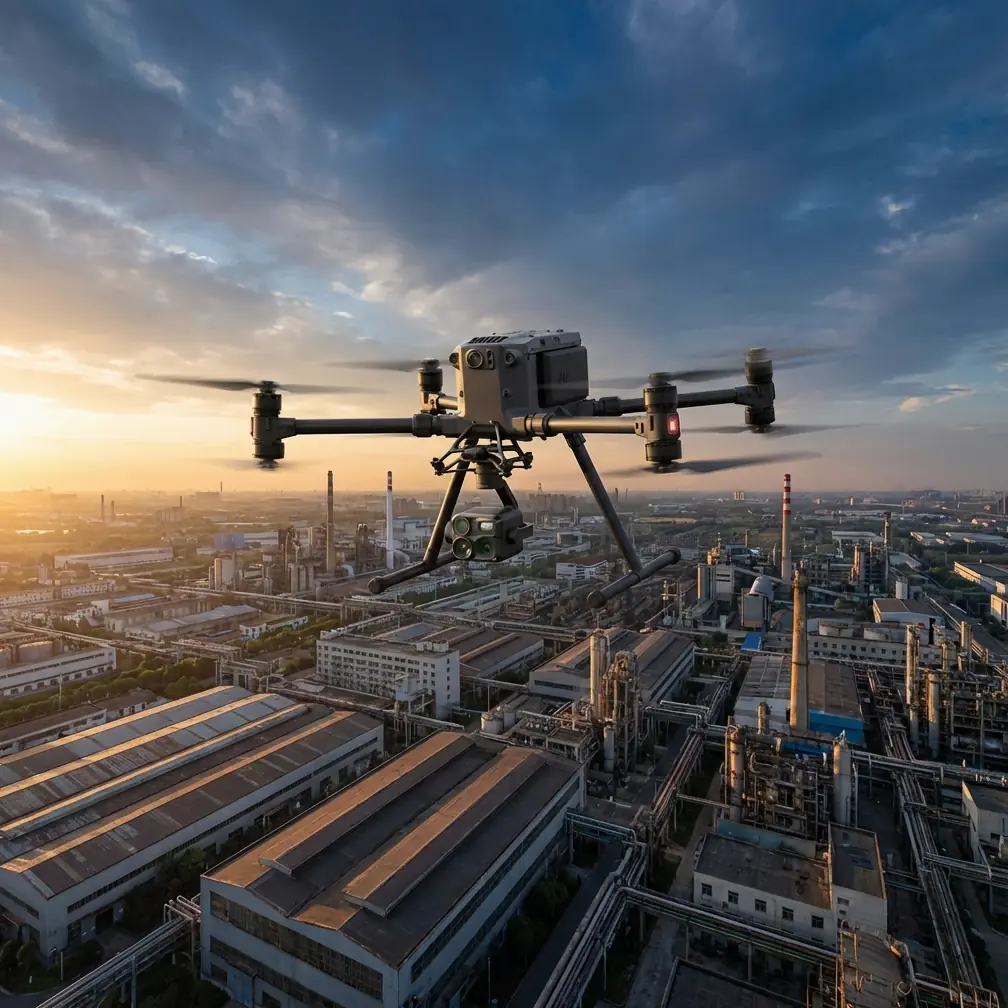
Matrice 4 for Coastal Wildlife Filming: A Practical Field Guide to Cleaner Data, Safer Flights, and Better Footage
META: Expert guide to using Matrice 4 for coastal wildlife filming, with field tactics on transmission, thermal spotting, photogrammetry, battery planning, and operational risk.
Coastal wildlife work looks cinematic from a distance. In practice, it is one of the least forgiving environments a drone crew can choose.
Salt haze cuts contrast. Wind shifts fast over cliffs and surf. Birds do not respect your shot list. Light bounces off water, then disappears behind cloud. And if you are documenting seals on a tidal shelf or nesting seabirds along a headland, your job is not simply to get pretty footage. You need repeatable results, minimal disturbance, and enough operational margin to come home with both the aircraft and the dataset intact.
That is where the Matrice 4 conversation becomes more interesting than a basic spec sheet. For coastal wildlife filming, the question is not whether the platform can fly. Plenty of aircraft can fly. The real question is whether it can hold up as a working tool when visibility, signal behavior, battery timing, and mission discipline all start pushing against each other.
I approach this as a field operator first. If your use case is shoreline ecology, conservation media, habitat mapping, or seasonal wildlife monitoring, the Matrice 4 earns attention because it sits at the intersection of imaging, transmission resilience, and structured commercial workflow. Those things matter far more than marketing adjectives.
Why coastal wildlife missions punish weak drone systems
A coastal mission exposes every shortcut in a drone platform.
Transmission can become unstable near cliffs, boats, and wet rock faces because signal reflections create a messy RF environment. Wind loading is rarely steady. Launch sites are often cramped, and safe recovery windows may be short. Wildlife subjects move unpredictably and may require standoff distances that force you to work at the edge of visual detail. If you are collecting habitat context as well as video, you may also need photogrammetry passes in the same outing.
This is why mission planning for a Matrice 4 should borrow discipline from civil aircraft thinking rather than from casual content creation. One detail from aircraft economic design literature is especially relevant here: early decisions shape lifecycle cost. In the civil aircraft handbook excerpt, “early decision” influence on whole-life cost is explicitly called out. For a drone crew, that translates directly into field reality. If you choose the wrong launch point, battery pacing, lens strategy, or data workflow before takeoff, the penalty arrives later as repeated site visits, incomplete mapping, stressed wildlife, and more maintenance exposure from unnecessary flights.
With coastal work, prevention beats recovery every time.
Start with the mission, not the camera
Before I fly Matrice 4 on a coastal wildlife assignment, I define which of these four jobs the aircraft is actually performing:
Behavioral filming
Smooth observation of animals with low disturbance.Thermal signature detection
Locating animals hidden by vegetation, shadows, rocks, or low light.Photogrammetry and habitat documentation
Building orthomosaics or terrain models of nesting zones, erosion edges, marsh channels, or haul-out areas.Mixed evidence capture
Creating a package that combines cinematic footage, thermal confirmation, and map-grade context.
Most failed missions happen when crews try to do all four at once without prioritizing.
The Matrice 4 becomes especially useful when you sequence these tasks instead of blending them chaotically. A common pattern is thermal detection first, visual confirmation second, then mapping after the animals have moved or after the primary observation window is complete.
Thermal is not just for dramatic imagery
On the coast, thermal signature work is often operationally smarter than jumping straight into visible-light filming.
A dark-coated seal on wet rock can be visually confusing at dawn. Birds tucked into dune grass can disappear in reflected glare. Thermal gives you a fast screening layer. That changes how you fly. Instead of creeping closer and closer trying to identify movement with the RGB feed, you can establish a respectful standoff position, confirm presence, and decide whether the visual shot is even worth pursuing.
This matters for disturbance reduction. It also matters for battery economy. Every minute spent searching inefficiently is a minute you no longer have for stable capture during the best light or tide window.
In this role, Matrice 4 stands out against many smaller competitor platforms because it is better suited to professional sensor-led workflows rather than purely opportunistic filming. That distinction is easy to underestimate. In wildlife work, the aircraft that helps you avoid unnecessary repositioning is often the aircraft that produces both better footage and better ethics.
O3 transmission is more than convenience over water
People often talk about O3 transmission as if it were just a nice quality-of-life feature. On the coast, it is a safety and data integrity feature.
Water surfaces, rock faces, and marine infrastructure can create awkward signal conditions. When your aircraft is tracking a subject along a shoreline contour, the ability to maintain a stable, high-confidence link affects more than pilot comfort. It affects framing decisions, route discipline, and your willingness to hold proper standoff distance instead of creeping too close for reassurance.
That has operational significance. A stronger live link means the pilot and camera operator can commit to cleaner flight lines. Cleaner flight lines mean better photogrammetry overlap, less erratic movement around sensitive animals, and fewer rushed corrections when the signal view drops.
If you are working with NGOs, environmental consultancies, or production teams handling unpublished location data, AES-256 also becomes relevant. Secure transmission is not a vanity feature. Nesting sites, protected species locations, and contracted environmental survey data should not be treated casually. Security discipline is part of professional wildlife operations now, not an afterthought.
How to use Matrice 4 for wildlife filming without spooking wildlife
There is no universal standoff distance because species tolerance varies, terrain changes the acoustic footprint, and weather affects how noise carries. But there are durable principles.
1. Arrive high, assess, and descend only if the mission demands it
Do not rush into low-altitude passes because the monitor view looks tempting. Begin from a conservative altitude and observe behavior. Head turns, flush responses, bunching, or movement toward water are all signs you are too intrusive.
2. Use thermal to locate first
If your payload setup supports thermal signature work, use it to confirm where animals are before planning the visual orbit or lateral pass. This reduces trial-and-error positioning.
3. Avoid direct overflight
Overhead positioning is often the fastest way to alter animal behavior. Shore-parallel flight paths are usually cleaner.
4. Keep your background movement predictable
Sudden lateral acceleration against a bright sky is more noticeable than many pilots realize.
5. Build battery swaps into natural pauses
If the Matrice 4 setup includes hot-swap batteries, use that capability intelligently. Do not stretch one pack to force a final shot while the tide, wind, and subject behavior are changing. A fast replacement lets you preserve operational rhythm without extending airborne risk.
Hot-swap capability matters on the coast because your launch area may be exposed, muddy, crowded, or tide-limited. Faster turnarounds reduce the temptation to cut margins thin.
Photogrammetry in the same mission: when it works and when it does not
Many wildlife teams now need two outputs from one field day: compelling footage for communication and measurable spatial data for analysis. That is where Matrice 4 can become a more valuable platform than drones built only for visual storytelling.
If your coastal assignment includes nesting habitat, erosion monitoring, saltmarsh boundary shifts, or cliff-face documentation, photogrammetry can be layered into the operation. But it needs structure.
Use GCPs where practical if map accuracy matters beyond a general visual reference. On beaches and tidal flats, place them above the waterline and record them quickly before conditions change. In sensitive habitats where physical access is undesirable, you may need to accept lower ground control density or rely on safer edge placements.
A few field rules matter here:
- Fly mapping legs separately from behavior filming passes.
- Preserve consistent altitude and overlap.
- Do not improvise the grid after starting.
- Keep a written note of tide stage, wind direction, and sun angle.
This is where another reference detail becomes surprisingly useful. The aircraft certification excerpt discusses statistically defined load conditions, continuous turbulence, fault states, and the need to keep exceedance probabilities within required limits. You do not need to be certifying an airframe to apply the lesson. On a windy headland, your drone is not operating in idealized conditions. Gusts, control responses, and flight path deviations all compound. If you want usable photogrammetry, you should plan as though environmental disturbances are part of the mission model, not a surprise exception.
In plain language: if the air is unstable enough to break your overlap consistency or force repeated corrections, your mapping result is already degrading even if the drone remains technically flyable.
Battery and sortie planning for coastal work
Battery strategy is where experienced crews separate themselves.
For Matrice 4 coastal operations, I recommend planning each sortie around a hard operational purpose, not a maximum airborne duration. One pack for locating and observing. One for primary filming. One for mapping or reserve contingency. That is usually smarter than trying to capture all deliverables in a single long flight.
Why? Because battery depletion on the coast has a cascading effect. Wind often strengthens later in the sortie. Return legs can be less efficient than outbound legs. Landing areas become busier or wetter. Cognitive load rises when the crew is trying to squeeze in “one last pass.”
Again, the civil aircraft economic reference is useful: lifecycle cost thinking should be built into the mission, not evaluated after the fact. Extra flights caused by poor first-pass planning create hidden costs in labor, equipment wear, travel, and data inconsistency. The cheapest sortie is often the one you do not have to repeat.
BVLOS thinking, even when you are not flying BVLOS
Some operators working coastlines may be pursuing or planning BVLOS workflows for long linear habitat surveys. Even if your current mission remains within the local visual and regulatory framework, BVLOS-style discipline improves ordinary operations.
That means:
- pre-defined lost-link behavior,
- route segmentation,
- weather thresholds,
- visual observer placement,
- recovery alternates,
- and clear go/no-go criteria.
The certification document’s emphasis on failure states and safety margins is a good mental model here. In the excerpt, active control systems are not judged only in normal operation; fault conditions must also be accounted for. For a Matrice 4 wildlife crew, the equivalent is simple: never build a flight plan that only works if everything behaves perfectly.
If the signal drops for a moment near a cliff edge, if seabirds move into your airspace, or if a gust line comes off the water earlier than expected, the mission should still remain recoverable.
A practical coastal workflow for Matrice 4
Here is the workflow I use most often for sensitive shoreline wildlife assignments:
Phase 1: Shore assessment
From the launch point, study wind direction, surf line, bird traffic, and escape routes. Confirm where you can safely land if the primary zone becomes unusable.
Phase 2: Detection pass
Launch conservatively. Use thermal signature tools first if available. Establish wildlife position without descending aggressively.
Phase 3: Visual confirmation
Transition to visible capture from an oblique angle. Watch behavior more than the monitor aesthetics for the first few minutes.
Phase 4: Primary filming
Capture the essential sequences first: wide environmental context, medium behavior shot, then detail work only if the animals remain settled.
Phase 5: Mapping segment
If habitat mapping is part of the mission, fly a separate photogrammetry pattern with disciplined overlap and stable speed. Use GCPs if your accuracy target justifies them.
Phase 6: Rapid battery turn
If conditions are still favorable, use hot-swap batteries to reset quickly rather than stretching a low pack. This is one of the easiest ways to keep field quality high.
Phase 7: Data protection
Secure and label media immediately. If the mission includes sensitive ecological locations, treat transmission and storage security seriously from the start, not later.
If you need a field-ready setup discussion for this kind of mission, you can message our drone specialists directly on WhatsApp for coastal workflow planning.
Where Matrice 4 has the edge over lighter alternatives
For hobby-grade shoreline filming, a smaller aircraft may be enough. For real wildlife documentation, Matrice 4 starts pulling ahead when the mission demands repeatability.
Its advantage is not one headline feature. It is the way professional transmission, secure data handling, thermal-informed observation, and structured battery logistics support one another. Competitor drones that excel at quick scenic shots often begin to show limits when the task becomes multi-layered: identify subjects without disturbance, maintain reliable control over reflective terrain, collect usable map data, and keep the sortie organized under changing wind.
That is the difference between getting content and completing a mission.
The bigger lesson behind the aircraft
One of the most interesting ideas in the reference material came from outside the Matrice platform itself. At AUVSI XPONENTIAL 2026, Brendan Stewart argued that rebuilding the U.S. drone industry will require long-term industrial policy, manufacturing scale, and patience. That point matters to operators too.
Why? Because serious drone work is not built on short-term thinking. The same logic applies at the mission level. Coastal wildlife filming improves when you invest in repeatable systems, disciplined crew habits, and aircraft that support professional workflows over time. Patience is not just an industry requirement. It is a field requirement.
The best Matrice 4 operators I know are rarely the flashiest pilots. They are the ones who plan early, leave margin, respect load and weather realities, and come back with footage that is both useful and ethically gathered.
That is what this platform is for.
Ready for your own Matrice 4? Contact our team for expert consultation.