
Matrice 4 for Coastal Inspection: Best Practices When
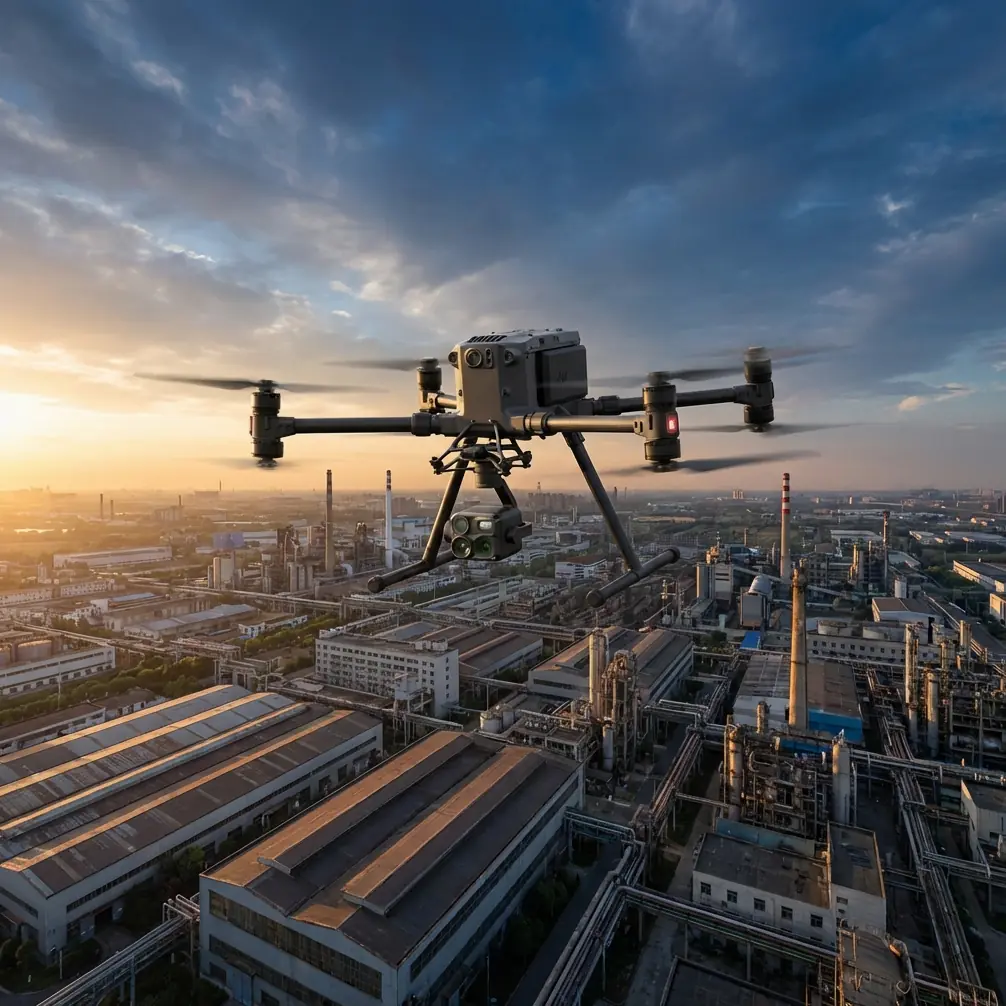
Matrice 4 for Coastal Inspection: Best Practices When the Weather Turns Mid-Flight
META: A practical expert guide to using Matrice 4 for coastline inspection in extreme temperatures, with operational tips on thermal work, photogrammetry, transmission reliability, battery strategy, and mission planning.
Coastline inspection looks simple on a planning screen. Draw the route, set overlap, launch, collect imagery, go home.
The shoreline rarely cooperates.
Salt spray creeps into everything. Wind direction shifts against cliffs and breakwaters. Surface temperatures swing faster than inland conditions. Light bounces off water and ruins assumptions you made ten minutes earlier. If you are inspecting revetments, erosion zones, sea walls, outfalls, or access roads near the water, the aircraft is only part of the job. The real question is whether the platform can keep producing usable data when conditions stop behaving.
That is where the Matrice 4 conversation gets interesting.
DJI’s own messaging around the newer enterprise platform family points to three ideas that matter for coastal work: it is built as an aerial tool for daily tasks, it is meant to gather data from multiple angles, and it is positioned for roads less traveled or hard-to-access areas. Those are not throwaway phrases. For shoreline inspection, they map directly to the field realities that determine whether a flight delivers actionable information or just a folder full of images.
This guide breaks down how to use a Matrice 4 workflow effectively for coastline inspection in extreme temperatures, especially when weather changes during the mission.
Why coastline work exposes the difference between a capable drone and a useful one
A coastal inspection mission is not just a flight over water. Most of the value sits in transitional zones:
- the edge where rock armor meets wash zones
- concrete joints in marine structures
- thermal anomalies around outfalls
- subsidence near shoreline roads
- erosion under access paths and embankments
- changes in riprap displacement after recent weather events
These are places where ground access is awkward, risky, or simply too slow. That aligns closely with DJI’s framing of the platform as a tool for less-traveled areas. Operationally, that matters because remote inspection sites usually punish weak links in a workflow: setup time, signal stability, battery turnover, and sensor flexibility.
For a Matrice 4 operator, the mission should be built around one principle: collect several layers of evidence in a single deployment. Visible imagery alone often misses what matters at the coast. Thermal signature data can reveal seepage, moisture intrusion, or heat differentials around infrastructure. Oblique capture supports better surface interpretation than straight-down imagery alone. A photogrammetry run can produce measurable terrain change. Together, those “multiple angles” become operationally significant, not just technically impressive.
Start with the mission objective, not the flight mode
Before you launch, define the inspection output in plain language.
Are you trying to:
- document erosion progression
- detect voids or water ingress indicators in a sea wall
- map shoreline change
- inspect access roads serving coastal utilities
- compare thermal and visual evidence around a discharge point
- build a repeatable baseline for later change detection
The answer changes the way you fly.
If the goal is measurement, prioritize photogrammetry discipline: overlap, altitude consistency, GCP placement where practical, and controlled speed. If the goal is anomaly detection, build in slower passes and oblique looks. If the goal is thermal assessment, pay closer attention to surface heating patterns, tidal influence, and timing.
A common mistake is trying to force one flight pattern to satisfy every objective. Coastal inspections reward separation of tasks. One pass for mapping. One pass for detailed visual inspection. One pass for thermal review if conditions support it.
That approach sounds slower on paper, but in practice it saves time because the data is easier to trust.
Extreme temperature planning changes battery strategy
Coastal environments can feel cooler than inland areas, but equipment stress can still be high. Direct sun, reflective surfaces, wind chill over open water, and rapid weather shifts create unstable operating conditions. Extreme temperature work is rarely just about hot or cold air temperature. It is about what those conditions do to power stability, sensor performance, and operator timing.
If your Matrice 4 operation uses hot-swap batteries, that is more than a convenience feature. It is a continuity tool. On coastline work, battery decisions often get compressed because the aircraft is fighting headwinds on one leg and riding a tailwind on the next. Add a weather shift mid-flight, and conservative battery management becomes mandatory.
Best practice:
- launch with a route designed around the worst return leg, not the easiest outbound leg
- keep battery swaps structured and fast to avoid losing weather windows
- avoid pushing for “one last segment” after conditions start degrading
- monitor pack behavior closely if ambient temperatures are unusually high or low
For daily operational tasks, reliability is what separates repeatable inspection programs from occasional successful flights. That point is easy to overlook, but it matters. One of the non-DJI reference materials here, a reliability design manual, includes failure-count validation tables and decision thresholds such as P = 20% and P = 10% with d = 2 in a test-verification context. The manual is not about the Matrice 4 specifically, but the engineering principle carries over: dependable field systems are not judged by a perfect run once. They are judged by repeatable performance under defined tolerance.
For shoreline inspection, that means your operational standard should not be “the drone made it back.” It should be “the drone delivered the same class of data across repeated missions despite environmental stress.”
Mid-flight weather changes: what actually happens on the coast
Let’s take a realistic scenario.
You launch in cool early conditions to inspect a stretch of shoreline road, concrete drainage outlets, and adjacent rock revetment. The first mapping leg is smooth. Water is relatively calm. Light is manageable. Then twenty minutes in, the weather shifts. Wind direction rotates, gusts increase along the sea wall, and the sun breaks through thin cloud cover. Surface contrast changes immediately.
Now three things happen at once:
- Your visual imagery changes character. Reflections increase and shadows sharpen.
- Your thermal interpretation becomes less straightforward. Heating patterns start moving.
- Your aircraft workload changes. Holding position and flying consistent lines takes more power.
This is where the Matrice 4 workflow should be disciplined rather than reactive.
First, preserve the mission objective. If the original task was measurement-grade mapping, do not contaminate the dataset by improvising uneven altitudes and inconsistent capture angles across the remainder of the grid. Pause if necessary. Finish the mapping segment only if conditions still support consistency. Otherwise, bring the aircraft back and relaunch for a separate inspection pass.
Second, use the platform’s multi-angle capability intentionally. DJI’s emphasis on collecting data from multiple angles is especially relevant here. When glare makes nadir imagery less useful over shoreline edges or concrete faces, oblique views can recover critical context. Cracking, displacement, undercutting, and washout patterns often read better from angled perspectives than from a purely top-down map product.
Third, watch your transmission margin. On a coastline, signal conditions can behave oddly due to terrain edges, structures, and distance management. If your operation relies on O3 transmission performance, do not treat link quality as static. A route that was comfortable in calm weather can feel very different once the aircraft starts working harder in gusting conditions near structures. Maintain a stronger reserve than you would inland.
If your data has sensitivity concerns, this is also the moment to keep your workflow clean from capture to transfer. Infrastructure imagery often involves restricted sites, utilities, or private industrial assets. AES-256 in the data chain is not an abstract specification. It is part of maintaining a professional inspection standard.
Thermal work at the shoreline needs timing discipline
Thermal payload use near the coast can be extremely productive, but only if the operator respects the environment.
A shoreline is a thermal confusion zone. Water, wet rock, dry concrete, vegetation, metal fixtures, and buried moisture all react at different rates. If you are looking for seepage behind a wall, differential heating near a utility corridor, or suspicious temperature patterns around an outfall, timing matters more than many operators admit.
Useful thermal practice with Matrice 4 missions:
- establish whether you need pre-sunrise, early morning, or late-day conditions
- record ambient temperature and visible weather changes during flight
- avoid comparing thermal captures from sharply different sunlight intervals as if they are equivalent
- use thermal findings as indicators to be cross-checked with visible and geometric data, not as isolated proof
That “multiple angles” point matters again here. Thermal signature alone may suggest moisture, but oblique visible imagery and a photogrammetry model often tell you whether the anomaly aligns with cracking, deformation, or drainage patterns.
Photogrammetry over coastlines: where small setup errors become expensive
Photogrammetry at the shoreline can produce excellent results, but water edges and repetitive textures are unforgiving. If the deliverable involves volume change, erosion progression, or structural geometry, treat the mission like survey work.
Use GCPs where practical and safe. Even a strong RTK-style workflow benefits from on-site control if the area includes feature-poor surfaces, hard transitions, or critical comparison against previous epochs. Make sure your control points are well distributed and visible in the imagery. Do not cluster them near the access area just because it is convenient.
Maintain steady overlap and avoid aggressive speed if wind is starting to push the aircraft off line. Coastal datasets suffer when operators assume software will fix poor capture geometry later.
One of the supporting engineering references in your source set discusses material behavior under temperature and stress, including a steel specification used below 250 C and another noting high-strength cast steel reaching 1665 MPa. Again, these numbers are not Matrice 4 specifications. Their relevance is operational by analogy: harsh environments expose structural and fatigue limits in real systems. In coastal drone inspection, the same mindset applies to mission design. You should assume that repeated vibration, wind loading, and temperature shifts amplify minor weaknesses in planning, mounting discipline, and maintenance routines.
That is why preflight checks should focus on more than battery percentage:
- verify payload seating and gimbal freedom
- inspect airframe surfaces for salt residue after previous missions
- confirm storage media and data redundancy
- review mission altitudes against terrain and built structures
- set realistic return thresholds before launch
Hard-to-access zones are where Matrice 4 earns its keep
DJI described the newer platform concept as suited to daily tasks and difficult access areas. For coastal teams, that translates into a very practical advantage: less dependence on physically reaching every inspection point.
Think about sections of shoreline where access by foot is slow or unsafe due to unstable rock, narrow embankments, or tidal cutoffs. A capable Matrice 4 setup reduces exposure while increasing documentation quality. You can inspect from a safer launch point, capture obliques on the structure face, run a mapping segment inland over the adjacent road, and document thermal anomalies around drainage assets in one deployment cycle.
That is the kind of mission architecture that makes drone programs defensible to asset managers and engineering teams. Not because the aircraft is new, but because the workflow gathers evidence they can use.
If you are refining that workflow for your own coastline projects, a practical place to start is to message an enterprise drone specialist here: https://wa.me/85255379740 and compare mission profiles before standardizing your checklists.
A sample coastal inspection workflow for Matrice 4
Here is a field-ready sequence that works well when temperatures are extreme and the forecast is unstable:
1. Pre-brief the environmental triggers
Set go/no-go thresholds for wind shift, glare, tide stage, and temperature change. Do this before the aircraft is powered up.
2. Fly the measurement mission first
If a photogrammetry product is required, collect it before conditions become thermally noisy or optically inconsistent. Use GCPs if the deliverable justifies them.
3. Follow with targeted oblique inspection
Use angled passes to inspect wall faces, toe erosion, riprap displacement, drainage features, and road-edge degradation.
4. Run thermal only when conditions support interpretation
Do not force thermal collection just because the payload is available. Shoreline surfaces can become misleading quickly after weather changes.
5. Watch transmission and battery reserve conservatively
O3 link confidence and hot-swap efficiency help, but they are not excuses to stretch the sortie after conditions deteriorate.
6. Log the weather change in the mission record
If cloud cover broke, wind rotated, or temperature climbed during the flight, write it down. That metadata may explain image differences later.
7. Clean and inspect after landing
Salt exposure is cumulative. A Matrice 4 used for daily coastal tasks needs a disciplined post-flight maintenance habit.
What makes the platform useful is not one feature
For shoreline inspection, the Matrice 4 value proposition is not about a single headline capability. It is the combination that matters.
A platform intended for daily tasks means the workflow has to be repeatable, not theatrical. Gathering data from multiple angles means visible, thermal, and geometry can be combined into a stronger inspection record. Suitability for less-traveled areas means the aircraft can reach places that are inefficient or unsafe to inspect on foot.
Add disciplined battery management, cautious use of O3 transmission range, sensible data security with AES-256, and a clear separation between mapping and anomaly-detection tasks, and the result is a drone workflow that holds up when coastal weather stops cooperating.
That is the standard worth aiming for. Not a dramatic flight. A dependable one.
Ready for your own Matrice 4? Contact our team for expert consultation.