
Matrice 4 for Coastline Inspection: What Actually Matters
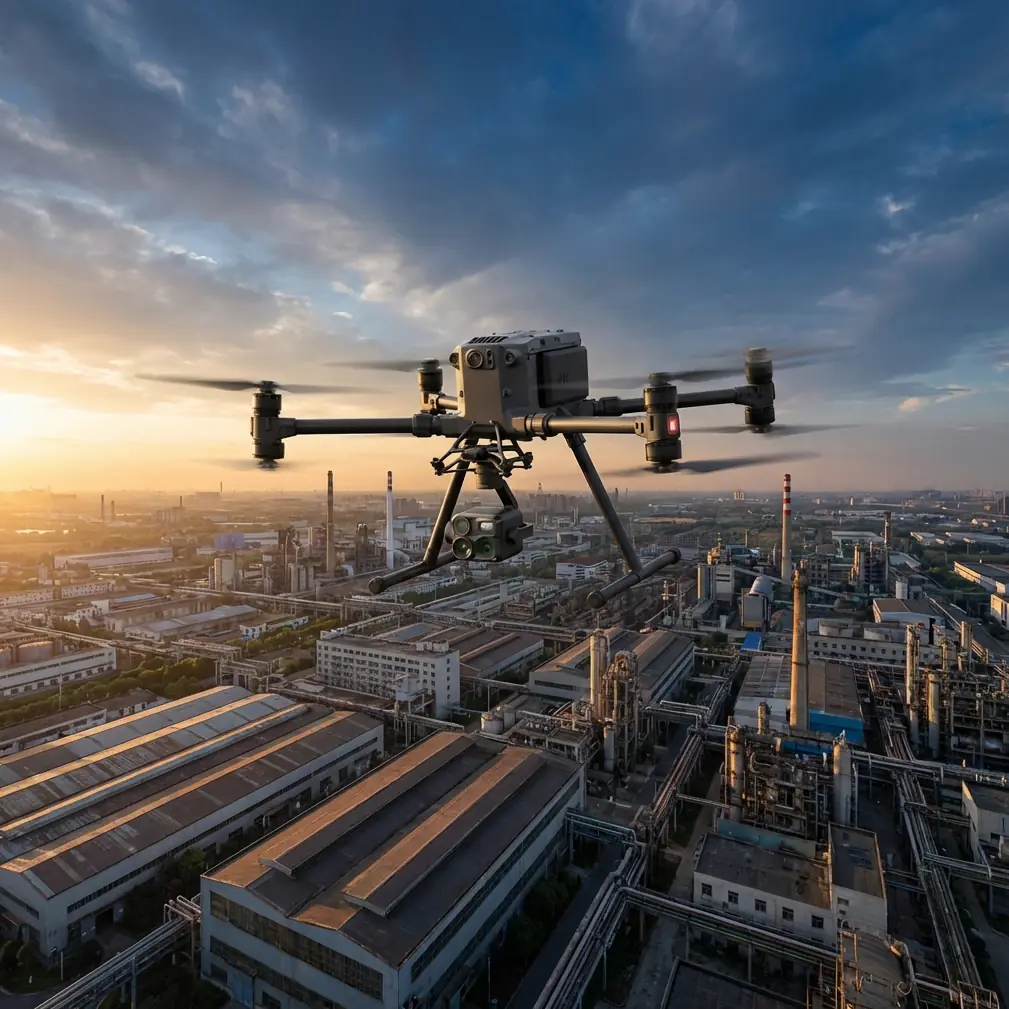
Matrice 4 for Coastline Inspection: What Actually Matters in Complex Terrain
META: A technical review of Matrice 4 coastline inspection workflows, covering aerodynamic loading, structural reliability, thermal signature capture, photogrammetry control, EMI mitigation, O3 transmission, AES-256 security, and field-ready battery strategy.
Coastline inspection looks easy on a mission-planning screen. A line follows the shore, altitude stays consistent, the overlap settings appear clean, and the aircraft seems to have plenty of margin.
Then the real environment shows up.
Headlands bend the wind. Salt haze softens contrast. Rock faces disturb GNSS reception. Utility lines and communications infrastructure inject electromagnetic noise exactly where you want the clearest data link. And if the job includes both erosion documentation and asset checks along harbors, breakwaters, or cliffside structures, the payload is suddenly being asked to do two very different things at once: survey-grade image collection and close visual diagnosis.
That is where a Matrice 4 workflow has to be judged properly—not by a brochure headline, but by how well it holds up when the shoreline is irregular, the terrain is layered, and the pilot needs repeatable results.
As a platform for coastal inspection, Matrice 4 is best understood as a systems tool. Airframe behavior, link resilience, thermal capture, and mission design all affect whether the output is useful. If one element is weak, the whole operation becomes slower and less defensible.
Why coastline work is harder than many infrastructure flights
Linear inspection in open farmland is one thing. Coastal corridors are another.
The aircraft is often exposed to shifting crosswinds caused by cliffs, seawalls, inlets, and built structures. Those terrain effects matter because small changes in attitude ripple into image geometry, hover stability, and target reacquisition. For operators running photogrammetry near bluffs or breakwaters, that means more than pilot comfort. It affects overlap consistency, edge sharpness, and the quality of downstream reconstruction.
This is where an engineering mindset helps. One of the reference materials behind this discussion, 飞机设计手册 第6册 气动设计, highlights how modern aerodynamic numerical analysis became valuable because it can evaluate complex external shapes, external attachments, control-surface effectiveness, and disturbed flow fields that are difficult or expensive to replicate physically. That matters operationally for Matrice 4 users even if they never run CFD themselves.
Why? Because a drone working a coastline is effectively flying through a disturbed flow environment. The practical lesson is simple: don’t treat wind numbers from a forecast app as the whole story. Wind wrapping around a headland or accelerating along a rock wall can change aircraft loading locally and abruptly. A capable inspection team plans flight paths with terrain-induced flow disturbance in mind, especially during oblique imaging passes and thermal work where stable framing matters.
The same source also notes that numerical aerodynamic methods are used for optimization and parameter selection. In field terms, that translates into something highly relevant for Matrice 4 missions: payload configuration and flight profile should be chosen as a package. If you are carrying accessories or using a particular sensor stack, your waypoint speed, standoff distance, yaw behavior, and pass direction should be tuned together rather than independently.
The hidden value of a stable data link in cliffs, ports, and relay-heavy environments
A lot of failed shoreline inspections do not fail in the air. They fail in the link.
The pilot still has enough control to bring the aircraft home, but the video becomes unreliable, latency increases, and the inspection loses its rhythm. You stop trusting what you see. Rechecks start piling up. Battery time gets wasted on uncertainty rather than productive capture.
In complex coastlines, electromagnetic interference often comes from exactly the places inspectors need to study: marinas, port infrastructure, telecom sites, bridges, radar-adjacent zones, and utility assets. This is where O3 transmission is not just a specification checkbox. It is part of inspection continuity.
But even a strong transmission system can be degraded by poor field technique. If you are working near steel structures, repeater sites, or dense communications equipment, antenna adjustment becomes a live skill, not an afterthought. On several coastal jobs, the fastest way to clean up intermittent signal behavior is not changing the mission at all. It is repositioning the pilot station for cleaner line-of-sight and adjusting controller antenna orientation to reduce multipath reflection from nearby structures.
That sounds basic. It is not. In coastline work, the pilot is often focused on terrain clearance and target framing, while RF geometry gets ignored. A small change in operator stance or antenna angle can materially improve downlink consistency when working along reflective surfaces like sheet pile walls, vessel berths, or wet rock faces.
If your team needs a field checklist for interference-heavy shoreline sites, I usually suggest sharing it before mobilization through a direct operations thread such as this Matrice 4 planning contact, so pilot, observer, and data lead are working from the same assumptions.
AES-256 also deserves attention here. Coastal inspection work often includes sensitive infrastructure data: seawall defects, port facilities, utility corridors, access roads, and sometimes thermal imagery around energy assets. Strong transmission security is not merely an IT talking point. It is part of responsible data handling when image streams and mission files may contain operationally sensitive details.
Thermal signature is only useful if the flight profile respects the environment
Thermal signature collection along coastlines is deceptively tricky. Water moderates temperature contrast. Sun angle changes reflected energy. Wind can cool surfaces unevenly. Salt deposits and wetness patterns can mimic or obscure defects.
The result is that thermal imagery gathered at the wrong time or from the wrong angle often creates interpretation noise rather than actionable findings.
With Matrice 4, thermal work on coastlines should be mission-specific. For revetments, concrete facings, embankments, and harbor-side structures, I prefer separating thermal passes from standard mapping passes instead of trying to capture everything in one run. The reason is operational discipline. Thermal wants controlled timing, consistent viewing geometry, and minimal rushing between points of interest. Photogrammetry wants overlap, repeatable altitude control, and predictable geometry for processing.
Combining them too casually leads to mediocre outputs in both.
This is especially true in complex terrain where aircraft attitude is constantly being corrected. If the platform is compensating for turbulent shoreline flow, thermal framing can shift enough to complicate later comparison between adjacent surfaces. Again, the aerodynamic reference is useful here. The handbook’s emphasis on disturbed flow analysis and optimization is a reminder that the air around structures is part of the inspection problem, not just the background.
Photogrammetry near cliffs and tidal structures: control beats convenience
For mapping erosion, documenting landslip risk, or building a digital surface model of a rugged shoreline, Matrice 4 can be highly effective—but only if the workflow is built around control.
Photogrammetry in coastal settings should not rely blindly on autonomous defaults. Terrain variation, wave motion at the boundary, wet reflective surfaces, and abrupt elevation changes can produce weak tie-point areas if the mission is planned too simply.
This is where GCP strategy still matters. Even with strong onboard positioning, coastal projects that may feed engineering review, long-term change detection, or contractor verification benefit from well-placed ground control points in stable, visible locations above splash and shadow zones. On rock platforms or narrow access paths, that may mean fewer but better-positioned GCPs rather than chasing full textbook coverage in unsafe or unstable areas.
The practical significance is straightforward: if you need year-over-year erosion comparison, retaining wall movement checks, or volumetric understanding around a damaged slope, your confidence comes from repeatability. A beautifully detailed model with uncertain control is still weak evidence.
I also recommend thinking about image directionality. Vertical mapping alone often misses the geometry that matters most along cliffs, riprap, and stepped concrete defenses. Oblique passes add interpretive value, but they also increase sensitivity to gusts and link interruptions. That is another reason Matrice 4 deployments on coastlines benefit from disciplined battery management and strong transmission practices.
Structural reliability is not abstract when salt, fatigue, and heat cycles are involved
Most drone operators talk about batteries, camera quality, and software. Fewer think in materials terms.
They should.
The structural reference, 飞机设计手册 第3册 材料, includes several points that are surprisingly relevant to how professionals should think about a hardworking inspection platform. One detail states that decarburization during heat treatment tends to worsen as carbon content increases, and that the resulting decarburized layer reduces fatigue performance. The engineering implication in the original context is that sufficient machining allowance is needed to remove the weakened layer completely.
You do not need to be manufacturing aircraft parts to understand why this matters conceptually for Matrice 4 operations. Coastline work is a fatigue-rich environment. Frequent launches, repeated gust loading, transport vibration, salt exposure, and temperature cycling all accumulate stress. The lesson is that structural durability is built upstream through materials and process control, not just visible hardware design.
A second detail from the same source is even more practical: strength and elastic modulus decrease as temperature rises, and for some structural steels the general service temperature limit is given as 300°C, while carbon steel use is generally kept below 482°C. Obviously a civilian drone never operates anywhere near those temperatures in normal use. The operational significance is not that your Matrice 4 is approaching metallurgical limits. It is that mechanical properties are temperature-dependent, and engineers ignore temperature effects at their peril.
In drone field work, that translates into a very grounded habit: do not treat thermal loading, sun exposure on dark components, and hot-turn battery operations as trivial. Hot-swap batteries are excellent for sustaining inspection tempo on long shoreline corridors, but they should be integrated into a disciplined turnaround routine. Quick replacement saves time only if the aircraft and power system remain within healthy thermal and operational margins.
Hot-swap batteries are about continuity, not just speed
On a long coast segment, every interruption costs more than a few minutes. You lose the weather window. Tide position changes. Shadow lines move. Vessel traffic shifts. The same defect area looks different by the time you relaunch.
That is why hot-swap batteries are so valuable in this use case. The real benefit is continuity of observation. A team can preserve mission logic across multiple sorties without rebuilding the mental model from scratch every time.
For BVLOS-oriented planning where regulations and approvals permit commercial operations, battery continuity becomes even more important. Shoreline corridors can stretch beyond the comfortable boundaries of ad hoc manual flying. Structured mission segmentation, preplanned alternates, and efficient turnarounds reduce exposure to rushed decisions.
Still, speed should not overrule process. I like to treat each battery change as a mini quality gate: airframe visual check, payload glass check, prop condition glance, mission segment confirmation, environmental update, and link verification before relaunch. On windy coast jobs, that short pause often catches the one issue that would otherwise consume the next 20 minutes.
What a good Matrice 4 coastline inspection setup looks like
A strong coastal workflow is not flashy. It is deliberate.
You begin by separating deliverables: thermal anomaly detection, visual inspection, and photogrammetric mapping each get their own pass logic where needed. You plan around terrain-driven airflow rather than average wind alone. You identify likely EMI zones before arrival. You choose pilot and observer positions for RF clarity, not convenience. You use GCPs where project defensibility matters. You exploit hot-swap battery capability to protect continuity. And you secure the mission data path because coastlines often intersect with sensitive infrastructure.
That is the difference between merely flying a Matrice 4 near the sea and using it as a serious inspection instrument.
The broad engineering principles in the two aviation handbook references point in the same direction. Aerodynamic complexity should be modeled, anticipated, and respected. Material behavior under real operating conditions affects fatigue life and reliability. Those may sound like aircraft-design concerns from another world, yet they map directly onto professional drone practice when the mission environment becomes demanding.
For coastline inspections in complex terrain, Matrice 4 is not just about getting airborne. It is about preserving data quality while the environment tries to erode it—through wind distortion, RF interference, thermal ambiguity, and operational fatigue.
That is the standard worth aiming for.
Ready for your own Matrice 4? Contact our team for expert consultation.