
How to Inspect Windy Construction Sites With Matrice 4
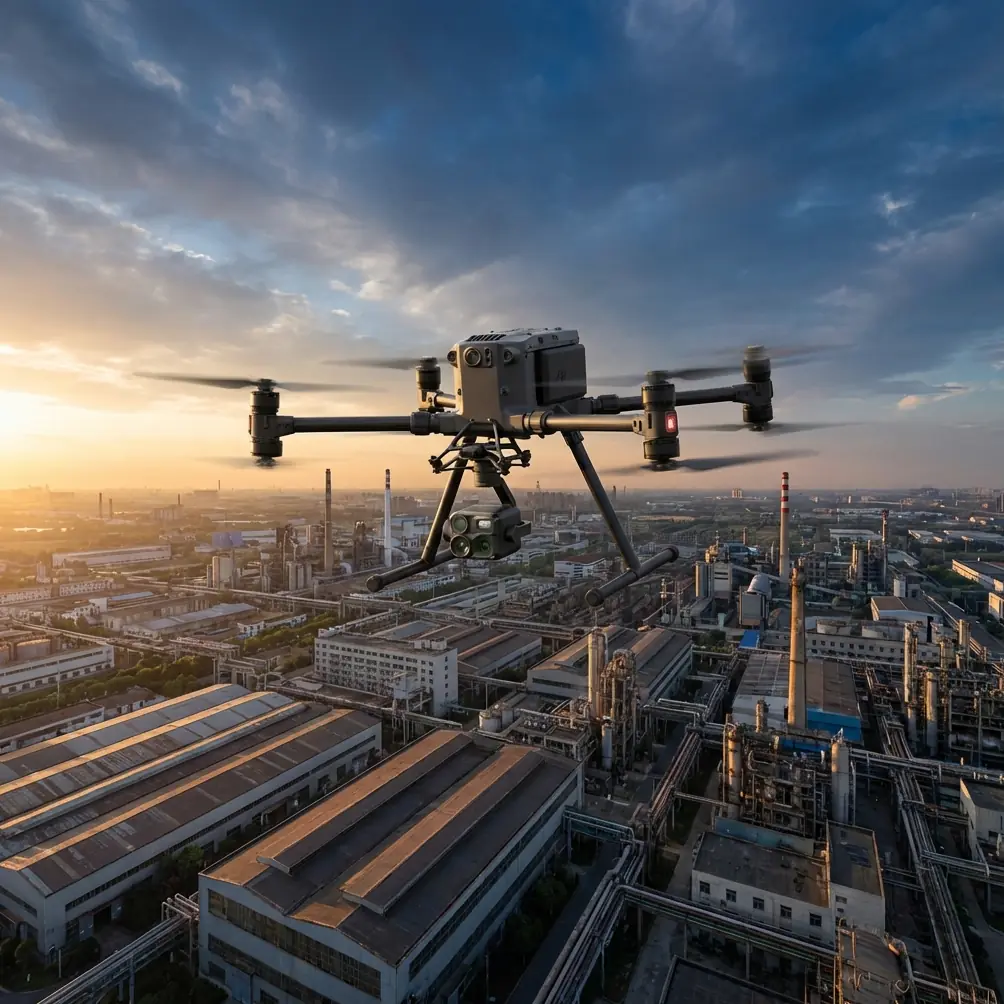
How to Inspect Windy Construction Sites With Matrice 4: Practical Field Tactics That Actually Hold Up
META: Learn how to use the DJI Matrice 4 for windy construction site inspections, with practical advice on antenna positioning, thermal workflows, photogrammetry accuracy, O3 transmission, AES-256 security, and battery planning.
Wind changes everything on a construction site.
It alters the way a drone holds position near partially enclosed structures. It affects image consistency during mapping runs. It exposes weaknesses in pilot setup, antenna placement, battery planning, and payload decisions. If you are inspecting active worksites with a Matrice 4, wind is not just an environmental variable. It is the factor that decides whether your data is clean, repeatable, and defensible.
That is why windy-site inspection with Matrice 4 deserves its own workflow rather than a generic “preflight, fly, land” checklist.
I approach this as both an operations problem and a data-quality problem. The aircraft may be fully capable, but construction inspections rarely fail because the drone cannot get airborne. They fail because the captured material is incomplete, distorted by poor flight discipline, or compromised by transmission dropouts at the exact moment the pilot is threading between steel, concrete, and moving equipment.
The Matrice 4 platform is especially relevant here because it sits at the intersection of enterprise inspection and fast deployment. For site teams, that matters. You need to move from incident report to airborne verification quickly, often while crane movement, façade work, grading, or roofing activity is still in progress. A platform that can support detailed visual inspection, thermal signature review, and photogrammetry in one operational framework gives you far more than convenience. It reduces handoff friction between safety, engineering, and project management.
Start by redefining the mission
On a windy construction site, “inspect the site” is too vague to be useful. Break the job into one of three mission types before the aircraft leaves the case:
Condition assessment
Used for façade attachment checks, roof membrane review, perimeter fencing, formwork alignment, or identifying water intrusion paths after weather.Thermal anomaly detection
Used when you need to find insulation gaps, overheated equipment, energized electrical points, or moisture patterns that reveal themselves through temperature differences.Photogrammetry for measurable progress
Used for stockpile volume, earthwork tracking, façade progress, topographic updates, and documentation tied to survey control.
The reason this matters in wind is simple: each mission demands a different tolerance for drift, gimbal behavior, image overlap, and route geometry.
A pilot who tries to use one flight style for all three will usually collect mediocre data in all categories.
Wind changes inspection geometry more than most teams realize
The biggest field mistake I see is pilots treating wind as a stability issue only. It is also a geometry issue.
When gusts move the aircraft laterally, the camera angle to the subject changes subtly from frame to frame. On a visual inspection pass, that can hide edge defects around cladding joints or fastener lines. In a thermal pass, it can shift the apparent shape of a heat source and make comparison harder. In a mapping mission, it can reduce the consistency needed for reliable reconstruction.
That means your route should be designed around wind direction, not just around the building.
For example, if you are inspecting a multi-story structure with one exposed windward façade and one sheltered leeward side, do not assume identical flight distances will produce equivalent results. The windward face often requires more conservative standoff, slower passes, and more deliberate hover pauses at defect-prone interfaces such as roof-to-wall transitions, window perimeters, and expansion joints.
On the leeward side, airflow can become turbulent as it rolls off the roofline and corners. That creates the kind of uneven buffeting that is harder to anticipate than a steady headwind. The aircraft may still look stable overall, but the data will show micro-variations if your shutter timing and route spacing are too aggressive.
Antenna positioning advice for maximum range on active sites
This is the part operators tend to underestimate until signal quality starts dipping behind a concrete core.
If you are relying on O3 transmission in a cluttered jobsite environment, antenna positioning is not a minor detail. It is one of the main levers you have for preserving consistent control and video feed quality when steel framing, temporary structures, and equipment yards create a messy RF environment.
Here is the practical rule: point the flat faces of the controller antennas toward the aircraft’s operating area, not the antenna tips directly at the drone.
That distinction matters. Many pilots instinctively “aim” the antenna ends at the aircraft as though they were laser pointers. In reality, the strongest transmission pattern is typically oriented off the sides of the antenna surfaces, not the tips. On a construction site, that mistake can shorten usable range and worsen penetration when the aircraft moves along the far side of a structure.
A few field-tested habits help:
- Stand where you can maintain a clean line of sight above site fencing, trailers, and parked machinery.
- Raise the controller to chest or upper-torso height instead of keeping it low near the body.
- Rotate your own stance as the aircraft transitions around the structure so the antenna faces stay aligned with the drone’s position.
- Avoid standing directly beside metal containers, rebar bundles, scaffold stacks, or generators, all of which can create reflection and signal clutter.
- If the inspection route goes behind a dense section of structure, reposition yourself before the pass rather than trying to muscle through a weak-link segment.
That matters even more if the operation may eventually evolve toward BVLOS planning under an approved framework. Teams that want to build toward more advanced operations need disciplined RF habits now, not later. Windy construction sites are a good proving ground because they force the crew to treat positioning and transmission integrity as part of the mission design.
Use thermal deliberately, not as an afterthought
Thermal signature work on a windy site is useful, but it needs context.
Wind can cool surfaces unevenly and mask or exaggerate certain anomalies depending on material type, sun loading, and exposure. That does not make thermal less valuable. It makes interpretation more operationally sensitive.
For construction inspections, thermal is strongest when paired with a known question:
- Is there moisture intrusion behind this section?
- Is this rooftop unit running hotter than adjacent units?
- Is there an insulation discontinuity along this transition?
- Is temporary electrical equipment showing abnormal heat at connections?
The Matrice 4 workflow is strongest when you use thermal to narrow the search area, then follow immediately with visual confirmation from a stable angle. On windy days, that second step becomes essential because convective cooling can distort first impressions. The thermal camera may flag a suspicious edge, but you still need a visual pass that confirms whether the issue is a material defect, water path, electrical hotspot, or simply a temperature artifact caused by exposure.
In practice, I recommend flying thermal inspection legs slightly slower than your visual overview legs. Give yourself time to verify recurring patterns from more than one angle. If the same anomaly holds from two perspectives despite gusts, your confidence goes up sharply.
Photogrammetry in wind: accuracy starts before takeoff
If your construction client needs measurable outputs, photogrammetry in wind is less forgiving than many teams expect.
Even with a capable aircraft, the deliverable is only as good as image consistency and control quality. That is where GCP strategy becomes decisive. A windy day can introduce small variations in aircraft attitude and image footprint, so ground control points provide the anchor needed to keep your model tied to reality rather than floating on assumptions.
For progress mapping or earthwork tracking, do not skip GCPs just because the aircraft navigation is strong. Use them to stabilize repeatability across survey dates, especially when comparing cut/fill movement, stockpile changes, or slab progress over time.
The operational significance is huge:
- Without solid GCP placement, your model may look visually acceptable while drifting enough to undermine quantity verification.
- With good GCP discipline, you create a consistent baseline for engineering review and contractor documentation.
Wind also affects overlap strategy. If the site is exposed, increase your margin rather than flying the minimum pattern. A little more overlap protects the dataset when gusts nudge the aircraft off the ideal line. It is a small time tradeoff compared with the cost of discovering reconstruction gaps back in the office.
Battery management is not just endurance math
Windy inspection work consumes more than battery percentage. It consumes schedule resilience.
Headwinds on outbound legs, repeated hover checks, and extra positioning corrections all stretch the mission. This is where hot-swap batteries become operationally important. The value is not simply faster turnaround. It is continuity.
On a live construction site, conditions shift quickly. A crane may begin moving, a lift may enter your planned corridor, or a superintendent may need a rapid revisit of a specific façade panel before crews cover the area. Hot-swapping lets you preserve mission momentum and keep the aircraft available during narrow inspection windows.
Plan battery usage around the most wind-exposed segments first. Do not leave the hardest leg for the weakest pack in your cycle. If you know the north elevation is taking the strongest gust load, inspect it while you have maximum reserve and maximum flexibility.
Security matters on construction sites more than many crews admit
Construction inspections often involve sensitive layouts, access routes, utility placement, and partially completed systems that should not circulate casually. That is why secure handling of imagery and flight data is not a box-checking exercise.
If your Matrice 4 workflow supports AES-256 protections within the data chain, that is not an abstract specification. It is operationally relevant for contractors, infrastructure teams, and developers working under strict documentation controls. The combination of secure transmission practices, controlled storage, and disciplined crew procedures reduces the chance that high-value site intelligence leaks through weak handling rather than through any dramatic breach.
A windy site often forces crews to move fast. Fast should not mean loose. Build the secure workflow first, then accelerate inside it.
A practical flight sequence that works
For most windy construction inspections, I recommend a four-pass logic instead of trying to capture everything at once.
First pass: site orientation
Fly a conservative visual orbit or segmented perimeter review to identify wind behavior, crane movement, dust sources, and GPS or transmission trouble spots.
Second pass: priority inspection angles
Focus on the defect-prone features identified by the project team. Keep standoff consistent and favor repeatable angles over artistic framing.
Third pass: thermal verification
Run targeted thermal checks where building envelope, mechanical, or electrical concerns justify it. Do not scan aimlessly.
Fourth pass: photogrammetry mission
Only after you understand the wind pattern should you commit to a mapping run. By then you will know which edges of the site need slower turns, stronger overlap, or a revised pilot position.
That sequence produces better data because each phase informs the next.
Field communication is part of the workflow
A lot of drone teams focus on aircraft settings and ignore crew communication. On construction sites, that is a mistake.
The pilot, visual observer, and site contact should all know which side of the building is likely to be most turbulent, which equipment is moving during the flight window, and where the pilot will physically stand for the strongest transmission path. If you need a second set of eyes on route planning, you can share inspection requirements directly through this quick field coordination link before the aircraft is airborne.
That kind of preflight coordination often does more for mission quality than tweaking one more camera setting.
What separates a usable windy-site inspection from a wasted one
Not every successful drone flight produces usable inspection data.
With Matrice 4 on a windy construction site, the real benchmark is whether the dataset stands up after the aircraft is packed away. Can the superintendent act on it? Can the engineer compare it with prior captures? Can the thermal anomalies be cross-checked visually? Can the model be trusted against control? Did the transmission remain stable because the pilot understood antenna geometry instead of guessing?
Those are the questions that matter.
A disciplined Matrice 4 workflow gives you a strong answer because it combines three things that construction teams actually need: transmission reliability through O3, operational continuity through hot-swap batteries, and secure data handling with AES-256-aligned practices. Add thermal targeting, photogrammetry anchored by GCPs, and smart pilot positioning, and the aircraft becomes far more than a camera in the air.
It becomes a dependable inspection tool for difficult sites where wind is part of the job, not an exception to it.
Ready for your own Matrice 4? Contact our team for expert consultation.