
How I Inspect Windy Fields With Matrice 4
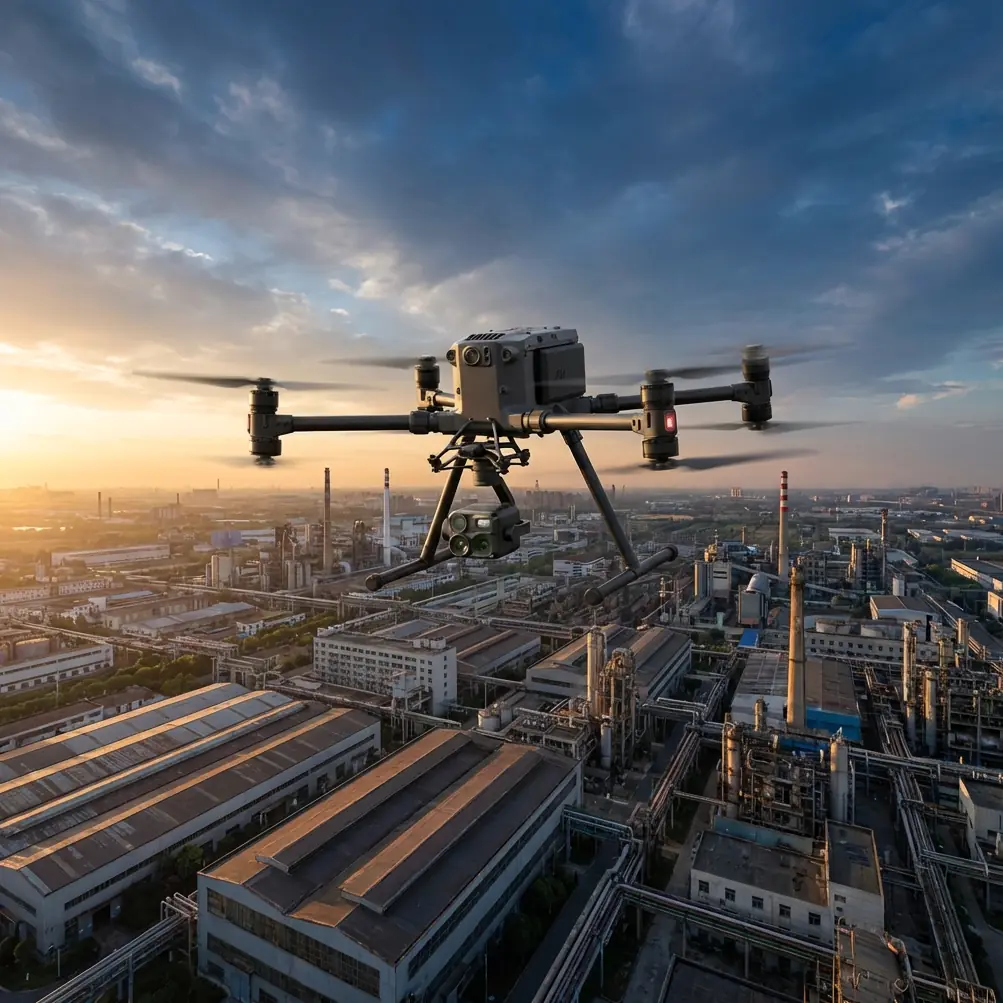
How I Inspect Windy Fields With Matrice 4: A Practical Method Informed by New High-Speed VTOL Milestones
META: A field-tested Matrice 4 workflow for inspecting windy agricultural sites, with lessons drawn from the Lan Ying R6000 tiltrotor maiden flight, weather shifts, thermal imaging, photogrammetry, GCPs, and secure long-range operations.
By Dr. Lisa Wang, Specialist
Wind changes everything in field inspection.
Not in theory. In practice. A mission that begins as a routine crop-health pass can become a test of stability, image discipline, and operator judgment within minutes. Gusts distort overlap. Shadows move. Thermal contrast drifts. If the site is large enough, the problem is no longer just data quality. It becomes a question of whether your aircraft and workflow can adapt without losing continuity.
That is why a recent aviation milestone deserves attention even for operators flying a Matrice 4 rather than a heavy long-range platform. On December 28, the Lan Ying R6000 completed its maiden flight in Sichuan and was described as the world’s first 6-ton tiltrotor unmanned aircraft. On the surface, that sounds far removed from day-to-day civilian drone inspection. Look closer, though, and the technical message is directly relevant: the industry is putting increasing value on aircraft that can handle vertical takeoff, transition efficiently through changing flight conditions, and keep useful performance when the environment stops cooperating.
The R6000’s reported fixed-wing cruise speed of 550 km/h and range of 4,000 km are not numbers a field inspection operator tries to match with a compact enterprise drone. That is not the point. The point is what those numbers reveal about where unmanned aviation is headed: stronger emphasis on efficient transit, better operational flexibility, and real-world deployment from constrained sites. The report also noted folding wing and blade technologies designed to reduce storage and parking footprint, which matters because many commercial missions begin from awkward launch areas rather than ideal airfields. If you inspect fields near access roads, pump stations, or narrow farm tracks, you already understand this problem.
For Matrice 4 operators, the lesson is simple. You do not need a 6-ton tiltrotor to borrow the operating mindset behind it. You need a method that assumes conditions may shift mid-flight and that data capture has to remain deliberate when they do.
The assignment: inspecting fields in wind, not just flying in wind
When I inspect agricultural land with Matrice 4, I separate the mission into three layers:
- Safe aircraft handling in unstable air
- Reliable visual and thermal data capture
- Mapping-grade consistency for follow-up analysis
That sounds obvious until weather changes halfway through a sortie.
A recent field session is a good example. We launched in steady morning conditions to assess irrigation uniformity, stress patches, and drainage anomalies across several blocks. The initial plan combined photogrammetry passes with targeted thermal observations over problem zones identified by the grower. About one-third into the mission, the wind shifted. Not just a mild directional drift. Gusts strengthened, the edge rows began showing visible crop movement, and ground temperature started climbing faster than expected under broken sun.
This is where many inspections get messy. Operators try to finish the original route unchanged. The aircraft may still be perfectly flyable, but the data no longer means the same thing.
With Matrice 4, the better move is to treat changing weather as a data-management event, not only a piloting event.
Step 1: Reframe the mission as conditions change
The first decision is whether the purpose of the flight remains valid.
If your original objective was high-accuracy photogrammetry, stronger wind can compromise image geometry, overlap consistency, and fine-detail reconstruction, especially over uniform crop texture. If your main objective was thermal signature detection, rising solar load and gust mixing can also alter the temperature patterns you are trying to interpret.
So I reclassify tasks in real time:
- Mapping blocks that still support stable overlap remain on schedule
- Thermal checks move toward comparative observation rather than absolute interpretation
- Edge areas most exposed to crosswind may be shifted to a separate pass
- Any segment likely to produce uneven data gets flagged rather than forced
This sounds conservative, but it saves time later. A stitched map with inconsistent geometry is harder to trust than a smaller, cleaner dataset. The same applies to thermal work. A false heat pattern caused by weather change can send a grower to the wrong section of the field.
Step 2: Use Matrice 4’s stability intelligently, not lazily
A capable aircraft can tempt operators into overconfidence. That is a mistake.
Matrice 4 can remain composed in conditions that would make smaller platforms struggle, but “stable enough to fly” is not the same as “stable enough to produce uniform inspection data.” In wind, I watch three things closely:
- Ground speed variation on cross-track legs
- Yaw corrections during image capture
- Gimbal behavior over transition zones
If the aircraft is making repeated corrections, your imagery may still look acceptable in a quick preview while becoming less useful in reconstruction or comparison. This matters for photogrammetry and thermal review alike.
For windy field inspection, I prefer to shorten assumptions, not stretch them. That means reducing the size of each mapping block and validating image quality after the first segment instead of waiting until the full mission is complete. If the weather is deteriorating, small verified blocks beat one elegant but questionable dataset every time.
Step 3: Tighten your photogrammetry discipline with GCPs
When conditions are variable, GCP strategy becomes more valuable.
Ground control points are often treated as a formality on farm jobs. They should not be. In windy field inspections, GCPs help anchor the project when image consistency is under pressure. If surface texture is repetitive or crop height varies across the site, a robust GCP layout gives your model a stronger geometric backbone.
I use them for two reasons.
First, they improve confidence in alignment and measurement when the aircraft has had to work harder to maintain position. Second, they reduce uncertainty when you are comparing this mission with a previous one taken under calmer conditions.
That comparison is where many real decisions happen. A grower rarely needs a pretty map. They need to know whether the stressed area near a drainage swale is expanding, whether stand variability is linked to moisture distribution, or whether a previous intervention changed the thermal pattern in a meaningful way.
Without solid reference control, weather-distorted inconsistency can masquerade as agronomic change.
Step 4: Read thermal data with weather in mind
Thermal signature work in fields is useful, but it is easy to oversimplify.
Wind can suppress or redistribute canopy heat signals. Mid-flight weather changes can flatten temperature differences in one zone while exaggerating them in another. Add shifting cloud cover and the thermal story becomes even more dynamic.
This is why I never treat thermal imagery as isolated truth. I pair it with visible imagery, site notes, and mission timing. If a warm patch appears after a wind shift, I ask whether the signature matches irrigation layout, compaction history, drainage, or simply a changed environmental condition.
On Matrice 4, the practical advantage is that I can move from broad survey logic to targeted confirmation quickly. Instead of interpreting every temperature variation as a plant-health issue, I use thermal to triage where closer visual review or later ground verification is warranted.
That makes the data more honest. It also prevents expensive overreaction.
Step 5: Protect your link and your data chain
Large fields and shifting weather create a subtle operational problem: the moment conditions get less predictable is often the moment your communications discipline matters most.
This is where transmission reliability and security are not abstract feature talking points. O3 transmission performance matters because stable situational awareness helps you make better route decisions as the environment changes. AES-256 matters because inspection work increasingly feeds into operational, agronomic, and infrastructure decisions that should not be casually exposed.
If you are working across distributed sites or sharing workflows with agronomy teams and asset managers, your chain of custody for data matters almost as much as the image itself.
I tell clients the same thing I tell new operators: your mission is only as professional as your weakest link, and sometimes that weak link is not the aircraft. It is the way data is moved, labeled, or interpreted after landing.
If you want to compare your field setup or mission logic with a specialist before a difficult inspection window, you can message me here.
Step 6: Plan battery strategy around weather, not brochure endurance
Hot-swap batteries are one of those features people appreciate more after a hard day in the field.
In windy inspection work, they are not just convenient. They allow you to preserve mission continuity when conditions are changing quickly. Instead of stretching a sortie to finish a block under worsening gusts, I can land, swap, reassess, and relaunch with a refined segment plan while keeping downtime low.
That is operationally significant.
A lot of poor field data comes from a simple human decision: “Let’s just finish this one last pass.” Hot-swap capability supports the better decision, which is to break the work into clean, manageable pieces. In agriculture, that often produces more usable outputs than trying to brute-force completion.
Step 7: Think about BVLOS logic even when you are not flying full BVLOS
BVLOS planning principles improve ordinary inspections.
I am not suggesting operators exceed their regulatory framework. I am saying that if you build your mission planning with BVLOS-style discipline, your visual-line missions become more robust. That means clearer route segmentation, stronger contingency planning, better communications checks, more deliberate launch-point selection, and a stronger understanding of how weather may diverge across the site.
This is another area where the R6000 milestone is relevant. Its tiltrotor design is about more than impressive performance figures. Vertical takeoff and landing combined with efficient forward flight reflects a broader operational push toward flexible deployment across larger areas without dependence on ideal infrastructure. Even though a Matrice 4 serves a very different class of mission, field operators can adopt the same mindset: launch where practical, transit efficiently, collect data with purpose, and remain adaptable when local conditions change.
The R6000’s reported service ceiling of 7,620 meters and payload of 2,000 kg are obviously outside the scale of crop inspection, but those figures still signal something useful. The unmanned sector is investing in platforms designed to hold capability under demanding conditions and across wide mission envelopes. Enterprise users at the Matrice 4 level should expect the same philosophy in miniature: not brute size, but efficient, dependable performance when the mission stops being straightforward.
The mid-flight weather shift: what I changed and why it worked
Back to that windy field mission.
Once the gusts increased, I made four changes:
- I split one large photogrammetry grid into two smaller blocks
- I postponed the most exposed edge strip until the return leg
- I shifted thermal work toward relative anomaly spotting instead of broad inference
- I landed early for a hot-swap battery change and route reset
The aircraft handled the weather calmly. More importantly, the workflow handled the weather honestly.
That distinction matters. Good hardware can mask bad decision-making for a while. In commercial inspection, the result you want is not merely a completed flight. It is defensible information.
The final deliverables from that job were better because we did less than originally planned, but did it with tighter control. The orthomosaic was clean enough to support follow-up measurements. The thermal review highlighted a handful of zones worth ground-checking rather than generating a field-wide narrative that the weather no longer supported. The grower got actionable insight, not noise.
What Matrice 4 operators should take from the R6000 story
The most useful takeaway from the Lan Ying R6000 maiden flight is not scale envy. It is operational perspective.
A 6-ton tiltrotor UAV that can move from vertical takeoff to high-speed fixed-wing flight, with a reported 550 km/h cruise speed and 4,000 km range, represents one end of unmanned aviation’s future. Matrice 4 sits in a very different operational category. Yet both platforms point to the same professional standard: aircraft are increasingly expected to adapt to real deployment constraints, not just ideal test conditions.
For field inspection in wind, that means:
- Build missions around data quality, not flight completion
- Use GCPs to protect mapping confidence
- Interpret thermal signatures in environmental context
- Treat transmission and encryption as practical tools, not marketing extras
- Use hot-swap batteries to make better timing decisions
- Plan with disciplined route logic so weather changes do not collapse the whole mission
Windy fields are where weak workflows get exposed. They are also where a well-run Matrice 4 operation proves its value.
If your aircraft can stay composed while the weather turns, and your process can stay composed with it, you are no longer just flying a drone. You are running a dependable inspection system.
Ready for your own Matrice 4? Contact our team for expert consultation.