
Matrice 4 in Remote Field Inspections: A Field Report
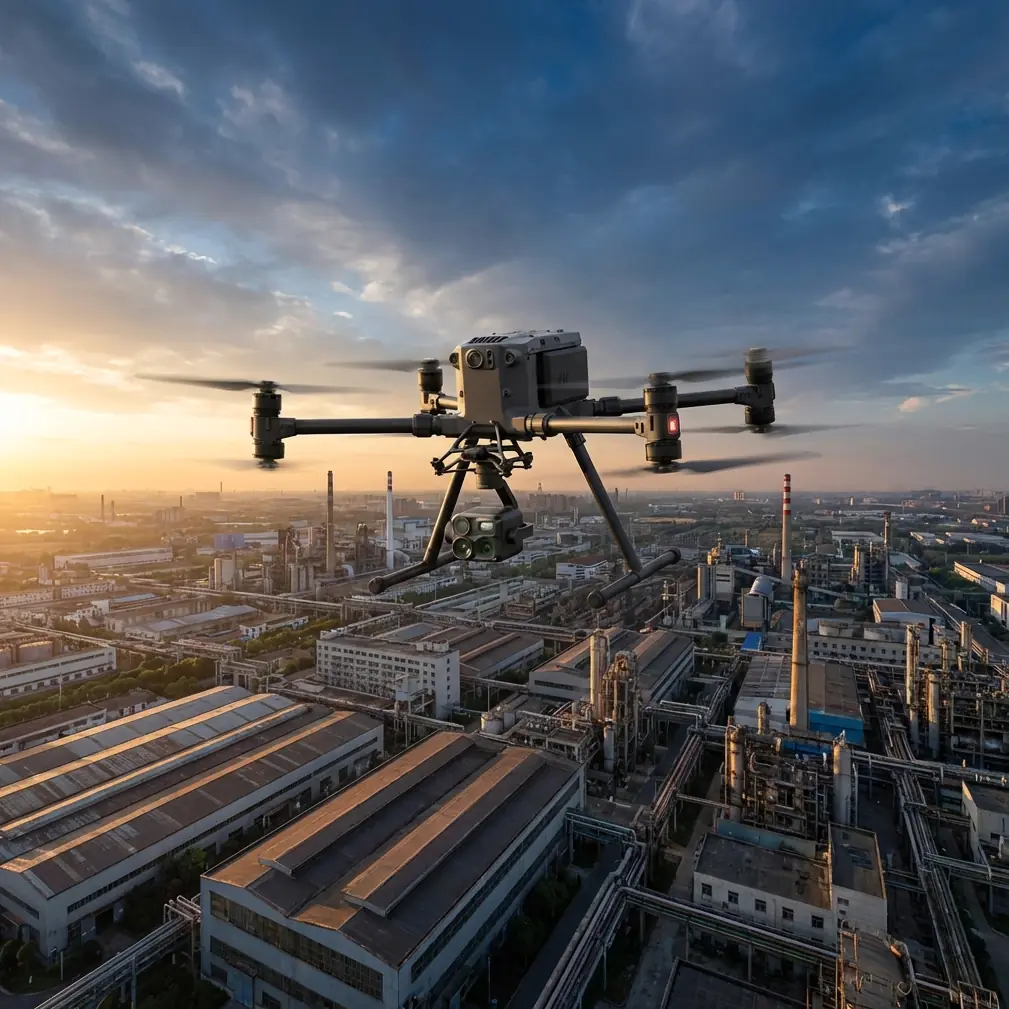
Matrice 4 in Remote Field Inspections: A Field Report on Stability, Sensor Confidence, and Why Vibration Discipline Matters
META: Expert field report on using Matrice 4 for remote field inspections, with practical insight on thermal signature work, photogrammetry, transmission reliability, and vibration-aware UAV operations.
Remote field inspection sounds simple until you are 40 minutes from the nearest road, trying to document irrigation loss, heat stress, drainage failures, and plant gaps before the weather shifts.
That is where the Matrice 4 starts to separate itself. Not because it is just another enterprise platform with thermal, mapping, and transmission features on a spec sheet, but because remote work punishes weak systems. In the field, every design choice shows up in the data. Transmission integrity, hover stability, battery workflow, and vibration behavior all become operational issues, not marketing categories.
I spent the latest run using the Matrice 4 in a broad agricultural inspection scenario: large remote plots, uneven access, patchy terrain, limited cellular support, and a mixed mission profile combining thermal signature checks with photogrammetry outputs. The assignment was not glamorous. It was practical. Find anomalies fast, map them cleanly, and get back with evidence that a grower, agronomist, or asset manager can actually use.
The first thing remote operators notice: time is lost on the ground before it is lost in the air
Most field teams think about endurance first. Fair enough. But remote inspections often succeed or fail during setup, repositioning, and relaunch cycles.
That is why hot-swap batteries matter more than many crews admit. When you are covering multiple sectors in sequence, the ability to keep momentum without cooling down the whole operation changes the day. It reduces dead time between sorties, preserves mission continuity, and helps maintain consistent light and thermal conditions across adjacent sections of a property. In thermal work, that consistency is not cosmetic. Surface temperature differences can shift quickly with sun angle, wind, and moisture. If one flight is delayed too long, comparisons become less reliable.
The Matrice 4 workflow is especially useful here because remote inspections rarely involve just one flight type. In my case, the mission stack alternated between broad photogrammetry passes for terrain and crop pattern reconstruction, then targeted thermal checks over areas already flagged visually. Hot-swap continuity meant those transitions felt like one operation rather than separate events stitched together afterward.
Why stable data matters more than fast data
A lot of drone discussions focus on sensor resolution. That is only half the story. The harder question is whether the aircraft can hold the conditions needed to make those sensors trustworthy.
This is where an older aviation principle becomes surprisingly relevant. One of the reference materials behind this article discusses helicopter ground resonance: a destructive condition caused when rotor-induced excitation couples with the airframe’s vibration mode through the landing gear system. If the excitation frequency and the aircraft’s natural vibration frequency become close enough, and damping is insufficient, the oscillation can amplify so quickly that serious damage occurs within seconds.
Now, the Matrice 4 is not a conventional helicopter, and nobody should force a one-to-one comparison. But the engineering lesson still matters for professional UAV work: vibration is never a side issue. It is a data-quality issue, a maintenance issue, and sometimes a mission-loss issue.
The handbook makes two points worth carrying directly into enterprise drone operations.
First, when excitation frequency approaches a structure’s natural vibration frequency, oscillation can escalate rapidly. Second, adequate damping is what prevents a small disturbance from becoming a destructive feedback loop. In the helicopter case, the text explains that if damping in the blade lag dampers and landing gear is high enough, or if the frequencies remain sufficiently separated, the vibration decays instead of growing. That is a blunt but useful framework for UAV operators.
For Matrice 4 field inspection, the practical translation is this:
- rough launch surfaces matter
- hard landings matter
- payload mounting discipline matters
- accessory balance matters
- post-transport inspection matters
If you are collecting photogrammetry, micro-vibration can soften image consistency and reduce tie-point confidence. If you are reading thermal signatures, instability can complicate edge definition and small anomaly interpretation. If you are operating in remote terrain, even minor landing gear stress or mounting looseness can become a recurring source of noise across the day.
That is why I now treat the preflight not just as a legal or procedural requirement, but as a vibration-control routine. Check prop condition, payload seating, frame integrity, landing gear contact symmetry, and any accessory mount with the same seriousness you would apply to lens cleanliness.
A third-party accessory that genuinely improved the mission
One non-obvious upgrade on this field run was a third-party high-visibility landing pad with weighted edges and a slightly raised central surface. It sounds mundane. It was not.
Remote fields are full of launch compromises: loose gravel, cut stalks, damp soil, uneven grass, dust, and sloped ground. A stable landing interface reduced debris exposure during takeoff and landing, made aircraft placement more consistent, and minimized the little disturbances that can introduce wear over time. That matters when you think back to the vibration principle above. Small repeated shocks are rarely dramatic in the moment. They accumulate.
The accessory also improved team rhythm. The visual contrast helped the pilot and observer maintain a consistent touchdown zone even when repositioning from plot to plot. In remote agricultural work, that kind of repeatability saves more trouble than another pouch full of spare cables.
O3 transmission earns its keep when the field gets big
Wide agricultural or infrastructure plots expose a common weakness in smaller drone workflows: pilots end up flying conservatively because signal confidence drops before the mission logic does.
That is where O3 transmission becomes more than a line item. In remote inspections, strong transmission reliability supports cleaner route execution, fewer unnecessary pauses, and better decision-making when pivoting to a follow-up pass. You still fly within your local regulatory framework, and BVLOS only belongs in properly authorized operations, but even within standard line-of-sight constraints, a robust link changes operator behavior. It reduces hesitation.
In my field session, that mattered most during transitional legs between mapped sectors and targeted thermal revisits. A weak link forces you to keep the aircraft artificially close even when the mission geometry would support a broader, more efficient pattern. A strong link lets you fly the job as designed.
Just as important, stable transmission supports confidence in the downlink itself. Thermal interpretation is often about subtle differences, not dramatic white-hot targets. If the live view is inconsistent, crews waste time second-guessing what they saw. O3 helps preserve continuity in that decision loop.
Thermal is valuable, but only when paired with context
The Matrice 4’s thermal capability is especially useful in field inspections because temperature anomalies often reveal problems before visible structure does. Irrigation leaks, blocked flow, standing water, stressed vegetation bands, and equipment heating can all present as thermal deviations.
But thermal alone can also mislead. A warm area might be exposed soil rather than failing crop. A cool patch might be shading rather than moisture concentration. This is why I prefer using thermal signature review as the trigger and photogrammetry as the explanation.
That combination worked well in remote plots. Thermal flagged suspect zones quickly. Then photogrammetry, supported by proper overlap and later stitched against GCP-backed reference points, helped determine whether the pattern aligned with elevation change, wheel tracking, drainage channels, or inconsistent emergence.
GCP use deserves emphasis here. In remote inspection work, field teams often skip ground control when they are under time pressure. That is a mistake if the outputs are meant to support repeat monitoring or engineering decisions. GCPs turn a “useful picture” into a measurable dataset. If you are comparing drainage shifts over time or aligning anomaly zones with field boundaries and infrastructure layers, that positional discipline pays for itself.
A note on geometry, and why old aircraft design logic still helps
The second reference document discusses fixed-wing tail design, including one detail that stood out: a moderate taper ratio of about 1/2 to 1/3 is often preferred because going too small may save structural weight but can hurt stall behavior and cause shielding issues in certain layouts. It also explains that vertical tail effectiveness depends not just on area, but on geometry and placement, including endplate effects from nearby surfaces.
Again, this is not a suggestion that Matrice 4 operators need to become fixed-wing designers. The useful takeaway is broader: aircraft performance is never just about isolated components. Placement, interaction, and flow interference matter.
That same systems mindset improves UAV operations. Add an accessory mount and you may alter cooling airflow, center-of-gravity feel, or landing stance. Reposition a beacon, antenna attachment, or payload protector and you may create a small but real effect on handling or sensor view. Enterprise crews sometimes underestimate these interactions because multirotors feel modular. They are modular, but not consequence-free.
For remote field inspections, the best results came from keeping the aircraft configuration disciplined and repeatable. One payload layout. One launch standard. One image pattern. One thermal review process. Once you remove variables, the Matrice 4 becomes much easier to trust.
AES-256 is not just for IT departments
Remote inspection work increasingly involves sensitive operational data: crop health patterns, infrastructure placement, proprietary trial plots, and internal asset conditions. That makes AES-256 relevant in a practical way.
If you are transmitting imagery and mission information from remote sites, secure handling is part of professional practice. It may not change how the aircraft flies, but it changes how comfortable stakeholders are with using the outputs for decision-making. For enterprise teams working with growers, utilities, or land managers, that confidence matters. Data is part of the deliverable.
What the Matrice 4 actually did well in the field
The most useful thing about the Matrice 4 was not one individual feature. It was the way several capabilities reinforced each other.
Thermal let us spot irregularities quickly. Photogrammetry turned those irregularities into mapped context. O3 transmission preserved control confidence across wide plots. Hot-swap batteries kept the pace intact. AES-256 supported responsible data handling. And a simple third-party landing pad reduced ground handling friction enough to make the whole operation smoother.
That stack matters because remote inspections are rarely linear. You do not just launch, fly a grid, and leave. You notice something, adjust. You compare one field edge to another. You revisit a drainage line. You decide whether a temperature shift is real or environmental. The aircraft has to support that rhythm.
If your team is planning a similar workflow and wants to compare field-ready configurations, this direct Matrice 4 discussion channel is a practical place to start.
The hidden discipline behind better Matrice 4 results
The strongest lesson from this field session came from outside the usual drone conversation. The helicopter dynamics reference describes how quickly vibration can turn destructive when frequency alignment and low damping feed each other. It even states that in severe cases the amplitude can build to damaging levels within seconds. That should sharpen how enterprise drone teams think about setup and maintenance.
You do not need a dramatic failure for vibration to cost you. In UAV inspection work, the penalty often appears first as softer data, reduced confidence, inconsistent landings, premature wear, or unexplained mission variability. Those are early warnings.
So if you are taking the Matrice 4 into remote field work, my advice is simple:
Treat stability as part of your sensor package.
Treat launch conditions as part of your airframe health.
Treat repeatability as part of your data quality.
Do that, and the Matrice 4 becomes more than a capable aircraft. It becomes a reliable field instrument.
Ready for your own Matrice 4? Contact our team for expert consultation.