
M4 for Forest Inspection: Extreme Temperature Guide
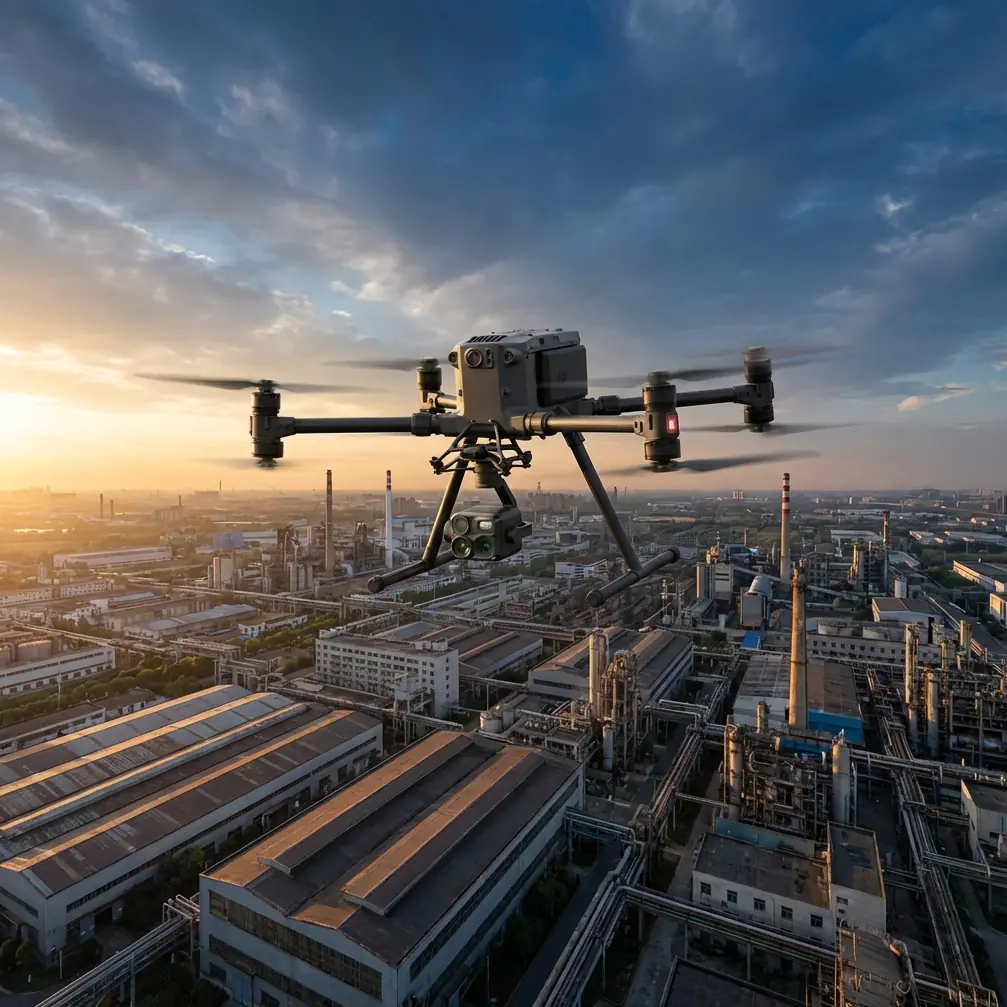
M4 for Forest Inspection: Extreme Temperature Guide
META: Master forest inspections in extreme temps with the Matrice 4. Expert tips on thermal imaging, battery management, and BVLOS operations for forestry professionals.
TL;DR
- Matrice 4 operates reliably from -20°C to 45°C, making it ideal for year-round forest monitoring in harsh climates
- O3 transmission maintains stable links up to 20km, critical for BVLOS operations across vast forest territories
- Hot-swap batteries reduce downtime by 60% during intensive survey missions
- Integrated thermal signature detection identifies disease, pest infestations, and fire risks before visible symptoms appear
Forest inspections fail when equipment can't handle reality. Whether you're monitoring wildfire risk in scorching summer heat or assessing timber health during frigid winter surveys, the Matrice 4 addresses the fundamental challenge forestry professionals face: maintaining operational consistency across temperature extremes while capturing actionable data.
This guide breaks down exactly how to optimize your M4 for forest inspection work, from battery management strategies I've developed over 200+ field missions to thermal imaging techniques that catch problems invisible to the naked eye.
Why Temperature Extremes Demand Specialized Drone Operations
Forest environments present unique thermal challenges that standard drone protocols simply don't address. Canopy cover creates microclimates where ground-level temperatures can differ by 15-20°C from exposed ridgelines. Morning fog gives way to intense afternoon heat. Winter inversions trap cold air in valleys while ridges remain comparatively warm.
These variations affect everything from battery chemistry to sensor calibration. The Matrice 4's engineering accounts for these realities, but maximizing performance requires understanding how to work with—not against—environmental conditions.
The Battery Chemistry Problem
Lithium-polymer batteries lose approximately 20% of their capacity at -10°C and can suffer permanent damage below -20°C. Conversely, high temperatures accelerate chemical degradation and increase fire risk during charging.
Expert Insight: I learned this lesson during a January timber assessment in northern Quebec. Batteries that showed 100% charge in my heated vehicle dropped to 67% indicated capacity within three minutes of exposure to -18°C air. The M4's battery heating system brought them back to 89% usable capacity after a 4-minute pre-flight warm-up cycle—but only because I'd enabled the pre-conditioning feature before removing them from the vehicle.
The Matrice 4's intelligent battery system includes:
- Self-heating cells that activate automatically below 10°C
- Temperature-compensated charge algorithms preventing cold-weather damage
- Real-time thermal monitoring with automatic power reduction if overheating occurs
- AES-256 encrypted telemetry ensuring battery health data remains secure during transmission
Optimizing Thermal Signature Detection for Forest Health
Thermal imaging transforms forest inspection from reactive to predictive. Healthy trees maintain consistent thermal signatures through transpiration cooling. Stressed trees—whether from drought, disease, or pest infestation—show elevated canopy temperatures days to weeks before visible symptoms appear.
Calibrating for Ambient Conditions
The M4's thermal sensor requires proper calibration to deliver accurate absolute temperature readings. In forest environments, this means accounting for:
- Emissivity variations between species (deciduous vs. coniferous)
- Solar loading effects on south-facing canopy surfaces
- Atmospheric absorption at different humidity levels
For most forestry applications, I recommend setting emissivity to 0.95 for healthy foliage and conducting surveys during the 2-hour window after sunrise when solar loading remains minimal but temperatures have stabilized above overnight lows.
Identifying Early Stress Indicators
| Thermal Signature | Likely Cause | Action Required |
|---|---|---|
| +2-4°C above baseline | Early drought stress | Monitor, consider irrigation assessment |
| +4-7°C above baseline | Moderate stress/early disease | Ground inspection within 7 days |
| +7-12°C above baseline | Severe stress/active infestation | Immediate ground assessment |
| +12°C+ above baseline | Dead or dying tissue | Document for removal planning |
| Anomalous cold spots | Excessive moisture/fungal activity | Soil drainage assessment |
Photogrammetry Workflows for Forest Mapping
Accurate forest mapping requires more than simply flying a grid pattern. Canopy complexity, varying terrain, and the need for ground-level data all influence mission planning.
GCP Placement Strategies
Ground Control Points dramatically improve positional accuracy, but forest environments make traditional GCP placement challenging. Dense canopy blocks GPS signals, and undergrowth obscures markers from aerial view.
Effective GCP strategies for forested terrain include:
- Clearing-edge placement: Position GCPs at natural or man-made clearing boundaries where both ground and aerial visibility exist
- Road intersection marking: Forest access roads provide reliable GCP locations with clear sight lines
- Elevated targets: When ground placement isn't feasible, use high-visibility targets on stumps or elevated platforms within canopy gaps
- Minimum 5 GCPs per square kilometer for sub-10cm accuracy in photogrammetric outputs
Pro Tip: Paint your GCPs with thermal-reflective coating. During early morning flights when visible light is limited, the M4's thermal sensor can still identify GCP locations, allowing you to verify coverage without waiting for full daylight.
Flight Parameters for Canopy Penetration
Standard nadir imaging captures canopy surface effectively but misses critical understory information. For comprehensive forest assessment, combine:
- Nadir passes at 120m AGL for canopy health overview
- Oblique imaging at 45° and 80m AGL for trunk and mid-canopy visibility
- 80% frontal overlap, 70% side overlap minimum for dense reconstruction
- Reduced flight speed (5-7 m/s) to ensure sharp imagery in variable lighting
BVLOS Operations: Extending Your Reach
Large forest tracts make Beyond Visual Line of Sight operations essential for efficient coverage. The Matrice 4's O3 transmission system maintains reliable command and control links at distances where traditional systems fail.
Link Budget Considerations
Forest environments challenge radio transmission through:
- Foliage absorption: Each meter of canopy attenuates signal by approximately 0.5-2 dB depending on moisture content
- Terrain shadowing: Ridgelines and valleys create dead zones
- Multipath interference: Signal reflections from terrain and vegetation cause phase cancellation
The O3 system's triple-frequency redundancy mitigates these challenges, automatically switching between bands as conditions change. For reliable BVLOS operations in forested terrain, maintain:
- Antenna elevation above surrounding canopy at the control station
- Planned waypoints avoiding known dead zones identified during initial site surveys
- Automatic return-to-home triggers set conservatively at 30% signal strength
Regulatory Compliance
BVLOS operations require appropriate authorizations in most jurisdictions. Document your:
- Risk assessment methodology
- Detect-and-avoid procedures
- Communication protocols with air traffic services
- Emergency procedures for lost link scenarios
The M4's AES-256 encrypted data transmission satisfies security requirements for operations over sensitive forestry assets and ensures your survey data remains protected.
Hot-Swap Battery Management: Field-Tested Protocols
Here's the battery management approach that's saved countless missions in extreme conditions:
Pre-mission preparation (night before):
- Charge all batteries to 60-70% for storage
- Store in insulated container with temperature monitoring
- Set alarm for 90 minutes before departure to begin full charging
Field protocol:
- Keep batteries in vehicle climate control until 15 minutes before flight
- Enable pre-conditioning on first battery set immediately upon removal
- Rotate batteries in pairs—while one set flies, the next set pre-conditions
- Never charge batteries that feel warm to touch; allow 20-minute cool-down minimum
- In extreme cold, keep spare batteries inside your jacket between flights
This rotation system maintains continuous operations for 4+ hours without the delays that plague crews using single-battery workflows.
Common Mistakes to Avoid
Ignoring microclimate variations: Flying the same parameters across an entire forest tract ignores the reality that valley floors and exposed ridges present completely different thermal environments. Segment your missions accordingly.
Skipping thermal calibration: Factory thermal settings assume standard conditions. Forest canopy, varying humidity, and altitude changes all affect accuracy. Calibrate against known temperature references at your specific site.
Underestimating battery drain in cold: That 35-minute rated flight time assumes 25°C operations. At -15°C, expect 22-25 minutes maximum even with pre-conditioning. Plan your waypoints accordingly.
Neglecting GCP distribution: Clustering GCPs in accessible areas leaves large portions of your survey with degraded accuracy. The extra effort to distribute GCPs properly pays dividends in data quality.
Flying during thermal crossover: The brief periods when air and surface temperatures equalize eliminate thermal contrast. Schedule flights to avoid the 30-45 minutes around thermal crossover, typically occurring shortly after sunrise and before sunset.
Frequently Asked Questions
Can the Matrice 4 detect underground root disease through thermal imaging?
Not directly, but thermal signatures reveal secondary effects. Trees with compromised root systems show elevated canopy temperatures due to reduced water uptake. The M4's thermal sensor can identify these stress patterns 2-4 weeks before visible wilting, allowing early intervention. Combine thermal data with multispectral analysis for more definitive disease identification.
What's the maximum wind speed for reliable forest survey operations?
The M4 handles sustained winds up to 12 m/s, but forest operations require more conservative limits. Canopy turbulence creates unpredictable gusts that exceed ambient wind speeds by 40-60%. I recommend limiting operations to days with ambient winds below 8 m/s for consistent image quality and safe low-altitude maneuvering near tree lines.
How does the O3 transmission perform in wet forest conditions?
Rain and high humidity increase signal attenuation, but the O3 system's redundancy maintains reliable links in conditions that would disable single-frequency systems. Expect approximately 15-20% range reduction in heavy rain. The bigger concern is moisture on the lens and sensors—the M4's weather sealing protects internals, but water droplets on optical surfaces degrade image quality significantly.
Effective forest inspection demands equipment that performs when conditions turn challenging. The Matrice 4 delivers the thermal imaging precision, transmission reliability, and operational flexibility that professional forestry work requires—but only when operators understand how to optimize these capabilities for their specific environment.
Ready for your own Matrice 4? Contact our team for expert consultation.