
Matrice 4 for Highway Inspection in Extreme Temperatures
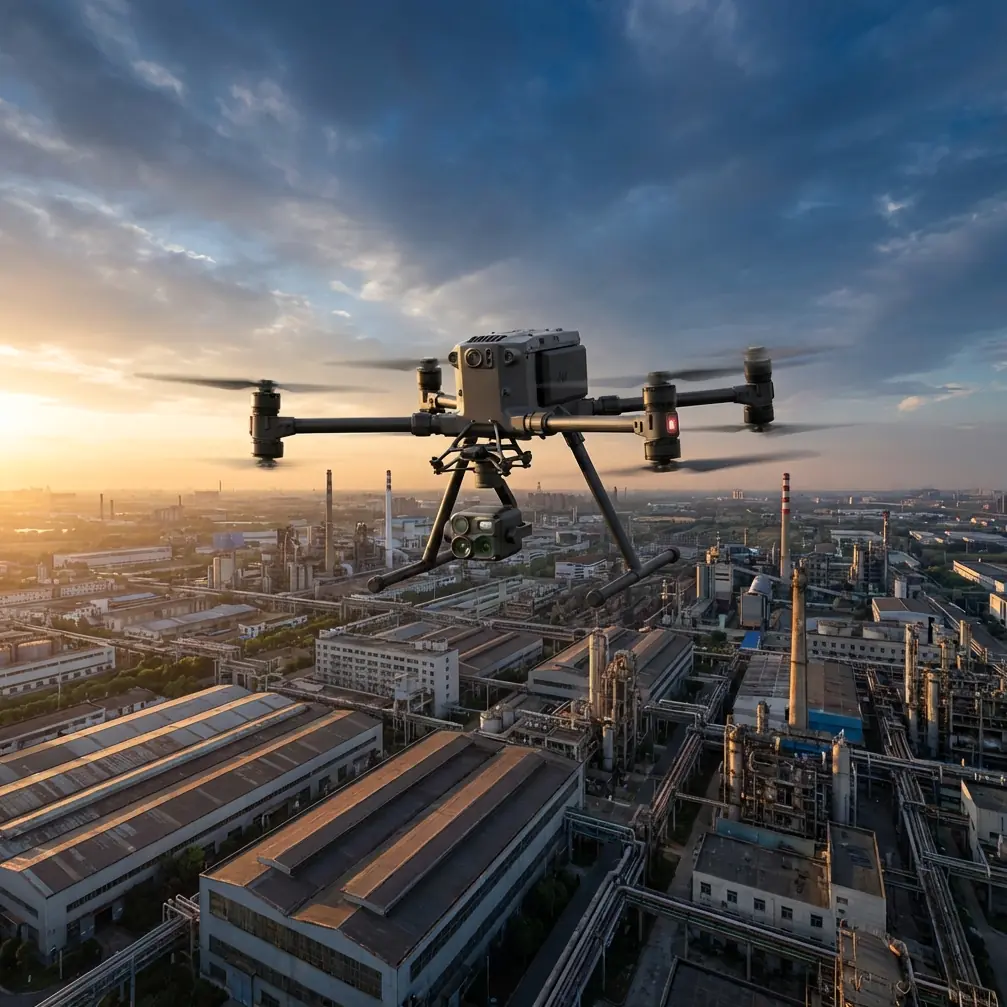
Matrice 4 for Highway Inspection in Extreme Temperatures: What the Lake District Drone Incident Really Teaches Operators
META: A technical review of Matrice 4 for highway inspection in extreme temperatures, using a recent helicopter-drone safety incident to explain transmission discipline, thermal workflow, antenna positioning, BVLOS planning, and operational risk control.
By Dr. Lisa Wang
A recent BBC report was only a single line long, but the lesson behind it is not small: Lake District rescuers condemned a drone pilot who flew close to two emergency service helicopters, and the flight was described as irresponsible because it endangered the rescue effort.
For anyone evaluating the Matrice 4 for highway inspection, especially in heat, cold, wind, or low-visibility conditions, that incident should sit in the front of the mind. Not because highway teams are doing mountain rescue work. They are not. The reason is simpler and more practical: once you deploy a high-end UAV around live infrastructure, you are no longer just collecting imagery. You are entering shared airspace, shared risk, and a chain of operational decisions that affects everyone nearby.
That makes Matrice 4 performance only half of the story. The other half is whether the aircraft can be used with enough discipline to keep inspection work efficient without becoming the problem.
Why this incident matters to a Matrice 4 highway workflow
Highway inspection in extreme temperatures often pushes crews toward harder mission profiles. You may be covering long corridors, dealing with mirage or thermal shimmer over asphalt, managing battery performance in winter, or trying to detect early pavement defects, overheating electrical cabinets, drainage issues, bridge deck anomalies, or delamination signals before they become lane closures.
Those are exactly the kinds of conditions where operators start leaning on advanced features: thermal signature analysis, photogrammetry for measurable reconstruction, O3 transmission stability, encrypted links using AES-256, and in some programs even BVLOS planning where regulations and approvals allow.
But the BBC incident highlights a point many spec sheets never capture. Long range is not a license to stretch judgment. Stable transmission is not permission to ignore the surrounding airspace. A well-equipped drone is safest when it reduces uncertainty, not when it encourages complacency.
For Matrice 4 operators inspecting highways, this means every technical advantage should be translated into a restraint principle:
- Better situational awareness should widen your safety margin.
- Better transmission should improve command reliability, not tempt unnecessary distance.
- Better thermal sensing should reduce repeated flights over traffic-sensitive areas.
- Better mission planning should shorten exposure time in complex environments.
That is where Matrice 4 becomes interesting as a professional inspection platform. Not as a trophy aircraft, but as a tool that can compress field time while keeping operations structured.
Extreme temperature work changes what “good drone performance” really means
A highway corridor in summer behaves differently from one in winter. On hot days, road surfaces radiate strongly and can distort apparent thermal contrast. In freezing conditions, batteries and material surfaces respond differently, and mechanical systems need more careful readiness checks. Operators who only think about airframe endurance miss the larger inspection equation.
For this type of work, Matrice 4 has to be judged on repeatability.
Can it maintain a consistent sensor viewpoint for comparing one section of carriageway against another? Can it hold enough link stability to avoid drift in operator attention? Can the team manage power swaps quickly enough that a temperature-sensitive defect is recorded during the right inspection window? Can the data set support downstream engineering decisions rather than just producing attractive images?
This is where hot-swap batteries matter operationally. On a highway inspection, especially in extreme temperatures, every interruption has a cost. If a crew has to shut down completely between cycles, the thermal environment may change before the next lift. On asphalt, concrete joints, expansion areas, culverts, and roadside electrical assets, timing affects what the sensor sees. A hot-swap workflow helps preserve mission continuity, which can make thermal comparisons more useful and reduce the need to re-stage the operation near moving traffic.
That may sound like a small convenience feature. It is not. In real inspection work, continuity is often the difference between a coherent data set and a patchwork of disconnected captures.
Thermal signature work on highways is only as good as the operator’s interpretation
Thermal imaging gets overused in drone marketing and under-disciplined in the field. On a highway project, a thermal signature does not automatically reveal a defect. It reveals surface temperature differences that may indicate a defect, drainage pattern, subsurface inconsistency, overloaded component, or simply a transient environmental effect.
With Matrice 4, the value comes from combining thermal results with visible imagery and, where needed, photogrammetry.
That combination matters because highways produce plenty of false positives. Freshly sunlit patches, repaired sections, water ingress, oil contamination, nearby metal barriers, vehicle heat residue, and shaded embankments can all alter apparent thermal behavior. A serious operator uses thermal as a triage layer, not a verdict.
Here Matrice 4’s operational advantage is not just sensor presence. It is the ability to fold thermal capture into a repeatable corridor workflow, then support engineering review with spatially organized visual data. When a hotspot or cold anomaly appears, the team should be able to answer three questions quickly:
- Where exactly is it?
- How large is it?
- Does the visual record support the thermal interpretation?
That is where GCP-backed photogrammetry can elevate the mission from “drone found something odd” to “inspection team has a measurable location and condition record.” Ground control points are not always necessary for every fast-response inspection, but when asset managers need defensible mapping outputs, GCP discipline improves spatial confidence. On long linear assets such as highways, that confidence matters when maintenance crews need to mobilize to the right place without repeat site visits.
O3 transmission is useful, but antenna positioning still decides the day
One of the most overlooked causes of poor field performance is not the aircraft. It is the way the controller antennas are aimed.
Many operators hold the remote as if the antenna tips should point at the drone. That is usually the wrong instinct. For best range and link quality, the broad face of the antenna pattern should be oriented toward the aircraft, not the narrow tip. In practical terms, keep the flat sides of the antennas presented toward the flight path rather than “spearing” the drone with the ends.
On highway inspections, this becomes even more important because the route geometry tricks people into bad habits. If you are standing beside an elevated section, near steel barriers, under gantries, or close to service vehicles, signal reflections and partial obstructions can degrade the link before the drone is actually very far away. O3 transmission can be highly capable, but it still depends on line quality, antenna orientation, and operator position.
My field advice for Matrice 4 corridor work is straightforward:
- Stand where the likely flight segment remains clear of large reflective structures when possible.
- Keep your body from blocking the controller face.
- Avoid last-minute antenna adjustments while the aircraft is turning at range.
- If the route bends, reposition early rather than trying to “pull” the signal through roadside clutter.
- On sloped terrain or overpasses, think in three dimensions. The drone may be visually clear but RF conditions may not be.
This is not just about maintaining smooth video. It is a safety discipline. The Lake District case shows what happens when drone operations lose respect for surrounding aviation activity. Reliable control link management reduces confusion, rushed decisions, and positional uncertainty. On infrastructure jobs, those margins matter.
AES-256 and data security matter more on highways than many teams assume
Highway inspections do not sound sensitive until you look at the data layers involved. Detailed imagery can expose structural conditions, maintenance backlogs, utility interfaces, access roads, traffic management plans, and operational vulnerabilities in roadside infrastructure. That is why encrypted transmission using AES-256 is not just a checkbox feature.
For contractors, consultants, and transport agencies, secure links support a cleaner chain of custody from capture to review. If the Matrice 4 is being used to document damage, monitor contractor performance, or inspect critical transport assets after severe weather, the integrity of the collected data matters operationally and contractually.
Security also intersects with workflow confidence. When teams know the link is protected, they are more willing to run standardized remote review processes and integrate flight data into formal asset systems. The platform becomes part of an inspection architecture rather than a standalone camera in the sky.
BVLOS thinking should improve planning even when the mission remains within visual line of sight
BVLOS is often treated as a yes-or-no topic. In reality, the discipline of BVLOS planning improves even conventional operations.
Highway inspection is a perfect example. A corridor mission forces you to think about handoff points, traffic staging, emergency landing options, communication procedures, visual observer placement, weather shifts, and competing airspace users. Even if the actual flight is kept within visual line of sight, those planning habits reduce surprises.
The Lake District helicopter incident underlines that point sharply. A drone does not need to make contact with another aircraft to create danger. It only needs to be close enough to disrupt a critical operation. For highway crews, that means every mission should begin with a simple assumption: if a crewed aircraft appears, your operation is instantly secondary.
That is not a slogan. It should change mission design. Build in safe loiter points. Know your descent options. Avoid narrow operational envelopes where the aircraft is committed to a structure-hugging path with limited flexibility. Use route segmentation so the drone is never so extended that recovery becomes awkward if the airspace picture changes.
Good Matrice 4 operations are defined by how quickly they can de-risk, not how aggressively they can stretch.
Building an inspection stack that produces decisions, not just files
Too many drone programs stall after the first few successful captures because they focus on acquisition rather than interpretation. For Matrice 4 highway inspection in extreme temperatures, the real output should be a decision-ready package.
That usually includes:
- thermal imagery tied to exact asset locations,
- visible reference imagery for context,
- photogrammetric products where measurement or deformation tracking is required,
- notes on environmental conditions at the time of capture,
- and a field log documenting any transmission or airspace anomalies.
This is where a technical review of Matrice 4 should stay grounded. The aircraft’s value is not abstract. It lies in reducing lane exposure, shortening on-site time, improving anomaly detection, and supporting repeat inspections across changing seasons.
If your team is setting up a corridor workflow and wants a practical discussion around antenna placement, transmission discipline, or inspection planning, you can reach out here via direct WhatsApp coordination.
The real standard for a professional Matrice 4 operation
The BBC report about the Lake District was brief: a drone flew close to two emergency service helicopters, and rescuers said it endangered the rescue. That single fact is enough to expose a dividing line in the UAV sector.
One group sees capability and asks how far, how fast, how much data.
The better group asks something else first: under pressure, in difficult conditions, with other airspace users present, can the operation remain controlled, predictable, and useful?
For highway inspection in extreme temperatures, Matrice 4 should be evaluated by that second standard. Its practical strengths come into focus when used to create stable thermal records, support photogrammetry anchored by GCPs where needed, maintain dependable O3 link performance through proper antenna positioning, secure data through AES-256, and preserve mission continuity with hot-swap battery workflow.
Those are not isolated features. Together, they shape whether the aircraft helps inspection teams work with less disruption and more confidence.
The deeper lesson from the Lake District incident is not merely “follow the rules.” It is that aviation discipline starts long before anything goes wrong. It appears in where you stand, how you point the antennas, how conservatively you plan the corridor, how quickly you yield airspace, and whether every technical feature is used to reduce risk rather than flirt with it.
That is the kind of thinking Matrice 4 deserves. And on a highway in punishing heat or severe cold, it is also the kind of thinking that gets the job done properly.
Ready for your own Matrice 4? Contact our team for expert consultation.