
Matrice 4 for Remote Highway Inspection: What Actually
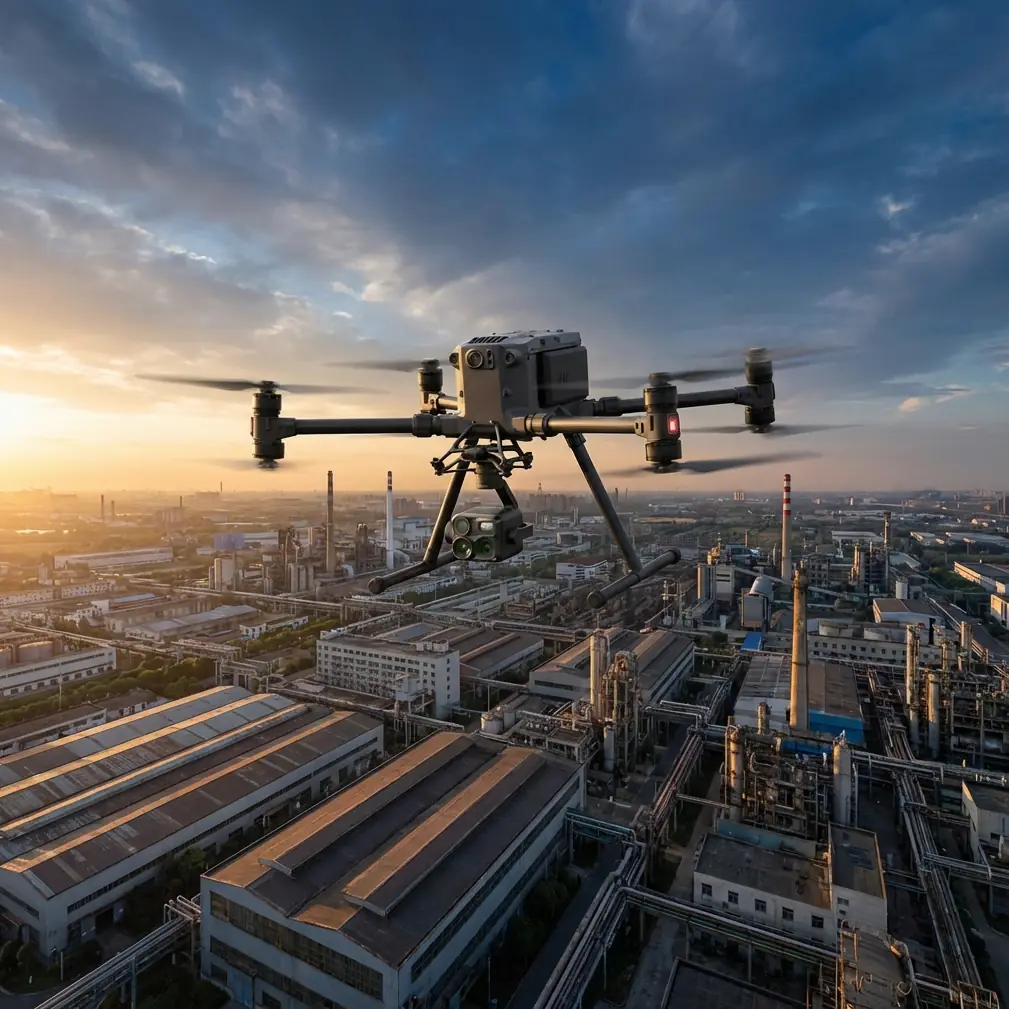
Matrice 4 for Remote Highway Inspection: What Actually Matters When Conditions Turn Mid-Flight
META: Expert analysis of how Matrice 4 fits remote highway inspection workflows, with practical insight on power margins, weather shifts, thermal observation, photogrammetry accuracy, and crew safety logic.
Highway inspection sounds straightforward until you leave the easy sections.
Out in remote corridors, the work changes character fast. A bridge deck gives way to cut slopes. A guardrail issue turns into drainage mapping. A suspected heat anomaly near electrical roadside infrastructure needs thermal verification before the crew drives another 40 kilometers. Then the weather shifts. Wind picks up along the embankment, air density changes with temperature, and the aircraft that felt overpowered 15 minutes earlier starts showing you what real power management looks like.
That is the right frame for thinking about Matrice 4.
Not as a spec-sheet object. Not as a generic enterprise drone. As a tool that has to keep an inspection mission coherent when distance, terrain, communications, and changing atmosphere all start pushing at once.
The real problem with remote highway inspection
Most remote highway jobs are not limited by image quality alone. They are limited by workflow fragility.
A field team may need to capture visual condition data, produce photogrammetry outputs for slope movement or pavement-edge deformation, check thermal signature irregularities, and do it without wasting daylight on repeated setup cycles. If the site is far from support, every landing costs time. Every unnecessary battery swap interrupts momentum. Every signal drop or unstable hover near terrain steals confidence from the pilot and value from the mission.
For highway operators and engineering contractors, the hidden cost is not just incomplete data. It is incomplete confidence. If you cannot trust that the aircraft will hold up when environmental conditions change, your whole inspection plan becomes conservative. That means shorter runs, more manual revisits, and more boots exposed to live road environments.
This is where Matrice 4 becomes interesting, especially for remote linear infrastructure work.
Why a helicopter design principle still matters to a modern inspection drone
One of the more useful ideas from classical rotorcraft design is simple: the most demanding maneuvers rely on the highest available power, and those windows are often brief. In the helicopter reference material, demanding flight actions may last only seconds or tens of seconds, but they still require maximum available output to preserve maneuver margin. That logic translates directly to highway drone operations.
A remote inspection mission rarely unfolds in one steady-state cruise profile. The aircraft may need to accelerate along a road segment, arrest speed to inspect a crack or expansion joint, climb above roadside obstacles, shift laterally for an oblique imaging pass, then hold stable enough for mapping overlap or thermal confirmation. None of these are dramatic in isolation. Together, especially in wind or broken terrain, they define whether the platform feels resilient or merely capable on paper.
For Matrice 4 operators, that matters because the aircraft is not just collecting pictures. It is constantly converting battery energy into stability, positioning precision, and recovery margin. The more remote the highway section, the less tolerance you have for an aircraft that runs near its edge.
Weather changed mid-flight. That is when the mission reveals itself.
On one kind of mission profile common to remote highway work, the day begins cool and stable. The route runs through exposed terrain with alternating cut slopes and elevated sections. The plan is straightforward: establish GCPs where practical, capture corridor imagery for photogrammetry, then pivot to thermal observations around culverts, electrical cabinets, drainage channels, or suspected moisture intrusion zones before heading back.
Then the atmosphere changes.
This is not dramatic storm weather. It is the more operationally annoying kind. Sun angle rises. Surface heating builds. Air becomes more active over asphalt and gravel shoulders. Wind starts moving unevenly through embankments and open spans. The helicopter handbook reference points out a fundamental truth here: atmospheric conditions change air density, which changes how much air enters the engine and alters the power required by the rotor system. While Matrice 4 is not a helicopter with a turbine engine, the performance principle remains highly relevant. Changes in air density and localized wind behavior directly affect lift efficiency, power draw, hover stability, and flight time assumptions.
In inspection terms, that means your clean morning plan can become a margin-management exercise by midday.
A good platform does not eliminate physics. It gives the crew enough control authority, transmission reliability, and battery planning flexibility to stay ahead of physics.
What that means operationally for Matrice 4
For remote highway inspections, Matrice 4’s value sits in the overlap between sensing and endurance discipline.
Thermal payload capability is not there to decorate the brochure. It changes decision-making. A thermal signature anomaly along roadside assets can help a team distinguish between a visual stain and an active issue, between a dry-looking patch and trapped moisture, between a routine revisit and a same-day escalation. On a long corridor where crews cannot inspect everything by hand, thermal context helps triage work.
Photogrammetry matters just as much, but for a different reason. Engineers do not just want a pretty corridor model. They need repeatable geometry. If a shoulder edge is slumping or a retaining section shows movement, the usefulness of the output depends on overlap discipline, stable navigation, and good control practices with GCP integration where conditions allow. Matrice 4 fits well in that environment when the operator treats it as a measurement platform, not just a camera in the sky.
Transmission is another non-negotiable factor. Remote highways often create deceptive line-of-sight conditions. Open road does not always mean clean link quality. Terrain cuts, roadside vegetation, utility structures, and long linear alignment can all complicate signal behavior. That is why O3 transmission is more than a convenience keyword. A robust link preserves command confidence and video continuity when the aircraft is working farther down a corridor than a short-range site survey would ever require.
And because highway inspection data can include sensitive infrastructure records, AES-256 transmission security is not trivial. It is relevant. Contractors, road authorities, and utilities increasingly care about how visual and thermal data move through the workflow. Secure transmission helps support that trust.
The battery question is really a continuity question
Remote road jobs punish stop-start operations.
If you are surveying isolated segments or leapfrogging between structures, hot-swap batteries become a mission continuity tool rather than a convenience feature. The gain is not merely saved seconds on the ground. The gain is procedural rhythm. Keep the aircraft and team moving, maintain capture logic across adjacent sections, and reduce the chance of mismatched datasets caused by long interruptions.
This becomes even more important when weather is shifting. If conditions are degrading gradually, the crew may choose to complete one final critical pass before standing down. Efficient battery handling can be the difference between finishing a bridge approach model cleanly and returning on another day for a partial retake.
Safety thinking should shape how you fly these missions
The rotorcraft source includes a striking emergency detail: in complete engine failure, a helicopter pilot is trained to manage autorotation around 120 to 130 km/h, then reduce touchdown vertical speed with a timed flare and collective input at about 4 to 6 meters above the ground. That exact procedure does not apply to a multirotor inspection drone, but the design mindset behind it absolutely does.
The lesson is not about copying helicopter emergency technique. The lesson is about respecting short windows where correct control action determines outcome.
For Matrice 4 teams inspecting highways, that translates into conservative route segmentation, deliberate return thresholds, and disciplined energy reserves when operating in remote areas. It also means pilots should train for loss-of-margin scenarios that are civilian and practical: sudden wind on a bridge span, partial obscuration near terrain, a temperature-driven drop in expected endurance, or degraded visual contrast during thermal confirmation late in the day.
BVLOS discussions often focus on regulation first. They should also focus on operational maturity. If a highway authority or contractor wants to move toward BVLOS-enabled corridor inspection, the platform matters, but crew procedure matters more: preplanned contingencies, communication discipline, terrain-aware route design, and sensible reserve policy.
Cabin and crew safety lessons matter too, even if the source came from manned aviation
The second reference document looks unrelated at first glance. It deals with seat strength and restraint load design in civil aircraft interiors. But one number deserves attention: a forward load case of 33369 N, with connection-related elements designed using an additional factor of 1.33 in some cases. That is a manned-aircraft structural design context, not a drone airframe spec. Still, it highlights a principle that remote highway drone teams would be wise to borrow.
Design for the load path, not the ideal scenario.
In practical terms, your Matrice 4 mission is not just about what the aircraft can fly. It is also about what the whole field system can absorb safely: transport cases in rough terrain, launch and recovery near uneven shoulders, secure mounting of controllers and screens in vehicles, disciplined handling of batteries, and crew ergonomics over long days. Inspection quality falls off when operators are fatigued, rushed, or improvising around equipment setup.
The best highway drone programs tend to look boring on the ground. That is a compliment. Cases are organized. Battery rotation is obvious. Data handling is clean. Crew positions are deliberate. The field workflow has been engineered the same way aircraft seating systems are engineered: assuming real loads, not perfect ones.
A realistic Matrice 4 workflow for remote highways
A strong remote-highway mission with Matrice 4 often follows this pattern:
Start with route segmentation. Do not think of the highway as one mission. Break it into problem-specific blocks: pavement condition, slope inspection, drainage review, bridge approaches, roadside assets. That lets the team prioritize payload mode, altitude, overlap, and revisit logic section by section.
Use visual data for broad condition intelligence and geometry capture. Use thermal intentionally, not continuously by habit. Thermal should answer specific questions: Is there moisture retention, heat buildup, electrical irregularity, or material contrast worth escalating?
Where mapping accuracy matters, support the workflow with GCPs when terrain and safety allow. If GCP placement is limited by roadside exposure or access constraints, compensate with disciplined flight planning and strong overlap control.
Keep an eye on atmospheric trend lines, not just current conditions. If warming surfaces and crosswinds are building, finish the highest-value precision passes first. Do not leave the most overlap-sensitive photogrammetry segment for the part of the day when the aircraft is working harder to hold consistency.
Protect the link. O3 transmission helps, but route geometry still matters. Avoid flying yourself into signal-complex terrain simply because the road looks visually open.
And if you are planning a corridor program and want to compare setup options for your own sites, it is reasonable to discuss the workflow with a specialist before deploying at scale: message an enterprise drone advisor here.
What separates a good Matrice 4 operation from a frustrating one
Not the drone alone.
The difference is whether the team understands power, atmosphere, and data purpose as one system.
The helicopter design reference makes clear that short-duration high-demand phases can define aircraft usefulness. The atmospheric note explains why performance shifts when air density changes. The seat-structure reference reminds us that real engineering starts with realistic loads and safety factors, not assumptions. Those are old aviation lessons, but they map surprisingly well onto modern highway drone work.
Matrice 4 makes sense for remote highway inspection when operators use it with that mindset.
If the mission needs thermal signature interpretation, corridor photogrammetry, secure data handling, stable long-link control, and efficient battery turnover, the platform fits. If the crew also respects changing weather, plans around real endurance margins, and builds repeatable field discipline, it fits even better.
That is the version of drone inspection that actually scales across remote road networks. Not flashy. Not theoretical. Just dependable when the wind shifts, the light changes, and the final useful flight window is shorter than expected.
Ready for your own Matrice 4? Contact our team for expert consultation.