
Matrice 4 for Dusty Power Line Inspections
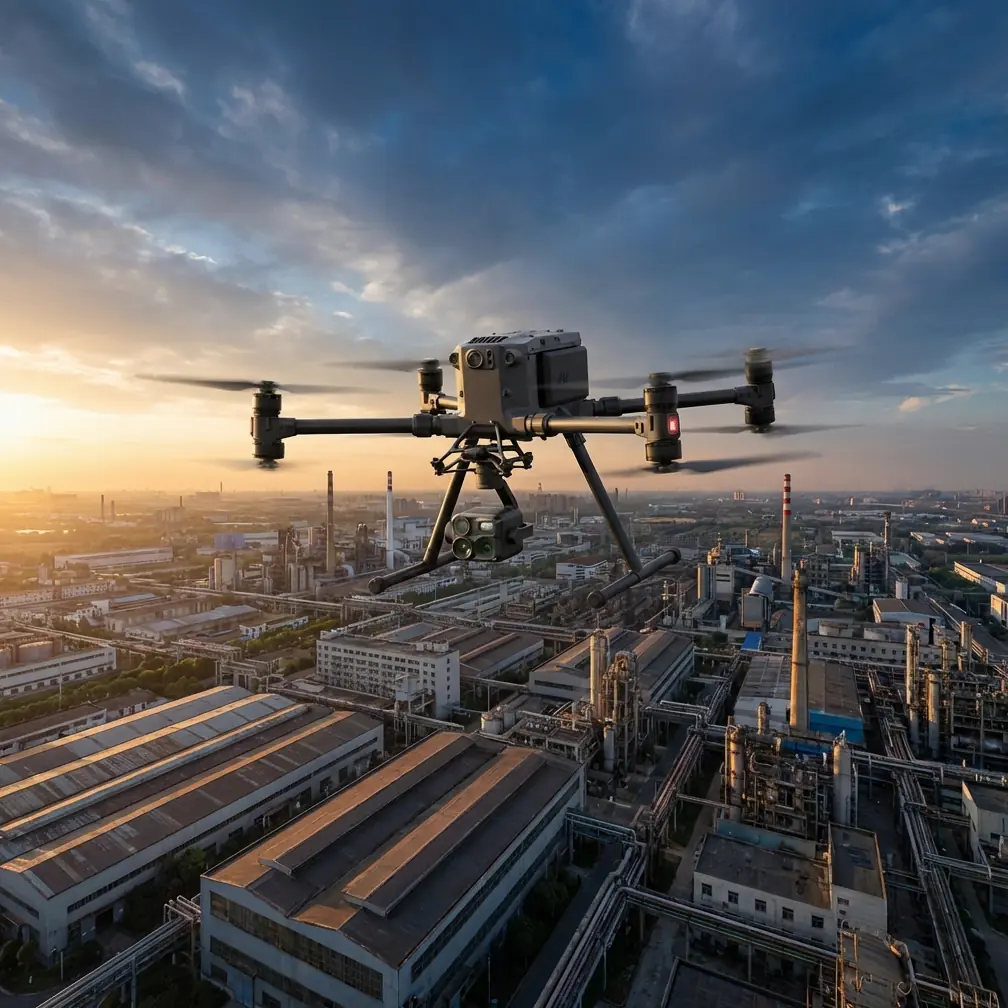
Matrice 4 for Dusty Power Line Inspections: What Actually Matters When the Weather Turns
META: A field-driven look at using DJI Matrice 4 for dusty power line inspection, with practical guidance on thermal signature capture, O3 transmission stability, hot-swap battery workflow, and secure data handling.
Power line inspection sounds straightforward until you do it in the real world.
Dust lifts off access roads before the aircraft is even out of the case. Heat shimmer distorts long views down the corridor. Wind starts as a nuisance and ends as the defining variable of the day. Then the weather shifts mid-flight, and whatever looked good on a checklist at sunrise suddenly becomes a test of aircraft stability, link resilience, sensor discipline, and pilot judgment.
That is where the Matrice 4 conversation gets interesting.
For utility teams working in dry, abrasive environments, the platform is not just another box to tick in the enterprise lineup. It sits at the intersection of inspection, thermal assessment, corridor documentation, and repeatable field workflow. If the mission is inspecting power lines in dusty conditions, the right question is not “Can it fly?” Almost any serious enterprise UAV can fly. The real question is whether it can keep collecting usable data when visibility gets dirty, wind shifts against the route, and the crew still needs a defensible inspection record at the end of the day.
The actual problem: dust changes everything
Dust affects more than visibility. It changes how a mission is planned, how long equipment stays reliable, and how sensor output is interpreted.
In a power line inspection workflow, fine airborne particles can soften image contrast, obscure surface detail on hardware, and create a false sense that the problem is the camera rather than the atmosphere. Thermal work becomes even trickier. A hotspot on a connector is valuable only if the thermal signature is captured with enough consistency to separate a real anomaly from environmental noise. Add midday heating, reflective components, and moving air, and a rushed flight can produce data that looks impressive in thumbnails but proves weak when engineers review it later.
That is why the Matrice 4 matters less as a headline product and more as a field tool. It has to support a disciplined inspection method under imperfect conditions.
Why transmission reliability matters more than people admit
One of the less glamorous but most operationally significant elements in corridor inspection is the control and video link. In dusty utility environments, crews often work across long linear routes with visual clutter, uneven terrain, and intermittent signal obstructions from towers, vegetation, or topography. A strong O3 transmission system is not a spec-sheet ornament in that setting. It is what allows the pilot and payload operator to maintain confidence in framing, approach angles, and anomaly verification without constantly second-guessing whether image breakup is atmospheric, sensor-related, or link-related.
That distinction matters. If you are evaluating a suspect insulator string or looking for heat concentration around a connection point, a stable live feed reduces unnecessary repositioning. Less repositioning means less time hovering in dust, less battery waste, and fewer rushed decisions when conditions deteriorate.
I have seen flights where the first half of the mission was routine, and the second half became a different job entirely because the weather changed. Wind moved through the corridor, blowing suspended dust across the line while a darker cloud bank narrowed the available light. In that moment, the aircraft’s ability to hold a dependable transmission link was not just convenient. It preserved the mission. The crew could still assess framing, maintain separation, and decide whether to continue gathering thermal and visual evidence or bring the aircraft home before the environment compromised the dataset.
Mid-flight weather shifts separate hobby thinking from inspection thinking
The romantic version of drone work assumes fixed conditions. Utility inspection never does.
A common field scenario goes like this: the team launches in dry, bright conditions, expecting a straightforward linear inspection pass. Halfway through, wind speed picks up and begins pushing dust laterally across the right-of-way. Light quality flattens. The aircraft is now working in a more turbulent pocket near structures, and the pilot has to manage trajectory, battery reserve, sensor angle, and return margin at once.
This is where the Matrice 4 should be judged. Not by calm-demo footage, but by how it behaves when the air gets messy.
A well-structured mission in these conditions uses the aircraft’s stability and transmission backbone to preserve data quality rather than chase perfect visuals. Instead of trying to complete the whole route at all costs, the crew can prioritize high-risk assets, capture the thermal signature of suspect components while conditions remain acceptable, and then pivot to wider-context imaging for the remaining structures. That kind of adaptation is only possible when the aircraft gives operators enough confidence to make smart mid-flight compromises.
The weather changed; the drone did not become reckless, confused, or blind. It remained a controllable platform. In inspection work, that is the difference between a useful sortie and a pretty failure.
Thermal signature capture is not just about having a thermal camera
Thermal inspections of power lines are often discussed too casually. People talk about “finding hotspots” as though every thermal image automatically reveals an actionable fault.
It doesn’t.
The operational value lies in capturing a thermal signature under conditions that let engineers compare one asset to another with reasonable confidence. Dusty environments complicate this because atmospheric particulates, heat radiating from surrounding materials, and unstable hover conditions can all muddy interpretation. If a crew is using Matrice 4 for thermal work, the aircraft needs to support controlled observation, not just thermal availability.
That means flying with enough standoff to maintain safety while still generating meaningful contrast on conductors, jumpers, clamps, and connectors. It means timing the mission intelligently rather than flying only when the schedule says so. It means cross-referencing thermal findings with high-resolution visual imagery so that a warm component is not treated as a diagnosis without context.
Operationally, this is where the platform earns its place. A stable aircraft, dependable live view, and efficient battery workflow give the crew time to capture thermal and visual evidence together, instead of forcing a rushed single-pass guess. In utility inspection, the thermal image is rarely the final answer. It is the prompt that tells you where to look harder.
Hot-swap batteries are not a convenience feature on corridor work
Long linear inspections punish inefficient ground routines.
When crews have to shut down completely between flights, lose workflow rhythm, reinitialize everything from scratch, and rebuild momentum after each battery cycle, inspection quality suffers. Not because the aircraft is incapable, but because the operation becomes fragmented. Small delays add up. Dust gets into gear during prolonged ground handling. Teams rush relaunches to recover schedule. Fatigue creeps in.
That is why hot-swap batteries matter in practical terms. On a corridor mission, every minute preserved during turnaround helps maintain consistency across repeated inspection legs. If one battery pair comes out and another goes in without forcing a full operational reset, the crew can keep moving through the route with less disruption. That continuity is especially useful when the weather is unstable. If conditions are degrading, a fast battery transition may be what allows the team to complete a priority segment before wind or airborne dust make thermal or visual capture less reliable.
This is one of those details that sounds small in marketing language and very large in fieldwork.
Security is not abstract when utility data is involved
Utility inspection data is sensitive even in purely civilian operations. Asset imagery, thermal records, geotagged findings, and route documentation all deserve strong protection. That is why AES-256 encryption deserves mention as an operational feature, not a technical footnote.
If the Matrice 4 workflow involves capturing infrastructure imagery that may feed into maintenance decisions, contractor reporting, or enterprise asset management systems, secure data handling becomes part of mission quality. A crew can gather excellent imagery, but if the transmission and storage practices are weak, the operation still falls short of professional expectations.
For inspection teams working with utilities, contractors, or engineering firms, this matters because trust is built on more than flight performance. It also depends on whether the platform supports responsible handling of infrastructure data from capture through review.
Mapping and photogrammetry still have a place in line inspection
Power line inspection is not only about zooming in on defects. Sometimes the job is broader: documenting encroachment, checking access routes, assessing tower surroundings, or building a repeatable record of corridor conditions over time. That is where photogrammetry enters the picture.
Used properly, Matrice 4 can support site documentation that goes beyond isolated inspection photos. If the crew establishes good GCP discipline for mapping-grade tasks, they can improve positional confidence in corridor models and orthomosaics. That has obvious value when maintenance planning depends on knowing exactly where vegetation pressure, ground disturbance, or structure-adjacent changes are developing.
The key is not to confuse inspection imagery with survey-grade output by default. GCP use is what separates rough visual mapping from more trustworthy spatial products. For utility teams, that means the aircraft can contribute to both close asset assessment and broader corridor intelligence, but only if the workflow is designed with intent.
BVLOS talk should stay grounded in reality
BVLOS is a tempting topic whenever corridor inspection comes up, because power lines naturally stretch far beyond comfortable line-of-sight distances. But it should be discussed carefully. The aircraft may support enterprise workflows that fit expanding operational concepts, yet the real-world significance depends on local authorization, procedures, crew structure, risk controls, and the maturity of the operator’s safety case.
For most readers considering Matrice 4 for utility inspection, the practical takeaway is simpler: build a line-of-sight workflow that is already disciplined, repeatable, and data-rich before trying to scale into anything more ambitious. The aircraft’s transmission, battery management, and sensor integration can support more advanced operations later, but inspection quality is won first through method, not reach.
A better way to fly dusty line inspections with Matrice 4
If I were setting up a Matrice 4 workflow for dusty power line inspections, I would anchor it around five rules.
First, launch with sensor priorities already decided. If thermal signature capture is mission-critical, do that work before rising winds and suspended dust degrade interpretability.
Second, use the O3 transmission strength to avoid overflying assets unnecessarily. Hold safe, efficient positions and assess whether the image is good enough before moving closer.
Third, treat hot-swap batteries as a scheduling tool. Plan battery transitions around route segments, not after the aircraft is already too low to preserve options.
Fourth, use visual imagery to validate thermal findings. A hotspot without corresponding context can trigger wasted follow-up.
Fifth, assume the weather will change before the mission is finished. Build reserve time, reserve battery, and reserve decision space into every flight.
That last point is the one many teams learn the hard way.
In dusty utility corridors, the best aircraft is not the one that looks most capable on paper. It is the one that keeps the crew in control when the environment stops cooperating. Matrice 4 makes sense when it is used that way: as an inspection platform that supports disciplined data capture, resilient communications, secure handling, and efficient field turnover.
If you are refining a utility inspection workflow and want to compare setup options or payload strategy, you can message a Matrice 4 field specialist here.
The platform is only half the story. The rest is how you build the mission around the conditions you actually face: dust, shifting light, unstable wind, and the need to come back with evidence that engineering teams can trust.
Ready for your own Matrice 4? Contact our team for expert consultation.