
Inspecting Windy Solar Farms With Matrice 4
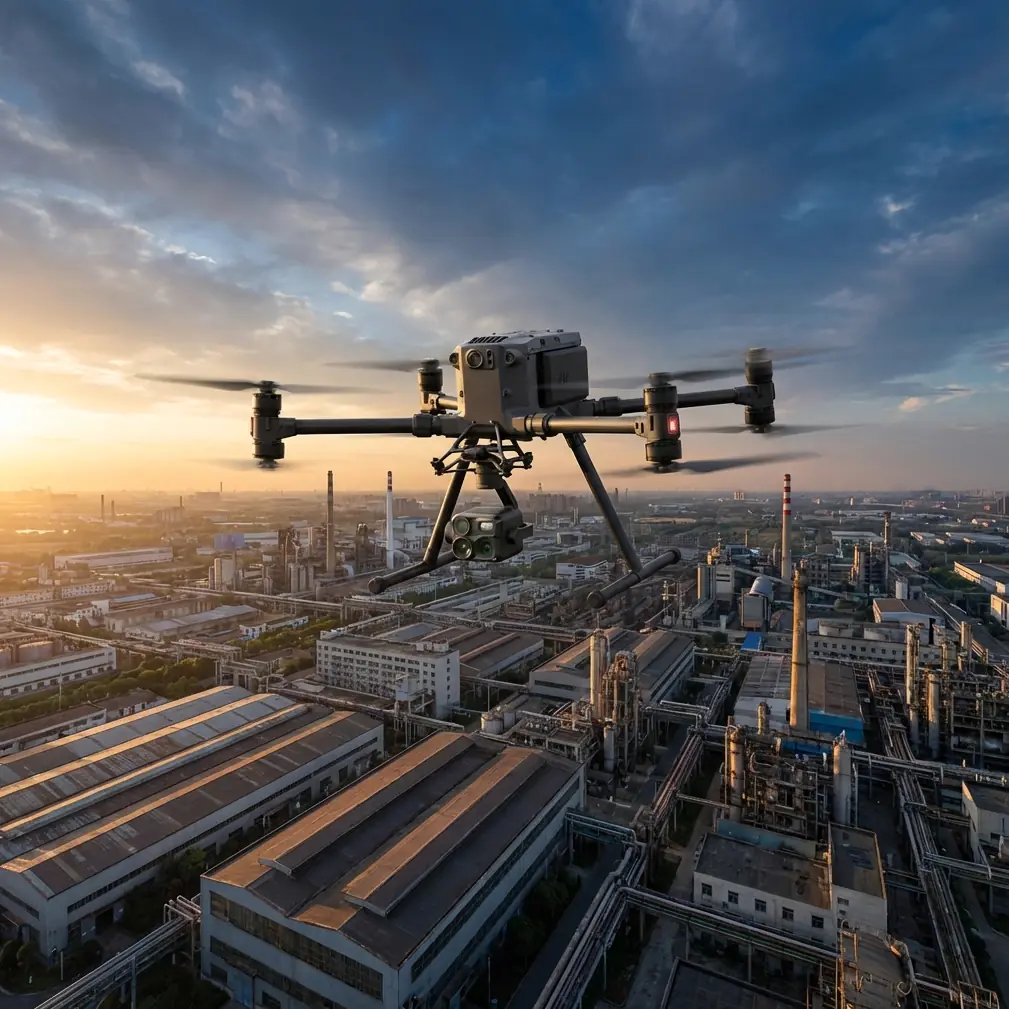
Inspecting Windy Solar Farms With Matrice 4: What Actually Matters in the Field
META: Expert technical review of using the Matrice 4 for windy solar farm inspections, with practical advice on thermal work, antenna positioning, photogrammetry, GCP strategy, transmission stability, and battery management.
Wind changes everything on a solar site.
Panels do not move, but the aircraft does. That single difference reshapes inspection planning, image quality, thermal consistency, flight time, and even how useful the final dataset becomes for an operations team. If your mission profile centers on large solar farms and the weather rarely gives you calm mornings, the Matrice 4 deserves to be judged on one question above all others: how well does it hold inspection quality together when the air gets messy?
That is the lens I would use.
The Matrice 4 is not interesting because it is new. It is interesting because solar inspections demand a very specific blend of capabilities that often pull against each other. You need stable hovering for thermal work, enough transmission resilience to stay connected along long rows of panels, efficient route execution for repetitive mapping passes, and battery workflows that do not slow a team to a crawl across a multi-megawatt site. Add wind, and weak systems expose themselves quickly.
For solar operators, the real value is not in headline specs. It is in repeatable defect detection.
Why wind is the real stress test
A calm-day demo flight can flatter almost any enterprise drone. Solar farms are less forgiving. The open terrain that makes them ideal for generation also gives wind room to build. Even moderate gusts can create yaw corrections, slight altitude fluctuations, and small framing inconsistencies that degrade inspection outputs in ways many teams do not catch until they review the data back in the office.
That matters most in two workflows: thermal scanning and photogrammetry.
With thermal, small shifts in aircraft attitude can alter viewing angle across panel surfaces. That changes the apparent heat pattern and can make it harder to distinguish a genuine thermal signature from a misleading reflection or perspective artifact. A hotspot is only useful if the operator can trust the context around it. In windy conditions, that means platform stability is not just a flight characteristic. It is a diagnostic requirement.
For photogrammetry, wind affects overlap consistency, corner sharpness, and reconstruction quality. If you are building a digital model to locate faults spatially, check string layouts, or compare repeat surveys over time, any drift in flight path introduces avoidable noise. A drone that can maintain disciplined route geometry in disturbed air gives you more than prettier maps. It gives you a stronger basis for maintenance decisions.
This is where the Matrice 4 makes sense as a solar tool: not because it promises perfection, but because the platform is aligned with inspection work that depends on disciplined data capture rather than casual visual observation.
Thermal work: what the aircraft must do beyond “see heat”
Too many conversations about thermal payloads stop at resolution. That is not enough for solar.
On a utility-scale array, the operator is rarely just searching for obvious failures. The useful cases are subtler: developing hotspots, string-level inconsistencies, bypass diode issues, connector problems, soiling anomalies that create uneven heating, and damage patterns that need confirmation against visual imagery. A thermal signature without stable framing and disciplined mission execution can send a technician to the wrong section of the site or miss a pattern that spans multiple modules.
In windy conditions, the Matrice 4’s value is in helping preserve consistent sensor presentation across long passes. That operational significance is easy to underestimate. If the aircraft constantly fights the air, the inspection team spends more time compensating manually, more time re-flying sections, and more time sorting uncertain results. That erodes the economics of drone inspection very quickly.
The practical takeaway is this: when you are flying thermal over solar in wind, resist the temptation to maximize speed just because the site is large. A steadier pass usually produces more actionable imagery than a faster one. The mission that finishes first is not always the one that finishes best.
I also recommend treating thermal and visual capture as complementary layers, not separate jobs. If the Matrice 4 workflow lets your team correlate heat anomalies with high-quality contextual imagery in the same operational window, troubleshooting becomes much faster. Maintenance crews do not want abstract heat maps. They want to know which row, which module, and what type of issue they are likely walking into.
Photogrammetry on solar farms: useful, but only if controlled properly
Photogrammetry is sometimes treated as secondary on solar sites, but that misses its real role. It is not there to replace thermal. It is there to anchor the inspection.
A strong photogrammetric dataset helps teams geolocate faults precisely, document panel layout changes, track grading or drainage issues around the site, and create a repeatable reference for future inspections. On large facilities, even a small positioning discrepancy can waste time when a ground crew is dispatched to inspect a flagged anomaly. That is why GCP strategy still matters.
Ground control points are not glamorous, but they remain one of the most effective ways to improve absolute accuracy where the mission requires dependable localization. If you are inspecting a windy solar farm with the Matrice 4, use GCPs selectively and intelligently rather than blanketing the site without a plan. Prioritize site edges, corners of operationally important blocks, and areas where terrain or access roads create visual uniformity that can confuse reconstruction. Solar farms have many repeating patterns. Repetition is the enemy of careless mapping.
The operational significance here is straightforward: better GCP placement means less ambiguity when you translate drone findings into field actions. That can reduce time-on-foot for technicians and lower the chance of inspecting the wrong section of an array.
For teams that revisit the same solar farm on a maintenance cycle, consistency is just as important as peak accuracy. Fly similar altitudes, preserve overlap discipline, and keep your control strategy stable from survey to survey. The Matrice 4 earns its keep when it supports repeatability. That is what turns a one-off map into a usable operational baseline.
O3 transmission is only as good as your antenna discipline
Long, open solar sites tempt pilots into sloppy transmission habits because the line of sight looks obvious. That is a mistake.
O3 transmission gives you serious operational flexibility on spread-out infrastructure, but range on paper is not the same thing as a clean, stable control and video link in the field. Windy inspections often require the aircraft to work farther down rows, lower over arrays, or at angles where panel geometry and subtle terrain changes affect signal behavior. If your antenna positioning is poor, you can create your own link problems before the environment does.
My advice is simple and field-tested: point the flat faces of the controller antennas toward the aircraft’s operating area, not the tips directly at the drone. Many pilots still get this wrong. The strongest radiation pattern generally comes off the broadside of the antenna, so treating the antenna like a pointer can quietly degrade signal quality.
On large solar farms, that becomes more important as the drone moves laterally across the site rather than directly away from the pilot. Re-orient the controller as the mission geometry changes. Do not lock your body position and assume the link will sort itself out. Even small improvements in antenna alignment can stabilize the feed, reduce hesitation in control response, and preserve confidence during detailed thermal work.
Height matters too. If you can safely operate from a slightly elevated staging point with a cleaner line over rows and site structures, do it. Avoid standing beside vehicles, metal containers, fencing clusters, or other reflective surfaces that can complicate signal performance. Open sites are not always RF-simple.
If you want a second opinion on mission setup before a difficult inspection, use this direct field support chat to sanity-check your antenna orientation, launch point, and route logic.
AES-256 and why data security belongs in the conversation
Solar inspections generate more than imagery. They produce infrastructure intelligence.
That includes thermal fault locations, site condition records, layout documentation, and in some cases operational patterns that asset owners do not want casually exposed. When people discuss enterprise UAV platforms, security features can sound abstract. They are not abstract when you are handling data tied to critical energy infrastructure.
AES-256 matters because transmission and data protection are not side issues for professional solar work. They are part of the risk model. If your Matrice 4 deployment sits within a broader utility, EPC, or asset management workflow, secure handling of inspection data helps align drone operations with the standards expected elsewhere in the organization. It also makes it easier to bring UAV inspections into regular maintenance and compliance processes rather than treating them as an experimental side channel.
That may not be the feature that gets the most attention on a spec sheet, but in mature operations it often becomes one of the reasons a platform survives procurement review.
Hot-swap batteries are not a convenience feature on big sites
They are a throughput feature.
A large solar farm can easily turn a battery change into a productivity bottleneck if the aircraft demands long pauses between sorties or forces the crew into clumsy power-management routines. Hot-swap batteries matter because they compress downtime between flights and help maintain inspection rhythm, especially when weather windows are narrow.
That has direct operational significance in wind. Conditions often worsen as the day develops. If your team loses time to inefficient battery handling, you may end up flying the final blocks in rougher air than planned or leaving parts of the site unfinished. On a project with repetitive rows and scheduled maintenance teams waiting on results, that delay ripples outward.
A disciplined battery workflow with the Matrice 4 should include more than simple swapping. Track pack temperature, keep charging logistics organized near the launch area, and think in terms of site segmentation. Break the farm into battery-sized inspection blocks before takeoff. That sounds basic, but it is one of the best ways to avoid rushed decisions in the field.
BVLOS potential and the regulatory reality
BVLOS is one of the most talked-about concepts in utility inspection because the use case is obvious. Solar farms can extend far enough that beyond visual line of sight operations would unlock meaningful efficiency. But the keyword there is “would.”
The Matrice 4 may fit the technical shape of a platform that supports longer, more systematic infrastructure missions, yet BVLOS is never just a hardware question. It sits at the intersection of aircraft capability, detect-and-avoid strategy, operational risk assessment, airspace context, and local regulatory approval.
Why mention it here at all? Because solar operators evaluating the Matrice 4 should think ahead. Even if current missions stay within visual line of sight, choosing a platform and workflow that can scale toward more advanced operations is a sensible move. That means documenting procedures well, standardizing flight profiles, maintaining clear data chains, and building repeatable crew practices now. You do not prepare for advanced approvals by improvising your way through basic inspections.
Where Matrice 4 fits best on windy solar inspections
The Matrice 4 is strongest when the inspection team knows exactly what outcome matters.
If your priority is defect localization with thermal context, stable route execution and link discipline become critical. If your goal includes reconstruction and recurring site comparison, photogrammetry and GCP planning move up the list. If you are covering large acreage under tight weather windows, battery workflow and transmission reliability start to define overall mission success more than any single camera feature.
That is why I would not frame the Matrice 4 as a universal answer to every solar job. I would frame it as a serious tool for operators who care about inspection consistency under real-world site conditions, especially wind.
And wind is the honest test.
On a difficult solar farm, the best aircraft is not the one that looks impressive on a checklist. It is the one that helps your team come back with data that maintenance crews can trust, site managers can act on, and asset owners can archive with confidence. Thermal signature quality, photogrammetry discipline, antenna positioning for O3 transmission, AES-256 data handling, hot-swap battery efficiency, and future BVLOS readiness are not disconnected talking points. On a live solar operation, they connect into one thing: whether the mission produces clean, defensible results.
That is the standard the Matrice 4 should be measured against.
Ready for your own Matrice 4? Contact our team for expert consultation.