
Matrice 4 for Solar Farm Inspection in Extreme Temperatures
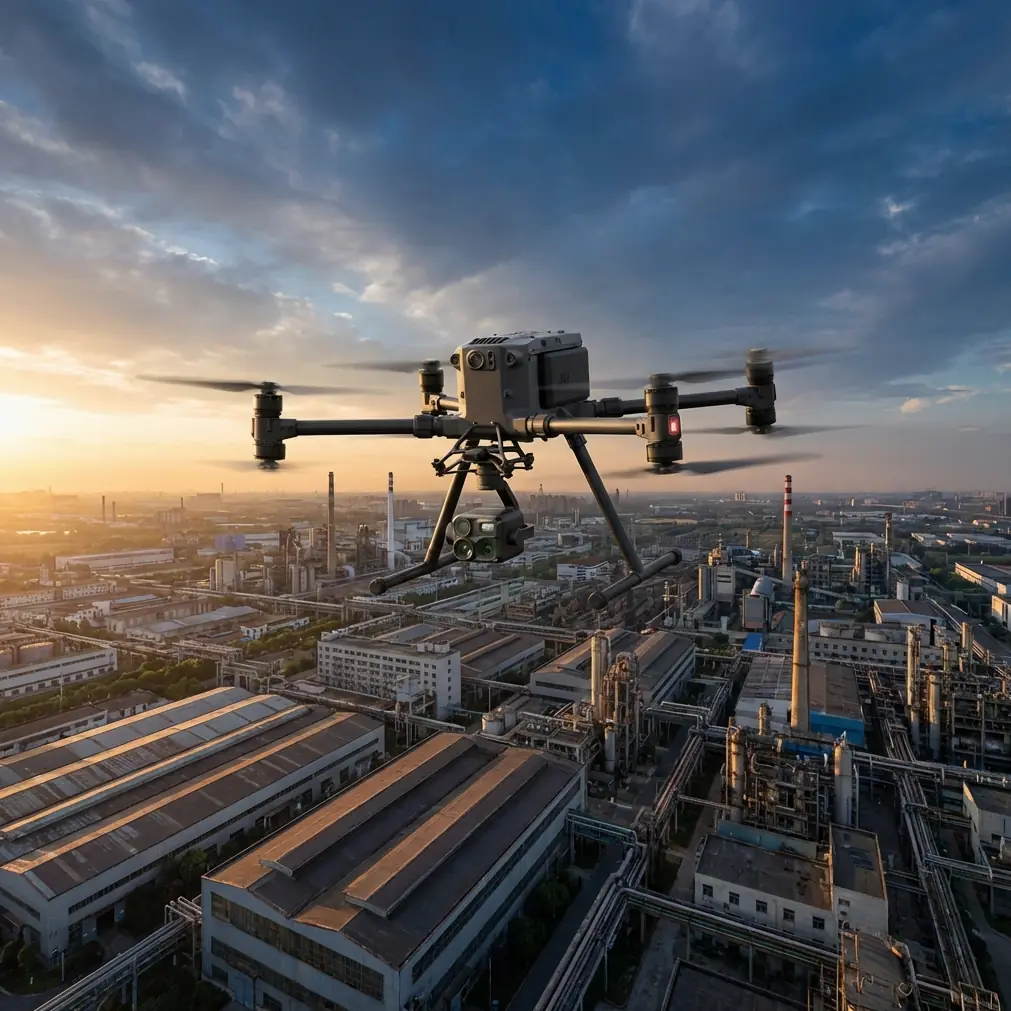
Matrice 4 for Solar Farm Inspection in Extreme Temperatures: What Actually Matters in the Field
META: A technical review of Matrice 4 for solar farm inspection, focused on extreme temperature operations, thermal signature quality, photogrammetry workflow, transmission discipline, and practical setup decisions that affect uptime.
Solar farm inspection looks straightforward until the site starts fighting back.
Heat shimmer distorts distant imagery. Cable runs bake all day and cool fast at dusk. Dust creeps into everything. Battery planning tightens when ambient temperatures swing hard between sunrise and mid-afternoon. And on utility-scale sites, one bad transmission habit can ruin a long inspection leg faster than any spec sheet can save it.
That is the context where Matrice 4 becomes interesting.
This is not a generic overview of the airframe. The real question is whether Matrice 4 fits the operational demands of solar inspections when temperature stress, long linear routes, thermal anomaly detection, and data integrity all matter at once. From that perspective, two engineering ideas from traditional aircraft design are surprisingly relevant: weight accounting at the component level, and environmental requirements for internal systems exposed to fire-prone or heat-affected zones. Those are not drone marketing topics. They are field reliability topics.
As an inspection platform, Matrice 4 should be judged the same way experienced crews judge any serious aircraft tool: by how predictably it behaves when the mission gets repetitive, hot, and unforgiving.
Why extreme temperatures change the inspection equation
Solar sites create their own microclimate. Panel surfaces absorb and re-radiate heat. Inverters and combiner areas can become localized hotspots. Air above long array rows can shimmer enough to complicate visual confirmation. Thermal work also becomes more demanding because not every hot pixel is a fault. Some are transient reflections, some are angle-induced artifacts, and some only reveal themselves cleanly within a narrow operating window.
That means the aircraft is only one piece of the job. The rest is workflow discipline.
For Matrice 4, the value is not simply that it can collect visible and thermal data. It is that it can support a repeatable inspection loop: fly a stable grid or corridor, maintain consistent overlap for photogrammetry where needed, preserve thermal signature confidence, and keep transmission stable while the crew works at distance from shade, shelter, and charging infrastructure.
The hidden lesson from aircraft hose-weight tables
One of the reference documents includes a component weight table for braided rubber hose, expressed in kilograms per meter. The values are small individually, but the spread is not trivial. A hose specification in the table ranges from around 0.11 kg/m to 2.50 kg/m depending on type and size. That is a big difference over length.
Why does that matter to a Matrice 4 operator inspecting solar farms?
Because it illustrates a truth many drone teams still underestimate: distributed weight matters more than people think. In aircraft design, engineers do not wave away “small” items like tubing, routing, or accessory runs. They quantify them per meter because cumulative mass changes balance, endurance, and control margins. On a drone mission, the equivalent mindset applies to payload choices, mounting accessories, RTK modules, strobe additions, landing gear attachments, external storage habits, and even how crews carry spare equipment into the field.
You may not be calculating hose weight, but you should be thinking the same way. Every added subsystem has a cost in endurance, thermal load, and handling. On a vast solar site, that translates directly into sortie count. More sorties mean more battery cycles, more takeoffs near dusty rows, more file segmentation, and more opportunities for inconsistent thermal baselines.
The operational significance is simple: when building a Matrice 4 inspection kit for extreme-temperature work, minimize “nice to have” additions that do not improve defect detection or mapping accuracy. In solar inspection, clean data beats bloated configuration every time.
Heat management is not just about the battery
The second reference document centers on civil aircraft internal facilities, with sections on fire protection, material selection under elevated environmental temperatures, ducting requirements, ventilation, and smoke handling. Even though it comes from a manned-aircraft design context, the engineering principle carries over neatly: high-temperature environments force system-level decisions, not just isolated component choices.
That matters for Matrice 4 in a solar farm setting because crews often talk about hot weather as if it were mainly a battery issue. It is not.
High ambient temperatures affect battery efficiency, yes. But they also change sensor behavior, controller comfort, storage media temperatures, cooling effectiveness during idle periods, and the consistency of thermal imaging itself. The reference’s emphasis on environmental temperature requirements for material selection is a useful reminder that heat resilience is about the whole mission stack.
In practice, that means:
- Do not leave aircraft, controller, or spare batteries exposed on vehicle dashboards or open gravel beside reflective panel fields.
- Build launch cycles that reduce powered idle time.
- Treat shade and airflow at the staging area as operational assets, not conveniences.
- Verify thermal readings against repeat passes when the site has mixed reflectivity or active wind shifts.
- Keep inspection windows aligned to defect visibility rather than crew convenience.
The reference also highlights ducting and connection requirements. Operationally, that translates into another field lesson: any system that depends on airflow or clean vent paths should be protected from dust accumulation during repeated hot-weather sorties. Solar farms are often dry, loose-surface environments. Heat plus dust can degrade performance quietly before the crew notices anything obvious.
Thermal signature quality: the difference between detection and noise
For solar inspections, “thermal signature” is not a buzzword. It is the difference between spotting a failing module string early and generating a folder full of ambiguous heat patches.
Matrice 4 becomes most useful when crews stop treating thermal as a standalone view and start pairing it with mission geometry. Angle, altitude, speed, and timing all influence how interpretable the data becomes. A strong thermal result is one where anomalies can be cross-referenced against visible imagery and, when necessary, a photogrammetry layer or accurate site map.
This is where GCP discipline still deserves attention even if the platform supports high-accuracy positioning. Ground control points remain valuable when the deliverable is not just “find hotspots” but “locate, classify, and verify them across a large asset register.” On utility-scale sites, small geolocation errors become expensive if maintenance teams are sent to the wrong row or tracker block.
For Matrice 4 workflows, I recommend thinking in three layers:
- Screening layer: fast thermal sweeps to isolate suspect zones.
- Confirmation layer: closer or better-angled visual capture for module-level context.
- Measurement layer: photogrammetry or georeferenced mapping tied to GCP-backed accuracy when defect logging must feed maintenance systems.
Many crews collapse these layers into one flight and then wonder why the dataset feels compromised. The aircraft can collect a lot. That does not mean every pass should try to do every job.
O3 transmission discipline is a skill, not a checkbox
On large solar farms, transmission performance is often treated too casually. People mention O3 transmission as if range alone settles the matter. It does not. Range claims are far less useful than disciplined antenna handling and route design.
Here is the practical advice I give crews.
First, antenna positioning matters more than most pilots admit. Keep the controller antennas oriented to present their broad faces toward the aircraft’s path, not the tips. Avoid pointing the antenna ends directly at the drone. As the aircraft moves down long array corridors, make small body adjustments so the controller maintains a clear, intentional relationship with the flight line. Do not wait for signal quality to drop before correcting your stance.
Second, use elevation and line-of-sight intelligently. Solar arrays create repeating physical structures that can encourage complacency because the site looks “open.” It is open from a human perspective, not always from an RF perspective. Service buildings, inverter stations, parked vehicles, terrain undulation, and even your own position relative to panel rows can affect stability.
Third, do not stand in the worst possible place just because it is near the launch case. If a few meters of repositioning improves sightline and reduces multipath interference, take them.
Fourth, if your team is planning advanced operations such as BVLOS under lawful, approved civilian frameworks, transmission planning becomes even more procedural. Antenna orientation, relay strategy if permitted, telemetry review, and route segmentation all need to be deliberate. O3 helps, but professionalism is what turns capability into reliable results.
For teams that want a field checklist for controller setup and antenna posture, I usually share one directly rather than bury it in a long email thread; this is the fastest way to request it: message Dr. Lisa Wang’s team on WhatsApp.
Data security belongs in inspection planning too
Industrial asset owners are asking harder questions about data handling now, and rightly so. Solar farm imagery can reveal infrastructure layouts, maintenance patterns, and operational conditions that owners do not want loosely managed.
That is where references to AES-256 matter in conversation around Matrice 4-class workflows. Not because encryption is flashy, but because inspection data is part of the asset management chain. Secure storage, secure transfer, and controlled access are no longer nice extras for EPC firms, O&M contractors, and independent inspection providers.
Operationally, the significance is straightforward:
- If the site owner expects secure handling, your drone workflow must match that expectation from capture through export.
- Transmission reliability and data security should be planned together.
- Fast collection is meaningless if file custody becomes sloppy once the aircraft lands.
The better operators now treat air data as infrastructure data.
Hot-swap batteries and sortie rhythm
On large solar farms, time lost between flights compounds quickly. Hot-swap batteries are useful not because they sound advanced, but because they preserve mission rhythm. In extreme temperatures, that rhythm matters even more.
A well-managed battery rotation allows crews to keep the aircraft productive while limiting prolonged exposure of any single pack to harsh conditions. It also helps maintain a more consistent inspection tempo across rows and sections, which supports better thermal comparability. If the first half of the site is captured under one set of thermal conditions and the second half after long ground delays under another, defect interpretation can become messier than it needs to be.
That said, speed should never come at the expense of thermal stabilization logic. Efficient swapping is good. Rushed launches with poorly planned sensor objectives are not.
My field rule is simple: use hot-swap capability to reduce dead time, not thinking time.
Photogrammetry on a solar site: when it helps and when it wastes effort
There is a tendency to overspecify photogrammetry in solar inspection. Not every mission needs a full reconstruction. But when panel layout verification, tracker alignment context, drainage issues, access planning, or recurring defect localization matter, a structured photogrammetric layer becomes highly useful.
Matrice 4 is strongest here when crews define the map objective before launch. Are you building a current-condition orthomosaic? Verifying row-level alignment? Tagging repeat-failure clusters? Supporting vegetation encroachment analysis around fence lines and service roads? Different aims justify different overlap, altitude, and GCP density.
The common mistake is gathering “extra mapping data just in case.” In extreme heat, unnecessary flight time is costly. Better to separate thermal screening sorties from mapping sorties if the site and schedule allow it.
What I would prioritize for Matrice 4 on extreme-temperature solar work
If I were standardizing a Matrice 4 deployment profile for this exact scenario, my priorities would be these:
- Consistent thermal acquisition windows, not all-day opportunistic flying.
- Lean payload configuration with no unnecessary accessories.
- Strict battery shade and rotation discipline.
- O3 transmission habits built around antenna posture and field positioning.
- GCP-supported geospatial accuracy where maintenance dispatch depends on exact location.
- Secure data handling aligned with AES-256 expectations and owner requirements.
- Dust-aware staging and cooling practices between sorties.
- Separate mission logic for screening, confirmation, and mapping.
That may sound methodical. It is. Solar inspection quality is usually won by method, not heroics.
Final assessment
Matrice 4 makes sense for solar farm inspection when the operator understands that extreme temperatures magnify small mistakes. Aircraft designers have long known that details such as per-meter component weight and temperature-driven material requirements are not trivia; they are the quiet mechanics behind reliability. The same mindset improves drone inspection work.
A hose table showing values from 0.11 kg/m to 2.50 kg/m is a reminder that cumulative design decisions affect performance. A civil aircraft section focused on fire measures, ducting, ventilation, and material selection under heat is a reminder that environmental stress is a systems problem. Those lessons map directly onto how a serious crew should deploy Matrice 4 in the field.
For solar farms, that means flying with restraint, capturing thermal data with purpose, managing transmission actively, and treating heat as an operational variable from setup to shutdown.
The aircraft matters. The discipline around it matters more.
Ready for your own Matrice 4? Contact our team for expert consultation.