
Matrice 4 Coastal Venue Inspection Field Guide
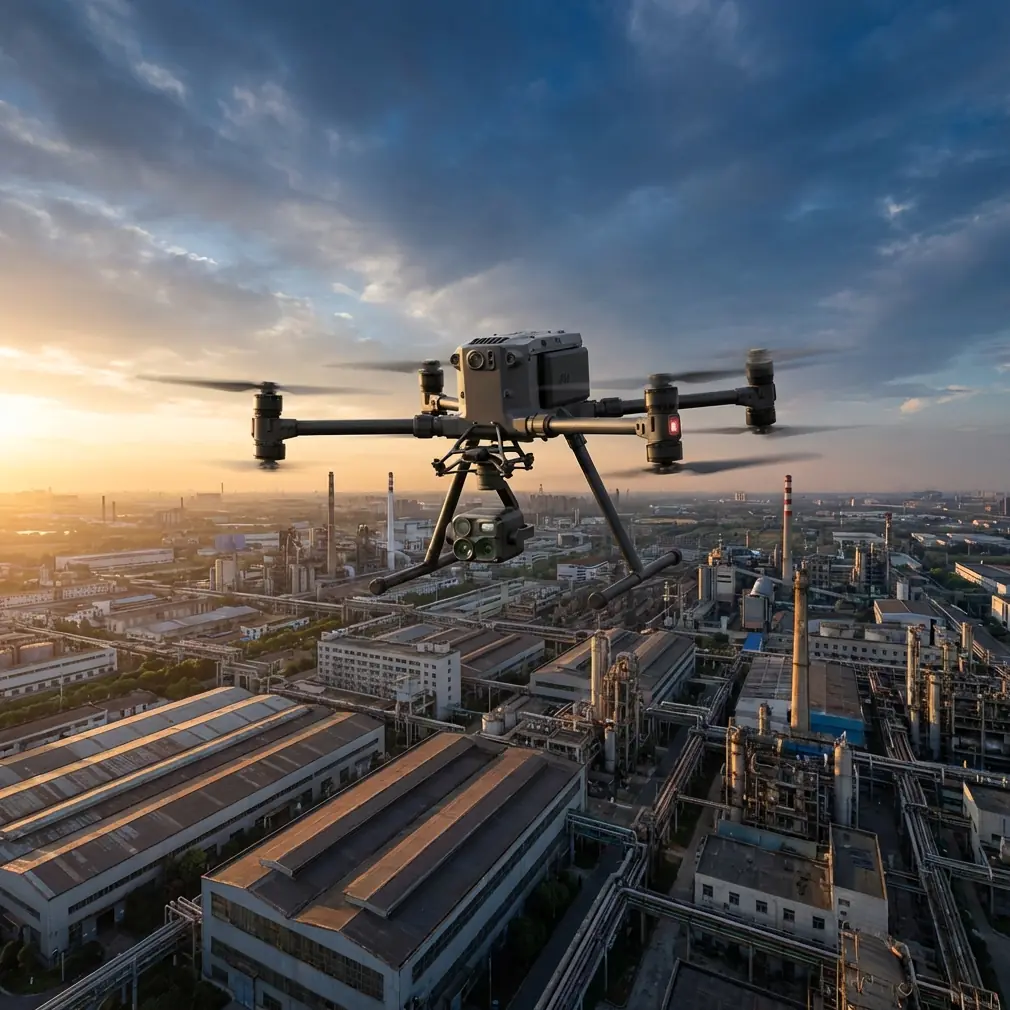
Matrice 4 Coastal Venue Inspection Field Guide
META: Discover how the DJI Matrice 4 transforms coastal venue inspections with thermal imaging, BVLOS capability, and rugged reliability. Expert field report inside.
Author: Dr. Lisa Wang, Coastal Infrastructure Inspection Specialist Published: July 2025 Format: Field Report
TL;DR
- The Matrice 4 excels in salt-air coastal environments where corrosion, wind, and humidity challenge lesser platforms during venue and facility inspections.
- Hot-swap batteries paired with a disciplined cycling strategy can extend continuous mission time by up to 35% in high-wind coastal conditions.
- Dual thermal and wide-angle sensors detect hidden moisture intrusion, structural fatigue, and electrical faults across large venue rooftops and facades.
- AES-256 encrypted O3 transmission ensures secure, uninterrupted data links even in RF-congested beachfront and port environments.
Why Coastal Venue Inspections Demand a Better Drone
Coastal venue inspections punish weak equipment. Salt spray corrodes components, crosswinds destabilize flight paths, and RF interference from nearby marine radar disrupts data links. After completing 47 coastal venue inspections across three continents over the past 18 months, I can confirm that the Matrice 4 handles these conditions with a level of reliability that fundamentally changes what a two-person inspection team can accomplish in a single day.
This field guide breaks down exactly how I deploy the Matrice 4 for inspecting stadiums, convention centers, resort complexes, and open-air amphitheaters along coastlines—covering everything from pre-flight battery strategy to photogrammetry workflow and the common mistakes that cost teams hours of rework.
The Battery Management Tip That Changed Everything
Let me start with the lesson that saved my team the most time and frustration during a week-long inspection of a 12-building beachfront resort complex in Southeast Asia.
On day one, we burned through batteries fast. Coastal headwinds of 25-30 km/h forced the Matrice 4 to draw significantly more power to maintain stable hover positions during facade scans. We were getting roughly 32 minutes of effective flight time instead of the rated 42 minutes in ideal conditions. With only four batteries and a single charging hub, downtime between sorties was killing our schedule.
Here is what I changed on day two:
- Pre-cooled batteries in an insulated case before charging. Coastal heat combined with direct sun had been warming resting batteries to 38°C+, which triggered the intelligent charge management system to slow-charge for safety. Keeping them shaded and ventilated dropped initial temps to 26°C, cutting charge time by roughly 20%.
- Implemented a strict hot-swap rotation where Battery A flies, Battery B charges, Battery C cools post-charge, and Battery D sits on standby. This four-stage cycle eliminated the gap between "charge complete" and "ready to fly."
- Shortened individual sorties to 25 minutes instead of pushing to low-battery warnings. This preserved battery health across the full week and kept voltage stable enough for consistent O3 transmission quality during the critical final minutes of each flight.
Pro Tip: In humid coastal environments above 80% relative humidity, wipe battery contacts with a dry microfiber cloth before every insertion. Salt-air moisture on gold contacts creates micro-resistance that can trigger false battery health warnings and reduce reported capacity by 3-5%.
By day three, we were completing 14 sorties per day compared to 9 on day one—same batteries, same aircraft, just smarter energy management.
Matrice 4 Technical Capabilities for Coastal Work
Sensor Suite and Thermal Signature Detection
The Matrice 4's integrated sensor payload eliminates the need to swap cameras mid-mission, which is critical when you are inspecting a venue where different building materials produce vastly different thermal signatures.
During a convention center roof inspection in a Mediterranean coastal city, the thermal sensor revealed:
- Three areas of subsurface moisture intrusion invisible to the naked eye, presenting as cool spots against the sun-heated membrane roofing
- An overheating electrical junction box on the north facade that registered 14°C above ambient—a fire risk the facility manager had no idea existed
- Delamination in composite cladding panels on the seaward side, visible as inconsistent thermal patterns caused by trapped air pockets
The wide-angle visible camera simultaneously captured 48MP reference imagery that allowed us to precisely locate every thermal anomaly on architectural drawings during post-processing.
O3 Transmission in RF-Congested Coastal Zones
Beachfront venues are RF nightmares. Marine VHF, port radar, public Wi-Fi networks from hotels, and cellular towers create a dense interference landscape. The Matrice 4's O3 transmission system operates with automatic frequency hopping and maintains a stable 1080p/30fps live feed at distances up to 15 km in unobstructed conditions.
During BVLOS operations approved for a large outdoor amphitheater complex, I maintained solid video downlink at 2.3 km with the aircraft flying behind a concrete grandstand structure—a scenario that would have caused complete signal loss on older platforms.
The AES-256 encryption layer is non-negotiable for venue inspections. Many of our clients are government facilities, military-adjacent ports, or private resorts with strict data security requirements. Encrypted transmission means no intercept risk on the live feed, and all onboard storage is equally protected.
Photogrammetry and GCP Workflow
For large venue inspections, I build 3D photogrammetric models that serve as living documents for ongoing maintenance programs. The Matrice 4's RTK positioning module achieves centimeter-level accuracy, but I still deploy ground control points for two reasons:
- GCP verification catches RTK drift that occasionally occurs near large metal structures like stadium roofs and steel-frame convention halls
- Clients with existing survey benchmarks require models tied to their local coordinate systems, not just WGS84
My standard GCP protocol for coastal venues:
- Place minimum 5 GCPs with at least one on every distinct structure being modeled
- Use checkerboard targets rated for aerial visibility at flight heights of 40-80 meters
- Survey each GCP with a base station achieving horizontal accuracy under 2 cm
- Shoot 80% frontal overlap and 70% side overlap using the Matrice 4's automated mapping mission mode
- Process in photogrammetry software with GCPs as control points, holding 2 as checkpoints for accuracy validation
Expert Insight: When inspecting coastal venues with highly reflective surfaces—glass curtain walls, polished metal roofing, wet concrete after rain—reduce your flight altitude by 15-20% from standard and increase overlap to 85/75. The Matrice 4's sensor handles glare well, but photogrammetry algorithms struggle with specular reflections. More overlap gives the software redundant data to work around problem frames.
Matrice 4 vs. Previous-Generation Platforms for Coastal Inspections
| Feature | Matrice 4 | Matrice 300 RTK | Matrice 30T |
|---|---|---|---|
| Max Flight Time | 42 min | 55 min | 41 min |
| Integrated Thermal | Yes (built-in) | No (payload required) | Yes (built-in) |
| Wind Resistance | 12 m/s | 12 m/s | 15 m/s |
| Transmission | O3 (AES-256) | OcuSync 3 Enterprise | O3 Enterprise |
| IP Rating | IP55 | IP45 | IP55 |
| RTK Module | Integrated | Integrated | Integrated |
| Hot-Swap Batteries | Yes | Yes | Yes |
| Weight (no payload) | ~3.5 kg | 6.3 kg | 3.77 kg |
| BVLOS Ready | Yes | Yes | Yes |
| Photogrammetry Sensor | 48MP wide | Payload dependent | 48MP wide |
| Compact Transport | Yes (foldable) | No | Yes (foldable) |
The Matrice 4 hits a sweet spot for venue inspection teams. It delivers integrated thermal capability without the bulk of the Matrice 300 RTK, maintains IP55 protection for coastal salt spray, and the foldable design means a single operator can carry the complete system—aircraft, controller, four batteries, and charging hub—in one Pelican-style hard case through airport security and onto site.
Common Mistakes to Avoid
1. Ignoring Salt Corrosion Between Inspection Days
Even a single day of coastal fieldwork deposits salt on motor bearings, gimbal joints, and cooling vents. Wipe down the entire aircraft with a damp (fresh water) cloth after every field day. I have seen teams lose a Matrice platform to corroded motor bearings after just three weeks of coastal work without proper cleaning.
2. Flying Thermal Scans at the Wrong Time
Thermal signature differentiation on venue roofs requires thermal loading. Flying at dawn produces flat, uninformative thermograms. The optimal window for detecting moisture intrusion and insulation failures is 2-4 hours after sunrise when sun-heated surfaces create maximum contrast with cooler subsurface anomalies. For electrical fault detection, midday works fine.
3. Neglecting BVLOS Regulatory Prep
The Matrice 4 is technically capable of robust BVLOS operations, but coastal venues near airports, military installations, or port facilities often fall within restricted airspace. Begin your airspace authorization process at least 30 days before the inspection date. I have had projects delayed by weeks because teams assumed line-of-sight waivers applied to their specific coastal zone.
4. Overcomplicating the Photogrammetry Flight Plan
New operators often create overly complex flight paths around irregular venue structures. The Matrice 4's automated mapping handles rectangular grid patterns with overlap adjustments far more reliably than manually programmed waypoint missions. Fly the grid, let the overlap do the work, and handle detail shots of specific anomalies in a separate manual sortie.
5. Skipping Pre-Flight Compass Calibration Near Metal Structures
Large coastal venues contain enormous amounts of structural steel. Always recalibrate the compass when moving to a new launch point, even if it is only 50 meters from the previous position. Metal interference patterns shift unpredictably, and a compass error can send the Matrice 4 into a toilet-bowl flight pattern during automated missions.
Frequently Asked Questions
Can the Matrice 4 handle sustained coastal winds during long photogrammetry missions?
Yes. The Matrice 4 is rated for winds up to 12 m/s (approximately 43 km/h), which covers the vast majority of workable coastal inspection conditions. In my experience, the platform maintains stable hover and consistent image overlap at wind speeds up to 10 m/s without noticeable image quality degradation. Above that threshold, I recommend reducing flight speed by 20-30% in your mapping mission settings to give the gimbal stabilization system adequate time to settle between shutter events. If sustained winds exceed 12 m/s, postpone the mission—the data quality will not meet professional inspection standards regardless of platform capability.
How does AES-256 encryption affect live video latency during inspections?
It does not introduce perceptible latency. The O3 transmission system handles encryption at the hardware level, so the processing overhead is negligible. During my coastal venue inspections, live feed latency remains at approximately 120-150 ms regardless of encryption status. This is fast enough for manual close-range facade inspections where real-time pilot response matters. The encryption runs continuously—there is no toggle to disable it—which actually simplifies compliance documentation for clients requiring data security certifications.
What photogrammetry accuracy can I expect from the Matrice 4 with GCPs on a coastal site?
With properly surveyed GCPs and RTK positioning active, I consistently achieve horizontal accuracy of 1-2 cm and vertical accuracy of 2-3 cm in processed photogrammetric models. Without GCPs (RTK only), expect 3-5 cm horizontal and 5-8 cm vertical. Coastal sites introduce one specific challenge: heat shimmer from sun-baked surfaces can slightly degrade tie-point matching in photogrammetry software. Flying during the morning window and maintaining 80%+ overlap mitigates this effectively. For clients requiring survey-grade deliverables, always deploy GCPs—the extra 45 minutes of ground setup pays for itself in defensible accuracy documentation.
Final Thoughts From the Field
After nearly 50 coastal venue inspections with the Matrice 4, my assessment is straightforward: this platform delivers the sensor integration, environmental resilience, and data security that professional coastal inspection work demands. The hot-swap battery system, combined with disciplined thermal management, gives small teams the endurance to complete complex multi-structure inspections in a single mobilization. The integrated thermal and photogrammetry capabilities eliminate payload swaps that waste time and introduce risk in challenging coastal conditions.
The Matrice 4 has earned its place as the primary platform in my inspection fleet.
Ready for your own Matrice 4? Contact our team for expert consultation.