
Matrice 4 for Venue Inspection in Complex Terrain
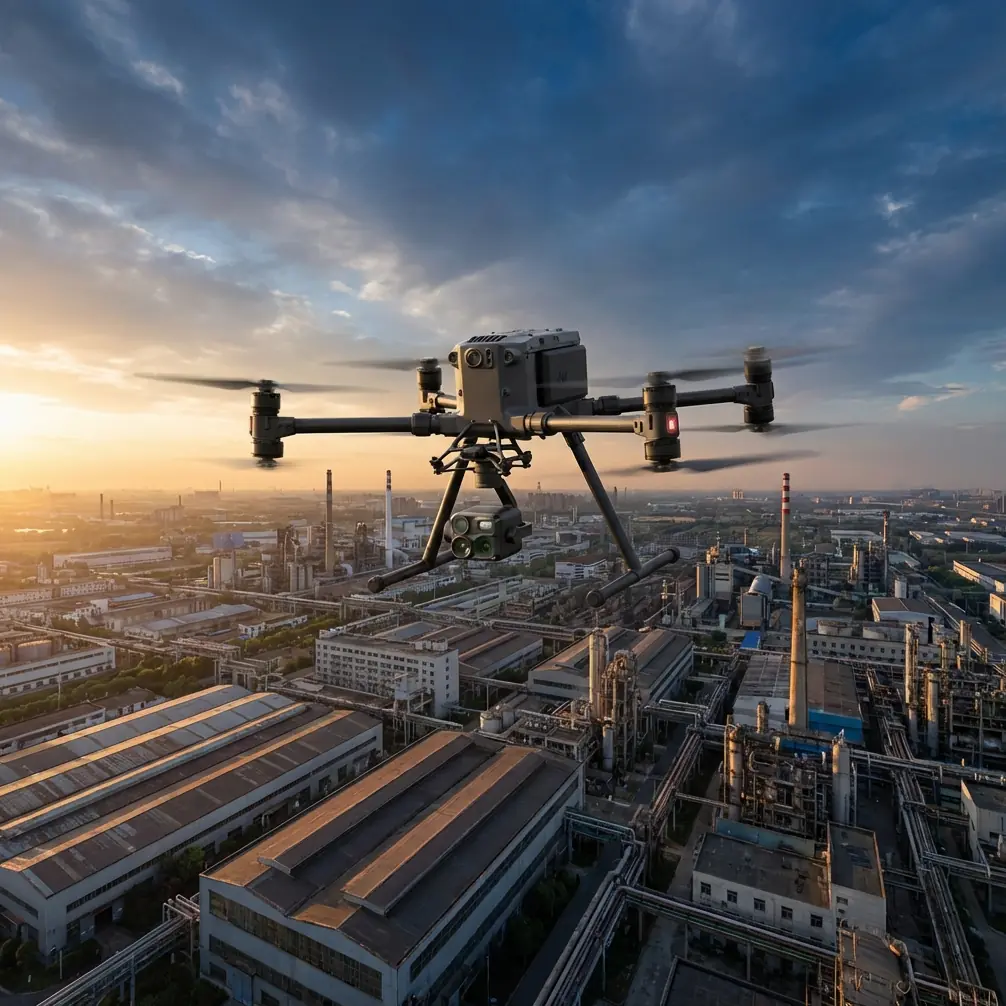
Matrice 4 for Venue Inspection in Complex Terrain: What Battery Supply and Aviation Support Principles Tell Us
META: Expert technical review of Matrice 4 for inspecting venues in complex terrain, with practical insight on battery supply resilience, spare strategy, thermal workflows, and operational reliability.
Venue inspection looks simple on a map. In the field, it rarely is.
A stadium tucked into a hillside, a festival site carved between access roads and tree lines, a motorsport venue with uneven service corridors, or an outdoor arena surrounded by temporary structures all create the same operational problem: you need accurate aerial data, fast turnaround, and dependable power. The drone can have excellent optics and stable flight performance, but if battery availability, support planning, and mission continuity are weak, the workflow falls apart exactly when the terrain becomes difficult.
That is why one recent supply-chain development matters more to Matrice 4 operators than it may first appear. On May 2, 2026, Titan Batteries announced the opening of a European drone battery production facility in Tilburg, the Netherlands. Titan, headquartered in Pocatello, Idaho, says this makes it the first major drone battery manufacturer running full-scale production on two continents.
For anyone flying Matrice 4 in venue inspection, that is not just industry trivia. It points to a larger truth about this class of aircraft: performance in the air is only half the story. The other half is sustainment.
Why battery manufacturing geography suddenly matters
Complex-terrain venue work is unforgiving on sortie planning. A single site visit may require multiple flight profiles in the same day:
- a high-overview photogrammetry pass for terrain and drainage context
- a lower oblique capture of roofs, trusses, facades, and retaining walls
- thermal signature sweeps at dawn or dusk for envelope anomalies, electrical hotspots, or moisture-related patterns
- repeat passes over ingress and egress routes to assess crowd-flow infrastructure and temporary installations
That flight stack burns through battery cycles quickly. Not because Matrice 4 is inefficient, but because inspection discipline demands redundancy. You do not want to discover after leaving site that the one thermal run missed the shaded retaining wall behind a temporary stage or that the mapping run needs a second pass because the angle of sunlight compromised reconstruction on a sloped service road.
A battery supplier with production on two continents changes the risk profile. It can reduce lead-time exposure, regional logistics friction, and replacement delays for European operators and for multinational inspection teams staging equipment across borders. For firms managing fleets, especially those trying to standardize payload and power planning around Matrice 4 deployments, local production capacity means less dependence on a single transoceanic supply lane.
That matters operationally because venue inspection is often deadline-driven. A consultant surveying a race circuit before upgrades, or an engineering team documenting an amphitheater before event season, cannot easily postpone fieldwork because power packs are stuck in a shipping queue.
The overlooked lesson from civil aviation support planning
The reference material from civil aircraft support manuals adds another useful lens. One source notes that parts ordered at a rate of fewer than 3 units per year can be classified as low-demand spares. Another states that production lead times of half a year or more can define long-cycle spare categories. It also observes that the parts truly needing inventory may account for only about one-quarter of total spare categories, while many others are tracked and monitored rather than stocked.
That logic translates surprisingly well to drone fleet management.
For Matrice 4 venue inspection teams, not every accessory deserves shelf-heavy stocking. But high-turn, mission-critical items absolutely do. Batteries sit at the top of that list. They are not exotic optional components; they are the pacing item for field productivity. A battery shortage does not merely slow a drone program. It compresses data collection windows, forces compromises in overlap planning, and can reduce the ability to re-fly critical sectors under consistent lighting or thermal conditions.
In practical terms, a Matrice 4 operator should think about support in three tiers:
1. High-consumption mission essentials
These need active inventory and rotation.
This category includes flight batteries, charging infrastructure, propellers, and key transport-safe storage gear. If your venue inspection program runs weekly, batteries are not “backup” assets. They are scheduled throughput assets.
2. Monitored but not heavily stocked items
These should be tracked for condition and availability.
Think specialty mounting hardware, certain cables, or less frequently replaced accessories. You need visibility, not necessarily a storeroom full of duplicates.
3. Long-cycle or low-frequency replacements
These require contingency planning rather than casual procurement.
If a component has a long replenishment timeline, the decision is not whether it is likely to fail tomorrow. The real question is whether its absence can stop an inspection program next month.
This is where the Tilburg factory story becomes relevant again. Localized battery production supports a healthier version of tier-one inventory planning. If you rely on Matrice 4 for terrain-heavy venue inspection, your continuity depends on keeping the highest-use consumables in the easiest supply channel possible.
Why Matrice 4 fits difficult venue environments
Matrice 4 is compelling in this niche because venue inspection in complex terrain requires a very specific blend of capabilities. It is not enough to have a sharp camera. You need stable positioning around uneven topography, reliable transmission, disciplined data security, and efficient power turnover between runs.
A serious Matrice 4 workflow typically revolves around four technical pillars.
1. Mixed-sensor inspection value, not just aerial imaging
When you are inspecting venues, optical detail alone can mislead. A retaining wall may look visually intact while holding moisture behind the face. A rooftop utility area may appear orderly but present a thermal irregularity around power distribution equipment. Access paths can seem acceptable in overhead RGB imagery while subtle grade changes create drainage and slip-risk concerns.
This is why thermal signature collection belongs beside photogrammetry, not after it.
Matrice 4’s value rises when operators treat thermal and visible imaging as part of one integrated site model. In complex terrain, this lets you compare slope geometry, material boundaries, and heat behavior in the same operational cycle. The result is faster triage: which areas need engineer review, which need repeat imaging, and which are simply benign surface variation.
Competitor platforms often force more compromise between compact deployment and serious inspection capability. Matrice 4 stands out when the job demands repeatable data capture across multiple sensor-driven objectives without turning the field team into a logistics exercise.
2. O3 transmission matters more than the brochure suggests
Venue sites with difficult terrain are also difficult RF environments. Hillsides, steel structures, temporary staging, utility corridors, and partial line-of-sight interruptions all punish weak links.
That is where O3 transmission has operational significance. In real inspection work, robust transmission is not about flying farther for the sake of distance. It is about preserving confidence during oblique passes, side-slope inspections, and transitions around built structures where visual perspective changes quickly. Stable video and control responsiveness reduce the need for conservative repositioning, which saves battery and shortens capture time.
For venue inspectors, that means cleaner flight execution over amphitheaters, ridge-side service roads, ski-area event zones, and similar landscapes where terrain and structure conspire to break easy geometry.
3. AES-256 is not a luxury feature for infrastructure-sensitive sites
Many venue inspections involve plans, layouts, or thermal findings that are not meant for public circulation. This is especially true when the drone data covers electrical systems, VIP access corridors, communications infrastructure, or temporary event security-related buildouts on the civilian side of operations.
AES-256 transmission and data protection therefore deserve more attention than they usually get in drone reviews. It is not just an IT checkbox. It allows operators to fold Matrice 4 into professional workflows where client confidentiality is part of the contract. For engineering firms, insurers, and facilities teams, that matters as much as camera quality.
If you are building a secure venue inspection workflow and want to discuss setup choices for your region, message a technical advisor here.
4. Hot-swap batteries are a workflow multiplier
Hot-swap batteries are one of those features people mention quickly and then move on from. They should not.
In venue inspection, especially in complex terrain, battery swaps are not neutral events. Every shutdown and restart risks losing momentum in a time-sensitive capture sequence. That is a bigger issue when thermal conditions are changing by the minute or when weather is closing a useful flight window.
Hot-swap capability shortens interruption time between missions. The effect compounds over a full inspection day. Less downtime means more consistent lighting conditions across photogrammetry runs, more chances to revisit problem sectors, and less pressure to rush a final pass because the team is trying to squeeze one more sortie into the schedule.
This is another reason the Titan Batteries expansion is worth attention. Hot-swap efficiency is only valuable if the battery pool behind it is healthy. Production resilience and field workflow are linked. One without the other is theory.
Building a Matrice 4 inspection method for complex terrain
A good venue inspection plan does not start with flying. It starts with data intent.
For Matrice 4, the most effective sequence usually looks like this:
Terrain framing first
Run a higher-altitude mapping mission to establish surface relationships, access corridors, slope transitions, and drainage logic. If deliverables require strong measurement integrity, use GCPs where appropriate to tighten geospatial confidence.
Structural context second
Follow with lower oblique capture of grandstands, roofs, retaining walls, towers, facades, and service structures. This is where Matrice 4’s stability and transmission quality begin to matter more than headline specifications.
Thermal targeting third
Use the earlier passes to define thermal priority zones rather than scanning everything evenly. On a complex site, targeted thermal acquisition is usually more valuable than broad but shallow heat imagery.
Verification passes last
Reserve battery margin for re-fly work. This is where many teams fail. They consume power on generalized coverage and finish the day with no reserve to confirm anomalies.
That final point circles back to support planning. If batteries are treated as scarce rather than managed assets, inspection quality declines. The aircraft may still fly well, but the mission becomes less precise.
What the aviation reference gets right about drone operations
The propulsion-system reference also highlights something mature operators already understand: systems should be designed around reliable function under varied conditions, with attention to control integrity, environmental exposure, and safe operating limits. Although the source discusses manned-aircraft auxiliary systems, the principle transfers cleanly to drone fieldwork.
Venue inspection often involves gusts, dust, reflective surfaces, variable moisture, and repeated starts and stops between flights. The lesson is simple: dependable performance is not a single hardware spec. It is the sum of power stability, cooling behavior, control continuity, and environmental resilience.
That is why buyers comparing Matrice 4 with competitors should look beyond camera talking points. The better question is this: which platform holds up when the site is steep, the client wants RGB plus thermal plus measurement-grade outputs, and the battery plan has to support several tightly timed missions in one day?
In that comparison, Matrice 4 earns its place because it behaves like a system platform rather than a one-trick sensor carrier.
The bigger takeaway from Tilburg
Titan Batteries opening a production facility in Tilburg is a supply-chain story, but for Matrice 4 operators it is also a field-operations story. Drone inspection is maturing. The differentiator is no longer just who can put a capable aircraft in the air. It is who can keep that aircraft productive, predictable, and supportable across real projects.
Two details from the reference data stand out for that reason.
First, the Tilburg launch gives Titan full-scale battery production on two continents. For European and cross-border operators, that can improve battery availability for the most consumed mission asset in the workflow.
Second, the aircraft support manual’s spare logic reminds us that not everything should be stocked equally. Low-demand items may be monitored, but high-use, mission-critical items must be actively provisioned. In drone venue inspection, batteries clearly belong in that second category.
That combination of manufacturing proximity and disciplined support planning is what turns Matrice 4 from a promising aircraft into a reliable inspection tool.
If your work involves venues in rough terrain, narrow access zones, or complicated site geometry, that distinction matters. The drone does not just need to fly beautifully for one mission. It needs to keep delivering through the whole inspection cycle, with enough power, enough confidence, and enough operational margin to get the hard parts right.
Ready for your own Matrice 4? Contact our team for expert consultation.