
Matrice 4 for Extreme-Temperature Venue Inspections
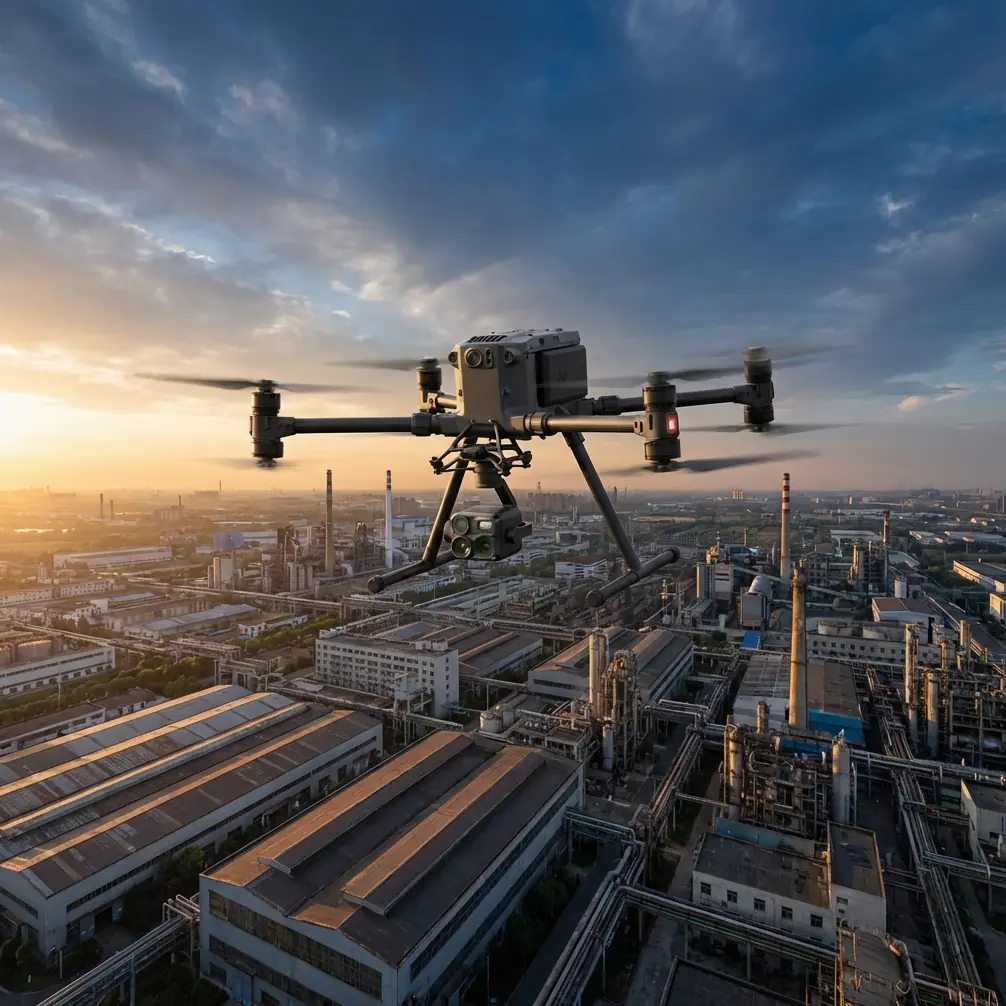
Matrice 4 for Extreme-Temperature Venue Inspections: What Actually Matters Before You Fly
META: A technical review of Matrice 4 venue inspection workflows in extreme temperatures, covering vibration exposure, control stability, thermal signature quality, pre-flight cleaning, and safer mission planning.
By Dr. Lisa Wang, Specialist
Venue inspection sounds simple until the environment stops cooperating.
A stadium roof at dawn can trap cold-soaked moisture on sensors and gimbal surfaces. A convention center facade in direct summer sun can radiate heat long after sunset, distorting thermal interpretation. Add wind channeling around grandstands, metallic structures that complicate signal behavior, and the pressure to deliver usable imagery on the first sortie, and the aircraft setup matters as much as the aircraft itself.
That is where the Matrice 4 discussion gets interesting. Not as a spec sheet exercise, but as an operational tool for inspecting venues in extreme temperatures. The real question is not whether it can fly. It is whether it can produce dependable inspection data while protecting the aircraft, the payload, and the people operating it.
Start with the overlooked safety habit: clean before power-up
Most operators talk about calibration, batteries, and mission routes first. In harsh temperature conditions, I would put one mundane step right near the top: pre-flight cleaning of exposed sensing and safety surfaces.
That means checking the lens windows, thermal imager cover, obstacle sensing apertures, landing gear contact points, battery terminals, and gimbal interface before the aircraft is powered. In venue work, dust from seating bowls, pollen accumulation around landscaped public plazas, condensed moisture from overnight cooling, and even residue from cleaning chemicals used by facility teams can interfere with what the aircraft “sees.”
This is not cosmetic maintenance. It directly affects safety features and data quality.
A smeared thermal window can soften heat boundaries that matter when you are tracing insulation failures or checking rooftop mechanical systems. A dirty visual lens reduces photogrammetry sharpness. Contamination around sensing modules can compromise obstacle awareness precisely where venues become difficult: trusses, cables, catwalk edges, facade fins, and overhangs.
In extreme heat, residue can bake onto surfaces and become harder to detect until you review the imagery later. In cold conditions, moisture films can briefly mimic sensor fogging or create false confidence if the issue clears only after takeoff. Clean early. Then inspect again after battery installation.
Why vibration discipline matters more than many venue teams realize
The most useful reference point from aircraft design literature is not glamorous, but it is deeply practical: prolonged vibration exposure has defined human comfort and safety boundaries, and system components must continue meeting performance requirements after sustained vibration states.
One of the source references notes that ISO-based health safety limits can be represented by taking the corresponding acceleration value and multiplying it by 2, which places the threshold about 6 dB above the reduced-efficiency boundary. Once vibration exceeds that level, internal human health effects may become a concern, and entry into that environment is not recommended without protection or special cause. The same source also makes a separate engineering point: subsystems and equipment under vibration must not suffer damage that reduces service life below requirements, and they still need to satisfy performance specifications after any duration likely to be encountered in use.
That sounds like helicopter design theory. For Matrice 4 venue inspections, it translates cleanly into field practice.
If you are flying in extreme temperatures, vibration is rarely just “airframe shake.” It is the cumulative effect of wind shear at building corners, abrupt braking around confined structures, payload stabilization effort, and operator decisions made in response to time pressure. This matters because venue inspections demand interpretable detail. A minor vibration issue may not threaten basic flight, yet it can still degrade thermal signature edges, reduce mapping overlap quality, or introduce small but costly errors in facade condition assessment.
In practical terms:
- For thermal inspections, vibration can blur temperature boundaries that distinguish normal heat retention from an actual anomaly.
- For photogrammetry, repeated oscillation can reduce image consistency, which weakens tie points and downstream model reliability even when GCP workflows are solid.
- For operator endurance, long sessions in uncomfortable environmental conditions reduce attention, and any roughness in control response increases fatigue faster than teams expect.
The reference’s distinction between reduced efficiency and outright health-safety concern is valuable because it mirrors inspection reality. Problems usually appear in the efficiency zone first. The mission is still technically possible, but the quality margin is already shrinking.
Control stability is not academic when buildings create their own atmosphere
The second source reference deals with modern aircraft control-law design. On paper, it discusses atmospheric models, white-noise inputs, gust outputs, full-state feedback, and stability margins. In operation, it helps explain why some aircraft remain composed in ugly air while others become tiring to manage.
One source detail stands out: full-state feedback optimal control can provide strong stability margins in control loops, with gain margins cited around -6 to +dB and phase margin around +60 degrees, but those margins can drop sharply when state estimation through a Kalman filter is introduced. Another detail is just as relevant: feedback of gust state is necessary for optimal gust-load alleviation when designing around an atmospheric disturbance model.
Again, that sounds distant from a venue inspection. It is not.
A large venue is a manufactured turbulence field. Air wraps around curved roofs, accelerates through service alleys, tumbles over parapets, and rises from heat-soaked surfaces. During extreme temperature operations, those air movements can become sharper because the temperature differential between sunlit and shaded structures changes local convection. The aircraft is not just handling “wind.” It is negotiating disturbed air shaped by architecture.
For a Matrice 4 operator, the operational significance is straightforward:
Stable control behavior preserves inspection geometry.
When the aircraft absorbs gusts well, the pilot spends less effort correcting small deviations. That keeps standoff distance more consistent, which improves both thermal interpretation and visual defect documentation.Estimation quality matters when the environment becomes noisy.
The source’s warning that stability margin can degrade when estimated states are inserted is a reminder that real-world sensing and control are never perfect. In venue work, reflective surfaces, changing winds, and intermittent signal clutter can all challenge the system. The solution is not distrust. It is disciplined mission design: slower passes near complex structures, wider buffers where wind spills off edges, and conservative pathing in thermally active zones.Gust awareness should shape route planning.
If gust-state feedback is valuable in formal control design, pilots should behave as if gust structure matters tactically. Do not run identical passes on all sides of a venue and assume equal handling. The leeward facade at noon can fly nothing like the shaded service side at sunrise.
Extreme temperatures change thermal interpretation before they change aircraft capability
Many teams approach thermal missions as if temperature extremes simply make anomalies easier to spot. Sometimes they do. Often they complicate the job.
A venue roof inspected after sustained sun exposure may hold heat unevenly due to material transitions, drainage patterns, or HVAC routing beneath the membrane. In cold-weather inspections, small differences in emissivity or lingering moisture can exaggerate or mute what you think you are seeing. Thermal signature quality depends on environmental context, not just sensor performance.
This is where Matrice 4 workflows should be built around comparison, not snapshots.
Use repeated angles. Pair thermal captures with standard visual images. If the mission includes photogrammetry, align that dataset so thermal observations are anchored to precise geometry. Where accuracy thresholds are tight, integrate GCP-based verification rather than trusting visual alignment alone. GCP discipline does not just help mapping teams. It helps inspection teams defend their conclusions when a facilities manager asks whether a heat anomaly is tied to a panel seam, a drainage edge, or a structural joint.
That distinction matters in venues because repair access is expensive. Sending a maintenance team to the wrong roof zone wastes time and creates avoidable safety exposure.
O3 transmission and AES-256 matter most when the building is hostile to signal behavior
Large venues are difficult RF environments. Steel, reinforced concrete, suspended signage, lighting structures, and back-of-house utility spaces can all complicate transmission quality. In extreme temperatures, operators may also be forced into less-than-ideal standing locations to stay clear of heat, ice, or restricted access areas.
That is why O3 transmission is more than a convenience topic. Reliable link performance supports smoother control inputs, steadier framing, and cleaner decision-making during inspection passes. It reduces the temptation to overcorrect when video quality fluctuates. In environments where architectural mass and interference patterns create momentary uncertainty, a robust transmission layer gives the pilot more usable confidence.
AES-256 also has a practical place in venue work. Civilian inspection teams are frequently documenting non-public infrastructure: roof membranes, utility systems, loading docks, communication equipment zones, and structural condition records. Securing transmitted and associated data is part of responsible operations, especially when inspections are conducted for event operators, property groups, insurers, or engineering consultants. This is not a theoretical cybersecurity flourish. It is basic handling of sensitive commercial information.
Hot-swap batteries are operationally meaningful in temperature-stressed inspections
Extreme temperatures punish tempo.
In heat, teams want to reduce exposed setup time, shorten unnecessary delays on open hardscape, and keep mission continuity so thermal conditions do not drift too far between passes. In cold weather, battery handling becomes even more procedural, and every interruption increases the chance of rushed restarts or inconsistent captures.
That is why hot-swap batteries are not just a convenience line item. They support continuity.
When an aircraft can resume work quickly between power cycles, inspection teams are better able to keep lighting conditions, thermal conditions, and flight geometry consistent across multiple segments. For venue work, that often means better comparisons between roof sections, facade elevations, and mechanical zones inspected within a narrow environmental window.
The benefit is especially noticeable during large-footprint assignments where one mission becomes several connected flights. Continuity improves data interpretation later.
BVLOS conversations should stay grounded in venue reality
BVLOS is often mentioned too casually. Around venues, the issue is less about ambition and more about whether the site, regulations, and risk controls actually support it. Even when a broader operational framework allows BVLOS, venue geometry, transient workers, rooftop obstructions, and localized RF complexity can narrow the practical value.
For Matrice 4 venue inspections, the smarter approach is to use BVLOS thinking to improve route structure even when operating within more conservative visual oversight. That means segmenting the site intelligently, defining recovery corridors, anticipating blocked lines around architectural features, and assigning observer support where structures create visual discontinuities.
Operational maturity is not measured by how aggressively the envelope is used. It is measured by how little improvisation is required when conditions turn.
A field-tested workflow for venue inspections in extreme temperatures
My preferred sequence for Matrice 4 work on these sites is simple:
Environmental read first.
Identify sun-loaded surfaces, shaded zones, rooftop exhausts, likely wind spill points, and any reflective cladding that could complicate both visual and thermal interpretation.Pre-flight cleaning and close visual inspection.
Treat sensor windows, gimbal movement, and contact surfaces as mission-critical. Do this before takeoff, not after a bad first pass.Short validation hover.
Watch for abnormal vibration, gimbal settling behavior, or control corrections near structures. Do not assume a normal open-area hover predicts behavior near roof edges.Run a low-risk initial pass.
Use it to validate thermal readability, transmission quality, and route spacing.Capture paired datasets.
Thermal alone is rarely enough. Combine it with visual imagery, and use photogrammetry where geometry adds value.Protect continuity with disciplined battery transitions.
Hot-swap workflows help preserve comparable conditions.Review sample outputs on site.
If thermal boundaries are soft or photogrammetry overlap looks compromised, adjust immediately rather than discovering the issue back at the office.
If your team wants to compare inspection setups or operational checklists for difficult venue environments, you can message a specialist here.
The bigger takeaway
What makes Matrice 4 useful for extreme-temperature venue inspections is not a single feature. It is the way good operational habits interact with aircraft capability.
The vibration reference reminds us that there is a threshold between merely tolerable conditions and conditions that erode human and equipment performance. The control-law reference reminds us that gusts, disturbance modeling, and stability margins are not abstract engineering trivia; they show up every time a drone turns a corner around a heated facade or rises above a roofline into unstable air.
Put those lessons together and the workflow sharpens:
- Clean the sensing surfaces before flight because safety features and data products depend on it.
- Respect vibration early, before it becomes visible in the final deliverables.
- Fly the building, not just the mission plan, because venue-generated airflow changes control behavior.
- Use thermal and photogrammetry as complementary tools, not separate departments.
- Preserve data continuity through disciplined battery handling and link management.
- Treat secure transmission and data handling as part of inspection professionalism.
That is the difference between getting airborne and getting answers.
Ready for your own Matrice 4? Contact our team for expert consultation.