
Matrice 4 in Windy Vineyard Inspection: What Actually
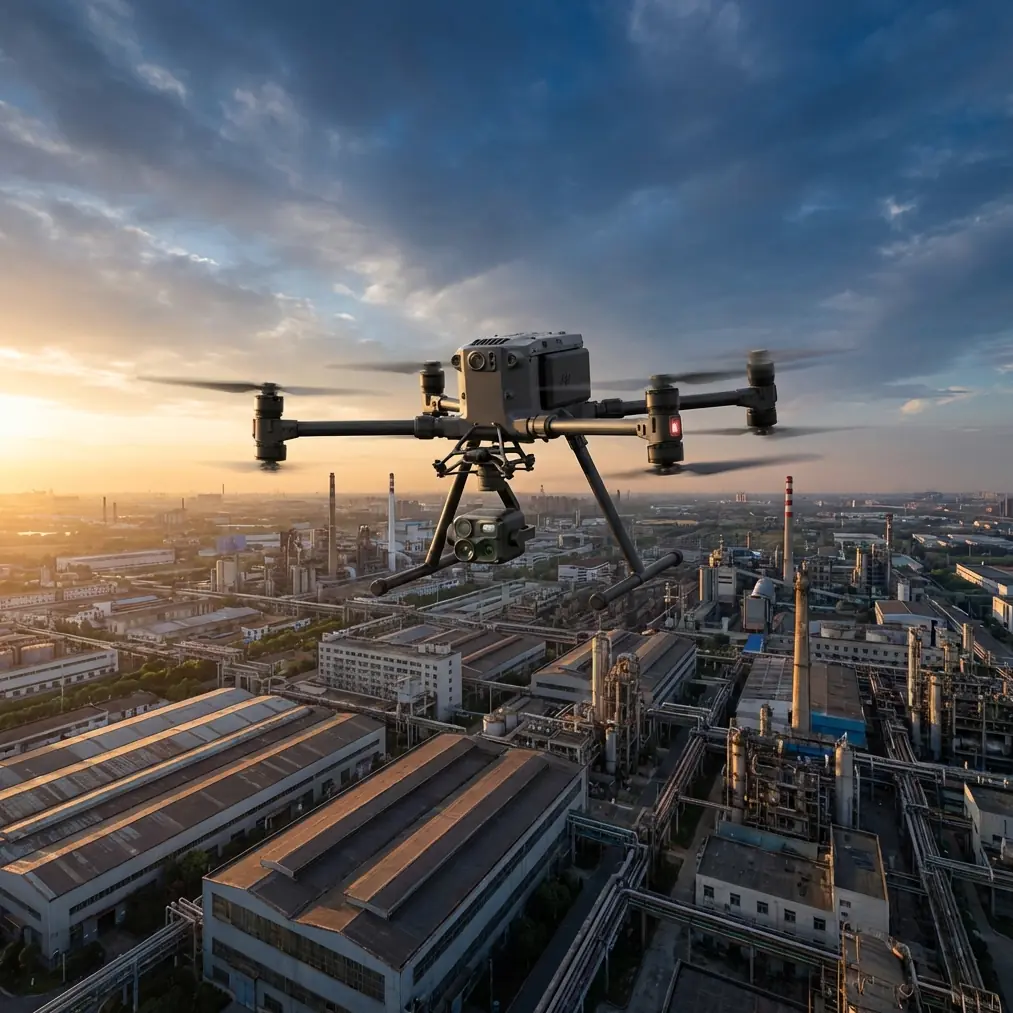
Matrice 4 in Windy Vineyard Inspection: What Actually Matters When Conditions Shift Mid-Flight
META: A technical review of how Matrice 4-style flight control logic, operator intervention, and aerial survey discipline matter during windy vineyard inspections, with practical insight for mapping and thermal workflows.
By Dr. Lisa Wang, Specialist
Vineyard inspection sounds gentle until the wind picks up.
Rows look orderly from the ground, but in the air they create a surprisingly difficult operating environment. Long corridors funnel gusts. Terrain rolls. Temperature contrast changes by the minute. If you are collecting thermal imagery, photogrammetry outputs, or basic visual inspection data, the challenge is not simply keeping a drone airborne. The real question is whether the aircraft can stay stable, preserve data quality, and let the operator step in at the right moment without turning the mission into manual workload overload.
That is why the most interesting way to evaluate Matrice 4 is not as a spec-sheet object. It is as a control system under pressure.
The reference material behind this review is revealing because it does not talk about drones in the usual marketing shorthand. It focuses on something deeper: how unmanned aircraft handle state transitions, control-mode switching, onboard fault monitoring, and operator authority. One source, from 航空学报 Vol. 29, describes flight control and management as largely a matter of logic relationships and status switching rather than only raw control laws. That distinction matters a lot in a vineyard mission where the aircraft may need to move from route-following to hover assessment to return procedures while weather changes in real time.
The part of Matrice 4 most operators underestimate
For vineyard work, payload quality gets most of the attention. People talk about thermal signature detection for irrigation anomalies, canopy stress, drainage patterns, and missing-vine identification. They should. But the more foundational issue is whether the drone can maintain a clean mission structure as conditions become less predictable.
The flight-control reference highlights several specific functions: flight-phase judgment and transition, switching between control methods and control modes, monitoring critical onboard equipment, handling link failures, redundancy management, and emergency response in abnormal situations. Those are not abstract engineering terms. In practical vineyard operations, they determine whether a mission remains useful after the first unexpected gust front hits.
On one recent windy-site scenario, the morning started with manageable airflow over a sloped vineyard. The plan was straightforward: run a photogrammetry grid over the upper blocks, then transition to lower-altitude thermal inspection over sections with known water stress variability. Mid-flight, the weather changed faster than forecast. Wind speed increased, and more importantly, the gust pattern became uneven across the rows. The aircraft was not just fighting stronger air; it was repeatedly entering and exiting disturbed pockets.
This is exactly where a Matrice 4-class platform earns its keep.
Not because it makes wind disappear, but because it allows the mission to survive a changing control environment. Stable flight is one layer. Decision structure is the other.
Why “human-in-the-loop” still beats pure automation in vineyards
One of the strongest points in the source text is its description of “人工干预自动控制,” which is best understood as operator-intervened automatic control. It sits between full remote manual control and full autonomy. The aircraft still handles flight stability and control execution automatically, but the operator can intervene in mode switching or adjust mission goals when the real world stops matching the plan.
That is a near-perfect model for vineyard inspection.
Rows are repetitive, but crop conditions are not. A thermal pass may reveal a suspicious heat pattern near an irrigation junction. A visual zoom inspection may suggest trellis damage or canopy thinning caused by localized stress. A fully preplanned route is efficient, yet the mission often becomes more valuable when the pilot or payload operator can redirect attention in the moment.
The source gives a useful example: during a search task, the aircraft may circle a given area, but the decision of when to enter or leave that pattern can depend on human interpretation of imagery. Replace “search task” with “vineyard anomaly review,” and the principle transfers cleanly. When the operator sees a thermal signature shift that could indicate blocked drip lines or nonuniform transpiration, Matrice 4 should not force an all-or-nothing choice between full autonomy and hand-flying. The best workflow is selective intervention.
That matters even more in wind.
When gusts picked up in our scenario, the mission did not need to be abandoned immediately. Instead, the inspection logic changed. The aircraft remained under automatic stabilization, while the operator adjusted the collection target and flight behavior to prioritize the most sheltered blocks first. This is the operational sweet spot described in the reference: the workload remains much lower than direct remote control, and the impact of link delay is reduced because the aircraft still manages control and stability on board.
For anyone doing corridor-like agricultural inspection, that balance is more than convenient. It is how you protect both safety and data integrity.
Wind does not just threaten flight. It threatens mapping quality.
A lot of drone teams think of wind primarily as a battery issue or a stability issue. In vineyards, it is also a survey-quality issue.
Photogrammetry depends on consistency. If row-edge motion, altitude variation, camera angle disturbance, or speed fluctuations become too large, your outputs suffer. Orthomosaic quality degrades. Reconstruction can become uneven. Small errors accumulate into bigger interpretation problems, especially when you are trying to compare canopy density or row uniformity across blocks.
That is why the second reference, despite its poor extract quality, still matters: it points to CH/Z 3002—2010, a technical requirement framework for unmanned aerial photography systems. The significance here is not any single garbled line. It is the fact that aerial imaging missions belong to a standards-driven discipline. Vineyard inspection with Matrice 4 should be treated as an aerial survey task, not as casual flying with a good camera.
In practice, that means building the mission around overlap discipline, consistent altitude control, proper GCP strategy where required, and clear segmentation between mapping passes and diagnostic passes. If the wind shifts enough to compromise image geometry, the right move is often to finish only the blocks that still meet quality thresholds, then reschedule the remainder. A smart flight-control system helps, but it cannot repair bad source geometry after the fact.
This is where Matrice 4 users should think carefully about mission architecture. Use automated flight for the repeatable photogrammetry leg. Then use lower-speed, operator-guided automatic control for targeted thermal or visual review. Do not force one flight style onto every objective.
What mid-flight weather change exposed about control authority
The reference text makes another point that deserves more attention: control and decision authority can shift dynamically. In remote control, authority sits with the human. In more autonomous operation, much of that authority moves to the flight control and management system. The transition is not binary. It is adjustable.
For Matrice 4 vineyard work, this is not a theory seminar topic. It is a field decision.
When conditions were calm, the aircraft could execute a structured route efficiently. Once gusts intensified, the operator did not need to seize every control axis manually. Instead, authority shifted only where it added value: mission objective changes, route reprioritization, and selective mode switching. The aircraft retained the job of maintaining stability.
That division of labor is why advanced commercial platforms scale better in real inspection programs. The pilot is not exhausted by constant stick input. The imagery team can keep thinking about outputs instead of fighting the airframe. And if you are planning eventual BVLOS-style workflows where regulations and site conditions permit, this authority model becomes even more important. Human oversight remains critical, but the aircraft must carry more of the stability burden itself.
The source also states that current autonomous control is often limited by insufficient ability to sense, judge, and handle uncertain events. That is a useful reality check. Even with modern obstacle awareness, transmission resilience, and onboard processing, unpredictable agricultural environments still reward trained operator judgment. No serious vineyard operator should assume full autonomy is automatically the best answer just because it exists.
Failure handling is not glamorous, but it is where trust is built
One operational detail in the source stands out: the system can automatically monitor important onboard equipment states and respond if events like engine stoppage, persistent remote-control link interruption, or power faults occur. For multirotor operators, the exact failure vocabulary differs from legacy UAV categories, but the principle remains central. Continuous health monitoring and automatic response logic are what make a professional aircraft usable over productive land, narrow access lanes, uneven terrain, and weather windows that rarely stay perfect for long.
In a vineyard context, link resilience matters for another reason. Rows, terrain folds, and vegetation structures can create awkward line-of-sight conditions, especially when operating near elevation changes or block boundaries. That is why teams evaluating Matrice 4 often discuss O3 transmission and encrypted workflows such as AES-256. The transmission layer is not just about range. It is about maintaining command confidence and data protection while reducing the chance that a temporary communications issue escalates into a ruined mission.
If your operation includes sensitive agronomic data or proprietary vineyard performance analysis, secure transmission becomes part of the professional baseline, not a nice extra.
Thermal and visible workflows should not share the same assumptions
Thermal inspection in vineyards behaves differently from standard RGB mapping. Wind changes leaf presentation and canopy motion. Surface temperatures can shift with cloud movement. The aircraft’s position-holding quality and route consistency influence interpretability more than many new operators realize.
A thermal signature that suggests water stress on one pass can become less trustworthy if the aircraft had to fight unstable air and the collection geometry changed block to block. That is why the control model from the reference text is so useful. The operator does not need to become a full manual pilot to preserve mission value. They need the ability to redirect, slow down, re-approach, or suspend a thermal segment while the aircraft maintains flight precision.
For practical teams, the best result often comes from combining:
- a repeatable photogrammetry framework,
- clearly marked GCP use where survey-grade alignment matters,
- a thermal follow-up pass designed around interpretation rather than coverage speed,
- and battery logistics that support mission continuity.
Hot-swap batteries become valuable here because they reduce disruption between survey phases. You can complete one block’s RGB mapping, land, swap, and relaunch into a thermal review sequence without rebuilding the whole operation from scratch. In weather-sensitive windows, that time discipline matters.
What separates a serious Matrice 4 deployment from a casual one
The answer is not the aircraft alone. It is the operating philosophy.
A serious Matrice 4 vineyard team understands that:
- Flight control is really mission control. Mode switching, fault logic, and flight-phase management directly affect data quality.
- Human intervention is not a weakness. It is often the best method when crop interpretation and weather variability collide.
- Standards thinking still matters. The reference to CH/Z 3002—2010 is a reminder that aerial imaging should be planned like a technical acquisition process.
- Wind response should be procedural, not emotional. Reprioritize targets, adjust authority, preserve the cleanest data first.
- Transmission reliability and secure handling are operational requirements, not decorative features.
If you are building or refining a vineyard inspection program and want to compare mission architecture, payload strategy, or windy-site planning assumptions, you can start the conversation directly through this field-ops WhatsApp channel.
Final assessment
Matrice 4 makes the most sense in vineyards when you stop asking, “Can it fly this route?” and start asking, “How well does it manage changing authority, changing conditions, and changing mission intent?”
That is the lens the source material supports. The article from 航空学报 Vol. 29 is especially relevant because it frames UAV performance around transition logic, monitoring, intervention, and adaptable autonomy. Those are exactly the traits that become visible when a vineyard mission starts calm and then turns messy. Add the survey discipline implied by CH/Z 3002—2010, and a clearer picture emerges: successful inspection is less about perfect automation than about controlled flexibility.
In a windy vineyard, that is not a philosophical advantage. It is the difference between pretty footage and defensible field data.
Ready for your own Matrice 4? Contact our team for expert consultation.