
Matrice 4 for Urban Wildlife Inspection: What Actually
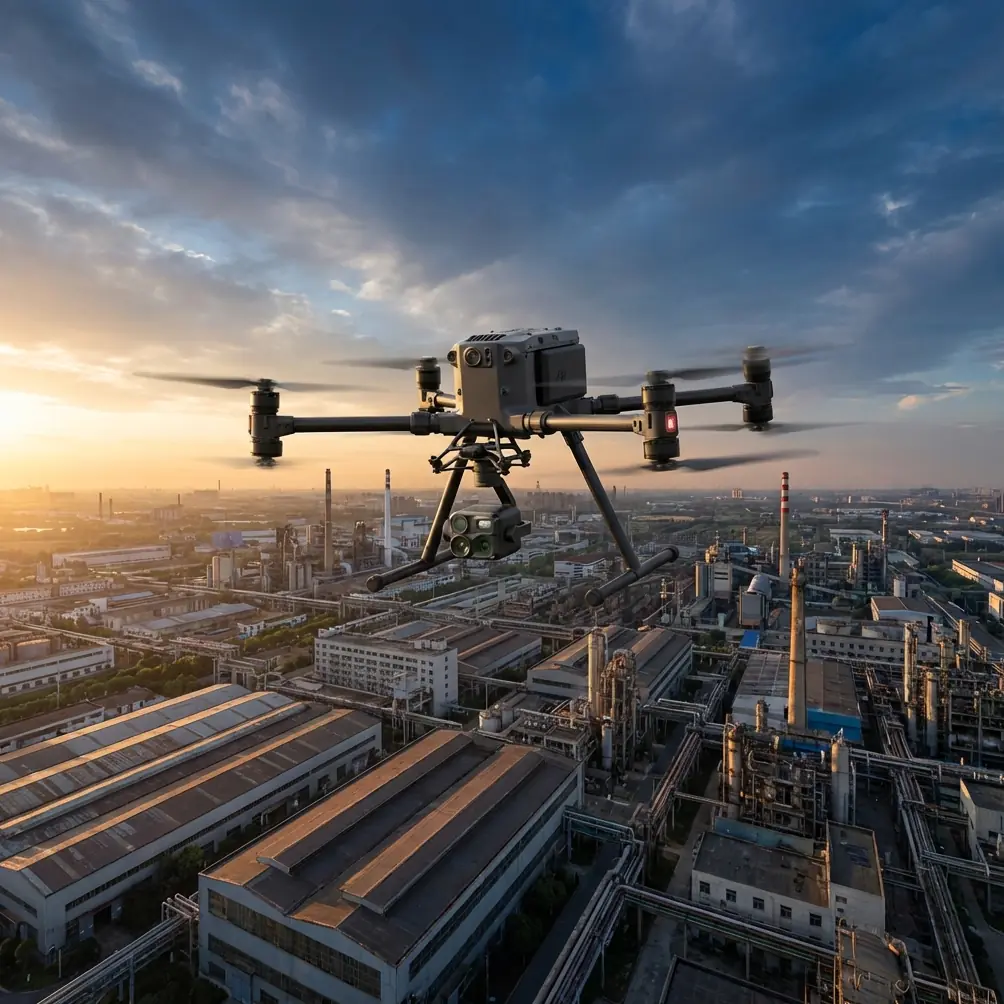
Matrice 4 for Urban Wildlife Inspection: What Actually Matters in the Field
META: Expert guide to using the DJI Matrice 4 for urban wildlife inspection, with practical insight on thermal signature detection, O3 transmission, AES-256 security, hot-swap batteries, and photogrammetry workflows.
Urban wildlife inspection sounds gentle on paper. In practice, it is one of the more technically demanding drone missions you can run.
Animals do not stay where you want them. Cities create heat clutter, signal reflections, tight launch zones, and public sensitivity. One flight may involve a nesting hawk on a high-rise ledge, raccoons moving through a storm drain corridor, and a fox slipping behind a warehouse just as the light drops. If the aircraft, sensors, and workflow are not aligned, the result is usually the same: incomplete data, unnecessary disturbance, and a second trip that should not have been necessary.
That is exactly where the Matrice 4 conversation becomes interesting. Not as a generic “powerful enterprise drone,” but as a platform that can solve a very specific problem: how to inspect wildlife in dense urban environments without turning the operation into a disruptive spectacle.
I have seen this gap firsthand. On one recent urban survey scenario, a small colony of bats had been reported near the ventilation void of a multistory parking structure. Ground teams could hear activity after sunset, but visual confirmation was unreliable. The site had warm concrete, vehicle exhaust, HVAC heat bleed, and intermittent RF noise from surrounding buildings. A standard visual-only workflow would have produced guesswork. A poorly planned thermal workflow would have produced false positives. What mattered was the combination of sensor discipline, transmission reliability, and enough endurance to stay methodical rather than rushed.
That is why the Matrice 4 deserves a closer look through the wildlife lens.
The real problem: cities confuse both people and sensors
Wildlife inspection in urban areas is not the same as searching open countryside. A city creates background interference everywhere.
Thermal signature interpretation becomes harder because rooftops hold heat, ducts vent hot air, and concrete surfaces radiate differently depending on sun exposure. A gull on a parapet may stand out cleanly at dawn, then nearly disappear against sun-warmed masonry by late afternoon. A raccoon near a loading dock may read less like an animal and more like another patch of mixed heat if the operator does not understand the scene.
Visual identification also gets messy. Shadows hide movement. Glass introduces glare. Narrow alleys distort line of sight. By the time a field biologist is certain what they are seeing, the animal may already be gone.
This is where a Matrice 4 workflow has an advantage when built around mission intent rather than hardware admiration. The platform is well suited to pairing thermal signature detection with high-resolution visual confirmation, so the operator is not guessing from a single data stream. That matters especially in urban wildlife work, where “something warm moved” is not a sufficient finding. You need location, direction of travel, likely species, habitat context, and enough documentation to inform the next decision.
In practical terms, that can mean the difference between identifying a temporary heat anomaly and confirming that a mother raccoon is using a roof access void as a den entrance. The latter changes how a property manager, municipal wildlife team, or contractor responds. The former just burns time.
Why transmission reliability is not a minor feature
Many drone buyers treat transmission specs as secondary, somewhere behind camera quality and flight time. For urban wildlife inspection, that is backwards.
O3 transmission matters because city work is full of interruptions. Steel, concrete, reflective façades, parked vehicles, telecom clutter, and uneven sightlines all chip away at confidence. A stable link is not simply a convenience for the pilot. It directly affects whether the inspection remains controlled and minimally invasive.
If the video feed stutters while the aircraft is tracking movement along a roof edge or above a tree canopy wedged between apartment blocks, the pilot tends to compensate with closer approaches, slower repositioning, or repeated passes. Each of those choices increases disturbance and can reduce safety margins. A more dependable transmission link supports better stand-off behavior. That is a major operational benefit in wildlife missions, where the cleanest flight is often the one that keeps more distance.
The value is even clearer during low-light work. Many urban species become active when visibility declines and the city background gets visually chaotic. If the pilot can trust the live feed and maintain composure, they can stay focused on behavior and surroundings instead of fighting the link. That helps preserve the integrity of the observation.
For teams building procedures around the Matrice 4, O3 is not just a line on a specification sheet. It supports a quieter inspection style, and quiet is often what urban wildlife work needs most.
Thermal is powerful, but only if you read it correctly
There is a persistent myth that thermal imaging simplifies wildlife detection. Sometimes it does. More often, it changes the type of expertise required.
With the Matrice 4, thermal signature analysis can help inspectors find animals in roof voids, tree canopies, drainage channels, and edge habitats that are difficult to assess from the ground. But the operator still needs to think like both a pilot and a field observer. Temperature contrast is not identity. Shape, movement pattern, shelter behavior, and scene context all matter.
Take the bat survey example. The first thermal passes did not show a dramatic swarm pouring out of the structure. What appeared instead were compact warm pockets near the ventilation openings and a subtle pattern of repeated emergence from one side of the concrete seam. Without patience, that could have been dismissed as residual heat from the building. With careful observation and cross-checking on the visual sensor, the pattern became meaningful.
This is where the Matrice 4’s suitability for mixed-sensor inspection earns its place. In wildlife work, thermal gets you to the clue. The visual payload helps you verify whether the clue is actually biological activity. Used together, they reduce unnecessary assumptions.
That is operationally significant for urban projects because false positives are expensive. They trigger unnecessary access requests, repeat flights, misplaced mitigation effort, and sometimes public concern. A well-run thermal workflow can do the opposite: narrow the search area, improve confidence, and shorten the path from detection to action.
Hot-swap batteries change the tempo of the mission
Battery handling rarely gets much attention in public-facing drone discussions, but it has outsized importance during wildlife inspection.
Hot-swap batteries matter because urban observation windows are often short and behavior-specific. You may need to hold a perimeter while waiting for emergence, then continue documenting movement patterns without losing the aircraft setup, site position, and mission rhythm. If the battery exchange forces a full reset of your workflow, you lose continuity. In wildlife work, continuity is not a luxury. It is evidence.
That is especially true when the objective is not just spotting an animal, but understanding how it uses the built environment. A fox crossing a service lane once is interesting. A fox using the same fence gap three times over 40 minutes is actionable. A kestrel appearing near a tower is a sighting. A kestrel repeatedly returning to a specific cavity is habitat use. Those distinctions depend on staying on mission long enough to observe patterns.
The Matrice 4’s hot-swap battery workflow supports that kind of field discipline. Teams can preserve momentum, keep personnel in place, and reduce dead time at exactly the moment when wildlife activity may peak. For sensitive operations, fewer restarts also mean fewer noisy repositioning cycles and less unnecessary aircraft movement around the site.
Security matters more than most wildlife teams admit
Urban wildlife inspection often touches places that are not ecologically simple. Schools, hospitals, transport infrastructure, utility corridors, private developments, and municipal assets all sit inside the same operational map. That means image data is not just biological evidence. It can also contain sensitive site information.
AES-256 support matters here because it strengthens the chain of custody around captured data and transmitted information. For a wildlife consultant, environmental team, or city contractor, that matters on two levels.
First, it protects the operational trust that keeps access available. Property owners and public agencies are more willing to authorize repeat inspections when they know the handling of imagery is serious and defensible. Second, it helps teams work across mixed stakeholders without treating data hygiene as an afterthought. That becomes especially relevant when findings affect compliance, building modifications, or habitat protection decisions.
In other words, security is not separate from the mission. It is part of being credible enough to keep doing the mission.
Photogrammetry is not just for maps
When people hear photogrammetry, they often think of terrain models or construction surveys. In urban wildlife work, its value is more strategic.
A Matrice 4-based photogrammetry workflow can help create repeatable site context around nests, roost access points, vegetation corridors, or façade features used by animals. That is useful because wildlife issues in cities are often spatially subtle. A species may rely on a gap behind cladding, a roofline transition, an isolated stand of trees, or a drainage gradient invisible from street level. A good model turns a vague location into a measurable environment.
If you pair that workflow with GCPs where appropriate, the output becomes stronger for repeat inspections and cross-team comparison. Ground control points are not necessary for every mission, but when habitat features need to be tracked over time or tied to engineering action, they add precision that casual drone imaging cannot match.
This matters because urban wildlife decisions are often contested by constraints. A contractor wants to proceed. A building owner wants certainty. A conservation officer wants defensible evidence. Photogrammetry, especially when anchored by GCPs, helps move the conversation away from impressions and toward documented site conditions.
For the Matrice 4 user, that means the aircraft is not just a flying observer. It becomes a tool for building a spatial record that can support mitigation planning, exclusion timing, or post-work verification.
What about BVLOS?
BVLOS sits at the edge of many enterprise drone conversations, but for urban wildlife inspection it should be discussed carefully and without hype.
There are situations where beyond visual line of sight concepts could expand corridor-based ecological assessments, especially along waterways, utility routes, or large urban fringes. But wildlife work in dense areas often depends on close contextual awareness, public safety considerations, and immediate visual interpretation of surroundings. So the question is not whether BVLOS sounds advanced. The question is whether it serves the biology, the airspace, and the site controls.
The Matrice 4 platform is relevant to that conversation because professional teams increasingly want one aircraft ecosystem that can support today’s legally practical urban missions while also fitting into more advanced operational frameworks as regulation and use cases mature. That future-facing flexibility matters. Still, the best current wildlife operators are not chasing BVLOS for prestige. They are designing missions that produce clearer evidence with the least disturbance possible.
That distinction is healthy.
The Matrice 4 is strongest when the workflow is mature
If there is one mistake I see in enterprise drone adoption, it is assuming the platform alone creates better outcomes. It does not. The Matrice 4 can be highly effective for urban wildlife inspection, but only when paired with disciplined mission design.
That means choosing the right time of day for thermal separation. It means understanding species behavior before takeoff. It means using O3 transmission stability to preserve stand-off distance rather than flying aggressively. It means treating AES-256 as part of professional practice, not marketing. It means planning battery swaps around behavioral windows. It means using photogrammetry and GCPs when spatial evidence will influence real decisions.
The aircraft supports those choices. It does not replace them.
For teams trying to inspect wildlife in cities, that is the most honest way to frame the Matrice 4. It is not magic. It is leverage. And in the right hands, leverage is exactly what these missions need.
If you are building a field workflow and want a second opinion on how to configure sensors, observation timing, or site documentation, you can reach out directly through our UAV field desk. The right setup is rarely about flying more. It is about seeing more while disturbing less.
That is the standard urban wildlife work should aim for. And that is where the Matrice 4 can genuinely earn its place.
Ready for your own Matrice 4? Contact our team for expert consultation.