
Mapping Mountain Construction Sites With Matrice 4
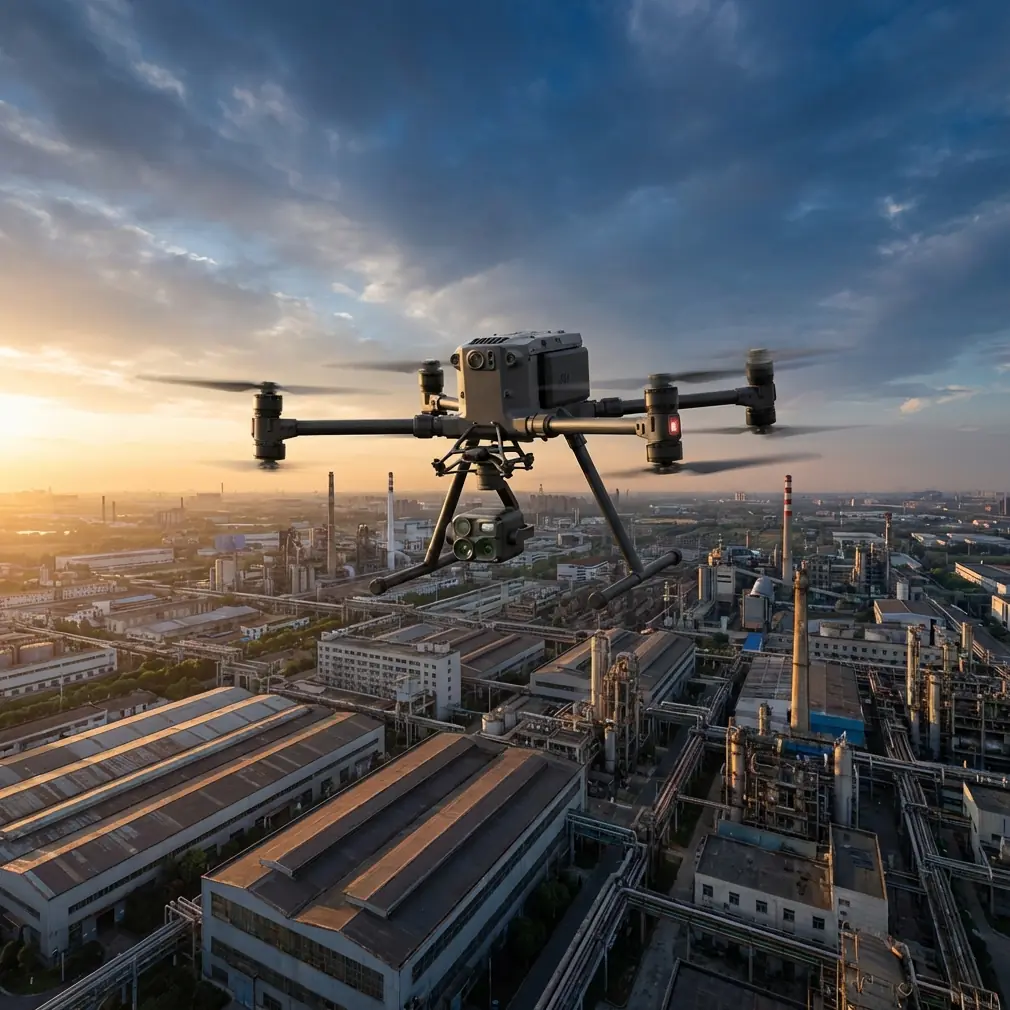
Mapping Mountain Construction Sites With Matrice 4: An Expert Field Tutorial
META: A practical expert guide to using Matrice 4 for mountain construction mapping, covering photogrammetry workflow, weather shifts, thermal use, O3 transmission, AES-256 security, GCP strategy, and battery planning.
Mountain construction mapping punishes weak workflows.
Steep gradients distort scale. Wind moves fast through saddles and cut slopes. Lighting shifts from harsh sun to shadow in minutes. Even a well-planned photogrammetry mission can start clean and end with inconsistent imagery if the aircraft, sensor package, and flight plan are not chosen for terrain rather than convenience.
That is where the Matrice 4 earns attention. Not because it is simply newer, but because its mission profile fits the kind of mixed, unpredictable work that civil contractors and survey teams face on mountain sites: orthomosaic capture in changing weather, progress documentation across terraced grades, thermal signature checks on drainage or roof assemblies, and repeatable data collection when the ground team cannot safely stand everywhere they need measurements.
This guide walks through how I would approach a mountain construction mapping job with a Matrice 4, using a field-first workflow rather than a brochure version of the story.
Why mountain sites are different
A flat industrial yard is forgiving. A mountain jobsite is not.
On steep terrain, two issues show up immediately. First, elevation changes alter your effective ground sampling distance across the mission. If your drone is flying a single relative altitude over uneven ground, image scale changes from one hillside to the next. Second, line of sight can disappear quickly when the aircraft drops behind ridges, scaffolding, retaining walls, or newly cut access roads.
Those are not minor annoyances. They affect the accuracy of your photogrammetry output and the confidence of everyone using the map for earthworks, drainage, safety planning, and material staging.
The Matrice 4 platform is useful here because it is built for serious enterprise flying rather than casual image capture. For mountain jobs, that matters less in abstract specs and more in how the aircraft behaves when the site stops cooperating.
Start with the mission design, not the takeoff point
When I map a mountain construction site, I do not begin by asking, “Where is the easiest place to launch?” I begin with three questions:
- Where are the largest elevation breaks?
- Which areas absolutely need survey-grade alignment?
- What weather changes are likely in the next 30 to 60 minutes?
That planning mindset determines whether the Matrice 4 becomes a time-saver or just an expensive camera in the air.
For photogrammetry, terrain awareness is the whole game. If your software supports terrain-following or adaptive mission planning, use it. If not, break the site into altitude bands. A road bench at one elevation and a higher retaining structure should often be flown as separate blocks rather than one oversized grid. That keeps overlap more consistent and reduces the risk of weak reconstruction along sharp slope transitions.
On mountain projects, I also recommend more GCP discipline than many teams use on flat sites. Ground control points should not be clustered only around the accessible lower areas. Spread them vertically across the site. Put some near the top cut, some along intermediate terraces, and some at the lower workface. That vertical distribution helps constrain the model where slope-induced distortion tends to creep in.
A practical Matrice 4 workflow for construction mapping
Here is the workflow I would use for a typical mountain construction mission.
1. Establish control before the drone leaves the case
If the deliverable includes volume calculations, grade checks, or overlay against design surfaces, your GCP layout is not optional. It is foundational.
A common mistake is placing control where trucks can reach it easily rather than where the terrain needs it most. On a mountain site, you want control near crest lines, on benches, and across direction changes in the slope. That gives the photogrammetry engine stronger geometric anchors.
Even if the Matrice 4 mission can produce visually excellent outputs without dense control, a construction team needs more than a good-looking map. They need a model that aligns with reality when comparing progress week to week.
2. Set overlap higher than you would on a flat site
Steep terrain and uneven surfaces create hidden zones and perspective differences. So I lean toward more conservative overlap settings. The exact percentages depend on the surface complexity, but the principle is simple: mountain terrain demands redundancy.
Extra overlap helps when portions of the site fall into shadow or when texture is weak on gravel, concrete, or exposed soil after weather changes. If there is fresh excavation with repetitive surfaces, the added image density can make the difference between a coherent model and reconstruction gaps.
3. Use the Matrice 4 transmission system strategically
O3 transmission is one of those details that sounds like a checkbox until you fly in broken terrain.
In mountain construction, maintaining a stable live feed and command link is not just about convenience. It affects whether you can confidently monitor framing, slope edges, exclusion zones, and aircraft position as the route progresses near obstructions. O3 transmission gives the pilot stronger operational awareness when terrain complexity starts to interrupt simpler links.
That does not mean you ignore line-of-sight planning. It means the aircraft is better equipped for a site where geometry constantly works against clean signal paths.
If your team is planning extended operations or future BVLOS-aligned workflows under the proper civil framework and approvals, link reliability and telemetry consistency become even more valuable. On active construction sites, good transmission discipline is what keeps a mapping sortie boring in the best possible way.
4. Treat battery planning as a data-quality issue
Hot-swap batteries are often discussed as a productivity feature. On mountain mapping jobs, they are also a consistency feature.
Why? Because steep, spread-out sites rarely fit into one perfect flight. If battery changes are slow and disruptive, crews are tempted to fly larger-than-ideal blocks just to avoid relaunching. That usually creates worse data. You get changing light, increased wind exposure, and more variation in the site conditions between the first and last image.
With hot-swap batteries, the team can break the mission into cleaner sections and relaunch quickly. That leads to better photogrammetry and less pressure on the pilot to stretch flight time when conditions are shifting.
What happened when the weather turned mid-flight
One of the most instructive Matrice 4 flights I have seen on a mountain construction job started under stable conditions and changed fast.
The site was a stepped road-and-retaining-wall development on a ridge. We launched in bright but manageable conditions, planning a standard grid over the upper benches first and then a second block over the lower excavation and drainage corridor. About halfway through the first mission, the weather changed in the way mountain weather often does: crosswind picked up from the saddle, cloud cover moved over the western face, and the sunny gravel textures we were using for easy visual confirmation flattened into low-contrast gray.
That combination can degrade image consistency quickly. Crosswind pushes the aircraft off ideal track lines. Variable light changes the visual character of the ground from one pass to the next. The pilot suddenly has to decide whether to continue, pause, or break the mission into recovery logic.
The Matrice 4 handled the shift well for two reasons.
First, the aircraft remained stable enough in the changing wind for the pilot to preserve mission integrity rather than improvising manually and introducing inconsistent angles. Second, the transmission link remained reliable even as the terrain and weather combined to make the operating environment less forgiving. That let the crew monitor the route, reassess the lower segment, and stop the mission at a natural break instead of forcing a poor final block.
We swapped batteries, waited for the cloud edge to settle, then flew the lower corridor as a separate mission. That decision produced cleaner reconstruction than trying to “finish no matter what.” The lesson was not that the drone makes weather irrelevant. It does not. The lesson is that a capable platform gives you enough control margin to make a good decision before the data quality collapses.
Where thermal signature work fits into a construction mapping workflow
Thermal is often treated like a separate discipline, but on mountain projects it can complement standard mapping surprisingly well.
A thermal signature can help teams review drainage performance, moisture intrusion patterns on structures, temperature variation across roof or envelope sections, and potential anomalies on recently installed electrical or mechanical infrastructure, depending on the task and local operating procedures. It is not a replacement for engineering inspection, but it adds another layer of field intelligence.
The operational significance is this: on mountain sites, access is hard and conditions change fast. If the same drone platform can support both photogrammetry and thermal review in one site workflow, the contractor reduces mobilizations and captures conditions before they shift again. That matters after rainfall, freeze-thaw cycles, or partial sun exposure, where thermal differences may only be visible during a narrow window.
If your site team needs help shaping a mixed mapping-and-thermal workflow, I usually suggest sharing the mission profile first through WhatsApp field coordination so the aircraft, payload, and deliverables align before deployment.
Security and project data are not side issues
Construction mapping produces sensitive information even when the work itself is entirely civilian. Site layouts, progress records, utility corridors, and infrastructure details all sit inside the collected dataset.
That is why AES-256 matters.
In plain terms, strong encryption is not just an IT talking point. It is part of responsible project handling when survey outputs, imagery, and mission data move between field crews, consultants, and project managers. On larger civil works, especially where multiple subcontractors touch the same data environment, security discipline matters almost as much as flight discipline.
For firms bidding high-value infrastructure work, this is one of those details that can quietly separate a professional UAV operation from a hobby-grade one.
Best practices for better mountain photogrammetry with Matrice 4
A few field habits improve results consistently:
Break the site into logical mapping zones
Do not force an entire mountain project into one giant mission. Separate upper slopes, bench roads, drainage channels, and structures if the terrain or lighting differs meaningfully.
Use terrain-aware altitude logic
If software support is available, use terrain following. If not, create flight blocks by elevation. This keeps image scale more uniform and improves reconstruction quality.
Place GCPs for geometry, not convenience
Distribute control across both horizontal area and vertical relief. High, mid, and low placement gives the model stronger real-world alignment.
Watch shadow movement
Clouds crossing a mountainside can change image texture in minutes. If half the site is now under flat light and half is in sun, that is usually a good moment to pause and split the mission.
Save thermal for the right window
Thermal signature work is only useful when the temperature contrast supports the objective. Plan it around the site condition you want to reveal, not simply when the drone is already airborne.
Use battery swaps to protect consistency
Fast relaunch capability through hot-swap batteries should encourage smarter mission segmentation, not longer flights for their own sake.
The real value of Matrice 4 on mountain construction jobs
The strongest case for the Matrice 4 is not that it can fly over a mountain site. Many drones can do that once.
The stronger case is repeatability. Can the team return next week, fly the same terrain under slightly different conditions, maintain data quality, protect project information, and capture outputs that engineers and contractors will actually trust?
That is where details like O3 transmission, AES-256 security, hot-swap battery support, and a workflow that respects GCP placement start to add up. They are not isolated features. They solve linked problems: terrain interruption, weather variability, operational tempo, and project-data integrity.
For construction in the mountains, that combination matters more than a flashy spec sheet. It means fewer compromised flights, cleaner photogrammetry, more dependable progress tracking, and better decisions made from the map instead of around it.
If you are planning your first mountain construction survey with a Matrice 4, think less about maximum range and more about mission structure. Plan for elevation bands. Place your control intelligently. Expect weather to change before you are ready. Use thermal only when it serves a clear site question. And let the aircraft’s enterprise features support disciplined fieldwork rather than replace it.
That is how you get useful outputs from difficult terrain.
Ready for your own Matrice 4? Contact our team for expert consultation.