
Matrice 4 Mapping Tips for Remote Fields: Range Discipline
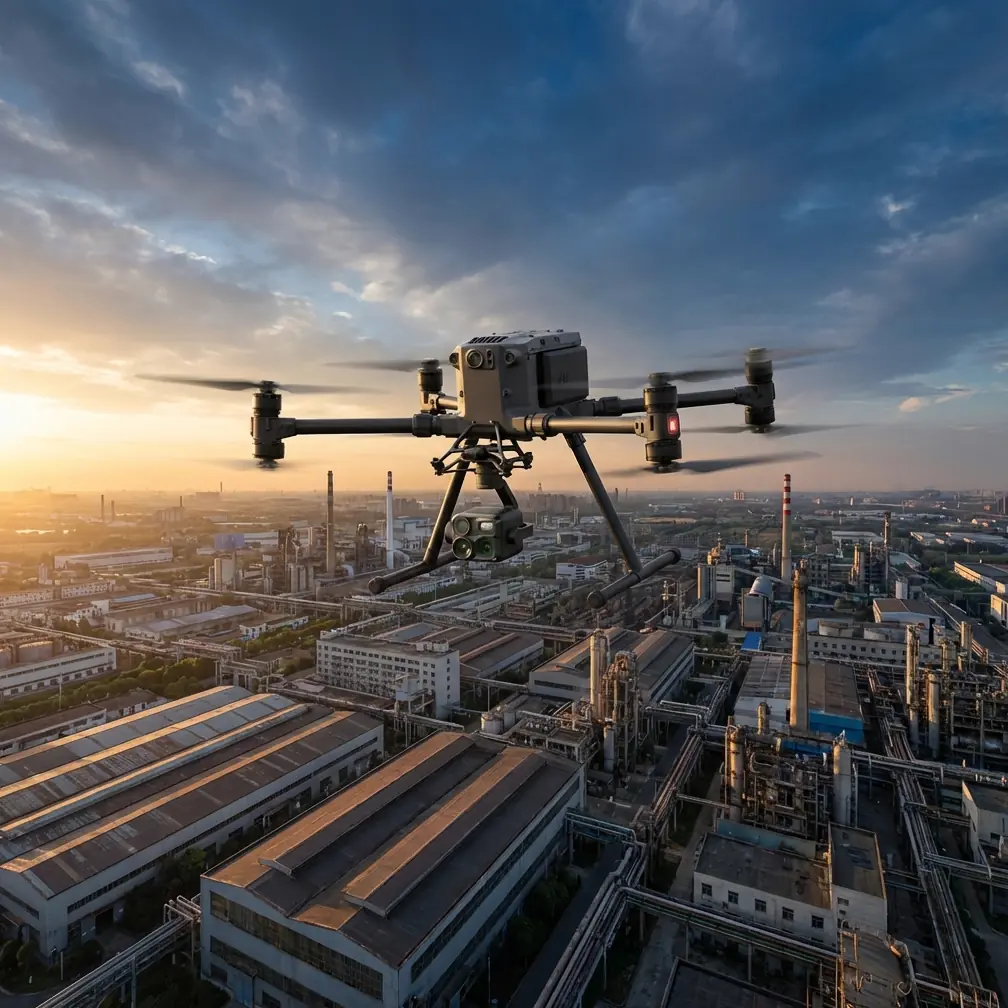
Matrice 4 Mapping Tips for Remote Fields: Range Discipline, Data Confidence, and Why UAV Security Now Shapes Every Flight Plan
META: Expert Matrice 4 field-mapping review covering remote operations, antenna positioning, transmission reliability, photogrammetry workflow, GCP strategy, and secure data handling.
Remote field mapping sounds simple until distance, terrain, and weak connectivity start attacking your margins. A drone may have the right camera and a capable airframe, but once you move beyond easy line-of-sight flying near a road, the real differentiators become link stability, recoverable workflows, and confidence that your captured data remains usable from takeoff to final map output.
That is where a Matrice 4 conversation becomes more interesting than a basic spec-sheet recap.
I approach the platform from the perspective of a field operator who has to come home with clean photogrammetry data, not just a flight log. In remote agricultural and land-survey scenarios, the priorities are rarely glamorous. You need repeatable overlaps. You need signal integrity when the aircraft is far out over repetitive terrain. You need battery strategy that does not force sloppy mission breaks. And increasingly, you need to think about drone security as an operational planning issue, not an abstract policy topic.
That last point matters more than many operators admit. Drone safety and security became a mainstream issue years ago as drone volumes climbed sharply. One clear marker came in 2016, when the FAA reported 600,000 registered drones in the United States. That number was an early signal that the airspace was no longer niche. Once unmanned aircraft moved from a specialized tool associated mainly with wealthy hobbyists and military users into mass consumer adoption, the conversation changed. Detection, control, and the broader management of drone risk became part of the operating environment. For a Matrice 4 pilot mapping remote fields today, that reality translates into one practical truth: every mission should be designed as if signal discipline, airspace awareness, and data protection are as critical as camera quality.
So let’s talk about what that means in the field.
Why remote field mapping stresses a drone differently
Open farmland can fool people. On paper, it looks like the easiest place to fly: flat, unobstructed, and visually simple. In practice, those same conditions expose weaknesses fast.
Large fields tend to be monotonous. That is bad for visual orientation, and it can also complicate photogrammetry if your overlap, altitude, or ground control strategy is weak. Remote locations often mean limited cellular support, fewer convenient recovery points, and longer travel times if something interrupts the mission. If the property includes irrigation lines, tree breaks, uneven crop canopy, or embankments, the “flat field” assumption disappears quickly.
Matrice 4 becomes valuable here not because remote field work is dramatic, but because it is repetitive and unforgiving. A platform built for serious commercial workflows has to maintain mission consistency over distance. That means the airframe, transmission system, batteries, and data-security architecture all become part of the mapping result.
The reader scenario here—mapping fields in remote areas—puts unusual weight on transmission behavior. That is where O3-class transmission thinking enters the conversation. Long-range image and control links are not just about how far a drone can theoretically fly. In survey work, the real question is whether the link remains stable enough to preserve confident command inputs and situational awareness at the edge of your working envelope. A remote field mission can fail long before battery reaches reserve if poor signal management forces unnecessary reorientation, pauses, or conservative route truncation.
Antenna positioning advice that actually helps in the field
Most range problems blamed on the drone begin at the controller.
If you want the strongest possible link during remote mapping, stop pointing the tips of the antennas toward the aircraft. That is one of the most common mistakes I still see. For maximum range and the most stable signal, the broad sides of the antennas should face the drone. Think of the antenna pattern as a field radiating outward from the flat surfaces, not from the narrow ends. When the aircraft moves farther downrange over fields, small controller-angle errors that seem harmless nearby can cost you signal resilience at distance.
A practical method:
- Keep the controller at chest height rather than low near the waist.
- Tilt the antenna faces so they remain broadside to the aircraft’s position.
- Re-adjust as the drone changes altitude or returns on a different heading.
- Avoid standing directly beside trucks, steel gates, irrigation equipment, or other reflective structures that can interfere with clean transmission behavior.
- If the field has rolling terrain, move yourself to a slight rise rather than the mathematically shortest launch point.
That last point is underappreciated. A modest elevation advantage at the pilot position often improves link quality more than obsessing over a few extra meters of nominal range. Remote farmland may look empty, but shallow terrain undulations, tree lines, utility corridors, and even dense crop moisture can shape your effective signal environment.
This is also where discipline beats optimism. If you are flying long mapping legs, rotate your body and controller deliberately as the aircraft tracks the route. Don’t let your posture lag behind the drone. Good antenna management is not glamorous, but it is one of the cheapest ways to protect a remote mission.
Security is no longer separate from mapping performance
The old view of drone security treated it as someone else’s problem. Today, security has direct operational value.
As unmanned aircraft became widespread, the industry had to reckon with a simple reality: more drones in the sky means more concern about interference, unauthorized activity, and data exposure. The growth was not hypothetical. The FAA registration count of 600,000 drones back in 2016 illustrated how quickly density increased. At the same time, anti-drone technologies emerged with a central goal of detecting and capturing drones in response to rising security risk. Even if your own work is entirely civilian and focused on agriculture or land mapping, that trend affects how responsible operators plan missions.
For Matrice 4 users, encrypted links such as AES-256 matter not as a marketing checkbox but as a way to reduce the risk of data interception and maintain trust in sensitive commercial workflows. A farm boundary survey, crop health assessment, irrigation audit, or land-development map can contain operationally sensitive information. Remote properties are not always isolated from third-party visibility; they are simply farther from support. Secure transmission and careful flight planning help keep the mission professional from start to finish.
This is also one reason to document permissions, operating areas, and intended deliverables before launch. In places where drone activity attracts attention, a well-prepared operator with a clearly commercial purpose faces fewer disruptions than someone who looks improvised. Security awareness starts long before the aircraft lifts off.
Photogrammetry in remote fields: what separates usable maps from disappointing ones
A Matrice 4 can collect a large amount of imagery quickly. That does not guarantee a useful orthomosaic or surface model.
Field mapping succeeds when image geometry, overlap discipline, and ground truth all reinforce one another. Photogrammetry is extremely good at reconstructing terrain and crop patterns when the image set is consistent. It is much less forgiving when the operator rushes the fundamentals.
Three points matter most in remote field work.
First, maintain overlap margins that reflect the site, not just the default mission template. Uniform crops can create repetitive visual texture, especially at certain growth stages. That makes image matching harder than many new operators expect. If the field surface lacks distinctive features, stronger frontlap and sidelap choices can improve reconstruction reliability.
Second, use GCPs when the map will inform decisions beyond casual visualization. Ground control points anchor the dataset to known coordinates and reduce drift. In remote fields, GCP placement becomes even more valuable because there may be fewer fixed manmade features to help validate alignment. Even a capable onboard positioning workflow benefits from a disciplined ground-control strategy when clients care about repeatability over time.
Third, think about timing. Midday flights often reduce long shadows, which can help photogrammetric consistency, but crop stress work may call for a different window depending on the sensor and the question being asked. If the mission includes thermal signature analysis, timing becomes even more important because heat patterns can change dramatically across the day. A thermal pass meant to expose irrigation irregularities or drainage issues has different ideal conditions from a pure RGB orthomosaic mission intended for boundary or stand-count work.
That is where Matrice 4-style multi-sensor planning has real value. Instead of treating thermal as an add-on, use it strategically. In remote fields, thermal data can reveal water distribution anomalies, drainage variation, or equipment-related hot spots around pumps and support infrastructure. Those signatures are not just visually interesting; they can influence where you send ground crews next.
Battery strategy decides whether your map is clean
Remote missions amplify poor battery habits.
Hot-swap batteries are one of those features that do not get enough respect until you need to maintain tempo on a large property. When you are mapping fields far from a service road or staging area, minimizing downtime between sorties protects consistency. Light changes. Wind shifts. Crop canopies move. Every long pause between battery cycles creates small differences that can complicate final processing.
With hot-swap workflow, the objective is not speed for its own sake. The goal is to restart the next segment while environmental conditions remain reasonably consistent with the previous one. That supports cleaner stitching and more predictable outputs. It also reduces the temptation to stretch a pack too far because you are trying to avoid an inconvenient landing.
My recommendation is to divide large remote-field projects into battery-sized blocks before launch. Assign each block a mission name, expected duration, overlap relationship with adjacent blocks, and a contingency landing area. This sounds administrative. It is actually one of the best ways to avoid the classic failure mode where a crew returns with hundreds of images but a weak seam between critical sections of the site.
BVLOS thinking without reckless behavior
BVLOS is one of the most discussed concepts in commercial drone operations, and remote fields are often where operators first feel its appeal. Wide acreage naturally pushes people to imagine longer, more autonomous mapping patterns.
The correct takeaway is not to fly beyond what regulations or approvals allow. The real lesson is to adopt BVLOS-grade planning discipline even when operating within standard constraints. That means rigorous route design, emergency procedures, communication planning, battery segmentation, and signal management. In other words, plan like distance matters because it does.
Remote field environments reward operators who think several steps ahead. Where would you reposition if topography weakens the link? What happens if one section of the field has unexpectedly poor visual texture for photogrammetry? Which GCPs verify the area that matters most to the landowner? How quickly can you relaunch after a battery exchange without changing the mission geometry?
Those questions turn a Matrice 4 flight from a hardware exercise into a professional mapping operation.
A practical remote-field workflow for Matrice 4 crews
If I were briefing a two-person crew for a field-mapping day, the sequence would look like this:
Start with the pilot position, not the drone. Choose a launch spot with the cleanest possible sightline and minimal reflective clutter. Confirm antenna orientation before takeoff and rehearse how the controller will be adjusted as the aircraft moves downrange.
Next, define the mapping purpose. Boundary confirmation, drainage analysis, crop variability assessment, and thermal inspection are not the same mission. Sensor choice, altitude, overlap, and timing should follow the job, not habit.
Then establish control. If the output matters operationally, place and verify GCPs with care. Do not scatter them casually. Put them where they strengthen the edges and the areas where accuracy will actually be questioned later.
After that, break the site into manageable segments. Use hot-swap capability to keep environmental consistency intact. Build overlap between blocks so processing has room to succeed.
Finally, protect the data chain. Secure links, organized naming, immediate media handling, and clean mission records matter more now than they did when drones were a small niche category. The industry has matured, and security expectations matured with it. If you need help planning a field-ready workflow or checking your signal setup before a survey day, you can message a specialist directly here: https://wa.me/85255379740
What makes Matrice 4 the right conversation for this kind of work
The best remote mapping platforms reduce uncertainty. That is the standard I use.
A Matrice 4 discussion is worthwhile when the job demands more than a casual aerial overview—when transmission behavior, sensor strategy, battery continuity, and secure data handling all affect the final deliverable. The platform matters because remote fields magnify small weaknesses. A shaky link becomes a truncated route. Weak overlap becomes a broken model. Poor control becomes a map no one fully trusts. Sloppy battery transitions become inconsistent capture conditions. Security complacency becomes avoidable risk.
The broader drone market has already shown why this level of rigor is necessary. Drones became numerous enough, visible enough, and capable enough that safety and interception concerns entered mainstream operations years ago. The number 600,000 registered drones in the FAA’s 2016 reporting was not just trivia. It marked the point at which serious operators had to stop thinking like hobbyists. In parallel, anti-drone systems built around detecting and capturing aircraft underscored the same reality from a different angle: once the skies become crowded, professionalism is not optional.
For remote field mapping, that professionalism shows up in very grounded ways. Hold the antennas correctly. Use GCPs when the result must stand up to scrutiny. Treat AES-256-style security as part of data stewardship. Plan thermal missions around the question you are trying to answer, not around convenience. Use hot-swap batteries to preserve environmental continuity. And borrow the discipline of BVLOS planning even when your mission stays within conventional operational boundaries.
That is how you get more than a flight. You get a map you can trust.
Ready for your own Matrice 4? Contact our team for expert consultation.