
Matrice 4 for Low-Light Field Mapping: Flight Height
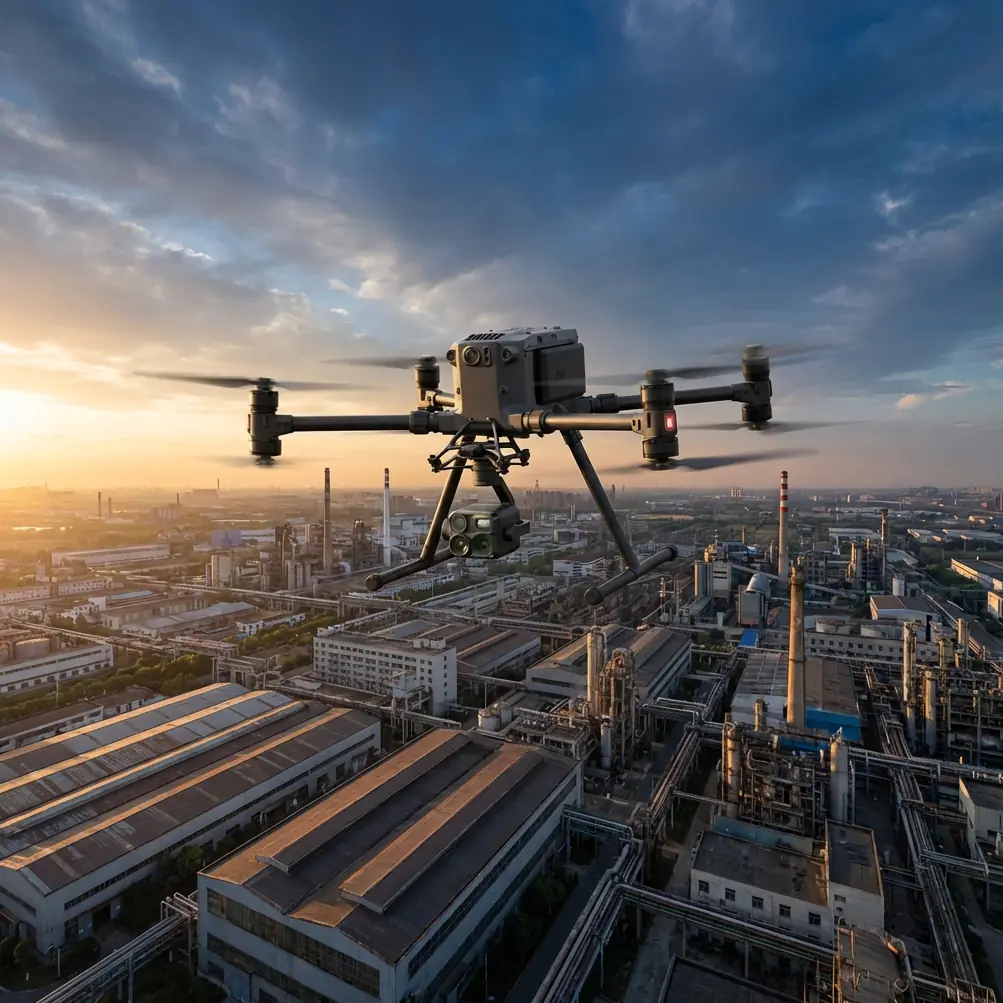
Matrice 4 for Low-Light Field Mapping: Flight Height, Sensor Discipline, and What Aircraft Design Manuals Quietly Teach Us
META: Expert tutorial on using Matrice 4 for low-light field mapping, with practical guidance on altitude, audio-noise discipline, photogrammetry workflow, and system reliability insights drawn from aerospace reference standards.
Low-light field mapping sounds simple until you try to produce survey-grade outputs from a scene that is losing contrast by the minute. Rows blend together. Surface texture fades. Shadows become geometry problems. Even when the aircraft is stable, the mission can drift off-spec because the weak links are rarely obvious in the field.
This is where a Matrice 4 workflow needs more than a checklist. It needs mechanical discipline, signal discipline, and one very practical choice most operators underthink: flight altitude.
For this scenario, my baseline recommendation is to begin around 60 to 80 meters AGL for general agricultural photogrammetry in low light, then adjust only after reviewing image overlap, shutter behavior, and ground texture retention. Go lower if crop detail is the priority and wind is manageable. Go higher only when coverage rate matters more than subtle surface definition. In fading light, altitude is not just about ground sample distance. It changes motion blur risk, feature extraction reliability, and how forgiving the data will be in processing.
That’s the core of the mission. But the interesting part is what the reference materials reveal when you read them through the lens of UAV operations.
Low light punishes weak assumptions
A field mapping job near dusk often pushes operators toward two instincts: fly higher to finish quickly, or rely on thermal alone because visible imagery is losing clarity. Both can work in limited cases, but neither should be the default.
If the deliverable is a stitched orthomosaic or terrain model, the photogrammetry engine still depends on recognizable tie points. In low light, those points degrade fast over uniform farmland. Soil, stubble, crop canopies, and irrigation patterns can flatten visually. At that point, extra coverage from a higher flight may actually reduce reconstruction confidence because the software has less texture to work with per frame.
That is why 60 to 80 meters AGL is a sound starting band. It usually preserves enough spatial detail for feature matching while still covering practical acreage. If you are working over highly repetitive crops with weak contrast, dropping to 50 to 60 meters can improve alignment consistency, especially when your GCP layout is modest. If you are mapping broad parcels for general condition assessment rather than measurement-heavy outputs, 80 to 100 meters may still be viable, but only if overlap is increased and exposure remains controlled.
The key is not altitude by itself. The key is matching altitude to the texture budget the scene still offers.
Thermal signature is useful, but it does not replace map structure
The low-light temptation is to lean on thermal signature because it remains readable when RGB detail drops. That makes sense for irrigation leaks, drainage anomalies, livestock location, stressed vegetation pockets, and certain edge conditions. A Matrice 4 configuration that supports thermal sensing can reveal patterns the visible camera misses entirely.
But thermal imagery behaves differently in mapping. It may help identify problem zones, yet it is not automatically the best source for high-confidence boundary extraction or photogrammetric reconstruction. Field surfaces that look distinct thermally can still produce less stable geometric matching than a clean visible-light dataset captured before ambient light falls too far.
So the best sequence in many civilian agricultural missions is this:
- Capture the primary photogrammetry block while visible contrast is still usable.
- Follow with thermal passes targeted at anomalies, drainage lines, wet spots, or crop stress zones.
- Use GCPs to anchor the geometry if precise measurement matters.
- Compare thermal hotspots or cold zones against the orthomosaic, not instead of it.
That workflow gives the client a usable map and a diagnostic layer. Different jobs need different outputs, but mixing them deliberately matters.
Why an old aircraft sealing standard is surprisingly relevant to Matrice 4 field work
One of the source references comes from an aircraft design manual discussing sealing structures, including uncut TFE backup rings conforming to MS28774 and pressure-use limits for fixed sealing elements. On the surface, that seems far removed from a drone mapping mission. It is not.
The manual makes two ideas clear. First, small protective sealing components must be installed correctly, sometimes with dedicated clamping tools, because poor assembly can damage the part. Second, some seal types are suitable only for fixed sealing, not for dynamic motion applications. It also cites a pressure threshold where fixed sealing in one hydraulic class can be used up to 1500 lb/in², while another configuration may require anti-extrusion protection for use at 3000 lb/in².
Why does that matter operationally for Matrice 4 users mapping fields in low light?
Because drones do not fail only through software or pilot error. They fail through cumulative mechanical neglect: compromised gaskets around service points, contamination ingress after repeated battery swaps, and rough handling during transport or maintenance. You are not maintaining a hydraulic aircraft, but the engineering principle carries over perfectly. A component designed for a static seal should not be treated like a flexible wear interface. A sealing surface should not be dragged across rough or irregular edges. Assembly technique matters.
For operators in humid farmland, dew-heavy mornings, or dusty dry seasons, this becomes practical fast. If battery compartments, external covers, payload interfaces, or cable transitions are repeatedly handled carelessly, the result is not always immediate failure. More often it is intermittent behavior: fogging risk, moisture intrusion, contact instability, or degraded environmental resistance. In low-light work, those problems show up at the worst time, when you are already operating near the edge of the sensor’s comfort zone.
So one of the quiet lessons from the aircraft manual is this: treat sealing and fitment as mission-critical, not cosmetic. Before a dusk mapping mission, inspect interfaces the same way you inspect props and lenses. The operators who do this consistently usually have fewer “mysterious” field issues.
The second manual points to an equally overlooked problem: signal hygiene
The avionics reference is even more interesting for drone operators. It describes an interference test procedure where audio system outputs are monitored and adjusted to about 40 mV, and where system A and system B are checked to determine whether one subsystem is contaminating another. It also notes a fault condition where an indicator remains half a point left before and after power-up, showing that the deviation is not caused by a specific radio source.
Again, this is not a drone manual. But the operational lesson is universal.
When a system behaves strangely, do not assume the most obvious active subsystem is the cause. Validate the signal path. Isolate variables. Record actual values, especially when expected thresholds are not reached. The reference’s insistence on recording the value if it is below 40 mV is exactly the kind of discipline professional UAV teams should borrow.
Applied to Matrice 4 low-light mapping, this matters in several ways:
- If downlink performance degrades, do not immediately blame range. Check RF environment, antenna orientation, controller state, nearby powered equipment, and payload configuration.
- If image quality looks unstable, do not assume the camera is at fault. Verify gimbal behavior, shutter settings, aircraft speed, wind coupling, and whether the mission profile changed after a battery swap.
- If transmission telemetry appears inconsistent, review logs before and after power cycles rather than judging from a single live symptom.
A Matrice 4 operator using O3 transmission and secure AES-256 data handling still benefits from old-school troubleshooting discipline. Strong transmission architecture and encrypted links protect the connection and data path, but they do not remove the need for isolation testing when anomalies appear. If anything, better systems make it easier to get complacent.
Low-light missions are less tolerant of that complacency.
Recommended altitude strategy for low-light agricultural mapping
Let’s get practical. If I were briefing a crew for a Matrice 4 field mission near dusk, I would frame altitude choices like this.
1. Start at 60 to 80 meters AGL
This range balances coverage with feature clarity. In weak light, it often preserves enough texture for reliable photogrammetry without forcing unmanageable sortie counts.
2. Drop lower for repetitive crop patterns
Uniform rows can confuse matching algorithms, especially when shadows are long and contrast is collapsing. Flying 50 to 60 meters can make the difference between a clean block and a fragmented reconstruction.
3. Raise overlap before raising altitude
If the team is tempted to go higher to save time, first consider increasing frontlap and sidelap. Low-light reconstruction benefits from redundancy more than speed.
4. Use GCPs when measurement matters
Low-light capture reduces the margin for alignment error. A disciplined GCP layout gives the processing model something trustworthy to hold onto when the scene itself is visually weak.
5. Use thermal as a second layer, not a crutch
Thermal can expose drainage issues, stressed vegetation, and moisture variation. It is excellent for diagnosis. But if the final product requires stable geometry, visible-light photogrammetry should usually remain the anchor dataset.
Battery management matters more after sunset
Low-light operations often run close to the edge of the day, which creates subtle planning mistakes. Teams shorten setup time, rush calibrations, and push one more leg before the light disappears. That is exactly when hot-swap batteries become a workflow advantage, but only if the process is controlled.
A rushed hot-swap can interrupt sequence continuity, alter mission timing, or introduce avoidable handling errors at the aircraft interface. Build the swap into the plan. Mark the last completed line. Reconfirm camera settings after restart. Check timestamp continuity if your downstream workflow depends on synchronized datasets.
This is another place where the sealing reference indirectly matters. Frequent opening and closing of compartments in dusty or damp field conditions increases mechanical risk. Efficient swapping is good. Clean swapping is better.
BVLOS planning changes the low-light calculus
If your operation is authorized for BVLOS or is being designed toward that future state, low-light mapping changes from a simple visual mission into a systems mission. Communications margin, route predictability, recovery logic, and terrain awareness all matter more.
At that point, altitude selection should not be driven only by image quality. It also has to support transmission reliability, obstacle clearance, and predictable return profiles. A lower altitude may improve imagery, but not if it compromises link quality over uneven topography or tree-lined field edges. A higher altitude may improve link stability, but not if it erodes photogrammetric detail beyond what the mission can tolerate.
That tradeoff has to be decided before takeoff, not improvised when the sun is already gone.
A field-ready workflow I would actually use
For a Matrice 4 low-light mapping job over agricultural land, this is the tutorial version I trust:
- Inspect aircraft interfaces, payload mount, compartment seals, and lenses.
- Confirm controller health, transmission settings, storage status, and encryption workflow if data custody matters.
- Place GCPs where they will remain visible as contrast falls.
- Launch early enough to capture the main RGB block before the last useful light disappears.
- Fly the first block at 60 to 80 meters AGL.
- Review sharpness and overlap immediately.
- If repetitive terrain causes weak image structure, rerun critical sections at 50 to 60 meters.
- Use thermal on a second pass to identify moisture differences, heat retention patterns, drainage irregularities, or stressed crop zones.
- Log every anomaly precisely rather than diagnosing by instinct.
- After landing, inspect the aircraft again, especially if dew, dust, or repeated battery swaps were involved.
If you want to compare mission design ideas for your own acreage, transmission environment, or sensor mix, you can message our flight planning desk here: https://wa.me/85255379740
What makes this approach work
The common thread across the reference material is not the literal hardware. It is engineering behavior.
One manual stresses that sealing components must match the application, be assembled correctly, and be protected from damage. The other shows that interference and indication problems should be isolated methodically, with actual measured values like 40 mV recorded rather than guessed. Those are aerospace habits. They transfer cleanly into serious drone work.
For Matrice 4 field mapping in low light, that means:
- choose altitude based on texture retention, not habit
- use thermal where it adds diagnostic value
- support geometry with GCPs
- respect mechanical interfaces during hot-swaps
- troubleshoot link or payload anomalies with evidence, not hunches
That is how you turn a difficult dusk mission into a reliable data collection exercise instead of a salvage operation in post-processing.
Ready for your own Matrice 4? Contact our team for expert consultation.