
Matrice 4 Mapping Tips for Forested Mountain Terrain
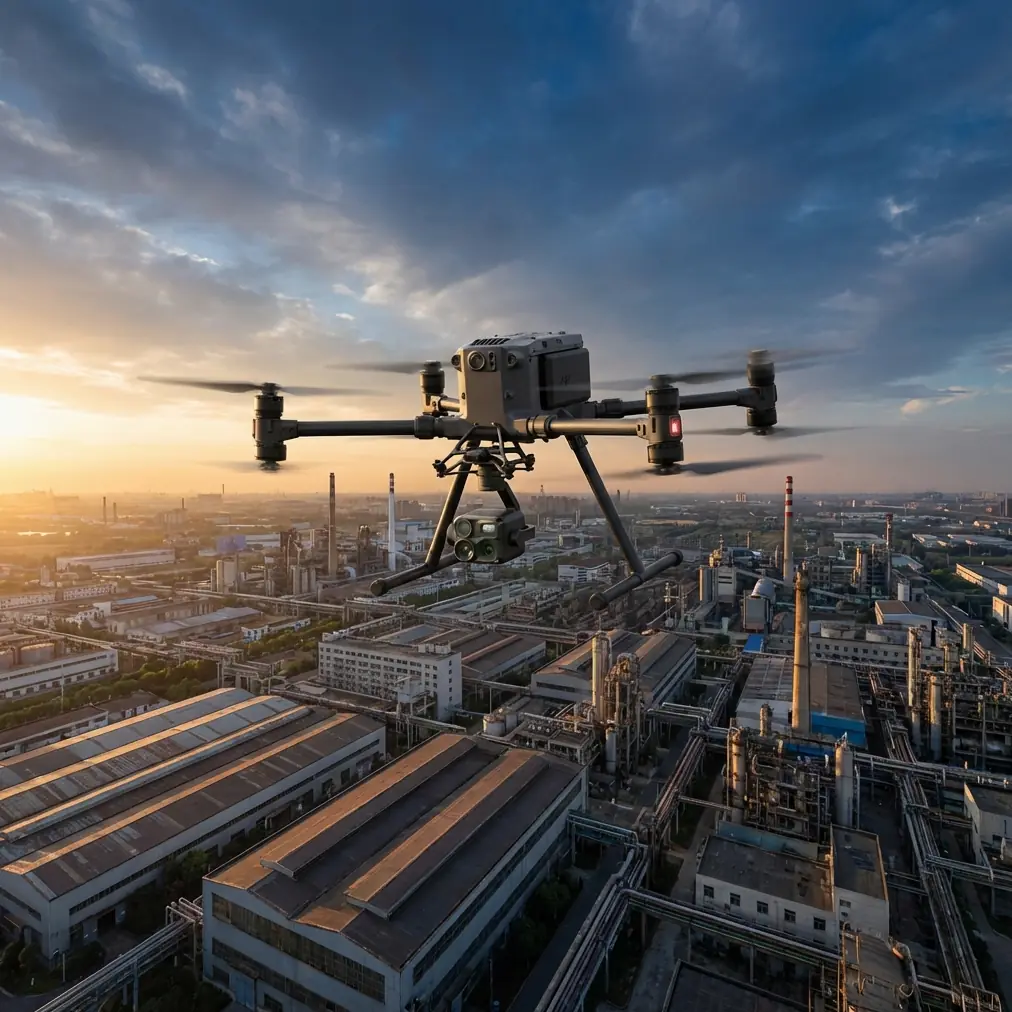
Matrice 4 Mapping Tips for Forested Mountain Terrain: What Actually Matters in the Field
META: Expert technical review of Matrice 4 workflow choices for mapping forests in mountain terrain, including thermal use, photogrammetry accuracy, battery strategy, O3 transmission, and operational planning.
Mapping forests in mountain terrain looks straightforward on a planning screen. Then you get to the site.
Tree canopies break line of sight. Ridges interfere with signal. Temperature shifts alter battery behavior. Light changes fast, especially when one slope is still in shade and the next is already reflective enough to complicate image consistency. For crews considering the Matrice 4 for this kind of work, the real question is not whether the aircraft can fly a mission. It is whether the platform can produce repeatable, defensible data in terrain that tends to punish weak workflows.
That is where the Matrice 4 conversation becomes more interesting. Not as a generic drone discussion, but as a technical field tool for mountain forestry, corridor inspection, and mixed-visibility survey work where photogrammetry and thermal signature analysis may need to coexist in the same operational plan.
Why forest mapping in mountains is a different job
A flat agricultural block rewards standard mission planning. A steep forest basin does not.
Mountain forests create three immediate problems. First, elevation changes distort your effective ground sampling distance if flight height is not managed relative to terrain rather than a simple launch-point altitude. Second, dense vegetation reduces visual reference quality for photogrammetry, particularly in homogeneous evergreen stands where image tie points can become repetitive. Third, operational safety margins shrink because battery reserve, transmission integrity, and return routing all become less forgiving when the aircraft is crossing ridgelines or working near isolated valleys.
That combination makes the Matrice 4 especially relevant when operators need a platform that can support more than one data layer. In practical terms, that means not only collecting RGB imagery for orthomosaics and 3D surface models, but also using thermal signature data to help distinguish moisture patterns, stressed vegetation zones, animal presence, or residual heat anomalies near infrastructure embedded in the forest.
The platform matters, but the workflow matters more.
The photogrammetry mistake many mountain crews still make
The most common failure in forest mapping is not poor flying. It is poor expectations.
Photogrammetry over trees is fundamentally different from photogrammetry over roads, rooftops, or bare ground. In a mountain forest, what you are often modeling is the canopy surface rather than the terrain beneath it. If the mission objective is timber stand analysis, canopy structure, or access-route context, that can be acceptable. If the objective is precise ground relief under heavy cover, the operator needs to be honest about what optical imagery alone can and cannot produce.
This is why GCP planning remains critical. In steep terrain, a few casually placed points near a trailhead do not solve the accuracy problem. Ground control points need to represent elevation variation across the operational area, not just horizontal spread. If your GCPs cluster at the bottom of a valley, the final model can look internally consistent while still drifting where it matters most: upper slopes, ridge transitions, and irregular canopy edges.
For Matrice 4 users, the strength is not that the aircraft magically eliminates this issue. The strength is that it supports a disciplined workflow where accurate terrain-aware planning, consistent image overlap, and stable mission execution give the processing engine the best possible inputs.
I generally advise crews to think in terms of mission architecture rather than a single flight. One pass optimized for clean photogrammetry. A separate pass for thermal interpretation if needed. Different speeds, different timing, sometimes different altitude logic. Trying to force one “do everything” mission in a mountain forest usually degrades both outputs.
Thermal is not a novelty layer in forest operations
Many teams still treat thermal as an occasional add-on. That misses the operational value.
In mountain forests, thermal signature data can reveal patterns RGB imagery hides completely. Wet seep lines on a shaded slope. Heat retention differences between dense canopy and recently disturbed ground. Wildlife activity corridors at first light. Hot electrical components if there is utility infrastructure crossing wooded terrain. Even post-fire monitoring can benefit when residual anomalies are subtle and visually masked by debris or regrowth.
What matters is timing. Thermal data collected at noon on a sun-loaded slope can become noisy fast. Surface heating overwhelms the subtle contrasts you were hoping to see. Early morning or late-day windows often produce cleaner separation, especially where you are trying to distinguish biological, hydrological, or infrastructure-related anomalies from general background warming.
This matters for Matrice 4 operators because thermal should not be treated as a checkbox payload feature. It changes mission design. It changes launch time. It changes the route order across east- and west-facing slopes. In mountain work, the best thermal flight is often the one you schedule before the photogrammetry sortie, not after, because environmental contrast is better and battery performance is easier to predict in cooler air.
O3 transmission is useful, but terrain still wins if you get careless
People talk about transmission systems as if stronger links erase geography. They do not.
O3 transmission can materially improve operational confidence in complex terrain, especially when the aircraft is moving along a forest edge, crossing partial obstructions, or working farther from the pilot’s position than a smaller prosumer setup would comfortably support. But signal quality in mountain forestry remains highly dependent on geometry. If you place yourself on the wrong side of a ridge shoulder, the forest and terrain will humble even a strong link.
Operationally, that means pilot position is part of the survey design. It should be selected with the same care as the flight path itself. A high, clear observation point with a cleaner shot into the valley often does more for mission stability than any setting in the controller menu.
This is also where AES-256 has practical significance beyond the spec sheet. In forestry and mountain corridor projects, data is not always trivial. You may be documenting protected habitats, utility routes, access roads, or sensitive land-use conditions. Secure transmission and data handling are not abstract benefits when the mission involves regulated environments or client confidentiality requirements. The aircraft is collecting geography, infrastructure context, and potentially thermal information that should not be casually exposed.
A lot of crews focus on image quality and overlook data security until procurement asks questions. That is backwards. In professional mountain mapping, secure workflow design belongs in the mission plan from day one.
My field rule for batteries: swap early, not heroically
If you fly enough mountain jobs, battery management stops being a checklist item and becomes a survival habit for your schedule.
Here is the simplest tip I give new teams using platforms with hot-swap batteries: do not treat the advertised flight endurance as a target. Treat it as a ceiling you should rarely approach in cold, elevated, or high-wind environments.
Forested mountain terrain quietly drains reserve in several ways. Climbing segments draw harder than operators expect. Wind shear near ridges forces additional corrections. Colder air can preserve some electronics performance while still reducing how confidently you can lean on the last part of the discharge curve. Then there is the human factor: when the aircraft is halfway down a wooded drainage, pilots are tempted to “finish this one last line” instead of returning with margin.
That is where people lose efficiency.
A hot-swap batteries workflow only pays off if the swap happens before the mission becomes tense. My own field rule is simple: if the aircraft comes back from a mountain mapping leg and the battery level is at the point where the crew starts discussing whether one more short segment is possible, the answer is already no. Swap now, relaunch cleanly, and preserve mission continuity.
The hidden value is not just safety. It is data consistency. Fresh batteries help keep flight performance, route adherence, and decision-making stable across multiple sorties. That matters when you are trying to maintain overlap quality over a large forest block or when repeating parallel passes for thermal interpretation.
I have seen crews lose more time nursing borderline packs than they would ever save by pushing them. The battery table might look efficient. The field result usually is not.
BVLOS discussions are changing mission design, but mountain forests remain unforgiving
BVLOS is one of the most consequential operational concepts in large-area forest mapping, especially where the work zone extends beyond what a single launch point can conveniently cover. For Matrice 4 users, that opens a serious conversation about productivity, route continuity, and reduced repositioning in long mountain corridors or broad forest management blocks.
But mountain terrain is exactly where BVLOS planning has to be the most disciplined.
Ridgelines interrupt both signal and situational awareness. Weather can differ dramatically between two sides of the same range. A route that looks efficient on a topographic map may place the aircraft in poor communication geometry halfway through the mission. Forest canopy also complicates contingency planning because emergency landing options are far less forgiving than in open ground.
So yes, BVLOS can transform how large forestry projects are structured. It can reduce repeated setup moves, cut wasted transit legs, and improve coverage logic over long distances. But the value comes only when supported by proper risk assessment, terrain analysis, and regulatory alignment. On mountain jobs, BVLOS is not merely a permissions issue. It is a mission design discipline.
How I would set up a Matrice 4 forest mission in mountains
For a practical forest mapping task, I would start by separating deliverables. If the client wants a photogrammetric map for canopy analysis and also wants thermal insight, those outputs get distinct capture windows.
The RGB mission would be planned terrain-aware, with overlap chosen conservatively because forests give processing software fewer clean geometric references than built environments. GCP placement would be distributed across the elevation range, not just around accessible roads. If wind is building, I would reduce ambition before I reduce overlap.
The thermal mission would be scheduled for the period of strongest useful contrast, often early in the day. I would prioritize target zones where thermal interpretation can actually support a decision: drainage patterns, suspected stress areas, infrastructure crossings, search sectors, or edge habitats. A full-area thermal blanket sounds thorough, but focused acquisition often produces better analysis and less irrelevant noise.
Pilot position would be selected for transmission geometry first, convenience second. O3 transmission helps, but not enough to justify a lazy launch point buried behind trees or tucked below a ridge shoulder. Security settings would be treated as standard practice, especially where AES-256 matters for sensitive land, asset, or habitat information.
And on batteries, I would build the day around deliberate hot swaps with reserve preserved, not squeezed.
If you are building a mountain forestry workflow and want a practical second opinion on mission setup, this is the sort of scenario worth discussing with an operator who has dealt with terrain-induced errors before: message a UAV specialist here.
The real value of Matrice 4 in this environment
The Matrice 4 is most compelling in mountain forest work when you stop judging it by isolated features and start judging it by how well it supports disciplined operations.
Thermal signature capability matters because forests hide patterns that visible imagery misses. Photogrammetry capability matters because management, planning, and inspection all depend on reliable spatial products. O3 transmission matters because mountains punish weak links. AES-256 matters because professional projects increasingly require secure handling of sensitive geographic data. Hot-swap batteries matter because sortie continuity is often the difference between a clean field day and a compromised one.
None of that means the platform removes the hard parts. It means the aircraft is capable enough that the remaining failure points are mostly human: weak control distribution, poor timing, lazy battery discipline, bad pilot placement, or unrealistic expectations about what imagery through heavy canopy can deliver.
That is actually good news. It means better results are achievable without chasing miracles. They come from better decisions.
For crews mapping forests in mountain terrain, that is the real Matrice 4 story. Not a flashy feature list. A platform that rewards serious planning, clean execution, and respect for what the landscape is doing to your mission every minute you are in the air.
Ready for your own Matrice 4? Contact our team for expert consultation.