
Mapping Urban Forests with Matrice 4: What Flight
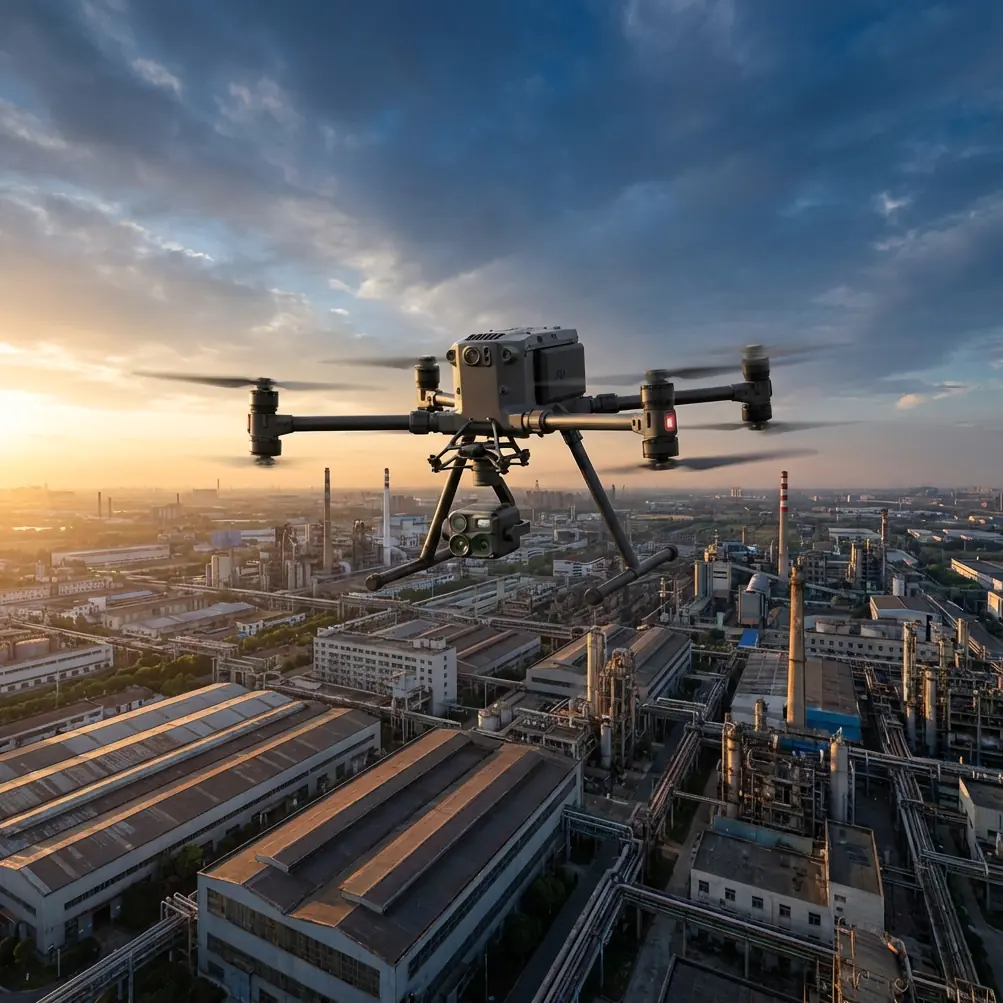
Mapping Urban Forests with Matrice 4: What Flight-Control Logic and Ground-Run Physics Really Mean in the Field
META: A technical review of Matrice 4 for urban forest mapping, connecting control-system redundancy, fault tolerance, and ground-handling principles to real-world photogrammetry, thermal survey, and BVLOS-ready workflows.
Urban forest mapping sounds tidy on paper. In practice, it is a layered aviation problem disguised as a data-collection task.
You are often flying over fragmented green corridors, between reflective glass, near RF noise, and around narrow launch points where the margin for error feels smaller than the mission brief suggests. The payload may be gathering photogrammetry one hour and thermal signature data the next. The airframe needs to hold position, recover gracefully from disturbances, and remain predictable when the site itself is anything but.
That is why the most interesting way to look at Matrice 4 is not through a feature checklist. It is through the lens of aircraft design logic: redundancy, fault isolation, actuator limits, pilot awareness, and the physics of low-speed ground handling. Those ideas show up clearly in the reference material, and they matter directly when the job is mapping forests in urban environments.
I’ll take this from the standpoint of field operations.
The hidden priority in urban forest mapping: predictable failure behavior
One of the strongest reference points comes from civil aircraft flight-control design requirements. The source states that non-critical systems must not degrade critical functions, and that important systems should respond to a common-mode fault in a fail-safe or passively safe manner. It also notes that a primary fly-by-wire flight-control system requires backup control so a control-system failure does not prevent continued safe flight and landing. Even the power system is expected to carry enough battery capacity for that same reason.
This matters more to urban forest mapping than many operators realize.
When you fly a Matrice 4 near tree canopies, facades, rooftop turbulence, and electromagnetic clutter, reliability is not just about “not crashing.” It is about how the aircraft behaves when one part of the system becomes unreliable. A mission can still go bad even if the airframe remains airborne—say, if an anomaly causes drift, delayed response, or degraded stabilization that compromises image overlap or thermal consistency.
For photogrammetry, that kind of instability shows up later as warped canopy edges, poor tie-point matching, and inconsistencies around shadowed tree lines. For thermal work, it can create misregistration between visible and thermal layers, which is especially painful when you are trying to identify irrigation stress, disease pockets, or heat-retaining urban surfaces adjacent to vegetation.
The reference also specifies a channel philosophy: active control systems typically need at least two operating channels, while primary flight-control systems generally require at least three. That number is not trivia. Operationally, multi-channel logic is how advanced aircraft reduce the chance that one bad input becomes one bad outcome. In an urban forest mission, where the aircraft may be making constant micro-corrections around obstacles and wind gradients, channel redundancy translates into trust. You are trusting the platform to detect disagreement, reject faulty behavior, and preserve controllability.
With Matrice 4, that same design mindset is what separates a survey tool from a camera in the sky.
Why “single-channel operation” is a warning label, not a comfort blanket
Another important detail in the source is its treatment of single-channel operation. Even with cross-channel comparison monitoring, single-channel operation is only considered acceptable under restrictive conditions: the system must provide adequate self-monitoring; if self-monitoring fails, the pilot must still be able to detect failure through other cues such as response time or damping; and actuator authority and rate limits must be imposed without reducing system performance, so hard faults or oscillatory faults do not damage the aircraft structure.
This is one of the most practical design lessons for Matrice 4 operators.
In a dense urban greenbelt, you may not have the luxury of broad visual separation or a forgiving recovery corridor. If the aircraft starts to feel “off,” the pilot’s ability to sense it quickly matters. The source explicitly mentions response time and damping as cues a pilot can use to recognize failure. That is not abstract test-pilot language. In the field, it means you should know how your Matrice 4 normally brakes, how it settles after a yaw correction, how it reacts in waypoint turns, and whether it carries any unusual lag in confined-space repositioning.
Pilots who only think in terms of camera settings often miss this. Pilots who map reliably develop a feel for the aircraft’s control signature.
That becomes even more relevant for BVLOS-oriented planning, where regulatory approval may depend on proving disciplined operational controls and robust contingency logic. You do not need to turn an urban forest survey into a certification seminar, but you do need to think like someone who understands failure modes before they become data-loss events.
The real significance of actuator limits and control-rate management
The source makes another sharp point: control authority and rate limiting should be available at the servo actuator so that even under hard faults or oscillatory faults, structural damage can be avoided.
Now connect that to an urban mapping mission.
Tree canopies create their own aerodynamic texture. Add building edges, alleyway gusts, and thermal upwash from pavement, and the aircraft is constantly filtering disturbances. A well-behaved control system does not simply “fight harder.” It manages how aggressively actuators respond. That restraint protects the aircraft, but it also protects your data quality. Overactive control can spoil survey geometry just as surely as underactive control can.
For photogrammetry, consistent track and attitude are everything. Good overlap is not just a mission-planning number; it is a product of stable execution. For thermal signature work, a smoother aircraft often means cleaner thermal mosaics with fewer alignment artifacts over mixed canopy and hardscape.
This is where a third-party accessory can genuinely improve the mission rather than just decorate the aircraft. I have seen operators get better urban forest mapping results by adding a well-designed RTK base-rover workflow using third-party GCP targets and survey gear. Not glamorous. Very effective. The drone may be stable enough on its own, but when your site includes tree-shadow occlusion, irregular clearings, and limited takeoff zones, high-quality GCP placement can rescue absolute accuracy in ways onboard positioning alone cannot. The combination of Matrice 4 flight stability and disciplined GCP control is what makes difficult urban forestry deliverables hold up under scrutiny.
What aircraft configuration studies teach us about payload decisions
The first reference also notes that active-control benefits are highly sensitive to the actual aircraft configuration. Not every function produces an obvious benefit on every platform, and system choices must be balanced against validation effort and cost. It further recommends comparing at least two candidate system configurations early in design because airframe configuration and control architecture influence each other.
This is a useful way to think about Matrice 4 mission setup.
Urban forest operators often overpack the mission profile. They want thermal, RGB, oblique, nadir, and close visual inspection in one sortie. Sometimes that works. Often it degrades the quality of each layer because the route, altitude, speed, and timing become compromises.
The lesson from aircraft design is simple: configuration matters, and tradeoffs are real.
If the deliverable is canopy-height modeling and tree inventory, prioritize photogrammetry geometry first. If the goal is stress detection or heat-leak interaction between trees and surrounding infrastructure, optimize for thermal timing, sun angle, and repeatable passes. If the mission crosses semi-obstructed urban corridors where transmission reliability matters, O3 transmission performance and route discipline may matter more than squeezing in extra capture modes.
A tightly scoped mission usually produces cleaner outputs than a technically possible but operationally muddled one.
Ground physics still matters, even for a multirotor workflow
The second reference comes from takeoff and landing control analysis. It explains that lateral loads on landing gear are tightly limited, so during the ground run the aircraft heading angle is generally small. To simplify analysis, the text assumes certain lateral terms can be taken as zero, separating longitudinal and lateral-directional problems. It then introduces the longitudinal three-degree-of-freedom equations for two-wheel ground roll and shows that friction, thrust contribution, and reaction loads determine the behavior.
At first glance, this sounds far removed from Matrice 4. It is not.
Urban forest mapping often happens from improvised launch and recovery points: compacted soil beside a pathway, a rooftop corner, a gravel maintenance lane, a closed parking bay. Ground interaction is where many otherwise careful missions become sloppy. The source’s emphasis on limited lateral load and small heading deviation during the ground phase is really an argument for controlled, aligned, low-disturbance launch and landing.
For a drone operator, that means three things.
First, surface selection is not cosmetic. Uneven or high-friction takeoff zones can induce avoidable attitude corrections during liftoff and touchdown, especially when operating near shrubs, fencing, or curbs that disrupt downwash.
Second, heading discipline matters. If the source treats yaw angle during ground run as generally small because side loads are constrained, the drone equivalent is that your takeoff and landing orientation should be deliberate, not improvised. Face the aircraft to reduce conflict with prevailing gust channels between buildings.
Third, friction and reaction loads are not just airplane concepts. They map neatly to drone launch accessories. A simple third-party landing pad with enough rigidity and size can improve repeatability on dusty urban green sites. It reduces debris ingestion, gives visual contrast for recovery, and helps maintain a consistent touchdown zone when the surrounding terrain is patchy or reflective.
These are minor decisions until they ruin a thermal mission with dust contamination or induce a needless aborted landing beside a stand of ornamental trees.
Why pilot transparency is a serious operational advantage
The flight-control source also states that advanced control systems should be “transparent” to the crew, except when a lost-function mode makes that impossible.
That principle is deeply relevant to Matrice 4 operations. The best mapping aircraft do not burden the pilot with constant interpretation of hidden system behavior. They present a stable, legible flying experience. For urban forestry, where the pilot is already balancing obstacle awareness, mission geometry, local airspace constraints, and image quality, transparency reduces cognitive clutter.
But transparency is not passivity. The same source insists that if self-monitoring fails, the pilot must still be able to detect the issue through the aircraft’s behavior. That is why recurrent training matters, particularly for crews that alternate between open-area agricultural jobs and tight urban vegetation surveys. You need enough stick time with Matrice 4 to recognize the difference between normal environmental disturbance and a developing control anomaly.
The crews that perform best are usually the ones who brief aircraft behavior, not just route lines.
Data security and transmission are part of survey integrity
Urban forest mapping often involves municipal clients, campuses, utility easements, or private developments. So security is part of operational quality. In that environment, AES-256 handling and disciplined link management are not buzzwords; they are part of chain-of-custody thinking for site data. The same goes for O3 transmission reliability. If the control-and-video link remains stable in a cluttered RF environment, you are less likely to make rushed pilot corrections, miss canopy-edge details, or interrupt automated capture sequences that your processing workflow depends on.
Hot-swap batteries also deserve a practical mention here. In fragmented urban forest parcels, battery continuity helps maintain mission rhythm across multiple short launches. That reduces reset time between blocks, which can preserve lighting consistency for photogrammetry and support tighter thermal comparison windows when temperature gradients are changing quickly after sunrise.
None of this is dramatic. It is just how good datasets are made.
A field-ready Matrice 4 workflow for urban forests
If I were configuring Matrice 4 for this exact reader scenario, I would think in layers:
- Stable control behavior first, with close attention to pilot recognition of abnormal response time or damping.
- Survey architecture second, separating thermal and photogrammetry objectives unless the overlap is genuinely defensible.
- GCP strategy third, especially where canopy interruption, narrow corridors, or urban multipath can degrade confidence.
- Launch and recovery discipline fourth, using a controlled surface and deliberate orientation to minimize avoidable disturbances.
- Secure transmission and data handling throughout.
That may sound conservative. It is. The source material points consistently in that direction: redundancy, fault isolation, dissimilar design logic, and operational transparency are what make advanced aircraft trustworthy. Even the ground-roll analysis reinforces the same mindset. Keep loads controlled. Simplify what can be simplified. Respect the physics at low speed and close to the ground.
If you are planning an urban forest mapping program and want to compare RTK, GCP, thermal, or transmission setup choices for Matrice 4, you can message our UAV specialists directly here: https://wa.me/85255379740
Matrice 4 is most impressive when treated as a serious aerial measurement platform, not as a generic drone with extra sensors. Urban forests expose weak workflows quickly. The aircraft design principles in the reference material explain why: when margins get tight, graceful degradation, channel logic, pilot-detectable behavior, and controlled surface interaction are what preserve both flight safety and dataset integrity.
That is the level on which this platform should be judged.
Ready for your own Matrice 4? Contact our team for expert consultation.