
Field Report: Mapping Highways in Extreme Temperatures
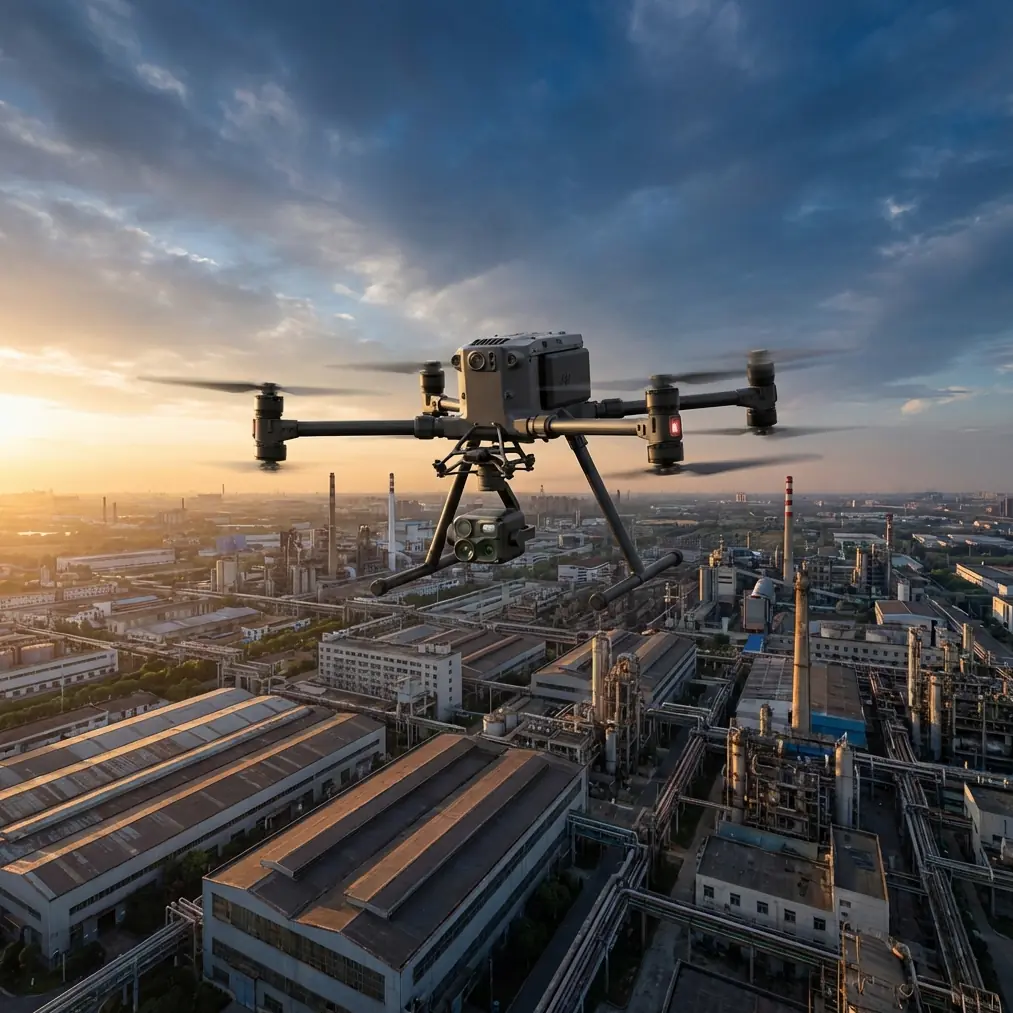
Field Report: Mapping Highways in Extreme Temperatures with Matrice 4
META: A field-tested look at using Matrice 4 for highway mapping in extreme temperatures, with practical insight on photogrammetry, thermal interpretation, icing risk, airspeed validation, and mission reliability.
A highway corridor looks simple from altitude until weather starts rewriting the rules.
I learned that on a winter-to-summer road survey program that crossed exposed embankments, shaded cut sections, bridge decks, and low-lying frost pockets. The assignment sounded routine: capture repeatable corridor data for surface condition review, drainage assessment, and progress mapping. In practice, temperature swings were punishing, wind patterns were inconsistent, and the smallest setup mistake showed up later as weak overlap, unstable thermal contrast, or rework in processing.
That is where the Matrice 4 fits best—not as a magic object, but as a platform that reduces the number of ways a demanding mapping mission can go sideways.
For teams mapping highways in extreme temperatures, the real question is not whether the aircraft can fly. Most professional platforms can. The real question is whether the data stays trustworthy when temperature, airflow, and surface conditions begin affecting sensors, endurance, and repeatability. That is the lens I use when evaluating Matrice 4 in the field.
Why extreme-temperature highway mapping is a different job
A highway is a long, narrow, reflective, heat-variable target. Asphalt stores heat. Concrete releases it differently. Metal guardrails spike thermal response. Bridge decks cool faster than adjacent pavement. Snow margins, pooled water, and patched surfaces all distort what a casual observer might call “just imagery.”
That matters for both photogrammetry and thermal signature interpretation.
If your objective is corridor mapping, your visible-light outputs depend on stable geometry, consistent overlap, and disciplined GCP strategy. If your objective includes thermal review—detecting moisture patterns, drainage anomalies, heat retention inconsistencies, or material transitions—then timing and environmental control matter even more. Extreme cold and extreme heat do not merely affect flight comfort; they alter the road itself and the reliability of the measurements you take from above.
Matrice 4 makes these projects easier because it supports a workflow that is less fragile under operational stress. Strong transmission stability, encrypted data handling with AES-256, and battery workflows built around fast turnaround all matter more in a highway corridor than many teams initially expect. Add the practical benefit of hot-swap batteries, and you can maintain mission continuity without stretching ground time longer than necessary in harsh conditions.
A lesson older aviation solved long ago
One reason I take extreme-temperature operations seriously comes from a much older part of aircraft design.
In classic aircraft engineering literature, environmental survival systems were not treated as afterthoughts. One reference states that when aircraft operate above 3048 m (10,000 ft) and up to 15,240 m (50,000 ft), fixed oxygen systems become necessary under decompression scenarios, and for sustained operation above 15,240 m or more than 5 minutes above 12,810 m (42,000 ft) without emergency cabin pressurization, a dedicated high-altitude oxygen arrangement is required. That may sound far removed from a civilian drone mapping mission. It is not.
The operational significance is straightforward: serious aircraft design assumes the environment can become the mission’s primary constraint. Human factors, system resilience, and emergency planning are baked into the platform requirements. For drone teams, the equivalent mindset is this: if you are mapping highways in severe heat or cold, environmental management should sit at the center of your mission plan, not at the edge.
Matrice 4 rewards that mindset. It is most effective when used by crews who think like system operators, not just image collectors.
The second lesson: airflow lies if you let it
Another piece of aircraft design guidance is even more directly relevant to highway mapping. In wind-tunnel test methodology, one documented aim of an airspeed probe test is to determine the velocity correction curve, optimize the geometry of the probe, define total and static pressure port layout, and decide the best installation position on the aircraft. That is a precise way of saying something field crews know instinctively: airflow measurement is only useful if the sensing arrangement has been validated.
Why does that matter to a Matrice 4 mapping run over highways?
Because highway corridors create uneven low-level air movement. Cuttings, overpasses, heavy vehicle slipstreams, open median sections, and heat shimmer above pavement all create local disturbances. If your mission planning assumes the displayed air data or ground-speed behavior tells the whole story, you may end up with compromised overlap, uneven image spacing, or unexpected yaw corrections. In corridor photogrammetry, those imperfections stack up fast.
The significance here is operational, not academic. A mature platform helps by stabilizing the aircraft and preserving link quality through changing conditions, but good results still depend on a validated flight plan, realistic speed margins, and a willingness to adapt altitude and leg orientation to what the corridor is doing aerodynamically.
Matrice 4 gives you the control authority and transmission confidence to make those adjustments without losing mission structure. In my experience, that is one of its quiet strengths.
What changed in my own workflow
Before using a platform in the Matrice 4 class for these corridor jobs, I used to build extra buffer into every schedule. Not for flying. For uncertainty.
I expected at least one partial remap due to thermal timing drift or overlap inconsistency. I expected more battery handling interruptions during temperature extremes. I expected to spend too much energy confirming whether a suspect anomaly in the thermal set was real or simply a product of changing surface temperature over the course of the mission.
With Matrice 4, that uncertainty narrowed.
The aircraft’s role was not to eliminate judgment. It reduced friction between planning and execution. On hot days, I could preserve momentum between sorties using hot-swap batteries instead of letting the mission rhythm break down. On cold days, I could keep route segmentation disciplined and avoid overextending any single flight into a marginal battery state. Over a long highway project, those small efficiencies translate into cleaner datasets.
That is especially useful in photogrammetry, where consistency is everything. If I am building a corridor model for measurement-grade outputs, I want every flight block to behave like part of one integrated acquisition logic. Reliable transmission through O3 architecture helps here, not because range claims are exciting on paper, but because stable command-and-video continuity reduces hesitation during long linear captures. That becomes even more relevant when operating under tightly controlled BVLOS frameworks where corridor situational awareness and procedural discipline are non-negotiable.
Thermal signature is only valuable if you understand timing
A lot of teams talk about thermal as if it were a simple overlay. Highway mapping in extreme weather quickly exposes that misconception.
Thermal signature shifts across the day. Bridge joints, drainage channels, shoulder repairs, subsurface moisture, culvert areas, and resurfaced patches all emerge differently depending on solar load, ambient temperature, and recent traffic. If you fly too late, the contrast flattens. Too early, and some anomalies are still masked by overnight uniformity. After precipitation, the story changes again.
Matrice 4 is helpful here because it allows repeatable collection windows. That repeatability is often more valuable than any single isolated thermal frame. If I can revisit the same stretch at controlled intervals with consistent route geometry, I can distinguish a one-off surface effect from a pattern worth reporting.
For highway asset owners, that matters. The goal is not “interesting heat pictures.” The goal is defensible interpretation tied to maintenance decisions.
GCP discipline still wins
Even with a capable platform, corridor mapping lives or dies on control.
I still place and verify GCPs with the same seriousness I did before higher-end automation became common. On long highway sections, GCP distribution needs to reflect not just distance but geometry change: curves, elevation transitions, interchanges, bridge approaches, and narrow service roads. Extreme temperatures can also affect access windows, crew pacing, and marker visibility, so the control plan should be built before launch, not improvised around it.
Matrice 4 supports a cleaner field execution of that plan because it shortens the gap between setup and capture. When crews are not fighting link instability, delayed turnovers, or clumsy battery transitions, they have more attention left for the work that actually protects map quality.
That is a subtle point, but an important one. Better aircraft do not replace surveying discipline. They preserve it.
Icing, heat, and the hidden edge cases
Another old aerospace testing principle deserves attention here. One design reference on icing evaluation describes changing pressure, speed, temperature, and water-droplet size in testing to identify critical icing conditions, locate ice formation, and study its shape. Again, that was written for crewed aircraft, but the lesson translates well.
Extreme-temperature highway operations are never just about ambient air temperature. They are about phase change at the surface, local humidity, wind exposure, and whether a cold morning corridor is producing conditions that reduce confidence in the aircraft or the data. Elevated road sections and bridge spans are often the first places where thermal and moisture behavior diverge from the surrounding grade. If your mission includes thermal interpretation, these are exactly the zones you should watch closely.
Operationally, this means Matrice 4 should be used within a weather decision framework that respects microclimate risk. The aircraft can help you work efficiently, but efficiency is only an advantage if it is paired with conservative go/no-go logic.
Data security and project confidence
Highway mapping projects often involve contractors, engineers, infrastructure operators, and external review teams. The data chain matters.
That is one reason I value AES-256 support in a platform used for corridor work. Not because encryption is a marketing checkbox, but because project datasets often include sensitive infrastructure geometry, asset condition evidence, and progress records tied to contractual milestones. Secure handling is part of professional practice now, especially when teams are moving files quickly between field and office environments.
If your operations group is building a repeatable highway mapping program around Matrice 4 and needs a practical workflow discussion, one direct channel I’ve shared with teams is message the field support desk here. Fast answers in the middle of a live corridor campaign are worth more than polished brochures.
The part that still depends on the operator
Matrice 4 makes highway mapping easier in extreme temperatures, but it does not excuse weak planning.
You still need to set realistic overlap for corridor geometry. You still need to choose the right thermal collection window. You still need to verify GCP placement, account for wind exposure near structures, and separate visual mapping objectives from thermal inspection objectives when they should not be combined in the same sortie.
And you still need to think like an aircraft operator.
That may be the biggest reason I trust this platform for difficult road projects. It fits into a professional workflow built on environmental awareness, repeatability, and careful data stewardship. The old aircraft-design references I mentioned—oxygen thresholds above 10,000 feet, dedicated high-altitude provisions beyond 50,000 feet, airspeed correction testing, controlled icing studies—are reminders that reliable aviation work has always come from respecting edge conditions before they become failures.
The Matrice 4 belongs in that tradition when used properly. For highway mapping in extreme temperatures, that means fewer avoidable compromises, more consistent photogrammetry, stronger thermal interpretation, and a cleaner path from flight line to engineering decision.
That is the difference I care about in the field.
Ready for your own Matrice 4? Contact our team for expert consultation.