
Matrice 4 for Windy Power Line Mapping: A Field
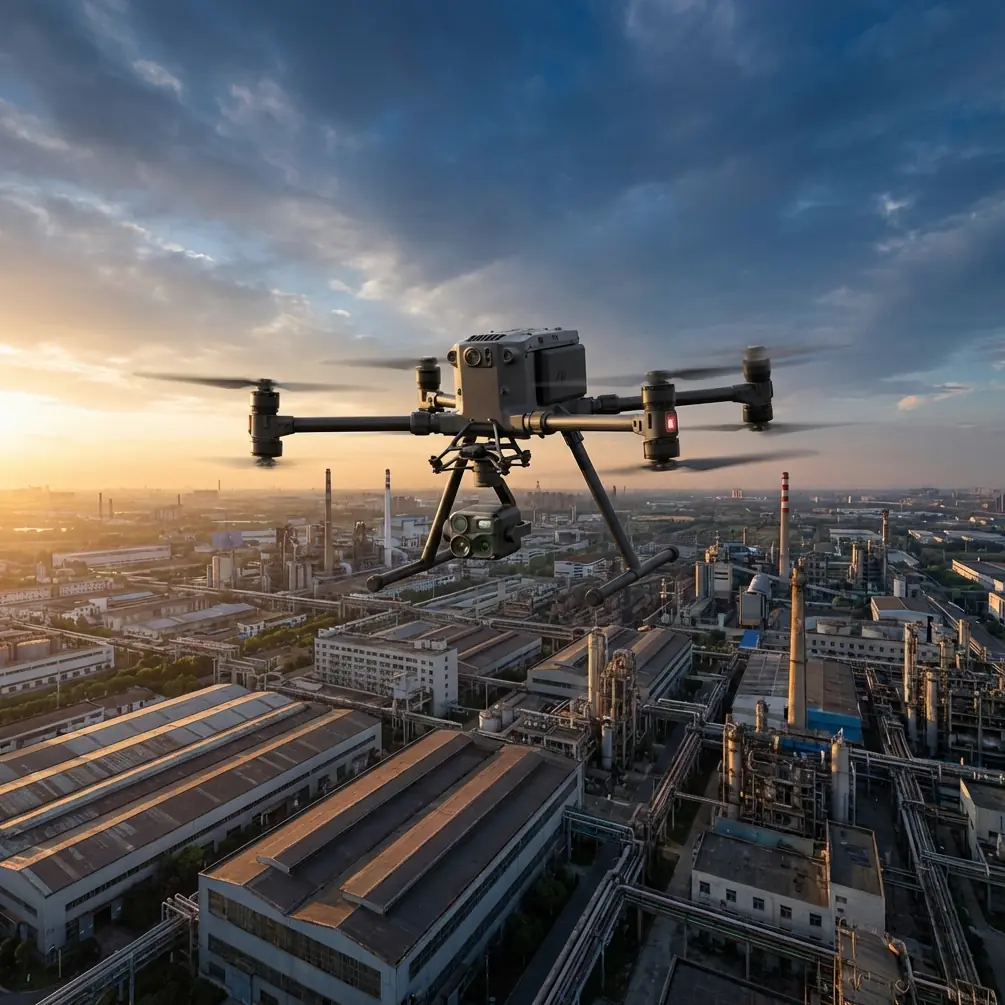
Matrice 4 for Windy Power Line Mapping: A Field-Led Case Study
META: Expert case study on using Matrice 4 for mapping power lines in windy conditions, with optimal flight altitude, thermal workflow, transmission reliability, and survey accuracy tips.
Power line mapping is rarely limited by camera resolution alone. In the field, the real constraint is usually stability: wind pushing the aircraft off corridor, conductor movement reducing image consistency, and terrain creating uneven stand-off distance from the asset. That is exactly where a Matrice 4 workflow needs to be judged—not on a spec sheet, but on whether it can deliver usable inspection and mapping data when the air is unsettled and the corridor is long.
This case study looks at how I would structure a Matrice 4 mission for a windy power line mapping scenario, with a practical focus on altitude selection, thermal interpretation, photogrammetry discipline, and link reliability. Since no fresh news event was supplied, the right approach is not to invent one. Instead, I will anchor this around the operational reality readers actually face: mapping energized infrastructure where wind, safety margins, and data accuracy pull in different directions.
The headline question is simple: what is the best flight altitude for Matrice 4 when mapping power lines in wind?
The short answer is that there is no universal fixed altitude. For most corridor capture work, I would treat roughly 35 to 55 meters above the conductor plane as the productive starting window, then adjust based on span height, crosswind strength, and whether the mission priority is geometric reconstruction, thermal anomaly review, or vegetation encroachment analysis. In stronger wind, that altitude window matters more than many operators realize.
Flying too low seems attractive because it increases visual detail, but over power lines it often makes the aircraft work harder than necessary. Small gusts become larger framing errors. Conductor sway appears exaggerated in the image set. Perspective changes between passes become more pronounced, which hurts downstream photogrammetry. When the drone is too close, the mission also becomes less forgiving around towers, shield wires, and abrupt elevation changes.
Flying too high creates a different problem. The corridor becomes easier to hold, but fine asset detail starts to compress. If your task includes identifying attachment hardware issues, insulator contamination patterns, or subtle heat irregularities, extra altitude can dilute what the payload is actually capable of seeing. The operator ends up with a neat-looking map that is weak where engineering decisions need confidence.
That is why I prefer an altitude logic rather than an altitude rule.
For linear power infrastructure in wind, the Matrice 4 performs best when the aircraft is high enough to smooth out control inputs, but low enough to preserve line-specific detail. In practical terms, I usually start test legs near 45 meters above the conductor level on a moderate day. That height tends to balance image overlap, lateral safety, and corridor readability. If gusting rises or tower turbulence becomes obvious near ridgelines, I step upward in small increments. If thermal or visual review of fittings becomes the priority, I come down—but only after confirming that the aircraft can maintain track without excessive yaw correction.
That last point is critical. Corridor mapping quality is often destroyed by yaw instability, not by poor optics. When the nose hunts in wind, overlap becomes inconsistent and reconstruction quality drops. A mission can still produce many sharp individual images and yet fail as a survey dataset. Matrice 4 operators working around power lines need to think like surveyors first and pilots second. The aircraft must capture repeatable geometry.
Photogrammetry over conductors adds another layer of difficulty. Power lines are thin, reflective, and not ideal subjects for clean 3D reconstruction on their own. The real value comes from mapping the corridor environment—towers, vegetation, access routes, terrain breaks, and asset context—while collecting enough line-adjacent detail to support engineering review. That means proper overlap discipline matters more than trying to fly dramatically close. In windy conditions, I would rather accept slightly less dramatic framing and maintain stable overlap than chase cinematic proximity and ruin the dataset.
Ground control points also deserve more attention than they usually get in transmission corridor discussions. If the deliverable includes measured corridor products, tower position validation, or change comparison over time, GCP placement becomes the quiet factor that separates a plausible map from a defensible one. On long power routes, operators sometimes rely too heavily on onboard positioning and forget that wind can amplify small capture inconsistencies. GCPs help stabilize the final model, especially where terrain undulates or tower spacing introduces repeated visual patterns. Even a capable platform benefits from disciplined field control.
The Matrice 4 also becomes more useful when the mission is designed as a mixed-sensor job rather than a single-camera run. Power lines in wind are not only a geometry problem. They are a thermal and reliability problem too. This is where thermal signature review can complement visual mapping. You are not expecting the thermal channel to reconstruct wires with survey-grade elegance. That is not the point. The point is to identify heat behavior that may suggest imbalance, resistance changes, connector trouble, or load-related irregularities while the visual dataset documents physical context.
Thermal work over lines is especially sensitive to stand-off distance and environmental interference. Wind cools surfaces and can mask developing patterns. Sun angle can muddy interpretation. That means thermal collection should not be treated as an afterthought pass flown at whatever altitude remains convenient. If thermal anomalies are part of the objective, I would split the mission logic: one corridor setup optimized for photogrammetry and another optimized for thermal review. Trying to make one pass do both perfectly usually gives you a compromise that satisfies neither.
Transmission security is another operational issue that becomes more relevant than people admit. Utility work often involves critical infrastructure, access roads, substation proximity, and asset condition records that should not be casually exposed. In that context, encrypted communications are not a marketing footnote. AES-256 matters because corridor inspection data can reveal sensitive layout and maintenance intelligence. When teams discuss platform suitability for utility environments, link protection should be in the same conversation as camera payload and endurance.
The same is true for control reliability. O3 transmission is operationally significant in power line work because these missions rarely happen in ideal open meadows with perfect visibility and no interference sources. Corridors cut across varied ground conditions, and transmission consistency directly affects how confidently the pilot can hold planned track, especially when crosswinds already demand more active correction. A strong link does not just reduce stress. It reduces the chance of abandoning a data run midway and having to resequence the corridor later, which is where accuracy and continuity often start slipping.
If the route is long, battery workflow becomes a planning issue rather than a convenience issue. Hot-swap batteries can save more time in utility operations than in many other drone use cases, because the corridor setup itself is usually the expensive part: access, observers, permit windows, and coordination with the asset owner. Preserving aircraft uptime between legs helps maintain mission consistency. More importantly, it reduces the temptation to stretch a battery segment too far in wind. I would much rather swap early and keep reserve margins healthy than push one more span and come home with compromised safety buffer.
Some operators ask whether BVLOS-style planning logic should influence Matrice 4 power line missions even when the actual flight remains within current line-of-sight requirements. My answer is yes. Absolutely. Even if the mission is not flown under a BVLOS authorization, the planning discipline from BVLOS operations is useful: segment the corridor, define emergency landing points, pre-brief signal weak zones, identify tower clusters that create awkward turns, and establish objective criteria for weather holds. Windy power line work punishes improvisation. The aircraft is only one part of the system. The mission architecture is what determines whether the final dataset is trusted.
Here is how that looks in practice.
On a moderate crosswind day, I would begin with a reconnaissance leg to establish actual turbulence behavior near structures. Not forecast wind. Real corridor wind. Tower geometry can create local effects that differ significantly from general weather reports. Once I have seen that behavior, I set my primary mapping altitude around that 45-meter-above-conductor baseline, adjust speed downward to protect overlap, and avoid aggressive lateral offsets unless terrain or right-of-way conditions require them.
If conductor sway is pronounced, I do not chase the line visually on every span. I prioritize smooth corridor geometry and predictable camera behavior. The finished model benefits more from consistency than from heroic hand-flying. If thermography is required, I schedule a separate pass with a different altitude and timing strategy, ideally when environmental conditions support cleaner interpretation. If the corridor includes dense vegetation encroachment zones, I may tighten altitude or alter angle slightly in those segments, but I do not let those local needs wreck the continuity of the whole run.
This is also where experienced crews separate themselves from enthusiastic but inconsistent operators. They do not ask only, “Can the Matrice 4 see the asset?” They ask, “At what altitude does the Matrice 4 produce repeatable, engineering-useful information under today’s wind conditions?” That question leads to better decisions every time.
For teams trying to standardize this workflow internally, my advice is to document altitude by outcome. Build a record of what altitude delivered the best thermal interpretation, what altitude gave the cleanest corridor model, and what altitude was easiest to fly safely in specific wind bands. After several missions, patterns emerge. You stop guessing. The aircraft becomes part of a repeatable utility inspection method instead of a flying camera with occasional success.
If you want to compare field workflows for your corridor environment, you can message our utility UAV team here and discuss the mission profile directly.
The Matrice 4 is not valuable because it can simply fly near power lines. Many drones can do that. Its real value comes from how well it can support disciplined corridor operations where transmission reliability, encrypted communications, thermal review, and photogrammetric consistency all need to work together. In windy conditions, the best altitude is the one that protects data integrity first. For many jobs, that starts around 35 to 55 meters above the conductor plane, with 45 meters as a strong practical benchmark. From there, every adjustment should be tied to mission objective, not pilot instinct.
That is the difference between collecting images and producing a utility-grade result.
Ready for your own Matrice 4? Contact our team for expert consultation.