
Mapping Solar Farms in Extreme Heat: What Matrice 4 Changed
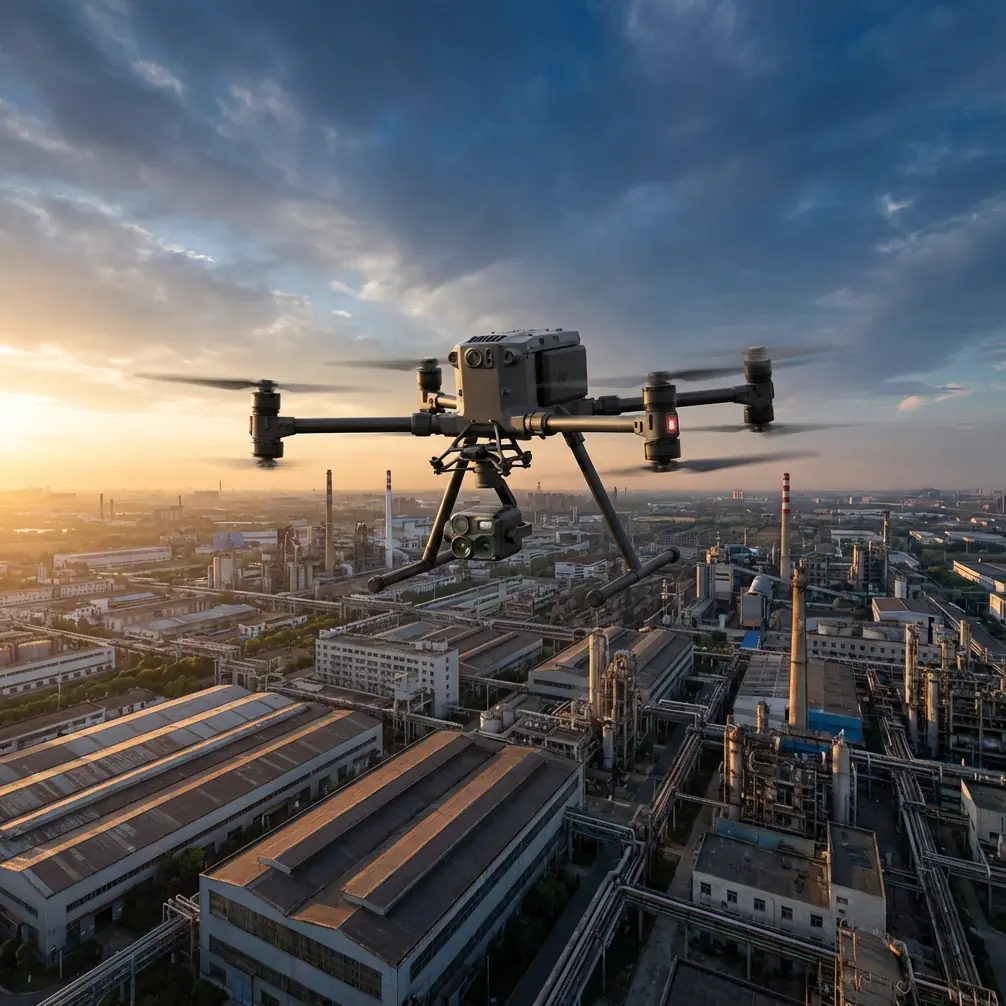
Mapping Solar Farms in Extreme Heat: What Matrice 4 Changed on a Real-World Survey Workflow
META: A field-driven Matrice 4 case study for solar farm mapping in extreme temperatures, covering thermal signature capture, photogrammetry workflow, O3 transmission, AES-256 security, GCP strategy, hot-swap batteries, and BVLOS-ready operations.
By James Mitchell
Most drone articles about inspection aircraft stay safely theoretical. Field specs. Sensor talk. A few neat workflow promises.
That is not how solar mapping feels at 2 p.m. on a utility-scale site when the ground is throwing heat back at you, battery turnover is constant, and the difference between a clean thermal dataset and a wasted day comes down to timing, transmission stability, and whether your crew can keep moving without breaking continuity.
That was the problem set behind one of our tougher Matrice 4 deployments: mapping a large solar farm during extreme temperatures while collecting both photogrammetry and thermal data that would actually stand up in review.
The interesting part is that the lessons from this job do not sit in isolation. They line up with a broader reality in today’s UAV environment: airspace reliability, signal control, and operational trust matter more than ever. One recent example outside the inspection world came from the University of Alabama, which selected D-Fend Solutions’ EnforceAir system to protect campus airspace, research infrastructure, and athletic events. That decision was not about solar mapping, obviously. But it reflects the same operational truth we deal with on commercial sites every week: drone activity now exists inside managed, security-conscious environments, and any platform used for professional work has to fit that reality.
For solar operators, EPC teams, and inspection providers, that context matters when choosing something like the Matrice 4.
The assignment: more than “fly and map”
The brief sounded simple enough. Build a current site model, verify panel field layout, identify thermal anomalies, and do it in heat that was already punishing crews before noon.
Anyone who has mapped solar farms knows the trap. The site looks repetitive, but it is not forgiving. Long rows create visual monotony for standard RGB processing. Heat shimmer can degrade image consistency. Reflections complicate inspection angles. Thermal collection windows can narrow fast as panel behavior shifts across the day. And once temperatures climb, battery management stops being a background task and becomes part of mission design.
On earlier projects, we had to make too many compromises. We would protect battery margins by shortening legs, then pay for that in extra launches and uneven overlap. Or we would get the map done but lose confidence in the thermal layer because the aircraft workflow encouraged treating thermal as an add-on rather than a coordinated dataset.
Matrice 4 changed that for us less through a single headline feature and more through how the platform reduced friction across the whole mission.
Why extreme heat exposes weak workflows
A solar farm in harsh conditions is a useful truth test for any enterprise drone. Not because it is dramatic, but because it is relentless.
You need consistent photogrammetry passes. You need reliable thermal signature capture. You need stable command and video links over long rows that may stretch well beyond the operator’s immediate visual comfort zone, especially on very large sites preparing for more advanced BVLOS-oriented workflows. You need battery swaps that do not drag operations into long dead periods. And you need data security that fits clients who are increasingly serious about infrastructure exposure.
If one part of that chain breaks, the whole survey slips.
The old habit in this industry was to evaluate aircraft in pieces: payload, endurance, camera, range. The field does not work that way. Solar mapping is cumulative. Reliability compounds, but so does friction.
What Matrice 4 solved first: continuity on the flight line
The first practical improvement was hot-swap batteries.
That sounds mundane until you have spent days losing productive minutes to restart cycles, mission interruptions, and handoff errors when crews are already under weather pressure. On this project, hot-swap capability mattered because it preserved rhythm. We were not just trying to keep an aircraft airborne. We were trying to keep a repeatable survey cadence intact across a very large site.
In extreme temperatures, crews slow down naturally. Electronics need more attention. Human error creeps in during rushed battery changes. A hot-swap workflow reduces the chance that your field team has to rebuild the mission mentally every time power cycles. That operational significance is bigger than the spec sheet suggests. It protects consistency in overlap planning, route progression, and anomaly logging.
For photogrammetry, continuity is not a luxury. It affects whether your final reconstruction behaves like one site or several stitched compromises.
Thermal signature capture is only useful if it is contextual
The second improvement was how naturally we could pair thermal and visual collection in one coherent workflow.
This is where many solar inspections go wrong. Teams collect thermal imagery, identify hotspots, and stop there. But a thermal anomaly without clean positional context can create more questions than answers. Is the issue tied to a specific module string? Is it repeatable? Does it align cleanly to the orthomosaic and engineering base layers? Can the asset owner hand the finding to maintenance without another site walk?
With Matrice 4, we approached thermal as a mapped layer, not a side mission. That meant planning around thermal signature quality and photogrammetric integrity together.
We also leaned harder on GCPs than some teams do on solar sites. Ground control points still matter when the asset owner wants high-confidence deliverables rather than “close enough” visuals. In repetitive environments like panel arrays, GCP-backed control gives the model better discipline. That matters when you are correlating thermal findings to exact positions across thousands of modules.
The operational significance here is straightforward: thermal data becomes actionable only when location confidence is high. Otherwise, crews end up chasing heat signatures across visually repetitive rows.
O3 transmission matters more on solar sites than many expect
One of the easiest details to underappreciate is transmission reliability.
On large energy sites, distance is only part of the challenge. The environment itself can work against you. Heat distortion, long linear corridors, changing terrain, metallic infrastructure, and sheer site scale all put pressure on link stability. That is why O3 transmission was not a marketing bullet for us. It was part of the reason the mission remained efficient.
A stable link does two things in practice. First, it preserves confidence in aircraft control and live view during extended runs. Second, it reduces the subtle decision fatigue that builds when pilots are constantly second-guessing connection quality. On a difficult day, that fatigue can be the difference between disciplined collection and avoidable rework.
And this connects back to the broader security conversation in the UAV market. When the University of Alabama chose EnforceAir to protect campus airspace, research infrastructure, and athletic events, it underscored how managed airspace is becoming normal around critical and high-visibility environments. Commercial drone operators are increasingly working in places where security awareness is not optional. A platform with strong communications architecture and enterprise-grade protections fits that shift better than hobby-derived workflows.
AES-256 is not just an IT checkbox
The same goes for AES-256.
For a solar farm operator, encrypted links may seem like a back-office concern until you remember what modern drone missions can reveal: infrastructure layout, asset condition, maintenance priorities, and operational patterns. Utility-scale energy data has value, and clients know it.
On this project, AES-256-level protection was part of the reason stakeholders were comfortable with the drone-based workflow in the first place. Not because encryption changes image quality, but because it reduces resistance from IT, operations, and asset management teams who are rightly cautious about aerial data capture over infrastructure.
This is one of the biggest changes in professional UAV adoption. The aircraft is no longer judged only by what it sees. It is judged by how responsibly it fits into the client’s operational environment.
That same principle sits behind universities and other institutions taking campus airspace seriously. When Alabama moved to deploy a counter-drone system to protect campus operations, research infrastructure, and athletic events, it signaled something the commercial side should pay attention to: airspace governance is tightening. Enterprise drone work that ignores security expectations will feel increasingly out of step.
The past challenge Matrice 4 helped us leave behind
Before this platform, our hardest solar jobs often created one recurring compromise: choose speed or confidence.
If we pushed for speed, thermal review became thinner than we liked. If we pushed for confidence, the day dragged, battery turnover became messy, and site teams lost patience waiting for enough clean passes to justify the mobilization.
Matrice 4 did not magically remove field constraints. Extreme heat still punishes everyone. But it gave us a more forgiving operating envelope.
That showed up in practical ways:
- We maintained stronger momentum through battery rotation because hot-swap handling reduced interruptions.
- We held a more reliable live link across long site sections, where O3 transmission helped sustain control confidence.
- We treated thermal capture as part of a mapping-grade workflow, rather than as isolated spot inspection.
- We aligned deliverables with stricter client expectations around data handling through AES-256 security.
- We used GCP-supported photogrammetry to keep positional confidence high in a visually repetitive environment.
The result was not simply faster collection. It was less rework. On large solar projects, that is the metric that actually protects margins.
Where BVLOS thinking enters the picture
Many solar sites are perfect candidates for more advanced operational models, including BVLOS-oriented planning where regulations and approvals support it. Even when a current mission remains within traditional constraints, the platform choice should not trap you in yesterday’s workflow.
This is another reason the Matrice 4 conversation matters. A solar farm is expansive, linear, and operationally repetitive in a way that rewards systems built for scalable missions. If your team expects to grow into longer corridor-style surveys, larger energy portfolios, or remote asset programs, you want an aircraft that does not need to be replaced the moment your operation matures.
That does not mean every project becomes BVLOS tomorrow. It means the workflow should be built with that future in mind.
What the client noticed
Clients rarely praise transmission protocols or battery architecture directly. They notice the downstream effect.
On this job, what they noticed was a cleaner handoff: fewer questionable anomalies, better map consistency, and less need for clarifying follow-up after the initial review. The maintenance side appreciated being able to move from thermal issue to exact location faster. The project management side appreciated that the drone team did not keep inventing reasons to revisit the same sections of the site.
That is what good enterprise hardware should do. It should disappear into the workflow and leave behind usable data.
The larger takeaway for Matrice 4 buyers in energy and infrastructure
If your work involves utility-scale solar, the Matrice 4 deserves to be judged less as a camera platform and more as an operational system.
The aircraft’s value shows up when conditions are difficult, not when the weather is mild and the site is small. Extreme temperatures, repetitive panel geometry, infrastructure-sensitive clients, and long mapping legs expose whether a platform is truly built for commercial field use.
The Alabama security story may seem distant from a solar mapping case study, but it points in the same direction. Institutions are protecting airspace and infrastructure more deliberately. Commercial operators are being pulled into a more mature drone ecosystem where communications resilience, secure data handling, and predictable operations matter as much as raw imaging capability.
That is exactly the environment where Matrice 4 makes sense.
If you are planning a similar workflow and want to compare mission design options, thermal mapping strategy, or site-specific setup details, you can message our field team here.
For us, the biggest change was simple: the aircraft let the crew stay focused on the survey instead of constantly managing the platform. On a solar farm in extreme heat, that is not a minor advantage. It is the dividing line between collecting data and building a deliverable the client can actually use.
Ready for your own Matrice 4? Contact our team for expert consultation.