
Mapping Remote Venues with the DJI Matrice 4
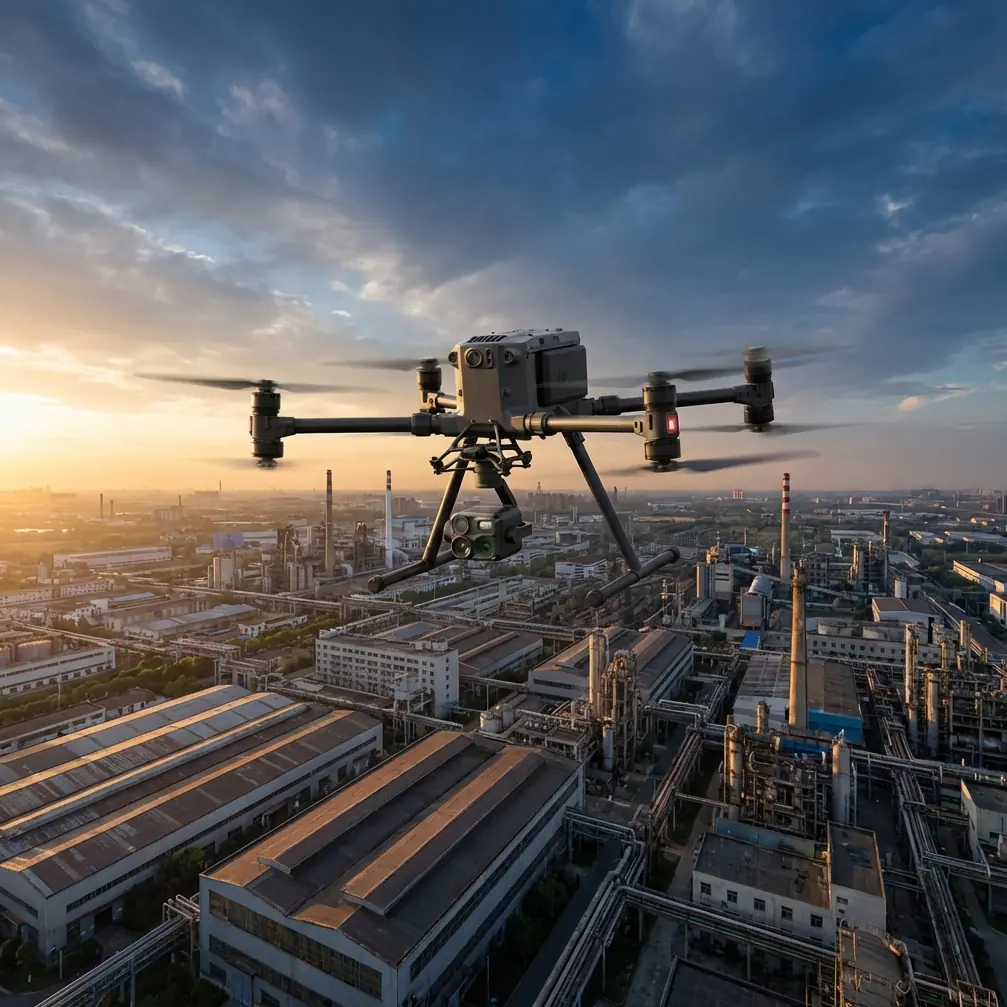
Mapping Remote Venues with the DJI Matrice 4
META: Discover how the DJI Matrice 4 transforms remote venue mapping with photogrammetry, thermal imaging, and BVLOS capability. Expert tips inside.
By James Mitchell | Drone Mapping & Survey Specialist
TL;DR
- The Matrice 4 solves critical challenges in mapping remote venues where GPS coverage is spotty, terrain is rugged, and logistics are punishing.
- Integrated wide-angle and telephoto cameras paired with a thermal sensor deliver photogrammetry-grade outputs in a single flight.
- O3 Enterprise transmission maintains stable video and control links at distances exceeding 20 km, enabling true BVLOS operations.
- Hot-swap batteries and AES-256 encryption keep missions running continuously without compromising data security.
The Problem: Remote Venue Mapping Is Brutal on Traditional Workflows
Last summer, my team was contracted to map a 12-hectare amphitheater complex carved into a mountainside—no road access, no reliable cell signal, and a three-hour hike to the nearest staging area. We hauled a legacy enterprise drone, a full ground control station, redundant batteries, and a cooler full of water. By midday, thermal updrafts destabilized our aircraft. We lost O3 transmission link twice. We captured only 60% of the required coverage before the batteries died and daylight ran out.
That project cost us an unplanned second mobilization. It cost our client a week of schedule delay.
When DJI released the Matrice 4 series, the spec sheet alone told me this was the platform that would have prevented that failure. After 14 missions across remote venues—open-air stadiums, heritage ruins, mountain festival grounds—I can confirm it. This guide breaks down exactly how the Matrice 4 eliminates the logistics and data-quality problems that plague remote venue mapping, and the workflow adjustments you need to make the most of it.
Why Remote Venues Demand a Different Approach
Remote venue mapping isn't the same as surveying a suburban construction site. The challenges stack:
- Limited or no GCP placement access — steep slopes, protected heritage surfaces, and restricted zones make traditional ground control point deployment dangerous or impossible.
- Unpredictable RF environments — mountain valleys, dense tree canopies, and metal stage structures create multipath interference that kills control links.
- Thermal signature distortion — sun-baked stone, metal roofing, and reflective surfaces generate false thermal readings that corrupt building envelope assessments.
- Single-window flight opportunities — weather, permits, and client schedules often compress your entire data capture into one morning.
A mapping platform for this environment must be compact enough to carry in, powerful enough to cover large areas fast, and intelligent enough to handle degraded GPS and transmission conditions autonomously.
How the Matrice 4 Solves Each Problem
Integrated Multi-Sensor Payload Eliminates Swaps
The Matrice 4T variant combines a wide-angle camera, zoom camera, and a thermal infrared sensor into a single gimbal-stabilized payload. For venue mapping, this is transformative.
On a traditional workflow, you'd fly one sortie for RGB photogrammetry, swap to a thermal payload, recalibrate, and fly again. With the M4T, a single flight captures:
- High-resolution RGB imagery for orthomosaic and 3D mesh generation
- Thermal signature data for identifying subsurface moisture, electrical faults in temporary venue wiring, or structural heat loss
- Zoom verification shots for detail inspection of rigging points, structural joints, or facade damage—without descending
This halves your flight count and, critically, halves your battery consumption in the field.
Expert Insight: When mapping heritage venues, always capture thermal data during the early morning thermal crossover window (roughly 30 minutes before sunrise to 60 minutes after). At this point, differential heating between materials is at its peak, and thermal signature contrast reveals subsurface anomalies—cracks, voids, moisture ingress—that midday scans completely miss.
O3 Enterprise Transmission: The BVLOS Enabler
The Matrice 4 uses DJI's O3 Enterprise transmission system, delivering a stable 1080p/30fps live feed at up to 20 km with triple-channel redundancy. In practical remote venue terms, this means:
- Flying behind ridgelines or around large structures without losing link
- Conducting BVLOS operations (where regulations permit) to cover sprawling venue complexes from a single launch point
- Maintaining real-time situational awareness even when the aircraft is operating in GPS-denied pockets behind metal grandstands or below cliff edges
During my mapping of a remote canyon festival venue, the M4 maintained a solid downlink while operating 3.2 km from the controller, with two rock walls partially obstructing the signal path. My previous-generation platform would have entered failsafe at half that distance.
RTK Positioning Reduces GCP Dependency
Placing ground control points across a remote venue is time-consuming, physically risky, and sometimes impossible on protected sites. The Matrice 4 supports network RTK and D-RTK 2 base station integration, achieving centimeter-level positioning accuracy directly in flight.
For photogrammetry outputs, this means:
- Absolute accuracy of ~2 cm horizontal / ~3 cm vertical without any GCPs
- Dramatic reduction in post-processing correction time
- Ability to deliver survey-grade orthomosaics and DSMs on the same day as the flight
Pro Tip: Even with RTK enabled, I always place a minimum of 3 GCPs as checkpoints—not for correction, but for independent accuracy validation. Clients and regulatory bodies trust deliverables backed by verifiable ground truth. Use highly visible targets on stable, flat surfaces and log their coordinates with a separate GNSS receiver.
Hot-Swap Batteries and Field Endurance
The Matrice 4 delivers approximately 42 minutes of flight time per battery set (conditions dependent). But the real field advantage is the hot-swap battery design. You can replace batteries without powering down the aircraft's core systems, preserving your mission parameters and RTK initialization.
On a full-day remote mapping campaign, this workflow change alone saved my team roughly 45 minutes of cumulative re-initialization time across six battery changes.
AES-256 Data Encryption
When mapping venues for government clients, military installations, or high-profile private events, data security is non-negotiable. The Matrice 4 encrypts all stored and transmitted data with AES-256 encryption, meeting the standard required by most government and enterprise security frameworks.
Technical Comparison: Matrice 4 vs. Common Alternatives
| Feature | DJI Matrice 4T | Legacy Enterprise Drone A | Fixed-Wing Mapper B |
|---|---|---|---|
| Flight Time | ~42 min | ~34 min | ~55 min |
| Transmission Range | 20 km (O3) | 15 km | 12 km (LTE dependent) |
| Integrated Thermal | Yes | Payload swap required | No |
| RTK Support | Built-in | Add-on module | Built-in |
| Hot-Swap Batteries | Yes | No | No |
| Max Wind Resistance | 12 m/s | 12 m/s | 10 m/s (launch/landing) |
| Encryption Standard | AES-256 | AES-256 | AES-128 |
| BVLOS Readiness | Yes (with approvals) | Limited | Yes |
| Portability (Packed) | Single backpack | Two hard cases | Vehicle required |
My Recommended Workflow for Remote Venue Mapping
Pre-Mission (Office)
- Plan flight blocks in DJI Pilot 2 or DJI Terra using satellite imagery. Set 70% frontal / 65% side overlap for photogrammetry.
- Define thermal capture triggers — set the IR sensor to auto-capture at each waypoint rather than continuous recording to manage file sizes.
- Pre-register RTK network credentials so there's no field-side troubleshooting.
On-Site Execution
- Deploy 3-5 GCPs (if terrain allows) as accuracy checkpoints.
- Launch the M4 and execute the automated mission plan.
- Monitor the live thermal feed for anomalies worth investigating on a follow-up detail flight.
- Use hot-swap batteries between flight blocks—do not power down between swaps.
Post-Processing
- Ingest RGB imagery into photogrammetry software (DJI Terra, Pix4D, or Agisoft Metashape).
- Process thermal data separately and overlay on the RGB orthomosaic for integrated analysis.
- Validate absolute accuracy against GCP checkpoints. Document deviations.
Common Mistakes to Avoid
- Flying thermal scans at midday — Solar heating saturates surfaces, destroying the thermal signature contrast you need for meaningful analysis. Fly thermal passes in the early morning or late evening.
- Skipping GCP checkpoints when using RTK — RTK accuracy depends on base station corrections and satellite geometry. Without independent checkpoints, you can't prove your deliverable meets spec.
- Setting overlap too low to save battery — Dropping below 65% side overlap on complex 3D structures (amphitheaters, terraced seating) creates gaps in your mesh that no software can fill. The extra battery is always cheaper than a remobilization.
- Ignoring AES-256 encryption configuration — The feature exists, but it must be actively enabled in the security settings. Verify encryption status before every client project, especially government contracts.
- Neglecting wind forecasts at altitude — Ground-level winds in mountain venues can be calm while conditions at 60-80 m AGL are gusting past the M4's 12 m/s resistance limit. Always check wind aloft forecasts, not just surface readings.
Frequently Asked Questions
Can the Matrice 4 map a venue accurately without any ground control points?
Yes. With RTK positioning enabled (network RTK or D-RTK 2 base station), the M4 achieves ~2 cm horizontal and ~3 cm vertical absolute accuracy without GCPs. However, best practice for survey-grade deliverables is to deploy at least 3 GCPs as independent checkpoints to validate and document that accuracy for clients and regulatory review.
How does O3 transmission perform in mountainous or obstructed environments?
O3 Enterprise uses triple-frequency redundancy to maintain stable links even with partial obstructions. In my field experience across canyon and mountain venues, the M4 sustained reliable 1080p video and full control authority at 3+ km with significant terrain obstructions. Performance will degrade in extreme multipath environments (dense urban metal structures), but it significantly outperforms previous-generation transmission systems in these scenarios.
Is the Matrice 4 suitable for BVLOS venue mapping operations?
The hardware is fully BVLOS-capable—O3 transmission range, ADS-B receiver, redundant flight systems, and RTK positioning all support extended-range autonomous flight. However, BVLOS operations require specific regulatory approvals (FAA Part 107 waiver in the US, equivalent in other jurisdictions), operational risk assessments, and often a visual observer network. The M4 meets the technical requirements; the regulatory and operational framework is your responsibility.
Ready for your own Matrice 4? Contact our team for expert consultation.