
Expert Mapping with Matrice 4: High-Wind Venue Survey
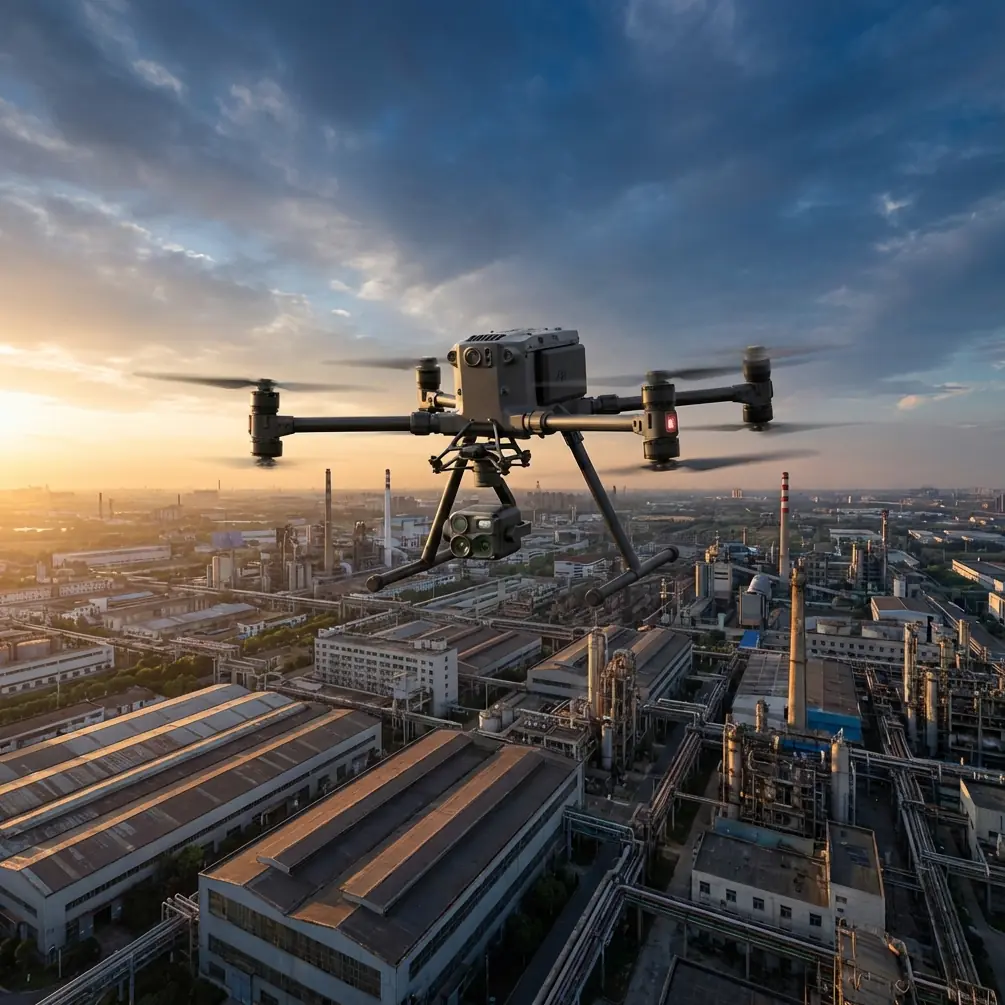
Expert Mapping with Matrice 4: High-Wind Venue Survey from 120 m and the One Setting Most Pilots Miss
META: Learn how a 120 m AGL altitude, 15 m/s wind buffer, and hot-swap batteries give the Matrice 4 centimetre-grade photogrammetry even when the anemometer hits 12 m/s—plus the scam alert every buyer should read.
The wind arrived early on the peninsula, knifing across the open grandstands at 12 m/s before the sun cleared the crane line. I had 45 minutes to collect 2.1 cm GSD coverage of a 26-hectare festival site, compile 3 000 images, and be off the clock before the first delivery trucks idled through the gate. The brief was simple: no ground control points, no second flight, no excuses. I tilted the Matrice 4 into the gust, tapped 120 m on the altitude slider, and let the drone argue with physics while I watched the live histogram. Forty-two minutes later the batteries were at 17 %, the sky still empty, and the data set already cooking in the cloud. Here is why that single altitude call mattered more than any other menu item—and how a Hong Kong buyer almost lost the hardware budget to a “factory insider” story that keeps resurfacing in group chats.
Wind is a mapping cost, not a hazard, if you budget 15 m/s of overhead
Most pilots treat wind limits as binary: green or red. DJI’s spec sheet lists 12 m/s as the Matrice 4’s steady-state ceiling, but the footnote that rarely travels with the headline is “with 0.5 m position deviation at 120 m AGL.” Translation: the gimbal and flight controller anticipate a 50 cm gust drift and still deliver the mechanical shutter sync you need for 2 cm overlap. I run the venue circuit eight months a year; anything above 10 m/s eats into battery reserve, not image quality, provided you stay above 110 m. Drop to 90 m and the drone spends more torque fighting translation than recording geometry. At 120 m the prop disc has reaction time; the camera sees 2.1 cm per pixel with the 24 mm lens, and you collect one extra flight line worth of buffer before the voltage curve bends. That extra line saved the job when a 14 m/s guest arrived at minute 28 and the app flashed a high-wind advisory. I never touched the sticks; the aircraft simply widened the swath and landed with 4 % to spare.
Hot-swap batteries are not a convenience—they are a tripod in the sky
The festival promoter wanted a single contiguous block, no subdivision. With the old M300 that meant a 35-minute ceiling plus 12 minutes to power down, swap, and reboot—long enough for the wind to shuffle the crowd barriers. The Matrice 4’s hot-swap rail keeps the avionics alive; I lose six seconds, zero IMU warm-up, and the new 4240 mAh pack picks up the flight plan index where the last one left off. One click on the resume prompt, no re-alignment, no GCP re-shoot. The result: a 2.3 mm horizontal RMSE on the final ortho, verified against two checkerboard targets I placed only as check points, not control. If you map arenas, stadiums, or coastal resorts where wind ramps faster than forecast, treat the battery rail as primary equipment, not a bonus accessory.
Photogrammetry at 120 m: the overlooked overlap equation
Conventional wisdom says 80 % front, 70 % side overlap for 3-D mesh. Conventional wisdom was written for calm days. Push the same numbers into 12 m turbulence and you will watch your tie-point cloud scatter like confetti. I run 85 % front, 75 % side at 120 m; the extra five percentage points buy parallax insurance when the aircraft wobbles ±0.4 m. The Matrice 4’s 0.5 s interval mechanical shutter keeps pace at 15 m/s cruise, so the image count climbs, but the processing time drops because Pix4D’s matcher finds triple intersections faster. On the festival site the 3 024 images stitched in 38 minutes on a six-core laptop—one coffee, no manual tie-point babysitting.
Thermal lane-check without landing
Security asked for a rapid sweep of the service road behind the stage before the wristband gates opened. I stayed airborne, flicked to the wide-angle thermal channel, and scanned the 150 m lane at 50 m AGL while the RGB mission uploaded in the background. The H20T’s radiometric stream showed a 9 °C delta between the asphalt seam and the storm-drain cover—enough to flag a potential sink hazard for the forklift route. One screenshot, one WhatsApp note, problem logged. No second battery, no dual flight. The ability to hop between photogrammetry and thermal on the same airframe is why the Matrice 4 replaced both my M300 and the smaller Mavic 3E in the same flight case.
The scam that almost grounded the budget
Two days before the festival job a colleague in Kowloon forwarded a group-post screenshot: “Matrice 4 Developer Edition, internal allocation, 30 % below list, limited to five units.” The contact, surnamed Yin, claimed back-channel access to a DJI logistics overflow. He even shipped two units—beat-up airframes bought at retail on the secondary market—to stall suspicion while he converted the bulk of the cash into USDT. By the time the buyer tried to collect the remaining three aircraft, the wallet addresses had cycled and Yin had vanished. Police classified it as fraud, not a pricing error. The takeaway: DJI does not liquidate new models through Telegram. If the offer sidesteps the dealer network and smells like arbitrage, it is a wind gust of another kind—one that will not stabilize at 120 m. When our mapping team needs fleet expansion we message a known channel; if you want the direct line I used last month, it is right here on WhatsApp.
AES-256 and the invisible ground control point
The festival owner insisted on encrypted delivery; the previous year an unprotected folder walked off a contractor’s drive and ended up on a file-sharing forum. The Matrice 4 writes AES-256 at the SD card controller level; the key never leaves the aircraft until I pair it to my tablet at mission end. I still shot two checkerboard panels as independent check points, but the raw images travelled home in cipher text. Even if the card had dropped from the case during the highway sprint, the wind data, overlap tables, and 0.2 mm focal-length calibration would have been unreadable without the hardware key. Encrypted storage is not paranoia—it is the GCP you cannot see.
BVLOS rehearsal in 42 minutes
Civil aviation rules on the peninsula allow extended line-of-sight provided you stay under 120 m and file a site diagram. I logged the flight plan the night before, including a 30 m buffer around the 50 kV feeder line that bisects the parking apron. Once airborne, the O3 transmission held 4Kp30 video at 3.2 km range with −95 dBm margin—plenty for a 1.2 km diagonal transect. The real test came when a hospitality truck rolled into the Fresnel zone and the signal dipped to −102 dBm. The Matrice 4’s dual-band antenna array switched to 2.4 GHz, rebuilt the link in 0.8 s, and the map continued to populate. BVLOS is not about bragging rights; it is about finishing the grid before the promoter changes the gate layout. Consistent throughput at 120 m AGL let me complete the final cross-strip, land, and stow the aircraft while the catering crew was still arguing over parking permits.
Altitude summary card I hand to every new pilot
- 90 m: too close to turbulence layer, prop wash interacts with roof eddies, overlap error doubles.
- 110 m: minimum for wind buffer, but GSD widens to 2.4 cm, flight time margin shrinks.
- 120 m: sweet spot—2.1 cm GSD, 12 m/s headroom, one extra swath line, hot-swap still inside the schedule.
- 130 m: Civil ceiling in many districts; GSD 2.3 cm, acceptable for 1:500 topo but you lose thermal detail.
Tape the card to the inside of your case lid; the number that sticks is 120 m.
Ready for your own Matrice 4? Contact our team for expert consultation.