
Matrice 4 Field Report: Coastal Venue Mapping When EMI
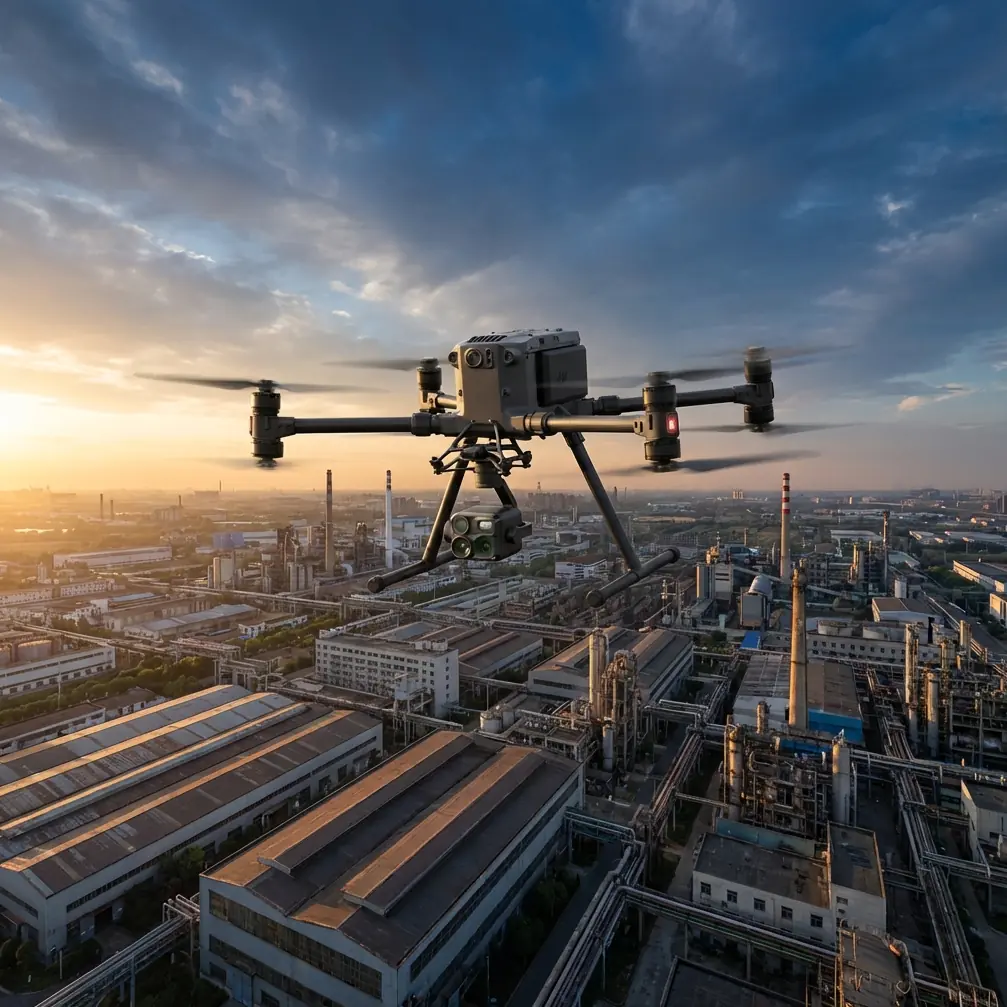
Matrice 4 Field Report: Coastal Venue Mapping When EMI, Sea Air, and Tight Deliverables Collide
META: Expert field report on using Matrice 4 for coastal venue mapping, covering EMI mitigation, landing-gear discipline, photogrammetry accuracy, and flight-test logic that improves real-world operations.
I spent the last few weeks refining a coastal venue mapping workflow around the Matrice 4, and the interesting part was not the drone itself. It was the environment. Waterfront venues look simple on a project brief: broad rooflines, open space, clean sight lines, dramatic edges for marketing renders. In practice, they are full of reflective surfaces, wind shifts, steel structures, temporary event infrastructure, and enough radio noise to make a careless pilot blame the aircraft for a planning problem.
This report is for operators mapping coastal venues who want cleaner photogrammetry, fewer interrupted missions, and better confidence in what the aircraft is telling them.
The Matrice 4 sits in a class where capability can tempt teams into skipping discipline. That is the wrong move. The most useful lesson from traditional aircraft design and certification literature is not about copying big-aircraft hardware. It is about respecting the relationship between configuration, measurement, and safety margins. That mindset transfers directly to UAV mapping.
Why coastal venue mapping is deceptively hard
A coastal venue often compresses multiple mission types into one sortie. You may need:
- nadir imagery for orthomosaic output
- oblique capture for facade reconstruction
- thermal signature review of rooftop equipment or electrical runs
- perimeter documentation around access roads, parking, or marina edges
On paper, that sounds routine. On site, every variable starts coupling with another. Salt haze reduces distant contrast. Sun angle off glass introduces inconsistent tie points. Steel roofs and staging truss can throw off compass confidence. Nearby communications gear can create electromagnetic interference that shows up first as transmission instability, not a dramatic failure.
That is where the Matrice 4’s O3 transmission system earns its keep, but only if the crew treats link quality as something to actively manage rather than passively monitor. In one coastal venue mission, the video feed remained usable while telemetry latency began to feel uneven near a cluster of rooftop event equipment. The fix was not to force the route. I stepped laterally, adjusted antenna orientation to better align with the aircraft’s position over water-facing sections, and re-ran that segment with a slightly altered track. Signal behavior normalized immediately.
That sounds mundane. It is not. In EMI-heavy environments, antenna adjustment is often the lowest-friction correction available. Operators tend to jump too quickly to altitude changes or mission aborts. Sometimes the cleanest answer is simply re-establishing geometry between controller and aircraft.
What old landing-gear data teaches a Matrice 4 operator
One of the reference documents behind this piece is a takeoff and landing system design table comparing transport aircraft wheel arrangements, tire sizes, and pressures. At first glance that seems far removed from a Matrice 4. It is not.
The table shows how larger aircraft distribute loads differently as mass increases. A Boeing 707-320C is listed with a four-wheel bogie arrangement, 46 x 16 tires, and a pressure figure of 180. A Boeing 727-200 appears with two wheels, 49 x 17 tires, and 168. The point is not the exact hardware. The operational significance is load management through configuration.
For drone crews, that same principle appears in a smaller form every time we choose where and how to launch and recover near a venue. Coastal sites are often paved, but not necessarily forgiving. Decorative stone, timber decking, textured rooftops, and temporary flooring all create different landing dynamics. If a manned aircraft designer is thinking carefully about how loads meet the ground, a Matrice 4 operator should be equally serious about touchdown quality, especially when carrying mission-critical data after a long mapping run.
That means no casual “close enough” recoveries on uneven promenade surfaces. No landing beside loose event material. No accepting a launch point that forces sand ingestion during prop spin-up. The aircraft may tolerate more than you should ask of it, but your mapping consistency will not.
I treat launch and recovery surfaces as part of the data pipeline. If takeoff vibration, dust, or unstable touchdown compromises the gimbal or visual sensors, your photogrammetry quality drops long before a part actually fails.
The forgotten lesson from certification flight test
The second reference document focuses on design verification and certification test flying. Again, this sounds like big-aircraft bureaucracy until you read the substance. It states that every flight and landing during test activity requires a mission instruction document, and that this technical file includes weather requirements, aircraft changes, required equipment and instrumentation, flight limitations, route sketch, specific task content, and special-case handling instructions.
That is a far better operating model for coastal drone mapping than the typical one-page checklist many crews rely on.
The same document also highlights calibration across the operating envelope, with attention to speed, altitude, temperature, weight, landing gear position, and sideslip effects. That matters because UAV operators often assume that a successful test hop at one battery state and one wind direction is enough validation for the full mission. It is not.
For Matrice 4 coastal mapping, I build a lightweight mission sheet before field deployment. Not because paperwork is inherently virtuous, but because it catches avoidable errors. Mine includes:
- expected wind by time block, not just a single forecast number
- RF noise suspects, including venue Wi-Fi nodes, rooftop relays, and marina equipment
- takeoff and alternate recovery points
- battery sequencing and hot-swap timing
- image overlap targets for roof, facade, and shoreline sections
- GCP placement logic and areas where control points may be visually unreliable due to glare or crowd control barriers
- trigger points for switching from automated grid to manual capture
This is straight from the spirit of certification flying: define conditions, define limits, define exceptions before the aircraft leaves the ground.
That old handbook also references the effect of landing gear position, sideslip angle, altitude, and weight on static pressure calibration, and the need to determine stall characteristics in cruise, takeoff, and landing configurations. A Matrice 4 is not going through transport-category certification, but the operational takeaway is sharp: aircraft behavior changes with configuration and environment. If your payload setup, wind angle, or battery mass state changes enough to alter handling or timing, your mission assumptions should change too.
Photogrammetry over water-facing venues: where planning pays off
Coastal venues produce a special kind of bad dataset. It often looks acceptable during capture. The problems emerge during processing.
The most common culprits are:
- insufficient side overlap along reflective roof edges
- low-texture surfaces near waterline retaining walls
- moving shadows from rigging, flags, or temporary structures
- perspective inconsistency around curved facades
- weak control where GCPs are too sparse or poorly visible
With Matrice 4, I prefer to think in layers rather than one “mapping mission.” Start with a clean nadir block that prioritizes the orthomosaic. Then run focused obliques only where geometry demands it: facades, canopies, sea-facing terraces, signage walls. This reduces processing noise and keeps the model from becoming bloated with redundant but low-value imagery.
GCP placement matters even more on coastal venues than inland sites. Over water-adjacent edges, visual references can flatten out, especially under hard light. A well-spaced control network gives the model something trustworthy to anchor to when reflective surfaces start lying. If a venue has broad pale paving, I use high-contrast targets and verify that they remain readable from the planned altitude, not just from standing height.
The Matrice 4’s role here is less about brute capability and more about repeatability. Consistent capture geometry beats “hero shots” every time if the end product is a deliverable map, mesh, or measurement-grade output.
Thermal work is useful, but only when separated from mapping logic
A lot of coastal venues now want more than a map. They want maintenance insight. Rooftop HVAC, electrical cabinets, solar arrays, drainage anomalies, and envelope defects often get folded into the same field day.
That is where thermal signature collection can be valuable, but mixing it carelessly into a photogrammetry mission usually degrades both outputs.
Thermal tasks want different timing, different altitude logic, and sometimes different pass geometry than RGB mapping. Midday glare and retained heat in roofing materials can distort interpretation. I usually treat thermal as a separate objective with its own acceptance criteria. If the venue wants actionable thermal findings, the crew should not pretend a standard mapping pass will produce that automatically.
This matters in coastal conditions because sea breeze can cool surfaces unevenly. You can end up chasing apparent anomalies that are nothing more than edge exposure or moisture variation. The Matrice 4 can collect useful thermal data, but the operator has to understand the building physics, not just the interface.
Transmission security and client confidence
When mapping private venues, transmission security is rarely the headline topic, but it should be part of your operating posture. AES-256 matters because venue owners are increasingly sensitive about site imagery, access roads, utility layouts, and event infrastructure being exposed during capture workflows.
Security features are easy to mention and easy to misuse in conversation. The more practical point is this: a secure transmission stack supports trust only when paired with disciplined handling of media, mission planning files, and export workflows. Clients care about results, but sophisticated clients also notice when your data practices feel sloppy.
Battery strategy on windy shorelines
Hot-swap batteries are one of those features people celebrate without fully exploiting. On coastal projects, they change pacing. Instead of treating each landing as a major interruption, you can preserve workflow continuity and maintain tighter light consistency across sortie blocks.
That said, hot-swap convenience should not trick crews into compressing turnaround checks. Shoreline operations need fast but deliberate inspection between flights:
- check for salt mist accumulation
- inspect prop surfaces for residue
- verify lens cleanliness before the next block
- confirm RTK or positioning consistency if your setup uses it
- re-evaluate wind trend, not just remaining battery capacity
A quick battery exchange with a dirty lens is still a bad sortie.
BVLOS talk versus actual venue operations
BVLOS gets mentioned constantly in drone discussions, often as if it is the natural next step for every operation. For venue mapping, it is usually less relevant than people think. Most coastal venue work benefits more from disciplined VLOS planning, smart observer placement, and transmission geometry management than from stretching the concept of remote reach.
The real operational challenge is not distance. It is maintaining reliable capture quality across a site where RF conditions, wind exposure, and surface reflectivity change block by block.
If you are building a serious Matrice 4 workflow and want to compare notes on coastal site planning, antenna setup, or capture sequencing, send the project outline here: message me directly on WhatsApp.
My recommended Matrice 4 field method for coastal venues
Here is the workflow I now use most often:
1. Start with RF reconnaissance
Before props spin, identify likely interference sources. Rooftop repeaters, event communications racks, marina systems, and dense guest Wi-Fi are all suspects. Decide where controller orientation and body position will best support O3 link quality.
2. Choose the launch surface like an airframe engineer
The landing-gear reference data may come from transport aircraft, but the principle is universal: ground interface matters. Use a stable, debris-free surface. Protect the aircraft from sand, salt spray, and vibration-inducing textures.
3. Separate mapping from thermal objectives
Do not force a single mission to satisfy every sensor goal. Build one capture plan for photogrammetry, another for thermal signature work if required.
4. Write a real mission sheet
Borrow from certification practice. Include weather windows, equipment list, route logic, limitations, and contingencies. The reference material’s insistence on a dedicated task document for every flight operation is exactly the kind of rigor that reduces rework.
5. Use GCPs where the site lies to your eyes
Reflective paving, glass edges, and water-adjacent surfaces can all weaken alignment. Put control where visual ambiguity is highest, not just where placement is convenient.
6. Reposition before you troubleshoot too much
If transmission gets unstable, do not instantly assume a system fault. Adjust antenna alignment, move laterally, and test a new angle before rewriting the mission.
Final takeaway
The Matrice 4 is powerful, but coastal venue mapping still rewards old-fashioned discipline. Two reference ideas stand out. First, from landing-system design: how an aircraft meets the ground affects everything downstream. Second, from certification flight testing: every mission should be defined by conditions, limits, and documented intent, not improvisation.
Apply those lessons and the Matrice 4 becomes more than a capable drone. It becomes a reliable survey instrument in one of the more deceptive environments commercial operators face.
Ready for your own Matrice 4? Contact our team for expert consultation.