
Mapping Wildlife in Extreme Temperatures with Matrice 4
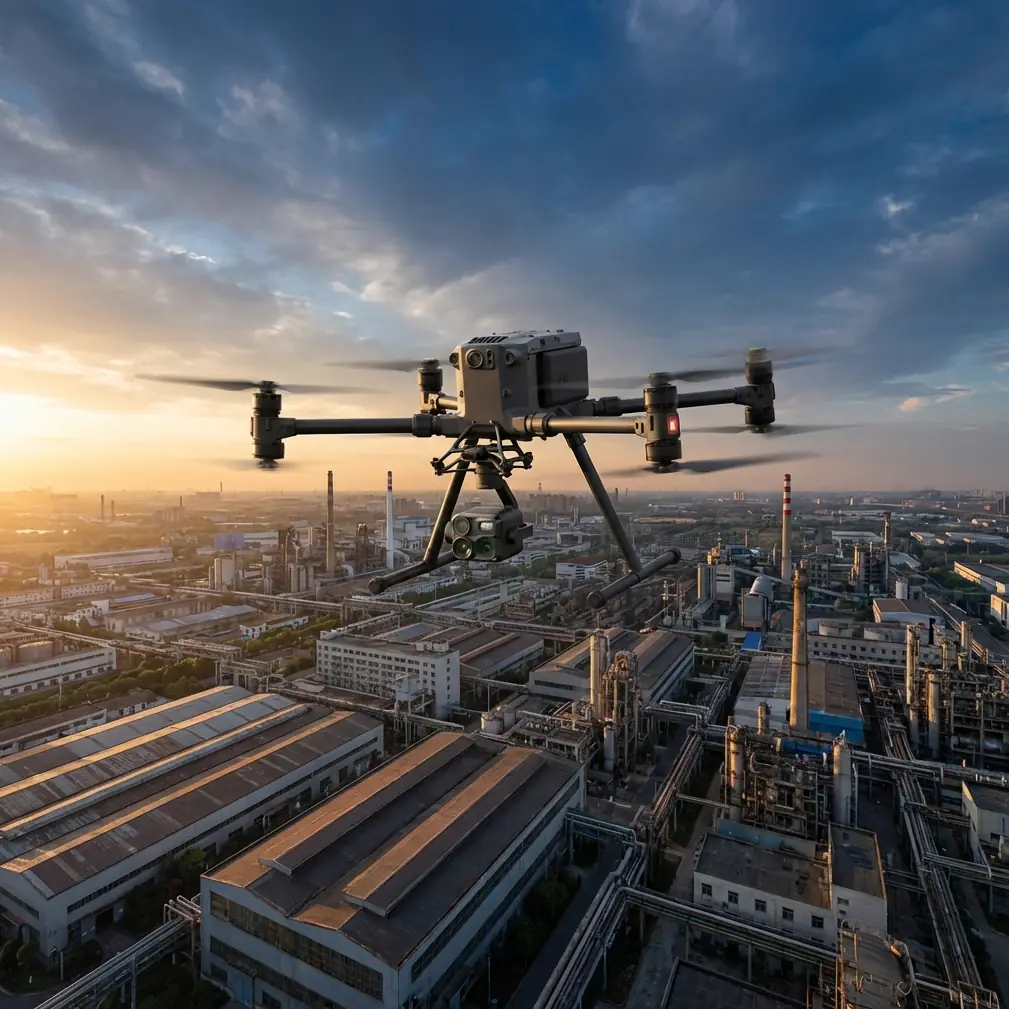
Mapping Wildlife in Extreme Temperatures with Matrice 4: A Field Method That Holds Up When Conditions Don’t
META: A practical expert guide to using Matrice 4 for wildlife mapping in extreme temperatures, with thermal workflows, photogrammetry tips, GCP planning, secure data handling, and field lessons from harsh environments.
I still remember a winter survey that went sideways before the first proper flight line was complete.
We were tracking herd movement across a high-altitude corridor where dawn temperatures stayed well below freezing. The landscape looked clean from the ground: open terrain, stable visibility, predictable animal paths. In the air, it became something else. Batteries sagged early. Finger dexterity vanished. Launch timing slipped because the crew kept adjusting the plan to protect equipment from the cold. By the time we had enough usable imagery for analysis, the animals had already shifted out of the zone we were trying to map.
That experience changed how I approach wildlife work in harsh climates. The aircraft matters, of course. But what matters more is whether the platform supports a workflow that remains reliable when temperature, terrain, and time pressure all start working against you.
For teams considering the Matrice 4 for wildlife mapping in extreme heat or cold, that is the real question. Not whether it flies. Whether it helps you produce defensible, repeatable ecological data when field conditions are punishing and mission windows are short.
I’m Dr. Lisa Wang, and this is the method I’d use.
Why extreme-temperature wildlife mapping is harder than it sounds
Wildlife surveys in severe weather expose weaknesses quickly. Cold reduces battery performance and slows setup. Heat does the opposite in a different way, pushing payloads, sensors, and crews toward thermal stress. Both conditions compress your useful flight window. Both make re-flights expensive in time and field effort.
Then there is the sensing problem.
In cold environments, thermal separation between an animal and the ground can be excellent at one hour and poor the next, depending on sun angle, wind, moisture, and surface material. In hot environments, midday thermal wash can flatten contrast so badly that detection becomes inconsistent even if the aircraft itself is performing well. If your mission blends thermal signature analysis with photogrammetry, you are not just collecting pictures. You are trying to align two different realities: what the terrain looks like and what it is radiating.
That is where the Matrice 4 discussion becomes useful. Not as a generic “best drone” debate, but as a platform choice tied to a very specific field problem: getting accurate wildlife location and habitat data in temperature extremes without breaking your workflow.
Start with the outcome, not the aircraft
For wildlife mapping, I divide missions into three outputs:
- Detection: finding animals or signs of activity
- Spatial documentation: producing maps, orthomosaics, or 3D models of the habitat
- Repeatability: collecting data in a way that can be compared across time
A Matrice 4 deployment only makes sense if it improves all three.
The practical advantage of a modern enterprise platform in this setting is not one single feature. It is the combination of stable transmission, sensor coordination, battery handling, and secure data management. If you are operating in remote ecological areas, often under strict permit conditions, those pieces are linked. A lost signal, a delayed battery swap, or sloppy georeferencing can compromise the dataset just as surely as a bad sensor reading.
This is also where broader U.S. drone policy matters, even for civilian conservation work. A recent DRONELIFE report described how the United States is still working through multiple challenges in building up counter-UAS capability, especially around new protocols intended to protect high-profile sporting events and critical infrastructure. At first glance that may seem unrelated to wildlife surveys. In practice, it is highly relevant. Airspace rules, event-related restrictions, infrastructure protection zones, and drone-security scrutiny can all shape where and how conservation teams operate. If your wildlife corridor overlaps with sensitive infrastructure or temporary security perimeters, your field plan must be airtight. For Matrice 4 operators, that makes transmission discipline, remote ID compliance, and data security more than technical preferences. They become operational necessities.
My recommended workflow for Matrice 4 in extreme conditions
1. Build the mission around temperature-driven animal behavior
Do not start by asking how long you can stay in the air. Start by asking when the animals are most separable from the environment.
For thermal work, the best window is often narrow. In cold climates, early morning can produce strong thermal contrast before solar heating starts reshaping the ground signature. In hot climates, dawn and evening are usually more productive than midday. If the Matrice 4 is carrying thermal capability, its value is highest when you are exploiting that short interval, not merely using thermal because it is available.
This sounds obvious. In the field, teams still get it wrong. They launch when the crew is ready rather than when the thermal physics are right.
My rule: define the thermal signature window first, then schedule all setup tasks backward from that point.
2. Use photogrammetry to explain the thermal detections
Thermal alone can tell you where heat is. It does not always tell you what that heat means.
That is why I pair thermal passes with visible-light photogrammetry whenever the mission allows. For habitat monitoring, den identification, nesting-area review, or herd path mapping, you want orthomosaic and elevation products that help contextualize detections. The Matrice 4 becomes more valuable when it is treated as a dual-evidence platform: one dataset for biological presence, another for terrain structure.
Operationally, this means two flight designs, not one.
- Thermal detection pass: lower altitude, slower speed, optimized for target recognition
- Photogrammetry pass: consistent overlap, steady ground sampling distance, terrain-aware pathing
In snow-covered areas, photogrammetry can be tricky because uniform surfaces reduce tie points. In those cases, your GCP strategy becomes even more important. Ground control points should be placed where they remain visible and stable despite snow glare or drifting edge conditions. In desert heat, high-contrast GCP materials and early deployment matter because shimmer and harsh sun can reduce clarity later in the day.
If you skip this discipline, the map may look attractive but still fall short scientifically.
3. Treat GCPs as insurance, not a formality
I see too many wildlife teams rely entirely on onboard positioning and then wonder why temporal comparisons get messy.
For serious habitat monitoring, use GCPs. Even if the Matrice 4 delivers strong onboard geospatial performance, GCPs give you consistency across repeat surveys, especially in difficult topography and extreme weather. That consistency is what allows you to answer real ecological questions: Has the herd shifted 40 meters downslope over the season? Has a nesting margin expanded? Has water access changed movement patterns?
In mountain cold, I prefer fewer but better-placed control points rather than many rushed placements. In high heat, I prioritize rapid deployment before the ground becomes punishing for crews.
A simple standard helps:
- Place GCPs where they can be recovered visually in both low-angle and overhead imagery
- Avoid shadow-heavy edges if the mission spans sunrise
- Record each point carefully; field mistakes multiply later during processing
4. Plan for battery handling as part of data quality
Extreme temperatures do not just affect endurance. They affect your entire survey rhythm.
Hot-swap batteries are not merely a convenience in this setting. They preserve continuity. When a wildlife group is moving, a slow turnaround can destroy the value of the next flight. Hot-swap capability reduces dead time between sorties and helps the crew maintain the thermal or visual window they planned around.
In deep cold, battery management should include staged warming, protected storage before launch, and tight rotation discipline. In severe heat, the focus shifts to shade, airflow, and preventing packs from sitting exposed on vehicle dashboards or field tables.
The field lesson here is simple: every extra minute on the ground can degrade your biology data as much as your aircraft logistics.
5. Protect the link, protect the mission
Wildlife sites are often remote, but remoteness does not guarantee a clean signal environment. Valleys, cliffs, vegetation, and infrastructure edges can all complicate control and video reliability. A system built around O3 transmission gives crews a stronger foundation for maintaining situational awareness during long mapping lines, especially where terrain intermittently interrupts line of sight.
That matters in two ways.
First, for safe aircraft handling in challenging geography.
Second, for decision-making. If you are watching live thermal and visible feeds while trying to confirm animal presence without disturbing a site, weak transmission is not a minor inconvenience. It affects what you trust and what you choose to re-fly.
I also advise conservation organizations to think seriously about data protection. AES-256 matters when your mission involves sensitive habitat locations, rare species data, or survey records tied to restricted land access. The same national climate that is pushing the U.S. to establish stronger protocols around drone-related risks near critical infrastructure and major public events is reinforcing a broader expectation: drone operations should be secure, controlled, and accountable. For wildlife researchers, that translates into encrypted workflows, access control, and disciplined handling of location data that should not be casually distributed.
A field scenario where Matrice 4 makes the job easier
Let’s make this concrete.
Imagine a multi-day winter mission to map ungulate movement through a migration bottleneck. Temperatures stay below freezing each morning, and the survey area includes a mix of open ridgeline, timber edge, and a utility corridor that introduces extra operational scrutiny.
Here is how I would run it with Matrice 4:
Pre-dawn
- Warm and stage flight batteries
- Confirm GCP visibility against snow background
- Load two mission plans: thermal detection and photogrammetry grid
- Review airspace and any temporary restrictions, especially because areas near infrastructure may attract tighter oversight
First launch window
- Fly a thermal-focused pass as the animals stand out clearly against the cold surface
- Use live feed to mark likely clusters and movement channels
- Keep altitude conservative enough for reliable interpretation, not just broad coverage
Transition
- Perform a hot-swap battery change immediately
- Shift to visible-light photogrammetry over the identified corridor
- Maintain overlap sufficient for a clean orthomosaic and terrain reconstruction
Mid-morning
- Validate detections against terrain features, snow breaks, vegetation lines, and slope aspects
- Flag any ambiguous thermal returns for later review rather than forcing field assumptions
End of sortie
- Secure logs, imagery, and coordinates using encrypted storage practices aligned with AES-256-enabled workflows
- Document environmental variables, because thermal interpretation without weather context is half a dataset
Notice what this workflow is doing. It is not treating the aircraft as the star. It is using the Matrice 4 to hold together a chain of evidence before the environment degrades that opportunity.
The overlooked issue: security and compliance affect conservation work too
The DRONELIFE piece on U.S. counter-UAS readiness focused on efforts to establish new counter-drone protocols to protect high-profile events and critical infrastructure. That may sound far removed from wildlife mapping, but I would argue the opposite.
Civilian drone teams now operate in a climate where visibility, legitimacy, and procedural discipline matter more than ever. If you are flying a Matrice 4 near transmission lines, water assets, transportation corridors, or during periods of elevated event security in a region, your mission planning has to reflect that reality. You may be doing habitat work, but others in the area may only see “enterprise drone activity.”
That is why I advise teams to prepare:
- clearly documented mission purpose
- current registration and pilot credentials
- preplanned routes that avoid sensitive adjacent areas
- secure handling of imagery and telemetry
- a concise explanation for land managers and stakeholders
Professionalism is now part of access.
Processing advice: make your datasets answer the biological question
After the flights, the temptation is to generate every possible output because the software can. Resist that.
For wildlife work in extreme temperatures, ask:
- Do I need count accuracy, distribution mapping, or habitat condition analysis?
- Are thermal detections being validated by visible imagery or field observations?
- Are my photogrammetry products precise enough to support comparison over time?
If the answer is long-term ecological monitoring, align every processing choice to repeatability. Use the same GCP framework where possible. Keep flight altitude and overlap consistent across survey dates. Record weather and surface conditions. Build a library of thermal interpretation notes so your team is not reinventing criteria every season.
This is where the Matrice 4 earns its place. Not because it makes fieldwork easy. Extreme-temperature wildlife mapping is never easy. It earns its place if it reduces the number of things that can go wrong between launch and final map.
When teams ask me what support they actually need
Usually not “which button does what.” They need help designing a workflow that matches sensor capability to ecological timing, site constraints, and data-security expectations. If that sounds familiar, you can message a specialist directly here: talk through your Matrice 4 wildlife mapping setup.
That conversation should cover more than payload preferences. It should address thermal timing, GCP layout, transmission reliability in terrain, battery rotation in heat or cold, and how to document flights properly if your survey area sits anywhere near sensitive infrastructure or regulated zones.
Final takeaway from the field
The past challenge I described at the start was not really about cold weather. It was about fragility in the workflow. Too many small weaknesses stacked up at once.
A better Matrice 4 workflow fixes that by tightening the chain: thermal signature collection at the right time, photogrammetry that explains those detections, GCP-backed spatial accuracy, O3 transmission for dependable field awareness, AES-256 for responsible data handling, and hot-swap batteries that preserve momentum when the survey window is short.
That combination is what makes extreme-temperature wildlife mapping more manageable. Not easy. Just finally manageable in a way that produces data worth trusting.
Ready for your own Matrice 4? Contact our team for expert consultation.