
Matrice 4 for Urban Wildlife Mapping: Control
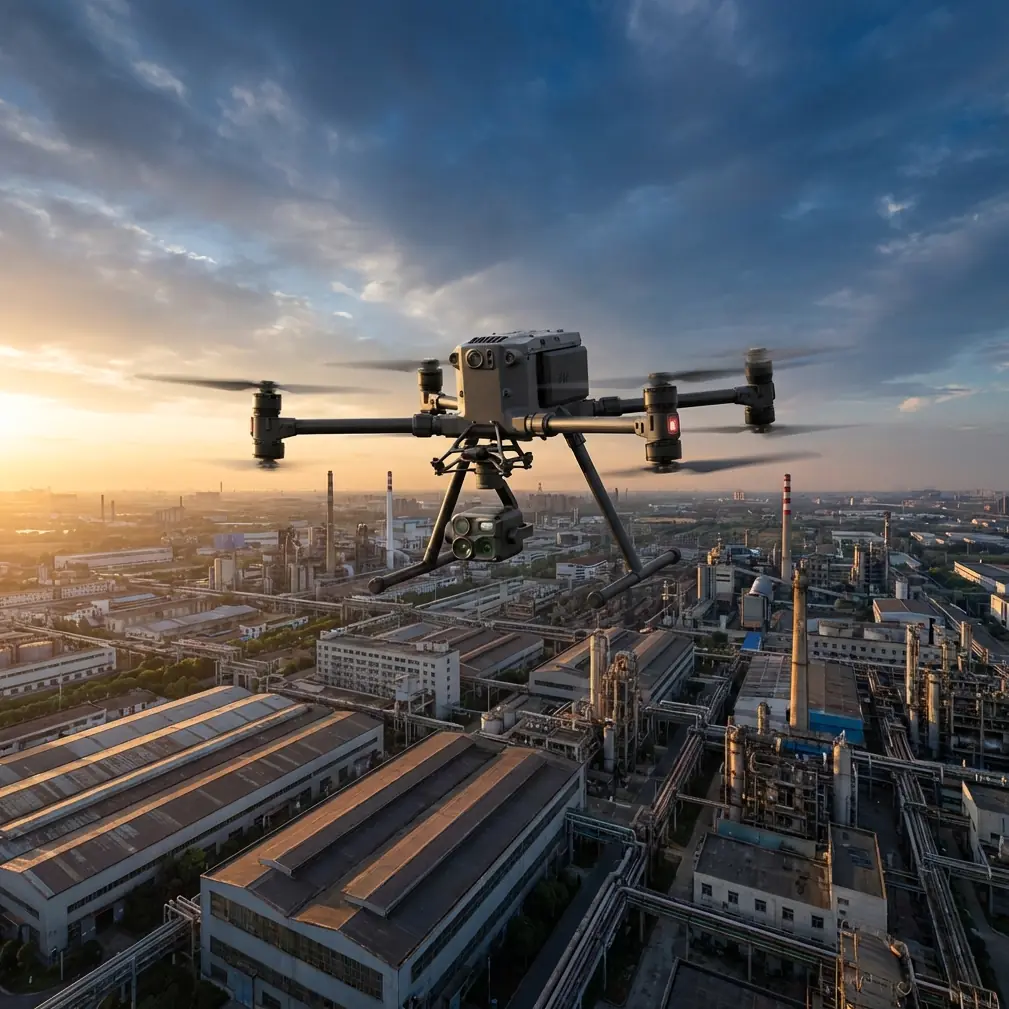
Matrice 4 for Urban Wildlife Mapping: Control-System Lessons That Actually Improve Field Results
META: Practical Matrice 4 best practices for urban wildlife mapping, with antenna positioning, photogrammetry workflow, thermal signature planning, and reliability insights drawn from flight-control design principles.
Urban wildlife mapping sounds tidy on paper. In the field, it rarely is.
You may be trying to document roosting bats under bridges, count nesting birds along rooftop edges, or build habitat layers for foxes and civets moving through industrial corridors. The city complicates everything. Glass throws reflections into optical payloads. Concrete blocks signal paths. Heat from HVAC systems contaminates thermal signature interpretation. Traffic corridors create narrow time windows when a site is safe and usable.
That is why a Matrice 4 workflow for urban wildlife mapping should not begin with camera settings. It should begin with control reliability, data flow discipline, and signal integrity.
Oddly enough, one of the best ways to think about this comes from civil aircraft design logic rather than drone marketing. The reference material behind this piece describes large-aircraft fly-by-wire architecture using details such as a quadruple-redundant sensor arrangement, ARINC429 serial data buses, and dual-channel fault-safe control logic. On the surface, that seems far removed from a compact enterprise UAV. It is not. Those design ideas point to a practical truth: when the environment is unforgiving, dependable outcomes come from layered sensing, clean communication between subsystems, and graceful handling of faults.
For Matrice 4 operators mapping wildlife in urban conditions, those same principles translate into better mission planning and fewer bad datasets.
The real problem: urban wildlife work punishes weak workflow design
A wildlife mapping sortie in a city is usually doing two jobs at once.
First, it is collecting location-grade spatial data for photogrammetry, corridor analysis, or habitat assessment. Second, it is trying to detect biological activity that is often subtle, intermittent, and easy to miss. You are not just photographing structures. You are trying to separate animals from vents, dens from debris, nesting behavior from random shadows.
That means you need confidence in three layers:
- Aircraft control and link stability
- Sensor interpretation
- Repeatable geospatial capture
Lose any one of them and the whole mission can become anecdotal instead of defensible.
This is where the reference material becomes useful in an unexpected way. One source describes a fault-safe digital control system with 2-channel redundancy for high-lift surfaces, plus multiple position and asymmetry sensors used to detect abnormal movement and either slow or stop the system automatically. Another passage references 4-redundant sensing around pilot input and feedback rate sensing, tied together through structured bus-based communication. For a Matrice 4 operator, the lesson is simple: treat every wildlife mission as a system problem, not just a flight problem.
You may not be designing flight computers, but you are designing a field process. Build redundancy into that process.
What that means on a Matrice 4 mission
With Matrice 4, redundancy in practice looks like this:
- Pair RGB imagery with thermal whenever the habitat or target species justifies it.
- Use overlapping mapping passes instead of assuming one pass is enough.
- Cross-check thermal detections with visible-light context before logging wildlife presence.
- Use GCP-backed validation when the deliverable needs defensible positional accuracy.
- Plan battery swaps so they do not interrupt the same light and thermal conditions across key transects.
If your objective is urban wildlife mapping, “close enough” data is often unusable. A fox den entrance mislocated by a few meters can move it to the wrong side of a retaining wall in your GIS. A rooftop heat patch can be mistaken for animal occupancy if you do not revisit the target under a different thermal loading condition. A missed signal dropout can produce inconsistent overlap and degrade your photogrammetry model right where your habitat edge analysis matters most.
Antenna positioning advice for maximum range and cleaner transmission
Let’s deal with the field issue operators feel most immediately: transmission quality.
In urban mapping, O3 transmission performance is not just about distance. It is about geometry. You can be relatively close and still get a degraded feed because steel framing, curtain wall glass, rooftop clutter, and moving vehicles are creating multipath interference.
The best antenna advice is boring, and that is why people skip it.
Face the flat side of the controller antennas toward the aircraft, not the antenna tips. The strongest radiation pattern is broadside, not off the point. Keep your body from blocking the controller. Avoid standing directly beside vans, metal railings, or rooftop plant enclosures that reflect signal. If possible, elevate your pilot position slightly above nearby obstructions instead of standing at the bottom of an urban canyon.
A few practical rules help:
- If the drone is high and offset, tilt antennas so their broad faces still point toward the aircraft’s approximate position.
- Reposition yourself before signal quality degrades, not after.
- Do not hug a concrete wall for shade if it puts the aircraft behind the structure from the controller’s perspective.
- On long corridor missions, walk the control point forward in stages when legally and operationally appropriate rather than forcing a single static pilot position.
This matters because urban wildlife surveys often happen near bridges, warehouses, rail approaches, green roofs, and drainage channels. Those are exactly the places where line-of-sight can be technically available yet RF performance is mediocre. Better antenna discipline often does more for a clean O3 link than endlessly tweaking altitude.
If you need a second set of eyes on route planning or signal strategy for a difficult site, you can message our field team here before deployment.
Why control-system architecture matters even if you never see it
The aircraft design reference mentions ARINC429-7, a broadcast serial data bus used to connect multiple subsystems. In manned aviation, that kind of standardized, structured communication matters because control computers, inertial systems, displays, and monitoring units all need dependable data exchange.
For Matrice 4 operations, the direct hardware is different, but the operational principle is identical: if your aircraft state, payload data, and mission logic are not synchronized cleanly, you get poor decisions in the field.
Here is the operational significance.
When you are mapping wildlife in an urban zone, you may be simultaneously managing:
- aircraft position and heading,
- live thermal interpretation,
- automated mapping path execution,
- image overlap requirements,
- obstacle awareness,
- battery state,
- and post-processing accuracy expectations.
That is a lot of moving parts. So your workflow must reduce ambiguity. Set a single source of truth for each mission variable. For example:
- One mission profile for overlap and speed
- One naming convention for transects
- One observer logging wildlife detections
- One rule for thermal confirmation passes
- One geospatial reference standard for export
This sounds administrative. It is actually flight quality control.
The aircraft-design source also describes automatic fault handling that can trigger reduced-speed operation or stop a mechanism when asymmetry or speed faults appear. That logic is worth borrowing mentally. In urban wildlife mapping, create your own “stop conditions.” If thermal glare exceeds interpretation reliability, pause. If wind pushes yaw corrections beyond your acceptable blur threshold, pause. If rooftops produce severe parallax for your chosen altitude, redesign the mission instead of forcing the capture.
Professionals do not salvage bad mission assumptions in post. They stop early and preserve data integrity.
Thermal signature work: where wildlife mapping usually goes wrong
Thermal is powerful in cities, but it is also deceptive.
Warm exhaust vents, sun-loaded membranes, electrical equipment housings, and recently heated masonry can all mimic wildlife presence. A Matrice 4 workflow aimed at thermal signature interpretation should always ask one question: is this heat source biologically plausible in context?
Three habits help.
1. Fly thermal near environmental transition periods
Early morning and evening often give you better separation between animals and background structures than mid-afternoon. A roost site that is obvious at dawn may disappear once rooftop materials equilibrate thermally.
2. Use shape, persistence, and context together
A single hot pixel cluster means very little. You want repeatable shape, expected location, and behavior-consistent persistence. For instance, repeated thermal presence at a sheltered ledge with visible droppings or nesting material is stronger evidence than a lone hotspot beside ducting.
3. Confirm with a second pass
This is your redundancy principle again. One pass detects. The second pass verifies. Ideally, that second look changes angle or timing enough to expose reflections, vent plumes, or transient heat wash.
The aircraft reference’s emphasis on multiple sensors and fault detection is a useful analogy here. Never let one sensor stream become judge and jury.
Photogrammetry in wildlife projects: accuracy without overbuilding the mission
Urban wildlife mapping is not always pure photogrammetry, but when it is, accuracy discipline matters. Habitat edge mapping, green-roof occupancy analysis, culvert access studies, and movement corridor modeling all benefit from clean orthomosaics and consistent 3D reconstruction.
Use GCPs when the output has to stand up to planning, environmental reporting, or repeat surveys over time. In dense urban areas, GNSS alone may be affected by reflected signals and constrained sky view. A well-placed GCP network gives you a reality check against that uncertainty.
The key is not to scatter GCPs randomly. Place them where they strengthen the geometry of the mapped area:
- corners and edges of the survey extent,
- elevation transitions,
- long corridor breaks,
- and areas where building massing may complicate alignment.
Then build capture settings around the species and habitat question, not just the map. If you are documenting nesting opportunities under overhangs, nadir-only imagery may miss the features that matter. Oblique support passes can make the dataset more useful for ecological interpretation, even if the base map itself is nadir-driven.
That balance between mapping efficiency and ecological usefulness is where experienced operators distinguish themselves.
Battery strategy is part of data quality
Hot-swap batteries are often discussed as a convenience feature. In wildlife work, they are really a consistency tool.
Suppose you are mapping a riparian corridor through a mixed residential and industrial district. You need thermal and visible capture across a narrow dawn window before roof surfaces heat up. A slow battery-change process can break the timing continuity that makes your thermal layer meaningful. Hot-swap capability reduces that gap and helps preserve comparable environmental conditions between adjacent flight segments.
The benefit is not only uptime. It is interpretive integrity.
When your mission is split into multiple sorties, log every battery change against time, weather shift, and thermal conditions. If one segment was flown after the sun cleared a building line, flag it immediately in your notes. That segment may still be useful, but it should not be treated as equivalent to the earlier passes.
AES-256 and the overlooked value of secure workflows
Wildlife projects in urban settings can involve sensitive location data. Nest sites, denning areas, and species-presence records are not always information you want moving loosely through unsecured channels. If your Matrice 4 workflow supports AES-256-secured transmission and controlled data handling, that is not merely an IT checkbox.
It has real field value.
It protects ecological data that could be misused, helps satisfy municipal or environmental client requirements, and keeps project documentation cleaner when multiple stakeholders are involved. Security in this context is part of professionalism, not a technical brag.
BVLOS conversations need discipline, not wishful thinking
Urban wildlife corridor work often tempts people to think in BVLOS terms, especially along canals, utility routes, shoreline edges, and transport corridors. The keyword gets thrown around casually. It should not.
If a mission concept pushes toward BVLOS, treat that as a separate planning framework involving the relevant regulatory, operational, and safety requirements for your jurisdiction. Do not let a mapping objective quietly drift into a different risk category. Many wildlife tasks can be restructured into segmented VLOS operations with better antenna positioning, smarter observer placement, and efficient staging.
That usually produces cleaner data anyway.
A better way to think about Matrice 4 in urban ecology
The strongest lesson from the reference material is not about copying airliner architecture onto a drone. It is about mindset.
The source mentions 4-redundant sensing, a fault-safe digital 2-redundant control concept, and bus-based subsystem communication through ARINC429-7. Those are engineering answers to a universal operational problem: how do you keep useful outcomes intact when one part of the system is stressed?
Urban wildlife mapping with Matrice 4 deserves the same seriousness.
Do not treat the aircraft as just a flying camera. Treat the mission as an integrated sensing system.
That means:
- fly with transmission geometry in mind,
- validate thermal signature findings,
- use GCPs when positional confidence matters,
- preserve timing continuity across hot-swap battery events,
- secure sensitive ecological data,
- and define stop conditions before you launch.
Do that, and Matrice 4 becomes far more than a platform that captures imagery. It becomes a reliable field instrument for ecological decisions in places where uncertainty is expensive.
Ready for your own Matrice 4? Contact our team for expert consultation.