
Matrice 4 mapping tips for wildlife work in dusty terrain
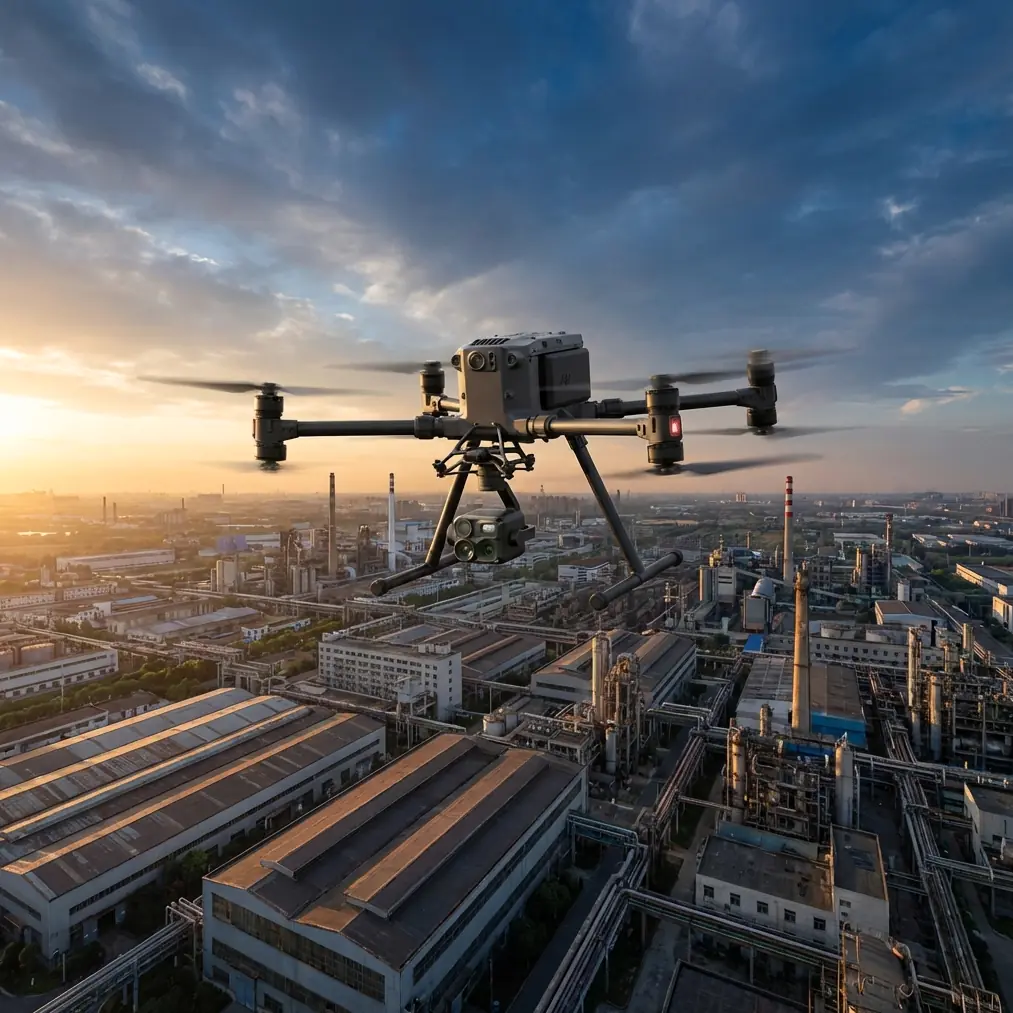
Matrice 4 mapping tips for wildlife work in dusty terrain
META: Expert field guide to using Matrice 4 for wildlife mapping in dusty environments, with practical advice on thermal signature capture, photogrammetry, GCP workflow, transmission reliability, and field durability.
Dust changes everything.
It gets into lenses, settles on landing zones, softens contrast in visible imagery, and turns routine wildlife mapping into a chain of small technical compromises. I learned that the hard way on a dry-season habitat survey where our aircraft performed well enough in calm morning light, then struggled once the ground started throwing heat and dust back into the air. The mission itself was simple on paper: map movement corridors, identify nesting or denning zones without disturbing the animals, and produce photogrammetry outputs accurate enough to compare against older survey layers. The reality was messier.
That is why the Matrice 4 matters in this specific kind of work. Not as a generic “better drone,” but as a platform that reduces friction where wildlife mapping usually breaks down: thermal ambiguity, visibility loss, field endurance, data security, and the practical burden of running repeatable missions far from clean infrastructure.
What follows is not a broad overview. It is the field logic behind using Matrice 4 in dusty wildlife operations, especially when you need both thermal signature interpretation and map-grade deliverables.
The real problem in dusty wildlife mapping
Wildlife survey teams often face two competing requirements.
First, they need distance. Animals should not be pushed by rotor noise or repeated passes. Second, they need fidelity. Habitat edges, game trails, burrow entrances, watering depressions, and vegetation stress patterns all need to resolve clearly enough for analysis. Dust makes those requirements harder to balance.
In visible-light mapping, suspended dust reduces image clarity and can flatten the texture that photogrammetry depends on. In thermal work, the issue is different but just as serious. By late morning, bare ground, rocks, vehicle tracks, and low scrub can all begin to hold or radiate heat in ways that mimic biological targets. A thermal signature that looked obvious at dawn can become ambiguous by mid-mission.
That means your aircraft and your workflow have to compensate. Matrice 4 is useful here because it supports a mission style that is less fragile. Better transmission stability lets you hold cleaner standoff positions. More disciplined thermal collection windows become realistic when battery changes are fast. Secure data handling matters when the survey involves protected species locations. None of that is glamorous. All of it is operationally significant.
Why thermal work needs timing more than marketing
The most common mistake I see in wildlife thermal mapping is overconfidence in the sensor and underplanning around the environment.
Thermal signature collection only works when the animal or feature of interest separates from the background. In dusty habitats, that separation can collapse quickly after sunrise. Matrice 4 operators should think in thermal windows, not just mission blocks. If your target species tends to move at first light, you build around that. If you are looking for residual heat near nests, burrows, or resting sites, your timing shifts again.
The aircraft helps, but timing still does the heavy lifting.
My rule is simple: use thermal to find, visible imagery to prove, and photogrammetry to contextualize. With Matrice 4, that sequence is easier to execute in one operation because the platform is built for professional payload and mission continuity rather than isolated one-off captures.
In dusty areas, thermal should rarely be treated as a standalone answer. Heat from exposed earth can mislead you. A warm patch is not always an animal. A cool void is not always a den entrance. Cross-checking against orthomosaic or oblique visible data remains essential.
Photogrammetry in dust: where consistency beats speed
Dusty terrain tends to punish rushed mapping.
Teams often try to outrun the conditions by flying faster or reducing overlap. That usually creates bigger downstream problems: weak tie points, inconsistent surface reconstruction, and more manual cleanup in processing. The better approach with Matrice 4 is to accept that stable image geometry matters more than shaving a few minutes off the flight.
This is where GCP discipline still earns its place. Even with strong onboard navigation, wildlife mapping projects often need outputs that can stand up across time-series comparison. If you are checking habitat erosion, trail expansion, or changes around watering sites, poor ground control will haunt you later. Dust itself can obscure small visual reference features, so your GCPs need to be high contrast, well secured, and placed where they won’t be swallowed by glare or loose surface material.
I have seen mapping teams skip GCP rigor because the aircraft was advanced enough to “probably handle it.” That is not a serious standard if the survey informs land management decisions. Photogrammetry is still a geometry problem. Better aircraft execution improves the inputs, but it does not repeal the rules.
Transmission confidence changes field decisions
One of the most practical advantages in this category is reliable long-range command and video link performance. In wildlife work, O3 transmission is not just a convenience feature. It changes how cautiously and intelligently you can operate around sensitive areas.
If you are mapping skittish animals in dusty open terrain, you often want to launch farther from the core survey zone and avoid unnecessary repositioning. A stable link helps maintain that distance. It also reduces the temptation to creep closer when dust or heat haze begins to degrade visual interpretation. That matters because disturbance is often cumulative. Even when an animal does not bolt, repeated pressure can alter behavior enough to corrupt the very data you are trying to collect.
Good transmission also helps when you are working around rolling ground, sparse tree belts, or rocky outcrops that can complicate line quality. The mission stays cleaner when the pilot is not fighting intermittent confidence in the feed.
Dust is a durability test, not just an image-quality issue
People talk about dust mostly in terms of dirty optics. That is too narrow.
Dust affects takeoff and landing discipline, battery handling, cooling, and the reliability of everything you touch in the field. Professional wildlife mapping often means operating out of vehicle-based staging areas, improvised clearings, or hard-packed surfaces with no ideal launch environment. The Matrice 4 fits this reality better when paired with strict field procedure.
A few rules I recommend:
- Use elevated launch and recovery surfaces whenever possible.
- Keep lens and sensor cleaning routines separated from battery swap tasks.
- Do not expose open battery bays longer than necessary.
- Brief the team so the landing zone stays sterile during final approach.
Hot-swap batteries are especially valuable in these conditions. The feature is easy to underrate until you are trying to preserve a narrow dawn thermal window while dust is rising with every movement around the aircraft. Fast, organized battery exchange reduces idle exposure and keeps mission continuity intact. For wildlife operators, that often means the difference between completing a coherent block of data and ending up with mismatched lighting and heat conditions across the site.
A useful engineering mindset: not every material number is a design number
There is an overlooked lesson in older aircraft engineering references that still applies to modern UAV field work.
One source set on aircraft materials lists minimum stabilized flat-panel shear strength values for 5052 and 5056 honeycomb core materials at room temperature, including figures such as 360 and 443 in one configuration range, and explicitly warns that the numbers are for testing only and are not suitable as design allowable values. Another reference on standard aircraft components gives a spring selection example built around a working temperature below 60°C, a load of 60 N, an outside diameter of 12 mm, and a free length of 80 mm.
Why should a Matrice 4 wildlife operator care?
Because those two details capture a discipline that separates competent field teams from careless ones. The first is a reminder not to treat isolated performance figures as operating truth. Just because a test value exists does not mean it predicts real-world durability in dust, heat, vibration, and repetitive handling. The second shows how mechanical choices are always tied to actual operating conditions such as temperature, load, and dimensional constraints.
Translated to drone operations, this means you should not build field expectations around a single headline spec, and you should respect environmental limits as real engineering boundaries. In dusty wildlife mapping, that mindset affects everything from mission duration planning to battery temperature management to how you judge airframe wear over time. It is not abstract. It is risk control.
Data protection matters more than many wildlife teams admit
Protected species work can be sensitive. Nest sites, migration congregation points, rare animal locations, and rehabilitation-release zones should not circulate loosely. That is why AES-256 encryption is more than a checkbox in this workflow.
When you are collecting thermal and map data that could expose sensitive ecological information, secure transmission and responsible handling are part of ethical field practice. This becomes even more relevant when survey teams include outside consultants, land managers, or multi-party stakeholders sharing outputs across networks. The drone is part of the chain of custody.
I would go further: if your wildlife mapping plan includes no data-security protocol, the technical quality of the imagery is only half the job done.
BVLOS thinking without careless execution
BVLOS is often discussed in dramatic terms. For civilian wildlife mapping, the more useful conversation is about mission design that prepares for lawful extended-range operations where permitted, while still prioritizing airspace compliance, observer structure, and non-disturbance principles.
Matrice 4 is well suited to longer, more systematic survey logic because of its transmission capability, mission repeatability, and professional workflow orientation. But range alone is not the point. The point is whether you can cover habitat corridors, edge zones, and low-access areas consistently while preserving map quality and minimizing repeated low passes.
Even when operating within visual-line constraints, adopting BVLOS-style planning improves results. Build segmented routes. Predefine lost-link behavior. Set decision points for dust escalation. Assign visual observers where terrain masking is possible. Plan thermal-first legs before surface heating ramps up. Good teams do this whether or not the mission legally qualifies as BVLOS.
My preferred Matrice 4 workflow for dusty wildlife sites
This is the workflow I have found most dependable:
1. Dawn reconnaissance pass
Begin with thermal priority. Fly conservatively and identify live heat targets, residual activity zones, and suspicious anomalies worth secondary review.
2. Confirmation imagery
Switch to visible captures while the light is still manageable. Use oblique and nadir coverage to confirm whether thermal hotspots represent animals, geology, ground vehicles, or solar-heated debris.
3. Structured photogrammetry block
Run the mapping grid only after the team has confirmed the key ecological zones. This avoids spending battery on irrelevant ground and helps preserve cleaner conditions for the highest-value area.
4. GCP validation
Do not assume your control points remained usable. Dust, hoof traffic, and low-angle light can degrade visibility fast.
5. Fast battery turnover
Use the hot-swap advantage to stay within the same environmental window rather than restarting after conditions have materially changed.
6. Secure export and review
Protect location-sensitive files from the beginning, not after the project is already shared around.
If you are planning a similar field setup and want to compare notes on payload strategy, thermal timing, or mapping overlap, you can message the field team here.
What Matrice 4 changed for me
The biggest improvement was not a single feature. It was the reduction in compromise.
On older workflows, dusty wildlife missions forced a choice: fly early for thermal and sacrifice some mapping continuity, or map later and lose clean thermal distinction. With Matrice 4, that tradeoff narrows. Better mission continuity, stronger transmission confidence, secure data handling, and practical battery management make it easier to capture a site while conditions still favor useful interpretation.
That does not remove the need for field judgment. You still need to read wind, light, animal behavior, and terrain reflectivity. You still need to understand how photogrammetry fails and why thermal can lie. But the platform gives experienced operators more room to apply that judgment well.
And that, for serious wildlife mapping, is what counts.
Ready for your own Matrice 4? Contact our team for expert consultation.