
Matrice 4 Monitoring Tips for Windy Coastlines: Altitude
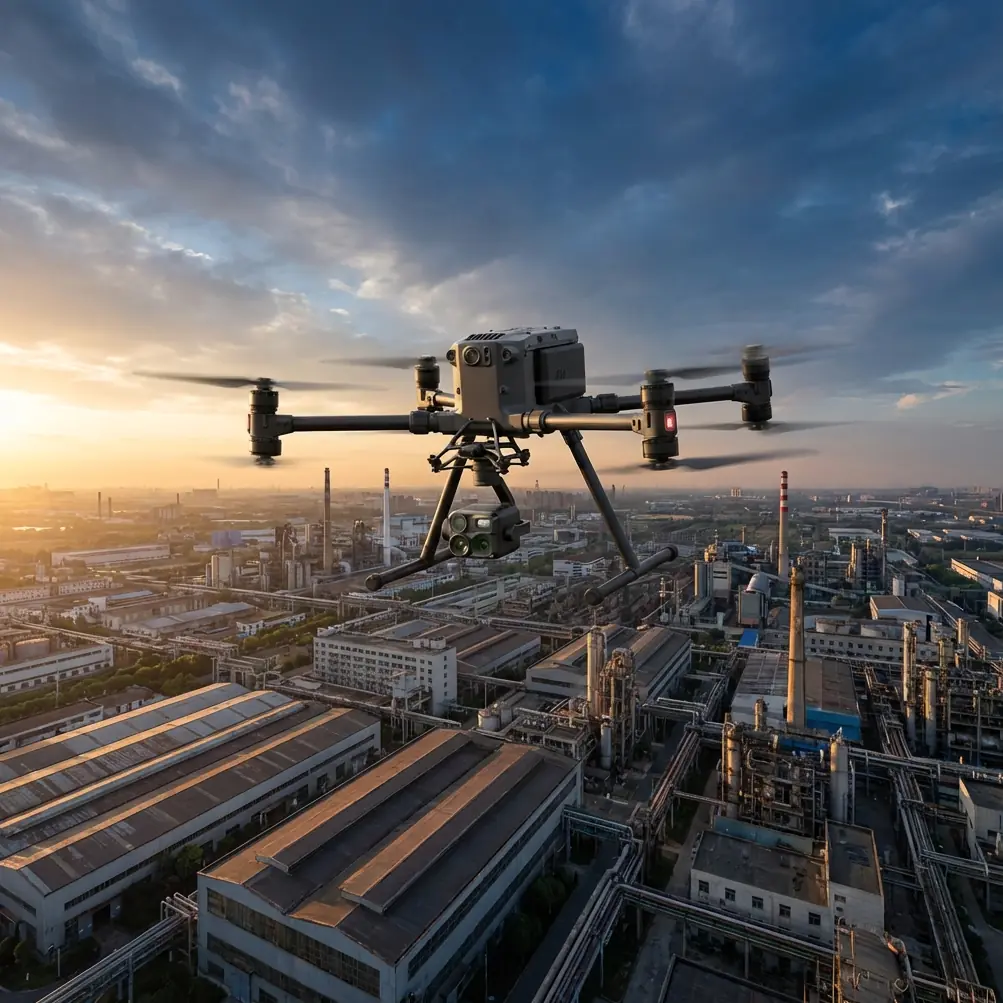
Matrice 4 Monitoring Tips for Windy Coastlines: Altitude, Sensors, and Workflow That Actually Hold Up
META: Practical Matrice 4 tutorial for windy coastline monitoring, covering flight altitude, thermal use, photogrammetry accuracy, O3 transmission, AES-256 security, and battery workflow.
Coastlines punish weak drone planning.
Wind shear changes by the second. Salt haze softens detail. Reflective water confuses exposure. Sand, rock, foam, vegetation, and built infrastructure all sit in the same frame, each demanding something different from the aircraft and camera. If you are flying a Matrice 4 for shoreline monitoring, the question is not simply whether it can do the job. The real question is how to set up a repeatable workflow that still produces useful data when the wind picks up and the edge between land and sea keeps shifting.
This guide is built around that operating reality: civilian coastline monitoring in windy conditions. The goal is practical output, not brochure language. We will look at flight altitude, thermal signature capture, photogrammetry setup, GCP strategy, transmission reliability through O3, onboard security through AES-256, battery discipline with hot-swap support, and what all of that means if your mission profile is stretching toward BVLOS-style corridor coverage under the rules that apply in your area.
Why the coastline is harder than most inspection environments
A shoreline combines three difficult elements in one airspace.
First, you are often tracking long linear assets rather than one fixed object. That could mean dune erosion, seawalls, tidal inlets, outfalls, drainage channels, marsh boundaries, beach nourishment zones, or harbor edges. Linear work exposes every weakness in planning because a tiny positioning or overlap error compounds over distance.
Second, the surface itself is unstable. Water movement changes visual texture from minute to minute. Wet sand can look dramatically different from dry sand. Foam and glare create false contrast. If your mission includes thermal signature review, solar loading on rocks, roads, roofs, and tidal flats changes the interpretation window quickly.
Third, coastal wind is rarely uniform. A launch point may feel manageable while the cliff edge, jetty, or dune line is getting hit by stronger crossflow. That matters for image sharpness, mapping overlap, battery reserves, and antenna orientation.
The Matrice 4 platform is attractive here because it is designed for professional data work rather than casual aerial capture. But the aircraft only solves part of the problem. The mission design is what determines whether your data is credible.
The most useful flight altitude for windy coastline monitoring
If you only change one thing in your workflow, make it this: stop treating altitude as a fixed habit.
For most windy coastline monitoring jobs with a Matrice 4, the sweet spot is usually between 60 and 90 meters AGL, then adjusted based on the asset type and wind behavior. That range tends to give the best compromise between ground detail, image stability, and safe margin over uneven shoreline terrain.
Why not lower? Because flying too low near the coast often magnifies turbulence coming off dunes, embankments, sea walls, and structures. It also forces more passes to cover the same distance, which increases battery turnover and introduces more stitching risk in photogrammetry.
Why not higher? Because as you climb, you reduce the effective detail on small cracks, erosion cuts, vegetation stress, and debris patterns. Wind can also become less predictable higher up, and if your objective includes thermal signature review, altitude can dilute the temperature contrast you need to interpret small features.
Here is the practical way to think about it:
- 60 to 70 meters AGL works well for targeted condition checks: revetments, sea walls, localized erosion scars, drainage outlets, and storm impact documentation.
- 70 to 90 meters AGL is often stronger for corridor-style shoreline mapping, especially when you need efficient coverage and smoother overlap in uneven wind.
- If you are collecting photogrammetry data for a stitched orthomosaic, favor consistency over aggression. A slightly higher but stable mission is usually better than a lower flight with blurred frames and uneven overlap.
On coastlines, image sharpness is often worth more than a theoretical boost in ground resolution. A perfectly planned 50-meter mission that gets pushed around by gusts will underperform a stable 80-meter mission every time.
How to adapt altitude to the exact task
Not all shoreline work is the same, so altitude should follow the output.
1. Erosion and change detection
If your team is comparing monthly or seasonal shore conditions, consistency matters more than maximum closeness. Fly the same corridor at the same altitude each time. Around 80 meters AGL is a practical baseline because it balances coverage and repeatability. If you use GCPs on landward control points, your change analysis becomes much more defensible because the dataset is tied to known positions instead of only relying on onboard positioning.
Operational significance: GCPs reduce drift and improve alignment between survey dates. That matters when you are trying to prove whether a dune edge moved by a small but meaningful amount rather than just showing a visually different image.
2. Thermal checks of outfalls, seepage, or wetland anomalies
Thermal signature work should usually be flown lower than broad-area mapping because subtle temperature boundaries are easier to interpret when the target occupies more pixels. Think 50 to 70 meters AGL if conditions allow. Early morning or late evening often gives cleaner contrast than midday, when solar heating makes every surface tell a different story.
Operational significance: on a coastline, thermal does not just reveal “hot” and “cold.” It can help distinguish freshwater seepage, drainage discharge, saturated ground, stressed vegetation, or unusual moisture retention patterns. But thermal interpretation becomes weaker if your altitude is too high and the scene blends into broad temperature averages.
3. Long shoreline documentation in stronger winds
When the breeze is pushing harder and your priority is stable visual documentation, moving up to 85 or even 90 meters AGL can be the smarter call. Not because higher is automatically safer, but because it can smooth your route geometry and reduce the number of turns. Turns cost time and energy, and they introduce more opportunities for overlap inconsistency.
Why O3 transmission matters near the coast
Coastal work can create transmission headaches in places that look open and easy.
You may be flying over beaches, estuaries, rock shelves, ports, or marshes with a clear horizon, yet signal reliability can still degrade because of terrain folds, sea-facing infrastructure, metal surfaces, and the way your route bends around headlands or structures. This is where O3 transmission earns its keep.
The benefit is not just range on paper. The real value is link resilience when your mission corridor is long and the environment is visually open but technically messy. In practical terms, stronger transmission stability means better confidence in framing, safer route management, and fewer interruptions when you are trying to hold a clean pattern in gusty conditions.
If your operation is approaching BVLOS-style planning concepts, even when conducted strictly within the regulations and approvals that govern your area, transmission integrity becomes part of the risk picture. A shoreline route can look simple and still expose weak mission design if the link quality degrades around bends, sea walls, harbor cranes, or changing topography.
AES-256 is not a footnote in shoreline work
People tend to treat AES-256 as a specification line and move on. That is a mistake, especially for environmental and infrastructure monitoring.
Coastal missions often involve sensitive but civilian datasets: erosion records tied to public works, utility outfalls, industrial waterfront inspections, ecological restoration zones, port-adjacent surveys, insurance documentation after storms, or georeferenced imagery of critical coastal assets. Strong encryption matters because drone data is not just video. It is location intelligence.
Operational significance: if your Matrice 4 workflow includes captured imagery, mapped shoreline condition, thermal anomalies, and asset coordinates, you are handling information that can affect planning, compliance, and liability. AES-256 support helps keep that data protected in transit and storage workflows where security is not optional.
Photogrammetry on the coast: where most people lose accuracy
Shoreline photogrammetry sounds straightforward until the waterline starts moving under you.
The classic problem is trying to map a scene that contains both stable and unstable surfaces. Land features such as dunes, roads, concrete, vegetation lines, and structures are reliable for reconstruction. Water, breaking waves, and reflective wet surfaces are not. If you feed poor image geometry into processing, the resulting model can warp at the edge where you actually care most.
Three rules help:
Use GCPs on stable terrain, not near shifting edges
Place GCPs on firm, visible ground above the active wash zone. Do not chase the waterline. Your control should anchor the parts of the scene that remain physically consistent from flight to flight.
Increase sidelap when wind is variable
If the aircraft is being nudged laterally, your overlap can degrade unevenly across the route. Slightly more conservative overlap settings can protect the dataset from coastal gusts.
Separate mapping goals from visual shoreline context
If the waterline itself is part of the story, document it visually, but do not expect the dynamic surf zone to behave like solid terrain in a clean photogrammetry model.
This is where experienced operators get better results. They stop asking the software to solve an unsolvable scene and instead build a mission around what can be measured reliably.
Thermal signature use cases that make sense on a coastline
Thermal is often oversold. It is not magic. On the coast, though, it can be genuinely useful when paired with a clear question.
Examples that fit civilian operations:
- Identifying moisture pathways behind retaining structures
- Distinguishing runoff discharge patterns
- Tracking wet versus dry substrate transition after tidal retreat
- Spotting stressed vegetation in dune or marsh restoration zones
- Reviewing rooflines and waterfront buildings affected by salt exposure and moisture intrusion
The key is timing. Thermal signature data is most valuable when the environment gives you contrast. If the sun has been baking the entire site for hours, temperature patterns can flatten into noise. The Matrice 4 can give you the sensor flexibility, but the operator still needs to choose the right collection window.
Battery workflow matters more in wind than most pilots admit
The coastline tempts people into optimistic battery planning. Everything looks flat and open, so the route feels easier than it is.
In reality, wind exposure can inflate power consumption fast, especially on return legs. If your platform supports hot-swap batteries, use that capability as part of a disciplined sortie rhythm rather than as a convenience feature. On long shoreline jobs, hot-swap efficiency reduces ground downtime between segments and helps maintain mission continuity while environmental conditions remain consistent.
Operational significance: if you are trying to compare adjacent shoreline blocks under similar tide, light, and wind conditions, wasting time on slow battery turnover can degrade the consistency of the entire dataset. Fast, structured swaps help preserve the usefulness of the mission, not just the schedule.
A few habits improve outcomes immediately:
- Split long shorelines into planned segments before launch
- Reserve extra battery margin for headwind returns
- Avoid flying “one more pass” over the surf line at the end of a pack
- Log which battery cycles were used on the windiest legs
That last point matters. Battery performance trends show up faster in coastal operations because the aircraft spends more time fighting the air.
A field-ready workflow for Matrice 4 coastal monitoring
Here is a practical tutorial sequence for repeatable missions.
Preflight
Check wind not only at launch height, but estimated wind at operating altitude. Review tide timing. Define the real output before you fly: orthomosaic, thermal review, condition report, or all three.
Mission design
Start with 70 to 85 meters AGL for broad monitoring. Drop lower only where the target justifies it. Build routes that reduce unnecessary turns. Keep the shoreline on a consistent side of the aircraft frame if your analysis workflow depends on repeatability.
Control and accuracy
If you need measurable outputs, use GCPs on stable land features. Mark them clearly enough to be visible in the image set. Avoid placing them where surf, shadow, or glare can compromise identification.
Data capture
For photogrammetry, prioritize overlap and shutter discipline over speed. For thermal signature collection, schedule the mission when temperature separation is strongest, not when your team happens to be available.
Link and security
Monitor transmission health throughout the route. O3 transmission helps, but do not confuse capability with immunity. Keep your data handling secure, especially when working around utilities, environmental compliance projects, or industrial waterfronts where AES-256 protections are relevant.
Turnaround
Use hot-swap batteries to keep sortie spacing tight and environmental conditions as consistent as possible.
If you need help matching route planning and sensor setup to your specific coastline, this direct WhatsApp line is the fastest way to compare notes: https://wa.me/85255379740
The biggest mistake: trying to do every objective in one flight profile
A lot of disappointing coastal drone work comes from combining tasks that should be separated.
A photogrammetry mission wants stable geometry, consistent overlap, and disciplined altitude. A thermal mission wants the right environmental window and often a different altitude. A visual condition inspection may need oblique angles and slower, more deliberate passes around structures. Trying to force all of those into one generic route usually means every output becomes average.
The Matrice 4 is best used as a flexible professional platform, not as an excuse to avoid planning. On windy coastlines, the winning approach is modular. Fly the mapping block correctly. Fly the thermal block correctly. Fly the inspection block correctly. Then merge the findings into one report.
That is how you turn drone time into evidence instead of just footage.
Final field advice
If I were setting up a Matrice 4 for windy shoreline monitoring tomorrow, I would start with a simple rule: default to around 80 meters AGL unless the mission objective gives you a strong reason to change it. That altitude is high enough to calm down route inefficiency and low enough to preserve useful coastal detail for many civilian monitoring tasks. Then I would refine from there based on wind, target size, thermal goals, and mapping accuracy requirements.
That single decision has a cascade effect. It improves image stability. It helps overlap. It reduces pointless battery burn. It makes corridor planning cleaner. And when paired with GCP-backed photogrammetry, reliable O3 transmission, secure AES-256 data handling, and efficient hot-swap battery management, it turns the Matrice 4 into a serious coastal monitoring tool rather than a flying camera.
Ready for your own Matrice 4? Contact our team for expert consultation.