
Matrice 4 in Windy Coastal Monitoring: A Field Report
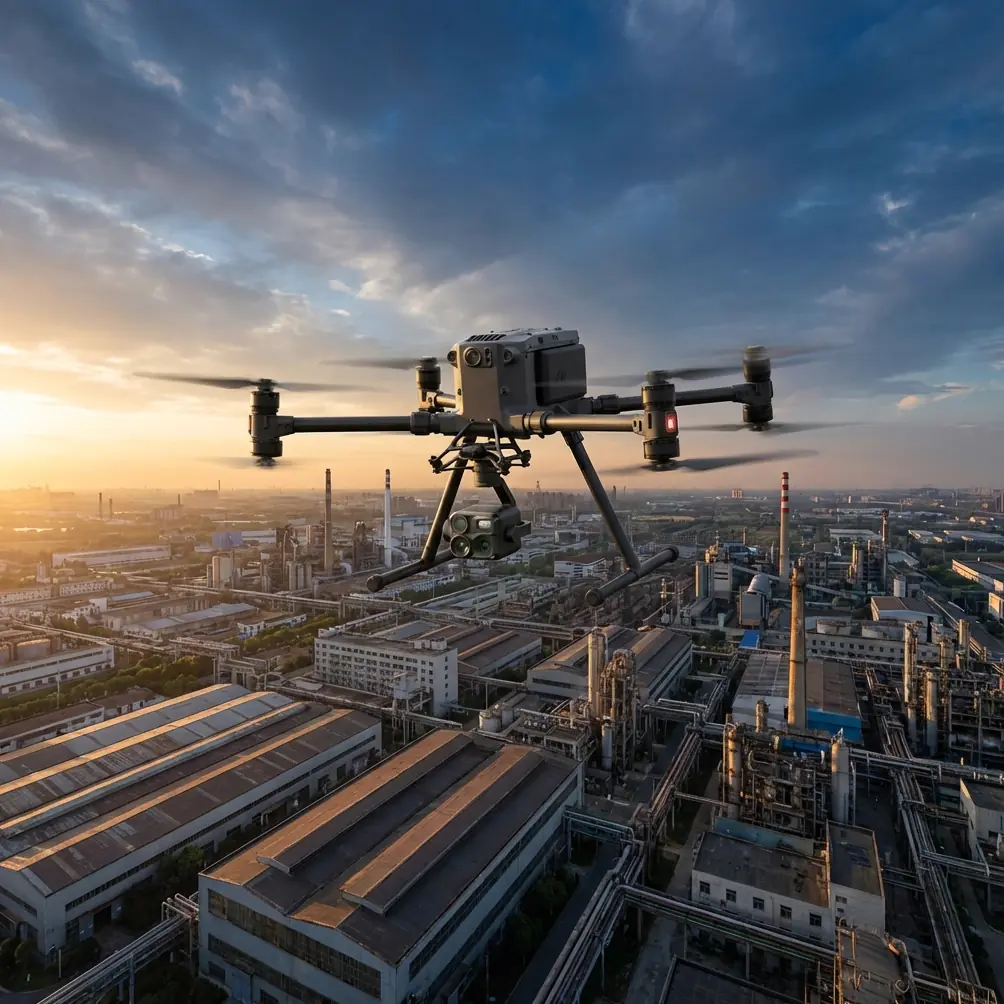
Matrice 4 in Windy Coastal Monitoring: A Field Report on Reliability, Data Integrity, and Why System Design Matters
META: Expert field report on using Matrice 4 for windy coastline monitoring, with practical insight into redundancy, data integrity, transmission resilience, thermal work, and mapping reliability.
Wind exposes weak aircraft faster than any brochure ever will.
Coastal monitoring is one of those jobs that looks simple from the shore and gets complicated the moment the drone lifts off. Salt haze softens visual contrast. Gusts shift direction around rocks, seawalls, and harbor structures. Repeated sorties stretch battery planning. Operators may need both thermal signature review and photogrammetry in the same mission window. If the platform drops data, hesitates during failover, or forces awkward maintenance routines, the real cost is not just a rough flight. It is broken continuity in the inspection record.
That is the lens I would use when assessing a Matrice 4 deployment for windy coastline work. Not as a spec sheet exercise, but as a reliability question.
The most useful way to think about this aircraft is not simply as “a drone with sensors,” but as a flying system whose value depends on how well it preserves control, power stability, and traceable data when the environment becomes messy. That perspective becomes clearer when you compare modern UAV expectations with some hard-earned design principles found in aircraft electrical architecture.
One reference point that stands out is the use of dual processors in aircraft power-distribution logic, where either processor can control the full data-handling task while the second remains in backup mode, passively receiving bus data and standing ready for automatic changeover if the active unit fails. That detail matters operationally because windy coastal work is exactly the sort of mission profile where interruptions are expensive. A drone hovering near a breakwater to verify erosion patterns or inspect wave overtopping evidence cannot afford uncertain behavior when the workload peaks. Redundancy is not a luxury in that setting. It is what separates a recoverable fault from a lost survey pass.
That same reference also mentions continuous onboard self-checking through parity and monitor circuits. Again, the practical meaning is bigger than the phrase. For a Matrice 4 operator flying recurring shoreline missions, internal self-monitoring supports confidence in the chain from aircraft state to payload output. When teams are comparing thermal imagery from one week to the next, or aligning orthomosaics against GCP-controlled datasets, they need to trust that anomalies in the data come from the site, not from silent system corruption.
This is where Matrice 4 stands above many lighter platforms that are easy to deploy but not always easy to trust in coastal wind. Plenty of drones can get airborne in calm conditions and capture attractive footage. That is not the job. The job is repeatable evidence collection when gusts, signal reflections, and long linear flight paths all conspire against consistency.
Why windy coastlines punish weak system design
Open water creates a deceptively harsh RF and flight-control environment. Wind is more persistent than inland turbulence, and it rarely arrives cleanly. Around piers, cliffs, coastal roads, and concrete barriers, the aircraft sees mixed airflow. At the same time, reflective surfaces can complicate transmission stability and visual perception for operators on the ground.
In that setting, the strongest platform is the one that keeps three things intact:
- Stable command and telemetry link
- Clean power and control continuity
- Usable, traceable inspection data after landing
Matrice 4’s appeal in this role is that it aligns well with all three priorities. O3 transmission matters here, not as a marketing bullet, but because coastal missions often stretch along extended, narrow corridors where link resilience is more important than peak cinematic quality. If you are moving parallel to a seawall, surveying tidal infrastructure, or checking debris fields after storm action, transmission interruptions waste time and create gaps in observation. A robust link helps the pilot maintain aircraft awareness while the payload operator stays focused on the scene.
AES-256 also deserves more respect in this kind of work than it usually gets. Coastal monitoring is often tied to critical civilian infrastructure: ports, flood-control systems, utility outfalls, bridges, and shoreline protection assets. Even when the mission is routine, the imagery may document vulnerabilities, access points, or deterioration patterns that should not drift casually through insecure channels. Encryption is not glamorous, but it is part of professional UAV operations when data custody matters.
The hidden advantage: architecture that reduces operational friction
There is another technical detail in the reference material that translates surprisingly well to drone operations: a multiplexed terminal architecture with an 11-bit communications format, distributed around the aircraft to collect control data and manage loads, with redundant bus structure and nominal operation around 1 megahertz in half-duplex mode over shielded twisted pairs. No one buying a Matrice 4 needs to replicate legacy manned-aircraft bus design. That is not the point. The point is that serious airborne systems are built around disciplined data flow, distributed control, and fault isolation.
For the field operator, that philosophy shows up in a more practical way: fewer unexplained glitches, clearer status awareness, and faster recovery when something is off. In coastal monitoring, where aircraft may be launched repeatedly from mobile teams, harbor vehicles, or temporary shoreline staging points, maintainability matters almost as much as pure flight performance.
The same reference highlights built-in test logic and maintenance reporting, including fault recording and simplified status display. That concept has a direct counterpart in how modern enterprise UAV teams should run Matrice 4 fleets. If the aircraft or mission stack can surface faults quickly and trace them to a component or event, downtime drops. This becomes especially valuable when crews are working on tight tidal windows. Miss the low-tide inspection slot because you are guessing at a power or communications issue, and the whole day can collapse.
What this means for thermal signature work
Wind changes thermal interpretation.
On the coast, thermal imagery is often used for identifying moisture ingress in structures, spotting warm discharge points, checking electrical assets near marine environments, or searching for erosion-related anomalies where temperature contrast helps define boundaries. But strong wind can cool surfaces rapidly and flatten the differences you would otherwise rely on. That makes stable hovering, disciplined repeat paths, and dependable payload behavior even more important.
A Matrice 4 configured for thermal work has an edge when the platform lets the operator spend attention on interpretation rather than aircraft babysitting. That is the real comparison point against weaker competitors. Some systems may technically carry the right sensor, yet the pilot’s workload rises sharply once gusts build. When that happens, thermal data quality suffers in subtle ways: inconsistent viewing angle, uneven overlap, missed dwell time, shaky target reacquisition.
The better aircraft is not just the one that survives wind. It is the one that lets the crew continue doing analytical work in wind.
That distinction matters for shoreline monitoring after storms. Crews may need to identify seepage areas in retaining structures, thermal irregularities around equipment shelters, or heat signatures from utility installations near sea defenses. If the aircraft’s control and transmission chain remains calm under pressure, the payload data becomes more reliable and easier to compare across inspection cycles.
Photogrammetry along the shoreline is harder than it looks
Photogrammetry in coastal conditions has its own trap. People tend to assume that an open shoreline is simpler than an urban site. Often it is the opposite. Sand, water, riprap, vegetation, and man-made structures create mixed textures. Wind can shift vegetation between passes. Tides alter edge geometry. Reflections can confuse the visual record. If your overlap discipline slips, reconstruction quality suffers quickly.
This is where Matrice 4’s value grows beyond basic flight. A stable enterprise platform paired with careful mission planning, proper overlap, and GCP-backed control gives surveyors a credible way to build repeatable coastal models. For erosion tracking, dune change analysis, revetment inspection, and harbor-edge mapping, consistency outranks convenience.
The more serious teams will still anchor their datasets with GCPs where required, particularly when monitoring legal boundaries, structural movement, or recurring environmental change. The drone does not replace survey discipline. It makes disciplined collection faster and more scalable. That is a better framing than the usual “one-click mapping” fantasy.
And here is the practical advantage over many smaller competitors: when wind picks up, lightweight aircraft often force a compromise between mission speed and image quality. They may still finish the route, but with yaw corrections, uneven ground sampling, or unstable headings that reduce reconstruction confidence. Matrice 4 is better suited to hold the line when the coastline stops cooperating.
Maintenance discipline is part of mission success
One of the smarter details in the source material describes a maintenance panel approach where faults discovered on the multiplex bus are recorded and made visible to maintenance staff, with simplified inhibit-reset and input-output display logic. That old-school aviation thinking still has teeth. It reminds us that reliable operations are built not only in flight, but between flights.
For Matrice 4 crews working coastlines, a professional workflow should include preflight self-check review, battery health tracking, payload connector inspection, corrosion awareness in marine air, and post-mission fault logging. Salt exposure is unforgiving. Connectors, airframe seams, landing gear surfaces, and sensor windows all deserve tighter inspection cycles than inland mapping teams might use.
Hot-swap batteries also matter here more than they do in general marketing copy. On a long shoreline task, teams may need rapid turnaround to catch weather windows or complete segmented corridor flights before tide or light changes. Hot-swap capability reduces idle time and helps preserve mission rhythm. The benefit is not convenience alone. It is continuity. The less time spent rebooting systems and re-establishing workflow, the easier it is to maintain consistent capture standards across multiple sorties.
If your team is structuring BVLOS operations where regulations and approvals allow, that continuity becomes even more important. Corridor-style coastal work naturally lends itself to longer operational concepts, but only when aircraft reliability, link confidence, and maintenance discipline support the risk case. Enterprise drones do not become BVLOS-ready just because the route is long. They become viable when every layer of the system supports predictable behavior.
A note on mechanical thinking
The second reference document focuses on aircraft door and latch mechanics, with details like two cam rollers riding on a cam plate, a handle mechanism housing fixed by 12 bolts, and spring-assisted motion toward a roughly 60-degree balanced opening position. At first glance, that seems far removed from a drone article. It is not.
Those details illustrate a principle that Matrice 4 operators should appreciate: in aviation, reliable access and secure closure are engineered, not assumed. Mechanical systems use defined travel paths, locking points, and load-managed motion because vibration and repeated cycles expose every weakness. For a UAV in coastal service, the parallel is straightforward. Payload mounting, battery seating, folding-arm interfaces if present, and protective covers all deserve the same respect. If a component is meant to lock, seat, align, or seal, verify it every time. Wind and salt amplify tiny oversights.
That kind of discipline is one reason enterprise teams outperform casual operators with the same aircraft.
Where Matrice 4 genuinely excels
If I had to summarize the model’s strongest case for windy coastline monitoring, it would be this: Matrice 4 is not just attractive because it can carry advanced sensing tools. It is attractive because it belongs in a workflow where redundancy, onboard checking, secure transmission, and maintainable operations are treated as mission-critical.
Competitor drones often look close on paper. In the field, the gap appears in edge cases. Wind. Repeated launches. Mixed thermal and mapping tasks. Long corridor routes. Infrastructure sensitivity. Short maintenance windows. That is where the better platform earns its keep.
For teams building coastal inspection programs, the smartest next step is not to ask only how far or how fast the drone flies. Ask how it handles the ugly parts of real work: uncertain conditions, data accountability, repeatability, and recovery from faults. That is a more serious standard. It is also the one Matrice 4 is better positioned to meet.
If you are sorting out payload strategy, mapping workflow, or encrypted transmission requirements for shoreline jobs, you can message a UAV specialist here and discuss the mission profile directly.
Ready for your own Matrice 4? Contact our team for expert consultation.