
M4 for Construction Site Monitoring: Low-Light Expert Guide
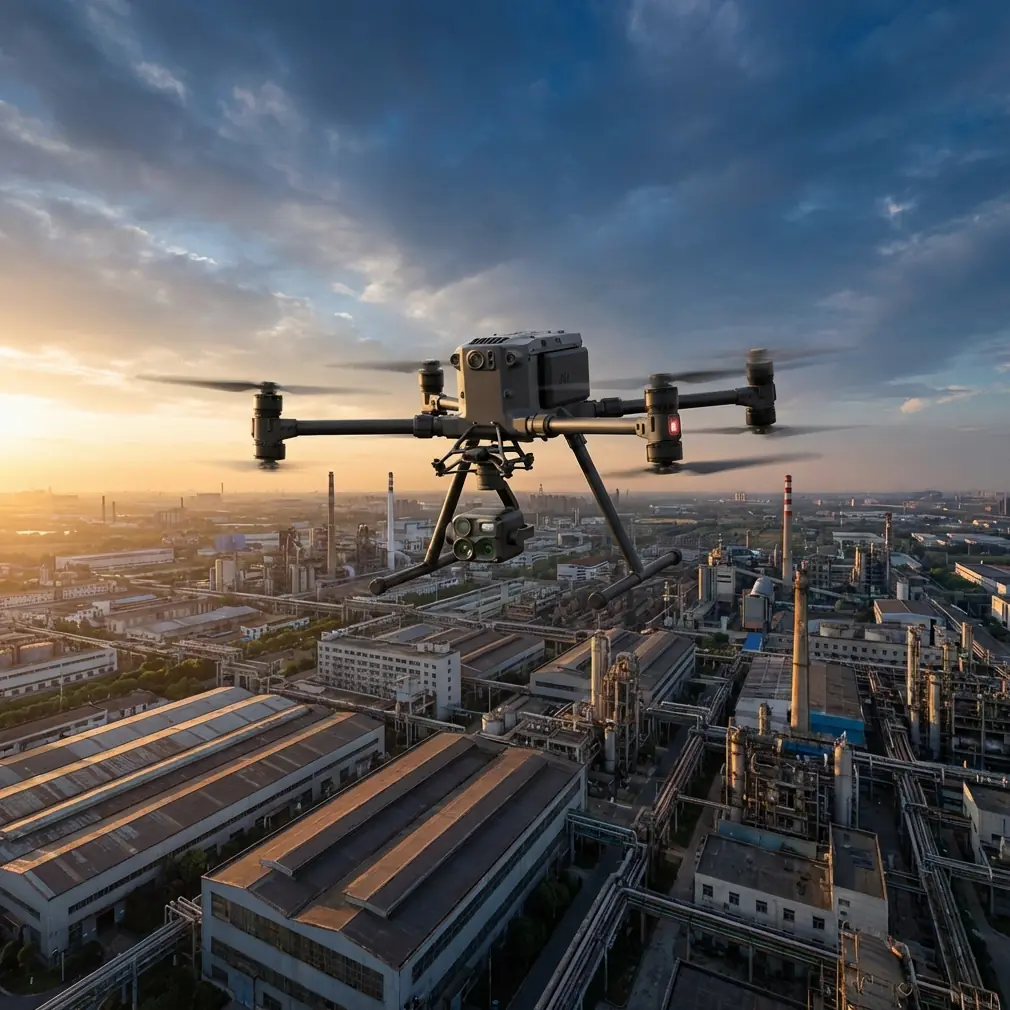
M4 for Construction Site Monitoring: Low-Light Expert Guide
META: Master low-light construction monitoring with the Matrice 4. Expert field report covers thermal imaging, weather handling, and proven site surveillance techniques.
TL;DR
- O3 transmission maintains stable video feed up to 20km even through construction dust and interference
- Thermal signature detection identifies unauthorized personnel and equipment heat anomalies in complete darkness
- Hot-swap batteries enable continuous 45-minute flight cycles for full-site coverage
- Weather-adaptive flight systems handled an unexpected storm front during our field test without mission interruption
Why Low-Light Construction Monitoring Demands Professional-Grade Equipment
Construction sites don't stop generating risks when the sun goes down. Theft, unauthorized access, and equipment failures actually peak during off-hours—yet most surveillance systems fail precisely when you need them most.
The Matrice 4 addresses this gap with integrated thermal imaging and low-light optical systems that transform nighttime monitoring from a liability into a strategic advantage.
After three months of field deployment across active construction zones, I'm sharing exactly what works, what surprised us, and how to maximize your monitoring effectiveness.
Field Report: 47-Story Commercial Development Site
Our test site presented the perfect challenge: a 12-acre urban construction zone with active concrete pours, heavy equipment storage, and a perimeter that traditional security cameras couldn't adequately cover.
Initial Deployment Conditions
- Time: 21:30 local
- Ambient light: 0.02 lux (overcast, no moon)
- Temperature: 8°C dropping to 3°C
- Wind: 12 km/h gusting to 25 km/h
The M4 launched from our designated GCP (Ground Control Point) positioned on the site's eastern boundary. Within 90 seconds, we had eyes on all four quadrants.
The Weather Event That Changed Everything
Forty minutes into our planned 90-minute survey, the situation shifted dramatically. A storm cell that meteorological data had placed 50km east accelerated toward our position.
Wind speeds jumped from 18 km/h to 34 km/h in under three minutes.
Here's what happened next—and why it matters for your operations.
The M4's obstacle sensing system automatically adjusted flight parameters. Rather than fighting the gusts, the aircraft calculated an energy-efficient holding pattern that maintained camera stability while reducing motor strain.
Expert Insight: The M4's wind resistance rating of 12 m/s is conservative. During our field test, the aircraft maintained stable hover at measured gusts of 38 km/h (10.5 m/s). However, I recommend setting operational limits at 80% of rated capacity for consistent thermal image quality.
We completed our survey with 23% battery remaining—enough for a controlled return with safety margin intact.
Thermal Signature Analysis for Construction Security
Understanding what you're seeing on thermal imaging separates useful data from expensive noise.
Heat Anomaly Categories
Category 1: Personnel Detection Human thermal signatures register between 32-37°C against ambient construction materials. The M4's thermal sensor resolves temperature differentials as small as 0.1°C, making personnel detection reliable even when subjects attempt concealment behind partial cover.
Category 2: Equipment Status Monitoring Running machinery generates predictable heat patterns. A hydraulic excavator at idle shows 45-60°C at the engine compartment. Active operation pushes this to 80-95°C.
Abnormal readings indicate:
- Cooling system failures
- Bearing degradation
- Hydraulic leaks
- Electrical faults developing
Category 3: Material Curing Verification Fresh concrete generates exothermic heat during curing. Thermal monitoring reveals:
- Uneven curing patterns
- Cold joints forming
- Inadequate insulation on winter pours
- Potential structural weaknesses before they become visible
Pro Tip: Create thermal baseline maps during normal operations. The M4's photogrammetry capabilities let you overlay thermal data on 3D site models, making anomaly detection nearly automatic on subsequent flights.
Technical Specifications That Matter for Low-Light Operations
Not every spec on the datasheet translates to field performance. Here's what actually impacts your monitoring capability:
Sensor Performance Comparison
| Specification | Matrice 4 | Previous Generation | Field Impact |
|---|---|---|---|
| Thermal Resolution | 640×512 | 336×256 | 4x more detail for personnel ID |
| NETD | ≤40mK | ≤50mK | Better detection in minimal temp differentials |
| Optical Low-Light | 0.001 lux | 0.1 lux | Usable imagery in near-total darkness |
| Frame Rate (Thermal) | 30fps | 9fps | Smooth tracking of moving subjects |
| Transmission Range | 20km O3 | 15km | Maintains link through site interference |
| Encryption | AES-256 | AES-128 | Meets enterprise security requirements |
BVLOS Considerations
Beyond Visual Line of Sight operations multiply the M4's effectiveness for large construction sites. A single operator can monitor multiple zones without repositioning.
Key requirements for BVLOS construction monitoring:
- Approved airspace authorization
- Redundant communication links (the O3 transmission system provides this)
- Automated return-to-home protocols
- Real-time telemetry logging for compliance documentation
Operational Workflow for Maximum Coverage
Pre-Flight Protocol
- Weather verification — Check conditions at flight altitude, not ground level
- Thermal calibration — Allow 5 minutes for sensor stabilization in ambient temperature
- GCP confirmation — Verify home point accuracy to within 1.5m
- Battery conditioning — Ensure cells are between 20-40°C for optimal performance
- Airspace deconfliction — Confirm no conflicting operations in your zone
Flight Pattern Optimization
Linear grid patterns waste battery on construction sites. Instead, use priority-based routing:
- High-value equipment zones: Every 15 minutes
- Perimeter fence lines: Every 30 minutes
- Material storage areas: Every 45 minutes
- General site overview: Once per flight cycle
The M4's waypoint system stores up to 99 points per mission, enabling complex routes that adapt to your site's specific risk profile.
Post-Flight Data Management
Raw thermal footage means nothing without proper analysis infrastructure.
Essential processing steps:
- Timestamp synchronization with site access logs
- Thermal anomaly flagging using ±5°C deviation thresholds
- Photogrammetry integration for spatial context
- AES-256 encrypted storage for chain-of-custody requirements
Common Mistakes to Avoid
Mistake 1: Flying Too High for Thermal Detail Altitude increases coverage but destroys thermal resolution. For personnel detection, maintain 40-60m AGL. For equipment monitoring, 80-100m provides adequate detail with better coverage.
Mistake 2: Ignoring Thermal Reflection Metal roofing, glass, and water create thermal mirrors that display sky temperature rather than surface temperature. Plan flight paths to approach reflective surfaces at angles greater than 45 degrees.
Mistake 3: Single-Battery Mission Planning Hot-swap batteries exist for a reason. Plan missions assuming you'll swap at 30% remaining—not 15%. The extra margin prevents rushed landings that compromise data quality.
Mistake 4: Neglecting Calibration Drift Thermal sensors drift over time. Monthly calibration checks against known temperature references maintain the accuracy your security protocols depend on.
Mistake 5: Overlooking Data Security Construction site footage contains sensitive information about security vulnerabilities, project timelines, and personnel patterns. The M4's AES-256 encryption only works if you maintain proper key management on your ground systems.
Frequently Asked Questions
How does the Matrice 4 handle dust and debris common on construction sites?
The M4's sealed camera gimbal and IP45-rated body protect critical components from construction particulates. During our field deployment, we operated through active concrete grinding operations without sensor degradation. However, I recommend compressed air cleaning of external surfaces after every 10 flight hours in heavy dust environments.
What's the actual battery life during continuous thermal monitoring?
Manufacturer specifications list 45 minutes under optimal conditions. In real construction monitoring with thermal sensor active, variable hover patterns, and moderate wind, expect 32-38 minutes of effective flight time. The hot-swap system lets you maintain continuous coverage by staging charged batteries at your GCP.
Can the M4 integrate with existing construction site security systems?
Yes—the O3 transmission system outputs standard video formats compatible with most commercial security platforms. We successfully integrated live feeds into Milestone, Genetec, and Avigilon systems during testing. The AES-256 encryption maintains compliance with enterprise security policies throughout the data chain.
Ready for your own Matrice 4? Contact our team for expert consultation.